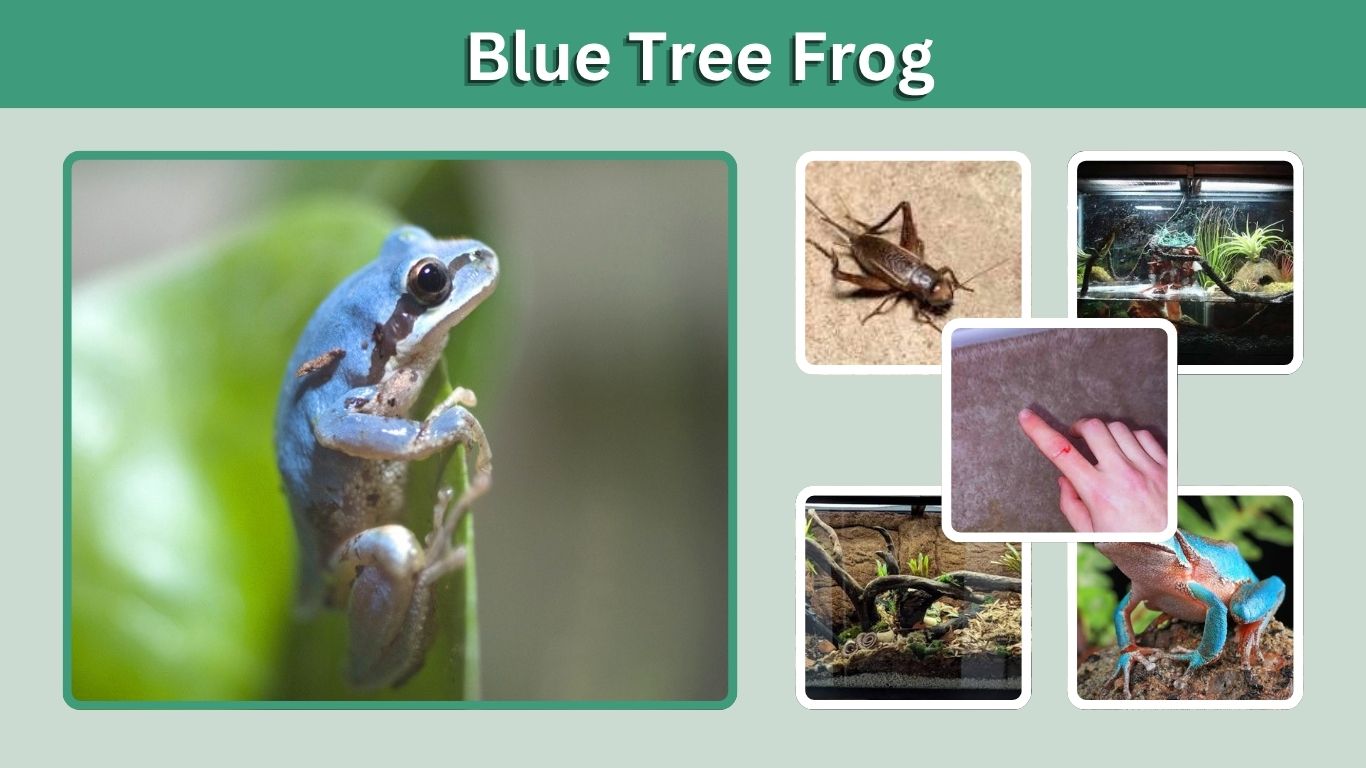
The blue tree frog is a fascinating amphibian known for its beautiful blue-green coloration, rounded body, and friendly-looking appearance. Often called the blue dumpy tree frog or blue White’s tree frog, this unusual frog is a popular choice among amphibian enthusiasts. Its striking colors, large eyes, and relatively calm temperament make it especially appealing as a pet. However, blue tree frogs require proper habitat conditions, feeding, and maintenance to remain healthy. Understanding their characteristics, natural habitat, different color varieties, and care requirements can help you appreciate these remarkable amphibians.
What Is a Blue Tree Frog?
A blue tree frog usually refers to a blue-colored variety of White’s tree frog (Litoria caerulea), also known as the Australian green tree frog or dumpy tree frog. These amphibians naturally occur in Australia and New Guinea, while captive-bred individuals are popular worldwide.
Although most White’s tree frogs have green bodies, some display blue, turquoise, or bluish-gray coloration. The blue phase White’s tree frog is especially popular because of its unusual appearance.
Adult frogs generally measure 3–4.5 inches long. They have broad heads, large eyes, and rounded bodies. Their specialized toe pads help them climb trees, branches, and glass surfaces.
Why Are Some Tree Frogs Blue?
Blue coloration in tree frogs is primarily associated with differences in skin pigments and light-reflecting structures.
Most green frogs have yellow pigment cells called xanthophores, along with reflective cells called iridophores. Together, these structures help produce their typical green appearance.
When yellow pigmentation is reduced or missing, the underlying blue coloration becomes more visible. This phenomenon is sometimes associated with a condition called axanthism.
However, not every blue-green White’s tree frog has the same genetic characteristics. Some are naturally teal, while others have been selectively bred for their appearance.
A frog’s color can also change slightly depending on lighting, temperature, and environmental conditions.
Blue Tree Frog Appearance and Identification
Blue tree frogs have several recognizable physical characteristics that distinguish them from many other amphibians. Their appearance varies according to age, individual genetics, and color variety.
Common identification features include:
- Body color: Light blue, turquoise, bluish-green, or gray-blue.
- Body shape: Rounded, stocky body with a broad head.
- Eyes: Large, prominent eyes, sometimes with golden or blue-colored irises.
- Skin texture: Generally smooth skin with occasional small white spots.
- Toe pads: Large adhesive pads that support climbing.
- Adult size: Usually around 3–4.5 inches long.
Blue dumpy tree frogs may become lighter or darker throughout the day. This natural color variation does not necessarily indicate a health problem, although unusual discoloration accompanied by lethargy or skin lesions requires veterinary attention.
Popular Blue White’s Tree Frog Varieties
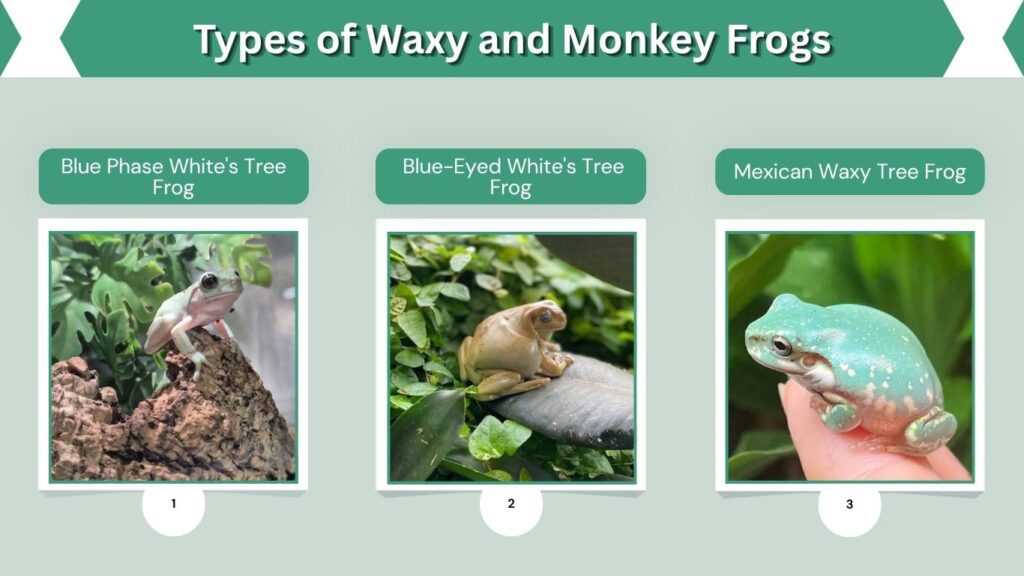
Several White’s tree frog varieties are sold under names describing their body color, eye color, or markings. These names generally refer to captive-bred appearances rather than separate species.
1. Blue Phase White’s Tree Frog
This variety has a distinctive teal or blue-green body. Blue phase frogs are among the most recognizable color variations and are commonly available from specialized breeders.
2. Blue-Eyed White’s Tree Frog
The blue-eyed variety is distinguished by its unusual iris coloration. Its body may be green, pale gray, or blue-green. Eye color, rather than body color, is its defining characteristic.
3. Honey Blue-Eyed White’s Tree Frog
This attractive combination features warm yellow or honey-colored skin with blue eyes. The contrast makes it especially noticeable among captive-bred frogs.
4. Blue Snowflake White’s Tree Frog
Snowflake frogs have distinctive white speckles scattered across their bodies. When combined with blue-phase coloration, the result is a turquoise frog with contrasting white markings.
These characteristics can occur together, and breeders may use combined names such as blue-eyed snowflake or honey blue-eyed White’s tree frog.
Blue Tree Frog Natural Habitat and Lifespan
The Australian blue tree frog originates from regions containing forests, woodlands, and other habitats with suitable shelter and moisture.
In the wild, White’s tree frogs spend considerable time resting on branches, hiding inside tree hollows, and searching for insects. They are primarily nocturnal, becoming more active during the evening and nighttime.
Their adaptable nature allows them to survive in both humid and seasonally dry environments.
Under appropriate captive conditions, White’s tree frogs often live well over 10 years. The Smithsonian’s National Zoo reports an average lifespan of approximately 16 years, with some individuals surviving beyond 20 years in human care.
Blue Tree Frog Care Guide
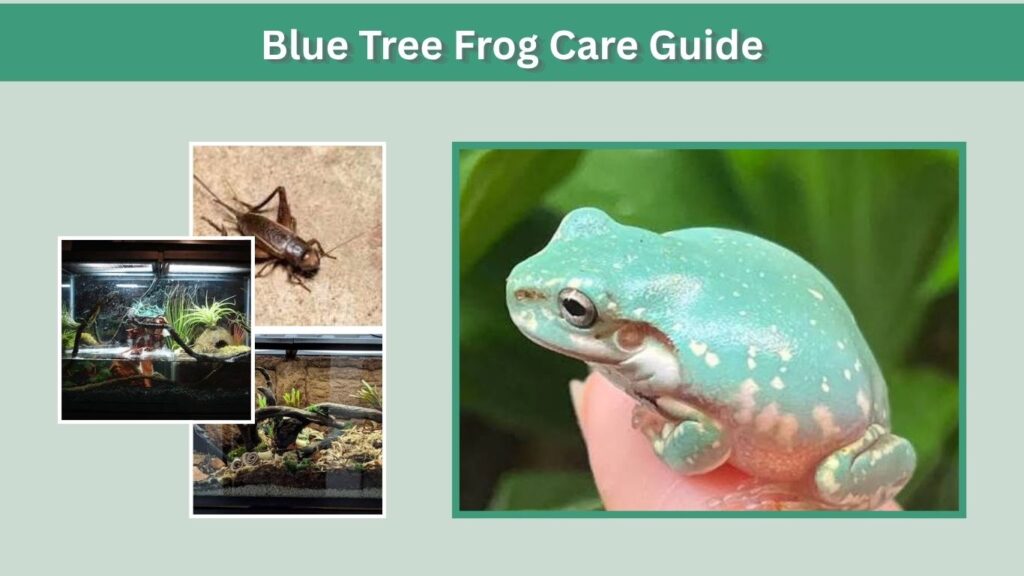
Blue White’s tree frogs have the same fundamental care requirements as ordinary green White’s tree frogs. Proper temperature, humidity, nutrition, and enclosure design are essential for maintaining their health.
Tank Size and Enclosure Setup
An adult blue dumpy tree frog should have a spacious, vertically oriented terrarium that supports climbing.
An enclosure measuring at least 18 × 18 × 24 inches is a commonly recommended starting size for one adult, although larger habitats are beneficial.
The enclosure should contain sturdy branches, broad leaves, climbing platforms, and sheltered resting areas. Coconut fiber or other amphibian-safe substrates can help manage moisture.
Avoid sharp decorations, unstable branches, and small loose materials that the frog might accidentally swallow.
Temperature and Humidity
Blue tree frogs require carefully controlled environmental conditions. A daytime temperature gradient of approximately 75–85°F (24–29°C) is suitable, with cooler overnight conditions.
Humidity is commonly maintained around 50–70%, with temporary increases after misting. Good airflow is important because constantly wet surfaces can encourage health problems.
Use a digital thermometer and hygrometer to monitor the enclosure. A low-output UVB lamp, appropriate shade, and a consistent day-night cycle also support healthy captive care.
Diet and Feeding Requirements
Blue tree frogs are insectivorous amphibians that primarily eat live insects.
Crickets, dubia roaches, and appropriately sized locusts are suitable food choices. Occasional treats may include waxworms, but fatty insects should not dominate the diet.
Young frogs generally require more frequent feeding than adults. Adult frogs are commonly fed two or three times weekly, depending on their size, condition, and veterinary guidance.
Feeder insects should be gut-loaded and supplemented appropriately with calcium and vitamins. Overfeeding must be avoided because White’s tree frogs are particularly prone to obesity.
Basic Maintenance Tips
Consistent maintenance helps prevent dehydration, contamination, and stress. Follow these essential practices:
- Fresh water: Provide clean, dechlorinated water daily in a stable soaking dish.
- Daily cleaning: Remove waste, uneaten insects, and contaminated materials.
- Humidity control: Mist as needed without allowing the enclosure to remain constantly wet.
- Limited handling: Use clean, damp, powder-free gloves when handling is necessary.
- Health checks: Watch for appetite loss, unusual swelling, skin lesions, or abnormal behavior.
Always consult an amphibian-experienced veterinarian when signs of illness appear.
Are Blue Tree Frogs Poisonous?
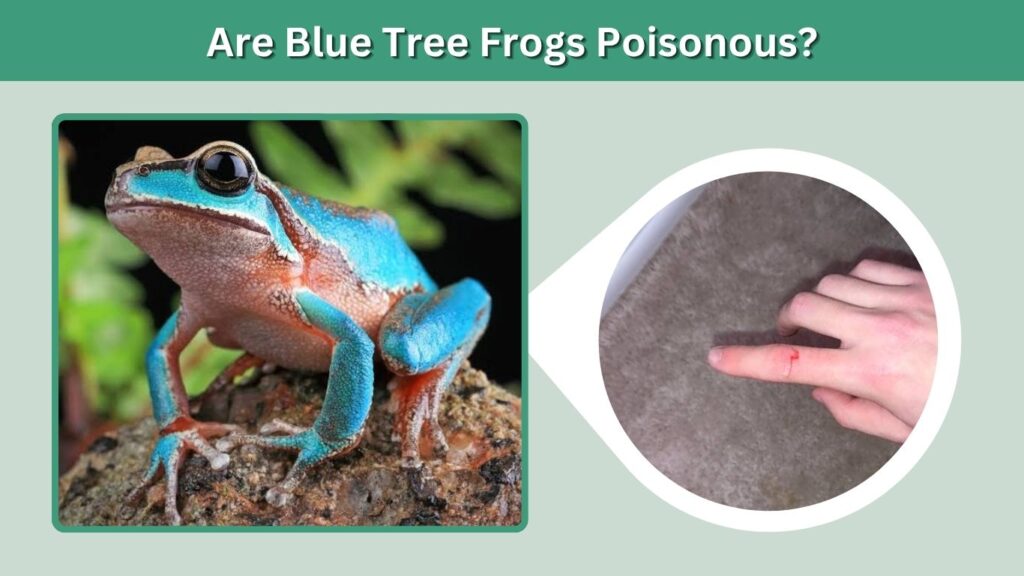
Blue White’s tree frogs are not considered highly poisonous to humans, and they do not inject venom through bites.
However, like many amphibians, they produce skin secretions that can cause irritation, particularly if transferred to the eyes, mouth, or open wounds.
These frogs can also carry bacteria such as Salmonella, making proper hygiene essential.
Avoid unnecessary handling, never kiss a frog, and wash your hands thoroughly after cleaning its enclosure.
It is also important to distinguish blue White’s tree frogs from blue poison dart frogs, which belong to an entirely different amphibian group and possess different chemical defenses.
Blue Tree Frog vs. Blue Poison Dart Frog
Although both amphibians may display beautiful blue coloration, they are not the same species.
The blue White’s tree frog is relatively large, rounded, and mainly arboreal. It belongs to the Australasian tree frog group and is generally active at night.
The blue poison dart frog (Dendrobates tinctorius, azureus form) is much smaller, vividly blue with dark spotting, and naturally occurs in Suriname. It is mainly active during daylight.
Wild poison dart frogs acquire defensive toxins through their natural diet, whereas captive-bred frogs generally lack comparable levels of toxicity.
Where to Find Blue Tree Frogs for Sale
Blue tree frogs are sometimes available through specialized amphibian breeders, reptile exhibitions, and reputable exotic pet stores.
Before purchasing, examine the frog’s overall condition and confirm that the seller follows responsible breeding practices.
Important considerations include:
- Captive breeding: Select captive-bred frogs rather than wild-caught individuals.
- Healthy appearance: Look for clear eyes, healthy skin, and appropriate body condition.
- Feeding history: Confirm that the frog is eating regularly.
- Morph identification: Ask whether the frog is blue phase, blue-eyed, honey, or snowflake.
- Legal requirements: Verify that ownership and transportation comply with local regulations.
Remember that a blue tree frog is a long-term commitment requiring specialized care, not simply an attractive display animal.
FAQs
1. Are Blue Tree Frogs Real?
Yes, blue tree frogs are real amphibians. Most are blue-colored varieties of White’s tree frogs, commonly found in Australia and New Guinea. Their unusual blue or turquoise appearance results from differences in skin pigmentation, making them popular among amphibian enthusiasts.
2. Are Blue-Eyed White’s Tree Frogs Rare?
Blue-eyed White’s tree frogs are relatively uncommon compared to standard green varieties. Their distinctive blue eyes make them desirable among amphibian collectors. Although captive breeding has increased their availability, these frogs can still be difficult to find in some pet markets.
3. How Big Does a Full-Grown Blue White’s Tree Frog Get?
A full-grown blue White’s tree frog typically measures between 3 and 4.5 inches long. Females are generally larger than males. With proper nutrition, suitable enclosure conditions, and consistent care, these frogs develop healthy, rounded bodies and strong climbing abilities.
4. Can Blue Tree Frogs Change Color?
Yes, blue tree frogs can change their body color slightly depending on temperature, lighting, humidity, and environmental conditions. They may appear turquoise, blue-green, or grayish-blue at different times. However, their underlying genetic pigmentation largely determines their overall coloration.
5. Are Blue Tree Frogs Good Pets for Beginners?
Blue tree frogs can be excellent pets for beginners who understand their basic care requirements. They are relatively hardy, calm, and easy to observe. However, they need appropriate temperatures, humidity, nutritious live insects, clean water, and regular enclosure maintenance.
