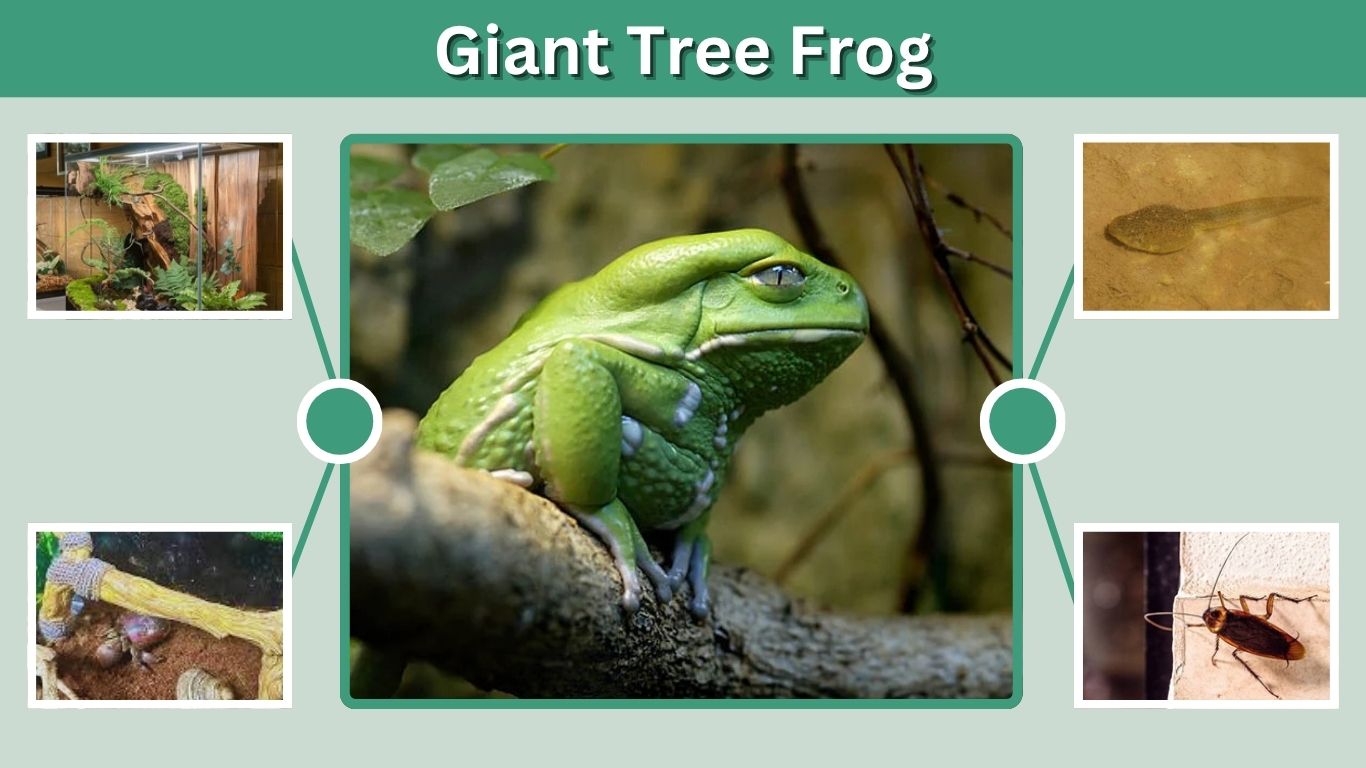
The giant tree frog is one of the largest and most fascinating tree-dwelling frogs in the world. Known for its bright green body, distinctive white lip, and impressive climbing abilities, this amphibian lives in tropical forests and humid environments. Giant tree frogs attract attention because of their unusual size, loud calls, and interesting behavior. However, several different species share similar common names. Understanding their differences is important when identifying them or considering one as a pet. This guide explores giant tree frog size, habitat, diet, appearance, breeding, and basic care requirements.
What Is a Giant Tree Frog?
The giant tree frog commonly refers to the white-lipped tree frog, traditionally known as Litoria infrafrenata and now classified by some taxonomic authorities as Sandyrana infrafrenata. It is native to Australia, New Guinea, and nearby islands.
Unlike smaller tree frogs, this species has a relatively large body, strong legs, and broad adhesive toe pads. Its distinctive white lower lip makes identification easier.
Giant Tree Frog Identification
Giant tree frogs have several recognizable physical features:
- Body color: Bright green, olive-green, or greenish-brown.
- White lip: A noticeable white stripe along the lower jaw.
- Large eyes: Prominent eyes with horizontal pupils.
- Long legs: Powerful hind legs for jumping and climbing.
- Toe pads: Large adhesive discs that help grip branches.
- Body shape: A relatively long, sturdy body with smooth upper skin.
Their coloration sometimes changes slightly depending on environmental conditions. A few individuals also develop pinkish markings along their limbs during breeding periods.
Giant Tree Frog Size and Appearance
Giant tree frogs are remarkably large compared with many common tree frog species. Their size helps distinguish them from smaller green frogs, although appearance alone is not always enough for accurate identification.
These amphibians are generally measured from the tip of the snout to the vent, excluding their legs. Adult females are typically larger than males.
How Big Is a Giant Tree Frog?
The white-lipped giant tree frog can reach approximately 14 cm (5.5 inches) in body length. Many adults measure around 11–14 cm, although individual sizes vary.
Their long legs make them appear considerably larger when stretched out or climbing. Young frogs are much smaller and gradually develop the proportions of adults.
Despite their size, giant tree frogs are agile climbers capable of moving across branches and other elevated surfaces.
Giant Green Tree Frog vs. White’s Tree Frog
The Australian giant tree frog is sometimes confused with White’s tree frog, also called the dumpy tree frog.
White’s tree frogs have a rounder, heavier appearance and usually lack the distinctive white stripe running along the lower jaw.
Both species can be green, but their body proportions, markings, and adult sizes help distinguish them.
Giant Tree Frog Habitat and Distribution
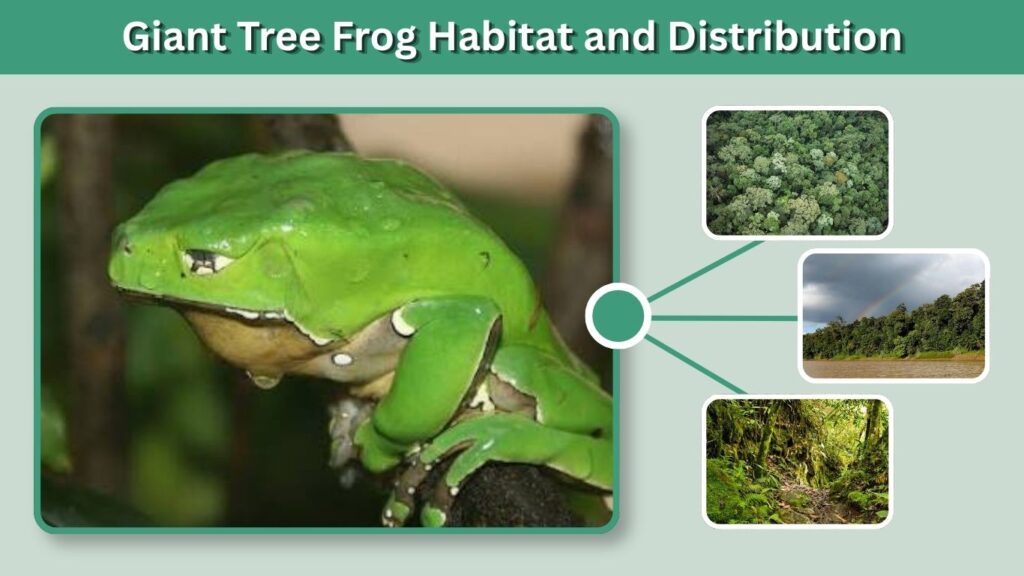
Giant tree frogs inhabit warm environments where moisture, shelter, and suitable breeding sites are available. Their natural habitats include tropical forests, wetlands, and other vegetated areas.
Although they spend much of their lives above the ground, they depend on freshwater habitats for reproduction.
Where Do Giant Tree Frogs Live?
White-lipped giant tree frogs occur in northeastern Australia, New Guinea, and several nearby islands.
Their habitats include tropical rainforests, coastal woodlands, mangroves, swamps, and humid gardens. They may also appear around houses, agricultural areas, and outdoor structures.
In Australia’s Queensland region, these frogs are especially associated with warm, humid coastal environments.
Giant Tree Frog Adaptations
Giant tree frogs possess physical adaptations that help them survive in trees.
Their adhesive toe pads provide grip on leaves, branches, and smooth surfaces. Long legs allow them to leap between nearby supports, while their green coloration helps them blend into vegetation.
They usually remain sheltered during the day and become more active during warm, humid nights. This behavior reduces exposure to drying conditions and daytime predators.
What Do Giant Tree Frogs Eat?
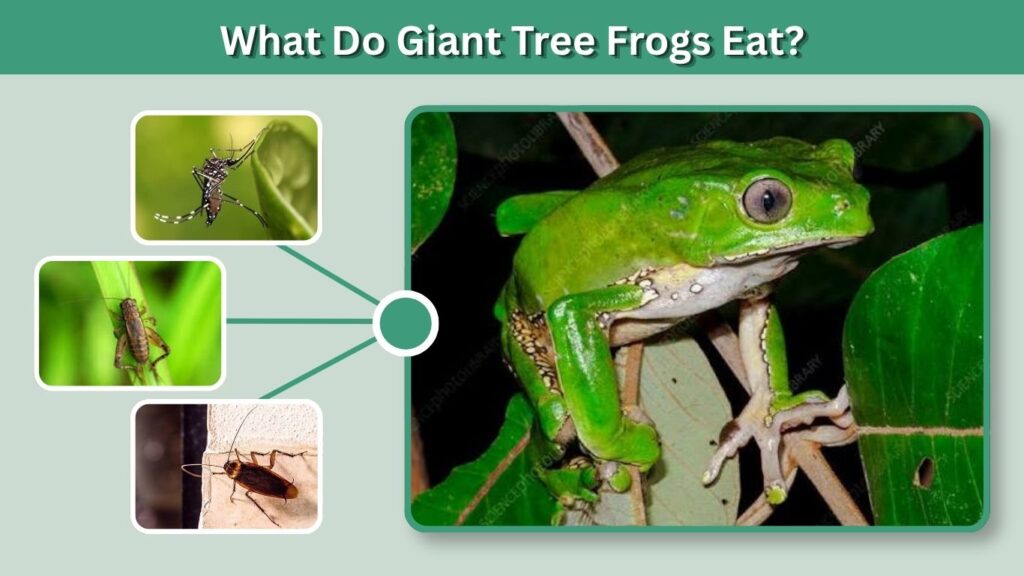
Giant tree frogs are primarily carnivorous amphibians that feed on insects and other small animals. Their natural diet depends on available prey and environmental conditions.
These frogs generally capture prey using quick movements and their sticky tongues. Most feeding activity occurs after sunset.
Giant Tree Frog Diet
Common prey includes:
- Crickets: A readily available source of insect protein.
- Moths: Flying insects encountered during nighttime hunting.
- Beetles: Small beetles that fit inside the frog’s mouth.
- Cockroaches: Various appropriately sized species.
- Grasshoppers: Insects captured among plants and vegetation.
- Spiders: Small arachnids encountered during hunting.
Larger individuals may occasionally consume other small animals, but insects and arthropods form the main part of their diet.
Giant Tree Frog Predators
Despite their size, giant tree frogs face several natural predators. Snakes, predatory birds, and larger animals may capture them.
Their green coloration provides camouflage, particularly when resting among leaves. Climbing abilities also allow them to escape some ground-based predators.
Remaining hidden during daylight hours is another important defensive behavior.
Giant Tree Frog Behavior and Reproduction
Giant tree frogs are generally nocturnal. During the day, they often rest in sheltered vegetation or protected areas where humidity remains relatively high.
At night, they search for food, climb through vegetation, and communicate with other frogs. Their activity frequently increases during rainy weather.
Giant Tree Frog Call
Male white-lipped tree frogs produce a loud, deep call resembling a dog’s bark.
These calls become especially noticeable during warm, rainy periods when males gather near breeding locations.
Calling helps males attract potential mates and communicate during the reproductive season.
Giant Tree Frog Eggs and Breeding
Breeding usually takes place during the warmer, wetter months. Males call near ponds, pools, or other suitable freshwater habitats.
Females deposit eggs in gelatinous masses at the water’s surface. After hatching, the tadpoles develop in water before undergoing metamorphosis.
Under suitable environmental conditions, development from eggs to young frogs can take approximately eight weeks, although timing varies.
Can You Keep a Giant Tree Frog as a Pet?
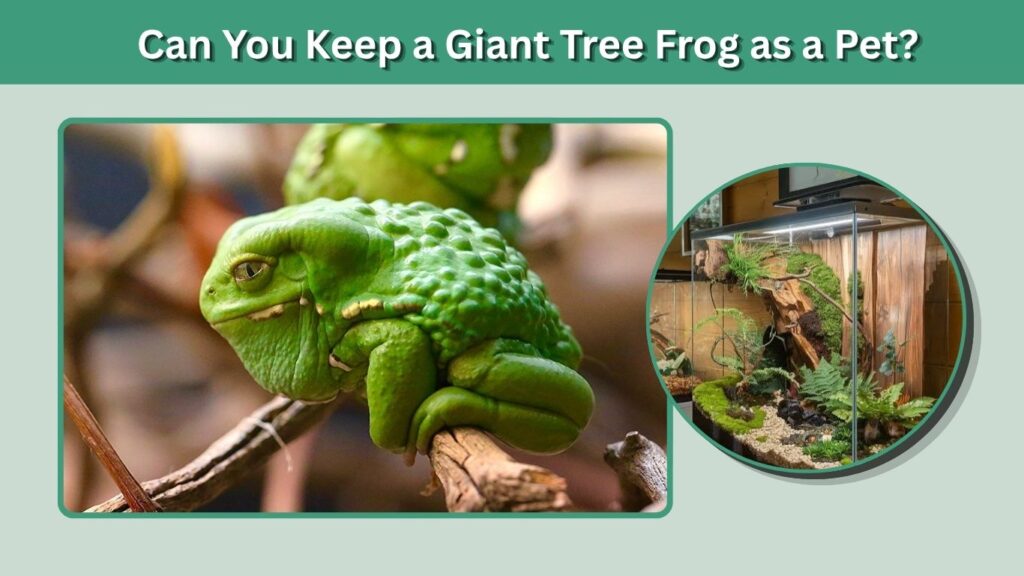
Giant tree frogs are sometimes maintained in captivity, but they require specialized environmental conditions. Their large size, moisture requirements, and sensitivity make them more suitable for experienced amphibian keepers.
Before obtaining one, owners should confirm species identification, local regulations, and the animal’s captive-bred origin.
Giant Tree Frog Care and
Important care requirements include:
- Enclosure: A spacious, vertically oriented terrarium that allows climbing.
- Temperature: A warm environment with a suitable temperature gradient.
- Humidity: Consistent moisture levels with adequate ventilation.
- Climbing structures: Strong branches, cork bark, and sturdy plants.
- Water: Constant access to clean, amphibian-safe water.
- Feeding: Appropriately sized, gut-loaded insects with suitable nutritional supplements.
- Cleaning: Regular removal of waste and uneaten food.
Environmental requirements should be tailored to the exact species rather than using a generic tree frog care sheet.
Handling and Health
Giant tree frogs have delicate, permeable skin that can absorb substances from human hands.
Unnecessary handling should be avoided. When handling is essential, clean, wet, powder-free gloves may help reduce contamination and skin damage.
Keepers should also monitor appetite, movement, skin condition, and body weight. An amphibian-experienced veterinarian should evaluate unusual symptoms.
Giant Waxy Monkey Tree Frog vs. Giant Tree Frog
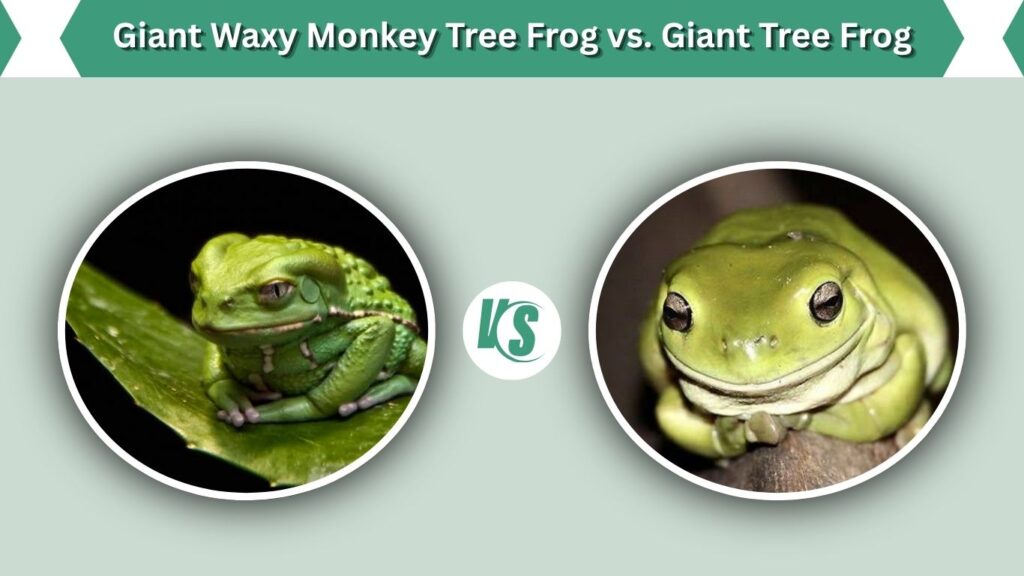
The giant waxy monkey tree frog (Phyllomedusa bicolor) is different from the Australian white-lipped giant tree frog.
Native to the Amazon Basin of South America, this species is also called the giant monkey frog or giant waxy tree frog. It has a large green body, distinctive eyes, and an unusual slow-climbing movement.
Giant Waxy Monkey Tree Frog Characteristics
The giant waxy monkey tree frog commonly grows to approximately 10–13 cm (4–5 inches).
It possesses specialized skin glands that produce protective secretions, helping reduce water loss. Its slow, deliberate climbing behavior differs from the movements of many jumping tree frogs.
This species also produces biologically active skin secretions associated with traditional kambô practices. These substances can cause serious adverse reactions in humans and should never be considered safe treatments.
FAQs
Are Giant Tree Frogs Real?
Yes. Giant tree frogs are real amphibians found in tropical regions. The Australian white-lipped tree frog is among the largest tree frogs, reaching approximately 14 cm in body length. Several other large species are also called giant tree frogs.
Are Giant Tree Frogs Dangerous?
White-lipped giant tree frogs are not considered dangerous predators to humans. However, like other amphibians, they have sensitive skin and may carry microorganisms. Avoid unnecessary handling, never apply chemicals to their skin, and wash your hands after contact.
How Long Do Giant Tree Frogs Live?
Their lifespan depends on the species, environmental conditions, nutrition, and health. White-lipped giant tree frogs can survive for several years in captivity, with some husbandry sources reporting approximately 8–10 years or longer under good conditions.
Can Giant Tree Frogs Live in Florida?
Florida is home to invasive Cuban tree frogs, which are sometimes called giant tree frogs. However, these are different from Australia’s white-lipped giant tree frog. Cuban tree frogs can grow unusually large and threaten smaller native amphibians.
Are Giant Tree Frogs Good Pets?
Giant tree frogs may be suitable for experienced keepers who can maintain appropriate temperature, humidity, feeding, and hygiene. Beginners should research the exact species before obtaining one because care requirements vary significantly.
