
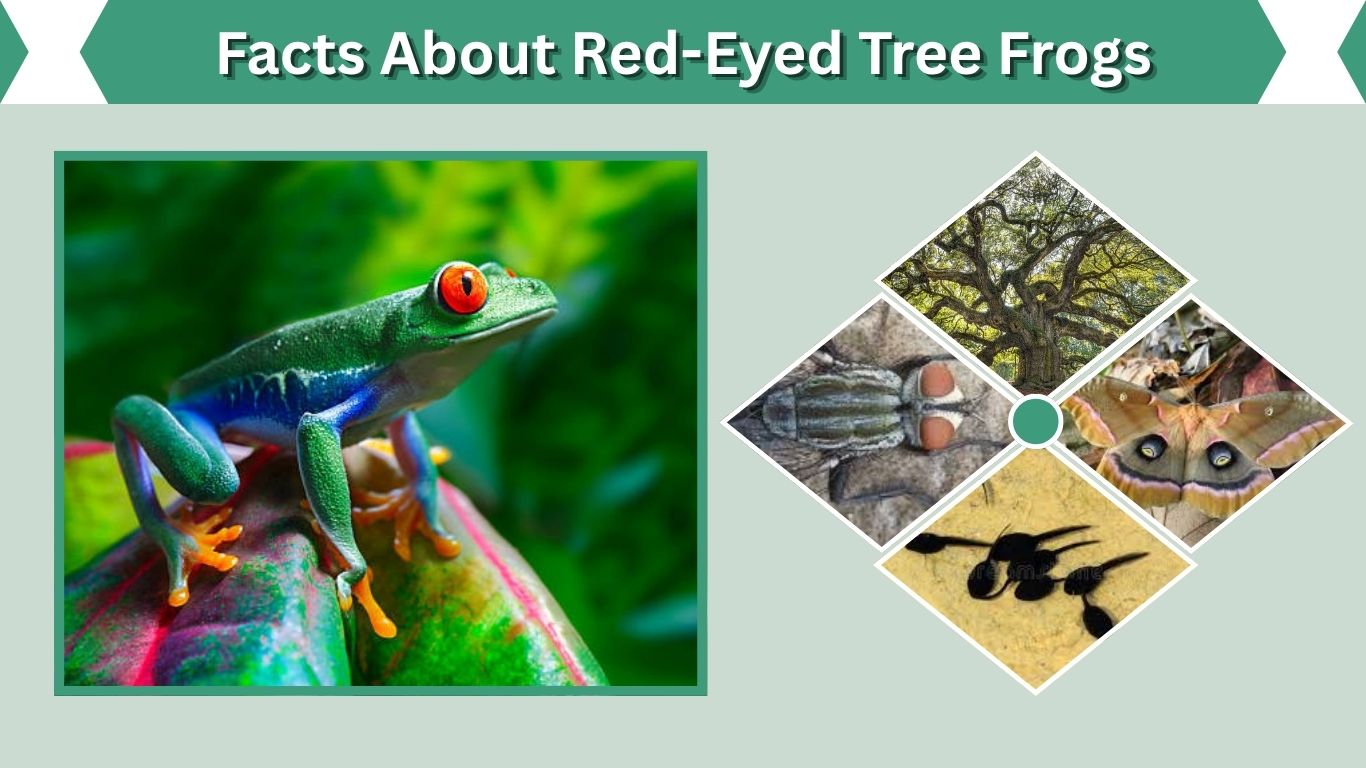
Red-eyed tree frogs are among the most recognizable frogs in the rainforest. Their bright red eyes, green bodies, orange feet, and blue-and-yellow sides make them look almost unreal. But these colorful frogs are more than just beautiful. They have unusual survival tricks, interesting life cycle stages, and special adaptations that help them live high in tropical trees.
What Is a Red-Eyed Tree Frog?
A red-eyed tree frog is a small tropical frog known for its striking colors and large red eyes. Its scientific name is Agalychnis callidryas. These frogs are native to parts of Central America and northern South America, where they live in warm, humid rainforests.
Basic Red-Eyed Tree Frog Fact File
Red-eyed tree frogs are amphibians, which means they spend part of their life in water and part on land. They begin life as eggs, hatch into tadpoles, and later develop into adult frogs. Adults spend most of their time in trees near ponds, streams, or other wet areas.
| Feature | Red-Eyed Tree Frog Facts |
|---|---|
| Scientific name | Agalychnis callidryas |
| Animal group | Amphibian |
| Habitat | Tropical rainforests |
| Diet | Insects and other small invertebrates |
| Activity | Mostly nocturnal |
| Adult size | About 1.5 to 3 inches long |
| Main defense | Bright colors and startle display |
| Native range | Central America and parts of northern South America |
Why Are They Called Red-Eyed Tree Frogs?
They get their name from their large red eyes and tree-dwelling lifestyle. During the day, they often sleep on the underside of leaves with their eyes closed and their colorful body parts tucked away. At night, they open their bright eyes and become active hunters.
Interesting Facts About Red-Eyed Tree Frogs
Red-eyed tree frogs are popular because they look colorful, but their appearance also helps them survive. Their colors, movements, and habits all play a role in avoiding predators and finding food.
1. Their Red Eyes May Startle Predators
One of the coolest facts about red-eyed tree frogs is that their bright eyes may help scare or confuse predators. When a sleeping frog is disturbed, it suddenly opens its red eyes and flashes its colorful sides and feet. This quick burst of color can surprise a predator long enough for the frog to jump away.
This defense is often called startle coloration. The frog is not poisonous like some brightly colored frogs, but its sudden flash of color can still be very useful.
2. They Sleep Under Leaves
Red-eyed tree frogs usually rest during the day. They often cling to the underside of leaves, where they are harder for predators to spot. While sleeping, they fold their legs close to their bodies and cover their bright colors.
This resting position helps them blend in with the green leaves around them. From a distance, a sleeping frog may look like just another part of the plant.
3. They Are Excellent Climbers
Red-eyed tree frogs have sticky toe pads that help them climb leaves, branches, and tree trunks. These toe pads allow them to move through the rainforest canopy with ease.
Their climbing ability is important because they spend much of their adult life above the ground. Living in trees gives them access to insects and helps them stay away from some ground-based predators.
Red-Eyed Tree Frog Habitat Facts
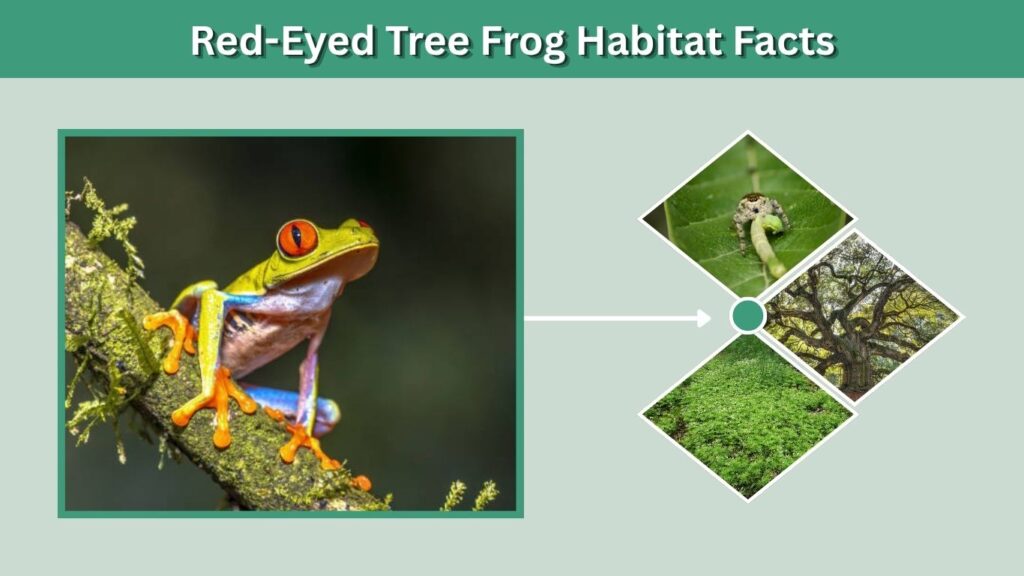
Red-eyed tree frogs live in warm, wet rainforest habitats. They need moisture to survive because amphibians can lose water through their skin. Their habitat must also provide leaves, trees, insects, and nearby water for breeding.
Where Do Red-Eyed Tree Frogs Live?
Red-eyed tree frogs are found in countries such as Mexico, Belize, Guatemala, Honduras, Nicaragua, Costa Rica, Panama, and parts of Colombia. They are strongly associated with tropical lowland rainforests.
Their habitat usually includes:
- Warm temperatures throughout the year
- High humidity
- Trees and broad leaves
- Nearby ponds, streams, or wetlands
- Plenty of insects
- Dense plant cover for hiding
Because they rely on rainforest environments, habitat loss can affect local populations. Forest clearing, pollution, and changes in water quality may reduce the places where these frogs can live and breed.
Are Red-Eyed Tree Frogs Rainforest Animals?
Yes, red-eyed tree frogs are rainforest animals. They are especially linked to humid forests where there is enough water for their eggs and tadpoles. Adults usually live in trees, but their life cycle still depends on water below.
Females often lay eggs on leaves that hang over ponds or temporary pools. When the eggs hatch, the tadpoles drop from the leaves into the water below.
Red-Eyed Tree Frog Diet Facts
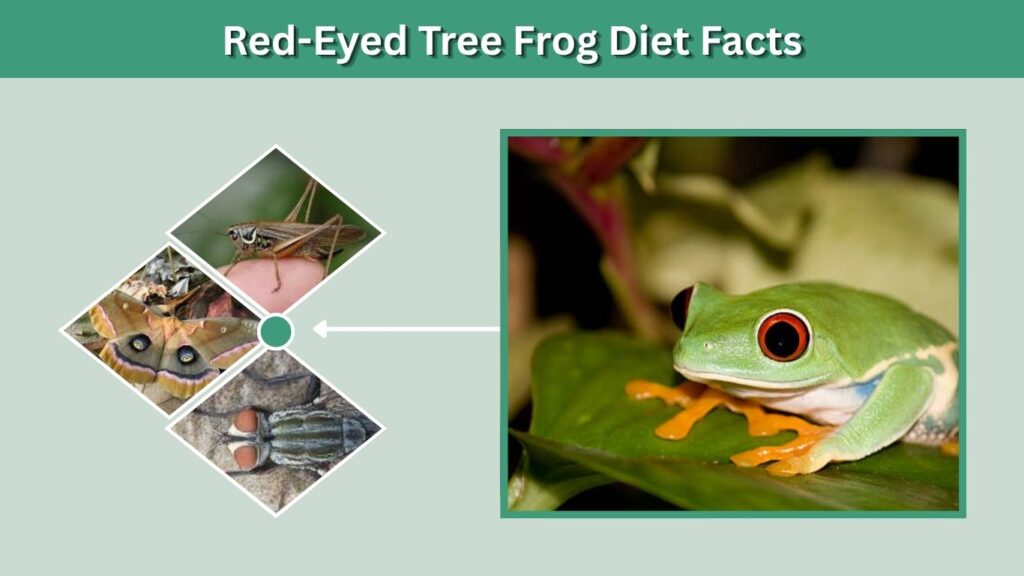
Red-eyed tree frogs are carnivores. They mainly eat insects and other small animals that they can catch at night. Their diet changes slightly depending on what is available in their habitat.
What Do Red-Eyed Tree Frogs Eat?
In the wild, red-eyed tree frogs commonly eat small insects and invertebrates. They use quick movements and their sticky tongues to catch prey.
Their diet may include:
- Crickets
- Moths
- Flies
- Grasshoppers
- Small beetles
- Other soft-bodied insects
- Tiny invertebrates
These frogs are nocturnal hunters, so they usually feed after dark. Their large eyes help them see better in low light while they search for moving prey.
Do Red-Eyed Tree Frogs Eat Plants?
Adult red-eyed tree frogs do not eat plants as their main food. They are insect-eaters. However, their tadpoles may feed on tiny organic material in the water during early development.
As adults, they need protein-rich prey to survive. Their role in the rainforest food web is important because they help control insect populations and also serve as food for larger animals.
Red-Eyed Tree Frog Life Cycle Facts
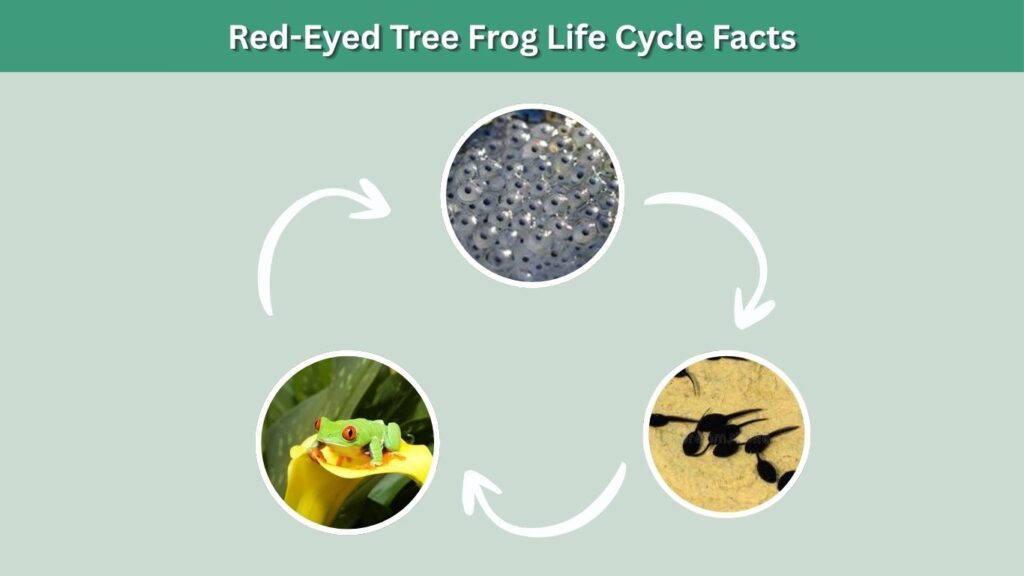
The life cycle of a red-eyed tree frog is one of its most interesting features. Like other frogs, it goes through metamorphosis, changing from an aquatic tadpole into a land-and-tree-dwelling adult.
From Egg to Tadpole
Female red-eyed tree frogs usually lay eggs on leaves above water. This location helps protect the eggs from some aquatic predators. The eggs are covered in a jelly-like substance that keeps them moist.
When the embryos are ready, the eggs hatch and the tadpoles fall into the water below. In the water, the tadpoles swim, feed, and continue developing.
From Tadpole to Frog
As tadpoles grow, they slowly develop legs, lungs, and other features needed for life outside the water. Their tails shrink, and they begin to look more like small frogs.
Once they become froglets, they leave the water and move into nearby vegetation. As adults, they spend most of their time in trees and return to wet areas when it is time to breed.
Cool Facts About Red-Eyed Tree Frogs for Kids
Red-eyed tree frogs are often featured in books, posters, and nature videos because they are so colorful. They are also a great animal for learning about rainforests, amphibians, camouflage, and life cycles.
10 Fun Facts About Red-Eyed Tree Frogs
Here are some quick red-eyed tree frog fun facts:
- They are mostly active at night.
- Their bright red eyes can surprise predators.
- They sleep under leaves during the day.
- Their sticky toe pads help them climb.
- They are not considered highly poisonous.
- They eat insects such as crickets, moths, and flies.
- Females are usually larger than males.
- Their eggs are often laid on leaves above water.
- Tadpoles drop into water after hatching.
- Their colorful bodies help them confuse predators.
These facts make red-eyed tree frogs one of the most fascinating amphibians in the rainforest.
Are Red-Eyed Tree Frogs Good Jumpers?
Yes, red-eyed tree frogs are strong jumpers. Jumping helps them move between leaves and escape danger. Their long legs give them the power to leap quickly when disturbed.
This ability is especially useful in the rainforest, where they live among branches, vines, and leaves. A quick jump can help them disappear into thick vegetation.
Red-Eyed Tree Frog Adaptations
Adaptations are body parts or behaviors that help an animal survive. Red-eyed tree frogs have several adaptations that make life in the rainforest easier.
Color and Camouflage
During the day, red-eyed tree frogs can hide their bright colors by folding their legs and closing their eyes. Their green backs blend with leaves, helping them avoid notice.
At night or when threatened, they reveal their red eyes, blue-and-yellow sides, and orange feet. This sudden display may confuse predators.
Sticky Feet
Their sticky toe pads are another important adaptation. These pads help them grip smooth leaves and branches. Without this feature, it would be much harder for them to live high in the trees.
Night Vision
Red-eyed tree frogs are nocturnal, so their large eyes help them see in dim light. Night activity also helps them avoid some daytime predators and find insects that are active after dark.
Are Red-Eyed Tree Frogs Endangered?
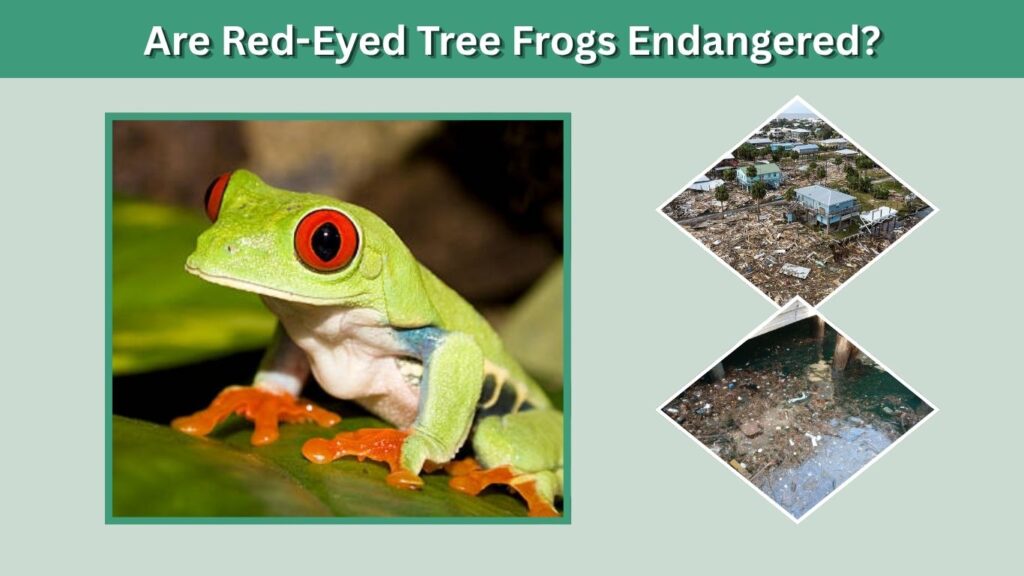
Red-eyed tree frogs are not usually described as one of the most endangered frog species, but they still face environmental threats. Habitat loss, climate change, pollution, and disease can affect amphibian populations.
Why Their Habitat Matters
Rainforests provide shelter, moisture, breeding sites, and food. If forests are cut down or water sources become polluted, red-eyed tree frogs may struggle to survive in those areas.
Protecting rainforest habitats helps more than just one frog species. It also protects insects, birds, reptiles, mammals, plants, and other amphibians that share the same ecosystem.
FAQs
What are 5 facts about red-eyed tree frogs?
Red-eyed tree frogs have bright red eyes, sticky toe pads, green bodies, and colorful sides. They are nocturnal, live in rainforests, eat insects, and lay eggs on leaves above water. Their sudden flash of color may help scare predators.
Where do red-eyed tree frogs live?
Red-eyed tree frogs live in tropical rainforests in Central America and parts of northern South America. They prefer warm, humid areas with trees, broad leaves, insects, and nearby water sources such as ponds, streams, or wetlands.
What do red-eyed tree frogs eat?
Red-eyed tree frogs mainly eat insects and other small invertebrates. Their diet can include crickets, moths, flies, grasshoppers, beetles, and soft-bodied insects. They usually hunt at night using their large eyes and quick movements.
Are red-eyed tree frogs poisonous?
Red-eyed tree frogs are not known as highly poisonous frogs. Their bright colors are mainly used for surprise and defense rather than strong toxicity. When threatened, they may flash their red eyes and colorful sides to confuse predators.
Why do red-eyed tree frogs have red eyes?
Their red eyes may help startle predators when the frog suddenly wakes or jumps away. During the day, they often hide their eyes while sleeping under leaves. When disturbed, the bright red eyes can create a quick surprise effect.
