
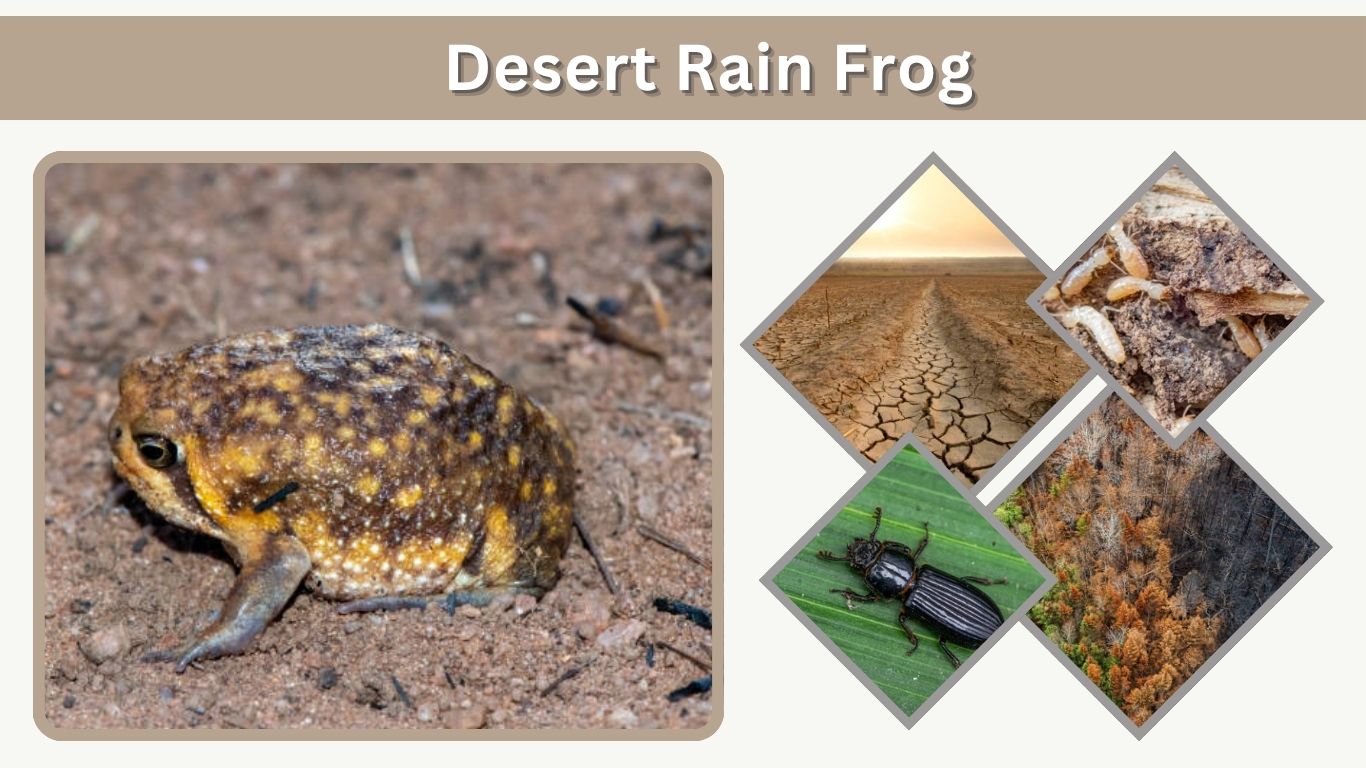
The desert rain frog (Breviceps macrops) is one of the most unusual and charming amphibians in the world. Known for its round body, tiny legs, and high-pitched squeaking sound, this small frog has become a viral sensation online. Native to the coastal deserts of southern Africa, it thrives in harsh environments where few amphibians can survive. This article explores its unique appearance, habitat, behavior, and why it continues to capture global attention.
What Is a Desert Rain Frog?
The desert rain frog is a small, burrowing amphibian adapted to dry, sandy environments. Unlike most frogs, it does not rely on open water for survival and has developed unique traits to live in coastal desert regions.
Scientific Classification
- Scientific name: Breviceps macrops
- Family: Brevicipitidae
- Common names: African desert rain frog, South African desert rain frog
Key Characteristics
- Small size with a rounded, inflated body
- Short limbs that limit jumping ability
- Distinct facial expression that appears “grumpy” or serious
Desert Rain Frogs Appearance and Physical Characteristics

The desert rain frog stands out because of its unusual body shape and expressive face. Its appearance has made it one of the most recognizable amphibians on the internet.
Size and Shape
- Typically grows between 4 and 6 cm in length
- Compact, balloon-like body structure
Color and Texture
- Yellowish to brown tones that blend with sand
- Smooth skin suited for dry conditions
Unique Features
- Large, forward-facing eyes
- Tiny limbs compared to body size
- Rounded back that gives it a “cute” and funny look
Natural Habitat: Where Do Desert Rain Frogs Live?

The desert rain frog is native to a narrow strip of land along the southwestern coast of Africa. It inhabits sandy coastal areas where moisture is limited but not entirely absent. These frogs depend on fog from the ocean, which provides enough humidity to support their survival. Unlike typical frogs, they do not need ponds or streams, making them well-suited to desert-like conditions.
They spend most of their lives buried beneath the sand, emerging mainly at night. This behavior helps them avoid extreme heat and dehydration. Their burrowing ability also allows them to maintain a stable microenvironment where moisture levels are higher than on the surface.
Desert Rain Frogs Behavior and Lifestyle
The behavior of the desert rain frog is shaped by its environment. It is primarily nocturnal and avoids daytime activity due to high temperatures.
Daily Activity
- Active during the night
- Spends daytime buried underground
Movement and Defense
- Limited jumping ability; mostly walks or crawls
- Inflates body to appear larger when threatened
Social Behavior
- Generally solitary
- Interacts mainly during breeding periods
Desert Rain Frog Sound: Why Do They Squeak?
One of the most fascinating traits of the desert rain frog is its unusual sound. Instead of the typical croak associated with frogs, it produces a high-pitched squeak that has been widely shared online.
The Famous Squeak
The sound is sharp, short, and resembles a squeaky toy. This unexpected noise often surprises people and contributes to the frog’s popularity in viral videos.
Why They Make This Sound
- Acts as a defense mechanism
- Warns predators to stay away
- Helps the frog appear more intimidating despite its small size
Viral Popularity
The squeaking sound has made the desert rain frog a favorite in memes, gifs, and short videos. Its combination of cute appearance and unusual noise creates a unique and entertaining experience for viewers.
Diet: What Do Desert Rain Frogs Eat?

The desert rain frog is an insectivore, meaning its diet mainly consists of small invertebrates found in its sandy habitat. Because it lives in a dry environment, it depends on whatever prey is available on the ground rather than hunting in water.
Natural Diet
- Ants and termites
- Beetles and small insects
- Other tiny invertebrates found in sand
Feeding Behavior
- Hunts at night when insects are active
- Uses its sticky tongue to catch prey
- Relies on short, quick movements rather than jumping
Desert Rain Frogs Life Cycle and Reproduction
Unlike many amphibians, the desert rain frog has a unique reproductive process that does not involve a free-swimming tadpole stage. This adaptation allows it to survive in dry environments without standing water.
Reproduction Process
- Mating occurs in moist underground burrows
- Females lay eggs in damp sand
Direct Development
- Eggs hatch directly into miniature frogs
- No aquatic larval (tadpole) stage
Growth Stages
- Egg → juvenile frog → adult
- Young frogs resemble smaller versions of adults
Desert Rain Frogs Lifespan, Predators, and Survival
The desert rain frog has developed several strategies to survive in its harsh environment. Its lifespan is not precisely known but is estimated based on similar species.
Lifespan
- Estimated to live several years in the wild
- Lifespan depends on environmental conditions
Natural Predators
- Birds that hunt in coastal regions
- Snakes and small mammals
- Larger insects or reptiles
Survival Strategies
- Burrowing to avoid heat and predators
- Camouflage with sand-colored skin
- Inflating body to appear larger
Are Desert Rain Frogs Endangered?

The desert rain frog is not currently classified as critically endangered, but it does face environmental pressures. Its habitat is limited to a narrow coastal region, making it vulnerable to changes in the environment.
Human activities such as coastal development, mining, and climate change can disrupt the delicate balance of its ecosystem. Because the species relies on specific conditions like ocean fog and sandy terrain, even small changes can have significant impacts. Protecting its habitat is essential for its long-term survival.
Desert Rain Frog as a Pet
Can Desert Rain Frogs Be Pets?
- Rarely available in the legal pet trade
- Often protected by wildlife regulations
- Difficult to source ethically
Are They Good Pets?
- Not suitable for beginners
- Require very specific environmental conditions
- Sensitive to temperature and humidity changes
Ethical Considerations
- Wild capture can harm natural populations
- Limited captive breeding programs
- Best appreciated in their natural habitat
Desert Rain Frog Care Guide
Keeping a desert rain frog in captivity is extremely challenging due to its specialized needs. Replicating its natural environment requires careful attention to detail, especially regarding humidity and substrate. Unlike common pet frogs, it does not adapt easily to artificial conditions, which makes long-term care difficult for most people.
Enclosure Setup
- Sandy substrate for burrowing
- Controlled humidity levels
- Moderate temperature similar to coastal deserts
Feeding in Captivity
- Small live insects
- Regular feeding schedule
- Nutrient supplementation if needed
Buying Guide: Desert Rain Frog for Sale
Can You Buy a Desert Rain Frog?
- Very rare in the market
- Often restricted by law
- Limited availability worldwide
Price and Cost
- Price varies depending on legality and source
- Additional costs for enclosure and maintenance
Where to Buy Safely
- Only from licensed breeders (if available)
- Avoid illegal wildlife trade
- Check local regulations before purchasing
Fun Facts About Desert Rain Frogs
- They do not croak like typical frogs
- Their squeak sounds like a toy
- They skip the tadpole stage entirely
- Their round body makes them look constantly “angry”
FAQs
What does a desert rain frog sound like?
A desert rain frog produces a high-pitched squeak instead of a traditional croak. The sound is often compared to a squeaky toy and is mainly used as a defense mechanism to scare off predators or warn threats.
Can you own a desert rain frog?
Owning a desert rain frog is difficult due to legal restrictions and limited availability. In many regions, they are not sold as pets, and capturing them from the wild is discouraged for ethical and conservation reasons.
Are desert rain frogs poisonous?
No, desert rain frogs are not poisonous. They rely on their unique squeaking sound and their ability to blend into their environment rather than using toxins for defense.
How long do desert rain frogs live?
Their exact lifespan is not well documented, but they are believed to live several years in the wild. Environmental conditions and predator exposure play a major role in how long they survive.
Why are desert rain frogs so popular?
Their popularity comes from their unusual appearance and funny squeaking sound. Viral videos and memes have made them widely recognized, turning them into one of the most famous small amphibians online.
