
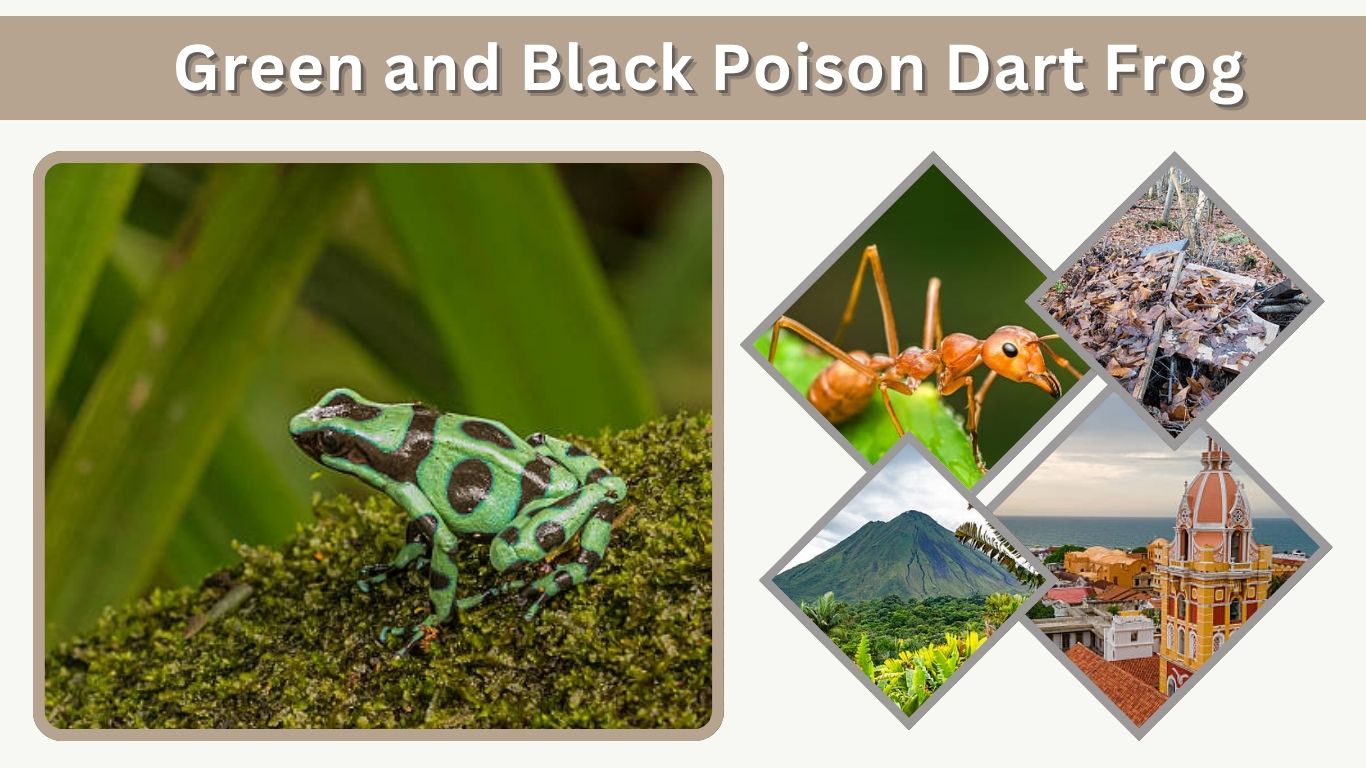
The green and black poison dart frog (Dendrobates auratus) is one of the most visually striking amphibians in the world. Known for its bright coloration and toxic defense in the wild, this small frog is found in tropical rainforests across Central and South America. Despite its dangerous reputation, it plays an important role in maintaining ecological balance. Understanding its appearance, habitat, and behavior helps reveal why this species is both fascinating and important in the natural world.
What Is the Green and Black Poison Dart Frog?
The green and black poison dart frog is a small amphibian belonging to the poison dart frog family. It is well known for its vivid green patterns over a dark background, which serve as a warning to predators.
Scientific Classification
- Scientific name: Dendrobates auratus
- Family: Dendrobatidae
- Class: Amphibia
- Order: Anura
Common Names
- Green and black poison dart frog
- Auratus dart frog
- Green-black dart frog
This species is widely studied due to its unique coloration and chemical defense mechanisms.
Physical Characteristics and Identification

The green and black poison dart frog is easily recognizable because of its bold and contrasting colors. These patterns vary slightly depending on the region, but they always serve as a warning signal.
Key Identification Features
- Bright green or turquoise markings on a black body
- Smooth, moist skin
- Slender body with long legs
- Large, alert eyes
Size and Appearance
- Typically 3 to 5 cm in length
- Lightweight and agile body
- Color variations include mint green, emerald, and blue-green
- Patterns differ between individuals and regions
Their coloration is not just for appearance—it is a survival strategy that warns predators about their toxicity.
Green and Black Poison Dart Frogs Habitat and Distribution

The natural habitat of the green and black poison dart frog is the tropical rainforest, where conditions are warm and humid. These frogs rely heavily on moisture and dense vegetation to survive.
Where They Are Found
- Costa Rica
- Panama
- Colombia
- Introduced populations in Hawaii
Habitat Characteristics
- High humidity levels throughout the year
- Dense forest vegetation
- Warm temperatures with minimal fluctuation
- Leaf litter and low forest areas for shelter
These environments provide the moisture and cover needed for feeding, breeding, and protection.
Diet: What Do Green and Black Poison Dart Frogs Eat?

The diet of the green and black poison dart frog is an important factor in both its survival and its toxicity. These frogs are carnivorous and feed on small invertebrates found in their environment.
Main Food Sources
- Ants (primary source of toxins)
- Termites
- Small insects and arthropods
Feeding Behavior
Green and black poison dart frogs are active hunters during the day. They use their sticky tongues to quickly capture prey and rely on movement to detect food. Their diet directly influences their toxicity, as certain insects provide the chemicals needed to produce their دفاع system in the wild.
Are Green and Black Poison Dart Frogs Poisonous?
The green and black poison dart frog is known for its toxicity, but this trait depends heavily on its natural diet and environment. In the wild, these frogs obtain toxic compounds from the insects they consume, which are then stored in their skin as a defense mechanism.
How Toxicity Works
- Toxins come from specific insects like ants
- Stored in specialized skin glands
- Used to deter predators rather than attack
In captivity, where these insects are not part of their diet, the frogs lose their toxicity over time. This means they are generally not dangerous when raised in controlled environments, though they should still be handled carefully to avoid stress.
Green and Black Poison Dart Frogs Behavior and Adaptations
The behavior of the green and black poison dart frog reflects its adaptation to rainforest life. These frogs are active, alert, and well-suited to navigating dense vegetation and humid environments.
Daily Behavior
- Active during the day (diurnal)
- Spend most time on forest floor or low plants
- Use visual signals and calls to communicate
Adaptations for Survival
- Bright coloration to warn predators
- Toxic skin as defense
- Agile movement for escaping danger
- Strong territorial instincts
These traits allow the frog to survive in a competitive ecosystem filled with predators and environmental challenges.
Green and Black Poison Dart Frogs Life Cycle and Reproduction
The life cycle of the green and black poison dart frog is closely linked to moisture and rainforest conditions. These frogs show interesting parental behavior compared to many other amphibians.
Reproductive Process
- Females lay eggs on moist leaves or surfaces
- Males guard and protect the eggs
- Eggs hatch into tadpoles within days
- Tadpoles are carried to small water pools
Tadpole Development
- Tadpoles grow in water-filled plant areas
- Feed on organic matter and small nutrients
- Develop legs gradually over weeks
- Transform into small froglets before becoming adults
Green and Black Poison Dart Frogs Predators and Threats
Although these frogs are toxic in the wild, they still face threats from certain predators and environmental changes. Their bright coloration helps warn predators, but it does not guarantee full protection.
Natural Predators
- Certain snakes resistant to toxins
- Birds that can tolerate mild toxicity
- Larger amphibians
Environmental Threats
- Habitat destruction due to deforestation
- Climate change affecting humidity levels
- Pollution in rainforest ecosystems
- Human collection for pet trade
Can You Keep Green and Black Poison Dart Frogs as Pets?
The green and black poison dart frog is a popular choice among amphibian enthusiasts. However, keeping them requires proper knowledge and preparation to recreate their natural environment.
Basic Care Requirements
- Maintain humidity above 70%
- Provide a planted terrarium with hiding spots
- Feed small live insects like fruit flies
- Keep temperature stable and warm
Important Care Tips
- Avoid frequent handling to reduce stress
- Use clean, dechlorinated water
- Ensure proper ventilation in enclosure
- Monitor health and feeding regularly
With proper care, these frogs can live long and healthy lives in captivity.
Green and Black Poison Dart Frogs Lifespan and Growth

The lifespan of the green and black poison dart frog depends on its environment and care. In the wild, survival can be challenging due to predators and habitat conditions, while in captivity they tend to live longer. Growth begins rapidly after metamorphosis, and young frogs reach maturity within a year. With proper care, they can live for several years, making them a long-term commitment for keepers.
FAQs
Are green and black poison dart frogs poisonous to humans?
In the wild, they are toxic due to their diet of certain insects. However, in captivity, they lose this toxicity because they do not consume those insects. As a result, they are generally not dangerous to humans when kept as pets.
What do green and black poison dart frogs eat?
They mainly eat ants, termites, and other small insects in the wild. In captivity, they are typically fed fruit flies and other tiny insects that are easy to digest and provide proper nutrition.
Where do green and black poison dart frogs live?
They live in tropical rainforests in Central and South America, especially in Costa Rica, Panama, and Colombia. They prefer warm, humid environments with dense vegetation and access to moisture.
Can green and black poison dart frogs be kept as pets?
Yes, they can be kept as pets, but they require a carefully maintained environment. Proper humidity, temperature, and diet are essential to keep them healthy and stress-free.
How long do green and black poison dart frogs live?
They can live several years in captivity, often longer than in the wild. With proper care, their lifespan can extend up to 10 years or more, depending on environmental conditions and diet.
