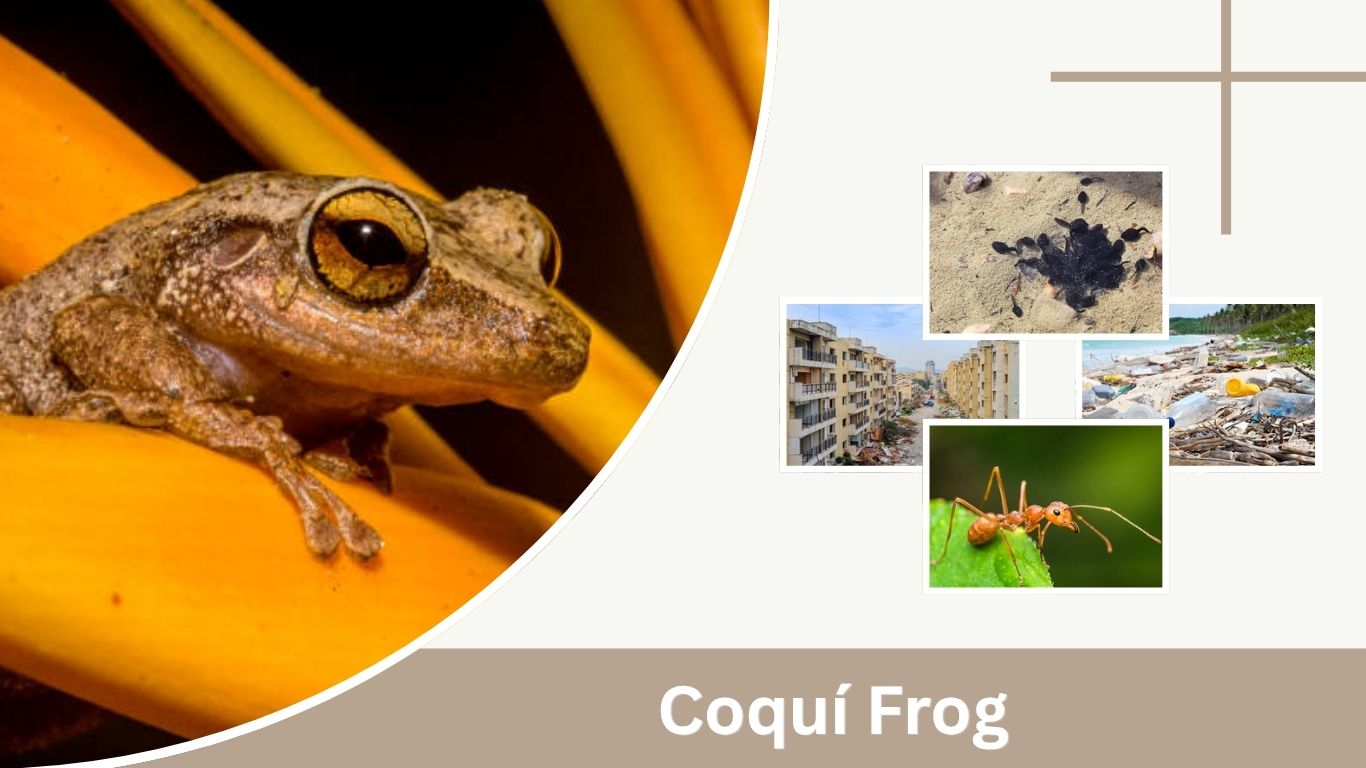
The coquí frog is a small but remarkable amphibian best known for its loud and distinctive “co-quí” call. Native to Puerto Rico, this tiny frog plays a major role in both the ecosystem and local culture. Despite its small size, it has become a symbol of national identity and is recognized worldwide for its unique behavior and sound.
What Is a Coquí Frog?
The coquí frog belongs to the genus Eleutherodactylus, a group of small frogs commonly found in tropical regions. The most well-known species is the common coquí (Eleutherodactylus coqui), which is native to Puerto Rico.
Unlike many other frogs, coquí frogs do not rely on water bodies for reproduction. They are terrestrial breeders, meaning they lay eggs on land. Their name comes directly from the two-note sound they produce, which is heard loudly at night across their natural habitat.
Physical Description
The coquí frog is relatively small, but its appearance can vary slightly depending on the species and environment.
- Typically measures between 2 to 5 cm in length
- Colors range from brown and gray to green shades
- Smooth or slightly textured skin
- Large, round eyes adapted for night vision
Their compact body and strong legs make them excellent climbers, allowing them to live among leaves, branches, and vegetation.
Male vs Female Differences
Male and female coquí frogs show some noticeable differences. Males are usually smaller but are much more vocal, as they produce the characteristic call used for communication.
Females are slightly larger and do not call. Another important trait is that male coquí frogs guard the eggs after they are laid, which is uncommon among many frog species.
Types of Coquí Frogs
There are several species of coquí frogs, each adapted to different environments within Puerto Rico and nearby regions.
- Common Coquí (Eleutherodactylus coqui) – the most widespread and recognizable
- Mountain Coquí – found in higher elevations with cooler climates
- Cave Coquí – adapted to darker, more sheltered environments
- Other regional species with variations in size, color, and call
Each species has its own unique characteristics, but all share the same basic traits that define coquí frogs.
Habitat and Distribution

Coquí frogs are native to Puerto Rico, where they are found in a wide range of environments. They thrive in tropical climates with high humidity and dense vegetation.
These frogs can live in forests, gardens, and even urban areas, as long as there is enough moisture and shelter. Their adaptability has allowed them to survive in both natural and human-modified environments.
Preferred Environment
- Warm, humid tropical climates
- Areas with dense plant life
- Forest floors, trees, and shrubs
- Locations with consistent moisture
Although they do not need standing water to reproduce, they still depend on humidity to keep their skin moist and healthy.
Coquí Frog Call
The call of the coquí frog is one of its most defining features. The sound “co-quí” is produced by males and serves two main purposes: attracting females and defending territory.
The first note (“co”) is used to warn other males to stay away, while the second note (“quí”) attracts potential mates. This dual-purpose call makes communication efficient and effective.
Why They Are So Loud
Despite their small size, coquí frogs can produce surprisingly loud sounds. This is due to their specialized vocal sacs, which amplify their calls.
- Sound can travel long distances at night
- Vocal sacs expand to increase volume
- Calls are most frequent after sunset
In areas where coquí populations are high, their calls can create a constant nighttime chorus.
Diet and Feeding

Coquí frogs are carnivorous and primarily feed on small invertebrates. Their diet plays an important role in controlling insect populations in their environment.
- Ants, beetles, and spiders
- Small insects and arthropods
- Occasional tiny invertebrates
They are nocturnal hunters, meaning they search for food at night when their prey is most active. Their quick movements and sticky tongues help them capture food efficiently.
Life Cycle

The life cycle of the coquí frog is unique compared to many other amphibians. One of its most interesting features is the absence of a free-swimming tadpole stage.
Egg Stage
Female coquí frogs lay eggs on land, usually in moist and protected areas such as leaves or soil. The male then guards the eggs to protect them from predators and dehydration.
Development Stage
Instead of hatching into tadpoles, the eggs develop directly into miniature frogs. This process is known as direct development and allows the species to live away from water bodies.
Adult Stage
After completing development inside the egg, young coquí frogs emerge as fully formed miniature versions of adults. They do not go through a swimming tadpole phase, which is unusual among amphibians.
These young frogs grow quickly and reach maturity within a relatively short time. Once mature, they begin their own cycle of feeding, calling, and reproduction, continuing the species’ life cycle.
Behavior
Coquí frogs are primarily nocturnal, meaning they are most active at night. During the day, they remain hidden in leaves, tree bark, or other sheltered areas to avoid predators and dehydration.
Male coquí frogs are highly territorial and use their calls to establish and defend their space. If another male enters their territory, they may increase their calling intensity to drive it away.
These frogs are also excellent climbers. They can be found on trees, shrubs, and even walls, using their strong legs and sticky toe pads to move easily through their environment.
Ecological Importance
Coquí frogs play an important role in maintaining ecological balance, especially in tropical environments like Puerto Rico.
- They help control insect populations by feeding on various pests
- They serve as a food source for birds, reptiles, and other animals
- They contribute to nutrient cycling in forest ecosystems
Because of their sensitivity to environmental changes, coquí frogs are also considered indicators of ecosystem health.
Cultural Significance
The coquí frog holds deep cultural importance in Puerto Rico. It is more than just a species—it is a national symbol that represents identity, pride, and connection to nature.
Its distinctive call is often associated with the island’s natural beauty and is featured in music, art, and folklore. For many people, the sound of the coquí is a comforting reminder of home.
This cultural connection has helped raise awareness about the need to protect the species and its habitat.
Coquí Frog in Hawaii (Invasive Species)
While the coquí frog is cherished in Puerto Rico, it has become an invasive species in places like Hawaii. It was accidentally introduced and quickly established large populations due to the favorable climate.
Without natural predators, their numbers grew rapidly. Their loud nighttime calls have caused disturbances for residents, and their presence may affect local ecosystems.
Efforts have been made to control their population, but complete removal has proven difficult.
Threats and Conservation

Although coquí frogs are adaptable, they still face several threats that can impact their populations over time.
- Habitat loss due to urban development
- Climate change affecting humidity and temperature
- Pollution and environmental degradation
- Introduction of predators in non-native areas
Conservation efforts focus on protecting natural habitats and maintaining the environmental conditions these frogs need to survive.
Interesting Facts
Coquí frogs are full of unique and fascinating traits that make them stand out among amphibians.
- They are named after the sound they produce
- They do not require water bodies for reproduction
- Their call can reach surprisingly high volumes for such a small animal
- They are found in a wide range of environments, from forests to cities
These facts highlight the adaptability and uniqueness of the species.
Coquí Frog vs Other Frogs
Coquí frogs differ from many other frogs in several key ways. One of the most notable differences is their reproduction method. Unlike most frogs, they do not have a tadpole stage.
They also rely heavily on vocal communication, with males producing loud calls to attract mates and defend territory. Their ability to live entirely on land further sets them apart from many amphibians that depend on water.
FAQs
Why is the coquí frog so loud?
The coquí frog is loud because males use specialized vocal sacs to amplify their calls. These calls serve to attract females and defend territory, and they can travel long distances, especially in quiet nighttime environments.
Where are coquí frogs found?
Coquí frogs are native to Puerto Rico but have also been introduced to other areas like Hawaii. They thrive in warm, humid environments with plenty of vegetation for shelter and feeding.
Do coquí frogs need water to reproduce?
No, coquí frogs do not need water for reproduction. Their eggs develop directly into small frogs on land, skipping the tadpole stage entirely.
Are coquí frogs harmful?
Coquí frogs are not harmful to humans. However, in non-native regions like Hawaii, they are considered invasive due to their impact on local ecosystems and their loud calls.
What do coquí frogs eat?
They mainly eat insects and small invertebrates such as ants, beetles, and spiders. This diet helps control pest populations in their natural habitat.
