
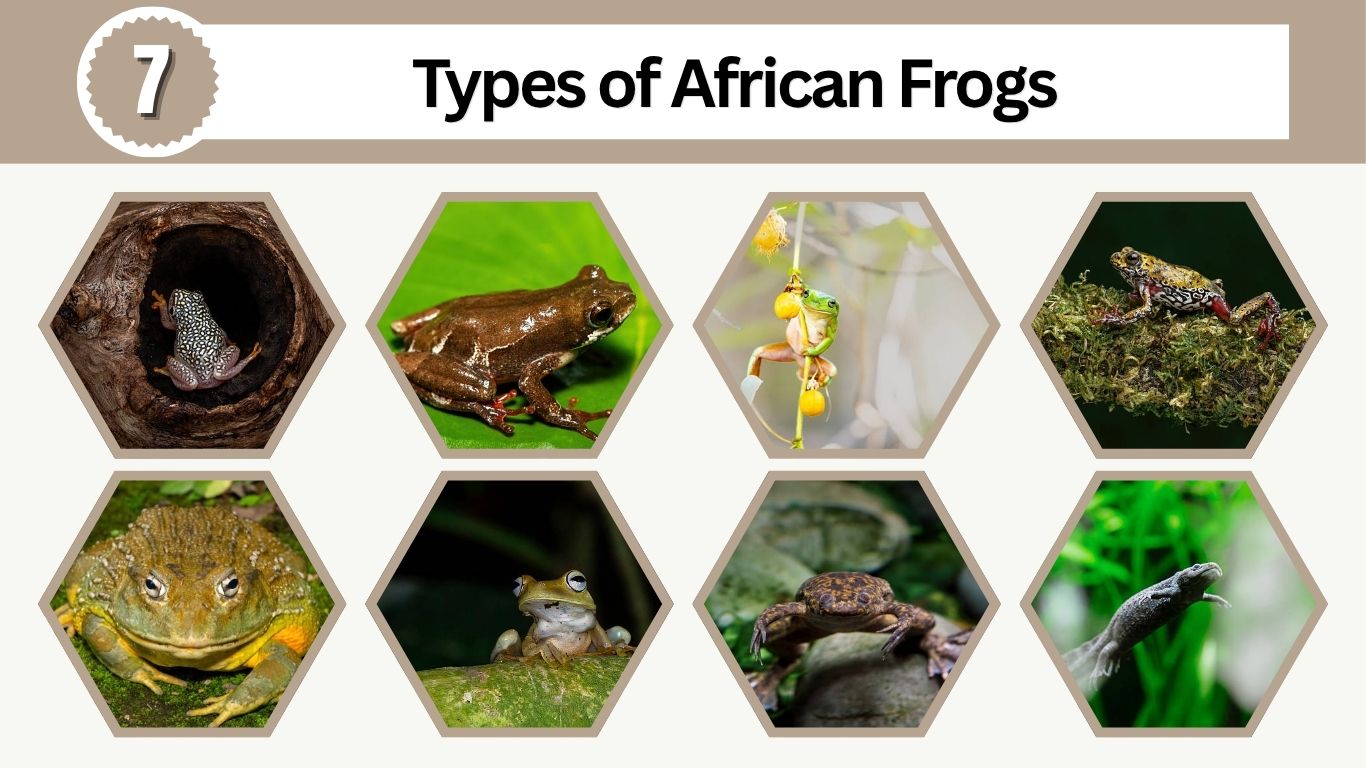
Africa is home to a wide variety of unique and fascinating frog species, each with its own characteristics, habitat, and behavior. From tiny, colorful tree frogs to the world’s largest frog, these amphibians play an important role in their ecosystems. Understanding the different types of African frogs helps you appreciate their diversity and, for pet owners, choose the right species to care for. In this guide, you’ll discover seven popular African frogs, along with key details about their identification, habitat, behavior, diet, and lifecycle.
1. African Dwarf Frog

African dwarf frogs are small, fully aquatic amphibians native to central and western Africa. They are popular in aquariums due to their peaceful nature and relatively simple care requirements. Unlike many frogs, they spend their entire lives underwater but must surface occasionally to breathe air. Their gentle temperament and unique swimming behavior make them a favorite among beginner pet owners.
Identification
- Typically grow between 1.5 to 2.5 inches in length
- Slim, flattened body with smooth skin
- Color ranges from olive green to brown with slight patterns
- Fully webbed feet on all four limbs
- Eyes located on the sides of the head
- No claws on the front feet, unlike African clawed frogs
Habitat
In the wild, African dwarf frogs inhabit slow-moving freshwater environments such as shallow ponds, marshes, and streams with dense vegetation. These habitats provide both shelter and easy access to food. In captivity, they require a fully aquatic tank with clean, dechlorinated water and a temperature range of about 24–27°C (75–80°F). Gentle filtration is important, as strong currents can stress them. Adding live or artificial plants, caves, and soft substrate helps recreate their natural environment and provides hiding places, which reduces stress and encourages natural behavior.
Behavior
African dwarf frogs are calm, social, and non-aggressive, making them suitable for community aquariums with other peaceful species. They are active swimmers but often rest on the bottom or perch on decorations. Because they breathe atmospheric air, they regularly swim to the surface. These frogs rely more on their sense of smell than vision when locating food, which can sometimes make feeding a bit challenging in shared tanks. They may also exhibit playful movements and occasional vocalizations, especially during breeding periods.
Diet and Lifecycle
African dwarf frogs are carnivorous and require a protein-rich diet. In captivity, they commonly eat bloodworms, brine shrimp, daphnia, and specially formulated sinking pellets. Feeding should be done carefully to ensure they receive enough food, especially in community tanks. Their lifecycle includes four stages: egg, tadpole, froglet, and adult. Eggs are laid in water and hatch into tadpoles with gills. Over several weeks, they develop legs, lose their tails, and transition into froglets. Eventually, they become fully developed adults capable of reproduction.
2. African Clawed Frog

African clawed frogs are larger, fully aquatic amphibians native to sub-Saharan Africa. They are known for their hardy nature and adaptability, which makes them easy to keep in captivity but also potentially invasive in the wild. Unlike dwarf frogs, they are more aggressive and should not be housed with small tank mates. Their name comes from the sharp claws on their hind feet, which they use for digging and tearing food.
Identification
- Grow up to 4 to 5 inches in length
- Broad, flat body with smooth, slippery skin
- Color ranges from gray to olive with lighter underside
- Strong hind legs with visible black claws
- Front feet are not webbed and have small fingers
- Eyes positioned on top of the head
Habitat
In the wild, African clawed frogs live in a wide range of freshwater habitats, including ponds, lakes, and slow-moving rivers. They are highly adaptable and can survive in both permanent and temporary water bodies. In captivity, they require a spacious aquarium with clean, dechlorinated water and a stable temperature between 22–26°C (72–79°F). They prefer minimal water flow and benefit from hiding spots like caves or decorations. Since they are strong swimmers and diggers, a secure lid and appropriate substrate are important for their safety and comfort.
Behavior
African clawed frogs are active, opportunistic, and sometimes aggressive. They are known for their strong feeding response and will attempt to eat almost anything that fits in their mouth. These frogs are mostly nocturnal but can be active during the day as well. They frequently swim to the surface to breathe and may use their powerful legs to move quickly through the water. Due to their aggressive nature, they are best kept alone or with similarly sized companions to avoid predation or injury.
Diet and Lifecycle
African clawed frogs are carnivorous and have a varied diet that includes worms, small fish, insects, and amphibians in the wild. In captivity, they can be fed pellets, frozen foods, and live prey. Their lifecycle includes egg, tadpole, froglet, and adult stages. Eggs are laid in water and hatch into free-swimming tadpoles that feed and grow rapidly. Over time, they develop limbs, lose their tails, and transform into froglets before becoming fully mature adults.
3. Goliath Frog

The Goliath frog is the largest frog species in the world, native to the rainforests of Central Africa, particularly Cameroon and Equatorial Guinea. These frogs are impressive in both size and strength, often found near fast-flowing rivers. Unlike smaller aquarium frogs, Goliath frogs are wild species and are not suitable as pets. Their size and habitat needs make them unique among African frogs.
Identification
- Can grow up to 12–13 inches in body length
- Weigh up to 3 kilograms (over 6 pounds)
- Large, muscular body with powerful limbs
- Greenish-brown coloration for camouflage
- No vocal sacs (unlike many frogs)
- Extremely strong hind legs for jumping
Habitat
Goliath frogs live in dense rainforest regions near clean, fast-flowing rivers and waterfalls. These environments provide both oxygen-rich water and plenty of food sources. They prefer areas with rocks and vegetation that offer shelter and protection. The water must be clean and well-oxygenated, as they are sensitive to pollution and environmental changes. Due to their specialized habitat needs, they are rarely found outside their natural range and are considered vulnerable due to habitat loss.
Behavior
Goliath frogs are generally shy and avoid human contact. They are mostly active at night, hunting and moving along riverbanks. Despite their large size, they rely on camouflage and quick movements to escape predators. They are strong swimmers and jumpers, capable of covering large distances in a single leap. Unlike many frogs, they do not croak loudly, making them less noticeable in the wild.
Diet and Lifecycle
Goliath frogs are carnivorous and feed on insects, small reptiles, fish, and even other amphibians. Their large size allows them to consume bigger prey compared to other frogs. Their lifecycle follows the typical amphibian pattern: egg, tadpole, froglet, and adult. Females lay eggs in water, often in carefully prepared nesting areas. Tadpoles develop in clean, flowing water and gradually transform into juvenile frogs through metamorphosis before reaching full size as adults.
4. African Bullfrog

The African bullfrog is one of the largest and most powerful frogs in Africa. Native to sub-Saharan regions, it is known for its aggressive nature and strong survival instincts. These frogs can live both in water and on land, making them semi-aquatic. They are popular among experienced keepers but require careful handling due to their size and behavior.
Identification
- Large size, reaching 6 to 10 inches
- Stocky, round body with thick skin
- Color ranges from olive green to brown
- Males are larger and brighter than females
- Strong jaws with small, sharp teeth-like structures
- Powerful hind legs for digging and jumping
Habitat
African bullfrogs live in savannas, grasslands, and seasonal wetlands where water is available during rainy periods. They are well adapted to harsh environments and can burrow into the ground during dry seasons to survive droughts, a process called aestivation. In captivity, they need a semi-aquatic enclosure with both water and land areas. The environment should be warm and slightly humid, with soft substrate for burrowing. Providing hiding spots and maintaining proper temperature is essential for their well-being.
Behavior
These frogs are known for their bold and aggressive behavior. They are territorial and may attack other animals, including smaller frogs. African bullfrogs are also ambush predators, waiting patiently before striking quickly at prey. During dry periods, they may remain inactive underground for long periods. Males are particularly protective and have been observed guarding their offspring in the wild, which is uncommon among frogs.
Diet and Lifecycle
African bullfrogs are carnivorous and have a very strong appetite. They eat insects, rodents, small birds, and other amphibians. In captivity, their diet includes insects, worms, and appropriately sized prey. Their lifecycle follows the typical frog stages: egg, tadpole, froglet, and adult. Tadpoles grow quickly and can even show cannibalistic behavior. As they develop, they undergo metamorphosis, eventually becoming large, powerful adult frogs.
5. Reed Frog

Reed frogs are small, colorful amphibians found across sub-Saharan Africa. They are known for their bright patterns and ability to climb vegetation near water. These frogs are commonly found in wetlands and are admired for their vibrant appearance and active nature. Despite their small size, they play an important role in their ecosystems.
Identification
- Small size, usually 1 to 2 inches long
- Slender body with smooth skin
- Bright colors such as green, yellow, or orange with stripes or spots
- Large eyes with horizontal pupils
- Sticky toe pads for climbing
- Lightweight body adapted for vegetation
Habitat
Reed frogs live in warm, humid environments such as marshes, swamps, and areas with tall grasses or reeds near water. They depend on both water and vegetation, often staying close to the edges of ponds or slow-moving streams. In captivity, they require a terrarium with high humidity, access to shallow water, and plenty of plants for climbing. A stable temperature and moist environment are essential to mimic their natural habitat and keep them healthy.
Behavior
These frogs are active and agile climbers, often seen moving among plants and reeds. They are mostly nocturnal, becoming more active at night when they search for food. Reed frogs are generally peaceful and can live in groups. Males are known for their calls during breeding seasons, which they use to attract females. Their bright coloration can also serve as a warning or camouflage depending on their environment.
Diet and Lifecycle
Reed frogs are insectivores, feeding on small insects such as flies, ants, and beetles. In captivity, they are typically fed small live insects like fruit flies and pinhead crickets. Their lifecycle includes egg, tadpole, froglet, and adult stages. Eggs are usually laid in or near water, where tadpoles develop. Over time, they grow legs, lose their tails, and transform into small frogs, eventually reaching adulthood.
6. Hairy Frog

The hairy frog, also known as the “horror frog,” is a unique species native to Central Africa. It is famous for its unusual hair-like structures that appear on males during the breeding season. These structures help with oxygen absorption, making them well adapted to low-oxygen water environments. This frog is mostly found in the wild and is not commonly kept as a pet.
Identification
- Medium size, around 4 to 5 inches long
- Brown or gray rough-textured skin
- Hair-like projections on males during breeding season
- Strong limbs with sharp claws hidden under the skin
- Broad head with a somewhat flattened body
- Camouflaged appearance to blend with surroundings
Habitat
Hairy frogs live in forested regions near fast-flowing streams and rivers. These environments provide clean, oxygen-rich water and plenty of hiding places among rocks and vegetation. They prefer areas with minimal disturbance and rely on natural cover for protection. In the wild, they are often found near water sources where they can easily escape predators. Their habitat must remain clean and stable, as pollution and environmental changes can negatively impact their survival.
Behavior
Hairy frogs are mostly nocturnal and tend to hide during the day. They are known for their defensive behavior, including breaking their own bones to extend claw-like structures through their skin when threatened. This unique defense mechanism makes them one of the most unusual amphibians. They are generally solitary and prefer to stay hidden unless searching for food or during breeding periods.
Diet and Lifecycle
Hairy frogs are carnivorous and feed on insects, small fish, and other invertebrates. They use their strong jaws and quick movements to catch prey. Their lifecycle follows the typical amphibian pattern: egg, tadpole, froglet, and adult. Eggs are laid in water, where tadpoles develop before undergoing metamorphosis. Over time, they grow limbs, lose their tails, and become fully developed adult frogs.
7. Painted Reed Frog

The painted reed frog is a small, brightly colored amphibian found in many parts of sub-Saharan Africa. It is well known for its striking patterns and adaptability to different wetland environments. These frogs are often seen near water sources surrounded by vegetation, where they thrive in warm and humid conditions.
Identification
- Small size, typically 1 to 2 inches long
- Bright coloration with stripes or spots
- Common colors include green, yellow, black, and red
- Smooth skin with distinct patterns
- Large eyes and horizontal pupils
- Sticky toe pads for climbing
Habitat
Painted reed frogs inhabit wetlands, marshes, and areas with dense vegetation near ponds or slow-moving water. They prefer warm climates with high humidity and plenty of plant cover for shelter. In captivity, they require a terrarium that mimics these conditions, including moist substrate, shallow water, and live plants for climbing. Maintaining consistent humidity and temperature is essential to keep them healthy and active.
Behavior
These frogs are active, agile, and mostly nocturnal. They spend much of their time climbing plants and reeds, using their sticky toe pads to move easily. Painted reed frogs are generally peaceful and can live in small groups. Males are vocal during breeding seasons, producing calls to attract females. Their bright colors can serve both as camouflage among plants and as a signal to other frogs.
Diet and Lifecycle
Painted reed frogs are insectivores, feeding on small insects such as flies, ants, and tiny beetles. In captivity, they are often fed fruit flies and small crickets. Their lifecycle includes egg, tadpole, froglet, and adult stages. Eggs are laid in or near water, and tadpoles develop in aquatic environments. As they grow, they undergo metamorphosis, developing limbs and losing their tails before becoming fully formed adult frogs.
FAQs
What is the most common African frog kept as a pet?
The African dwarf frog is the most commonly kept pet frog from Africa. It is small, fully aquatic, and relatively easy to care for compared to other species, making it ideal for beginners with proper aquarium setup.
Which African frog is the largest?
The Goliath frog is the largest frog in the world. It can grow up to 13 inches long and weigh over 3 kilograms, making it significantly larger than any other frog species found in Africa.
Are all African frogs aquatic?
No, not all African frogs are fully aquatic. Some species, like African dwarf and clawed frogs, live entirely in water, while others, such as African bullfrogs and reed frogs, are semi-aquatic or spend time both on land and in water.
What do African frogs eat?
Most African frogs are carnivorous and eat insects, worms, small fish, and other invertebrates. Their diet depends on the species, size, and habitat, but protein-rich foods are essential for their health.
Can African frogs live together in the same tank?
Some peaceful species like African dwarf frogs can live together, but larger or aggressive frogs like African clawed frogs or bullfrogs should not be housed with smaller species, as they may attack or eat them.
