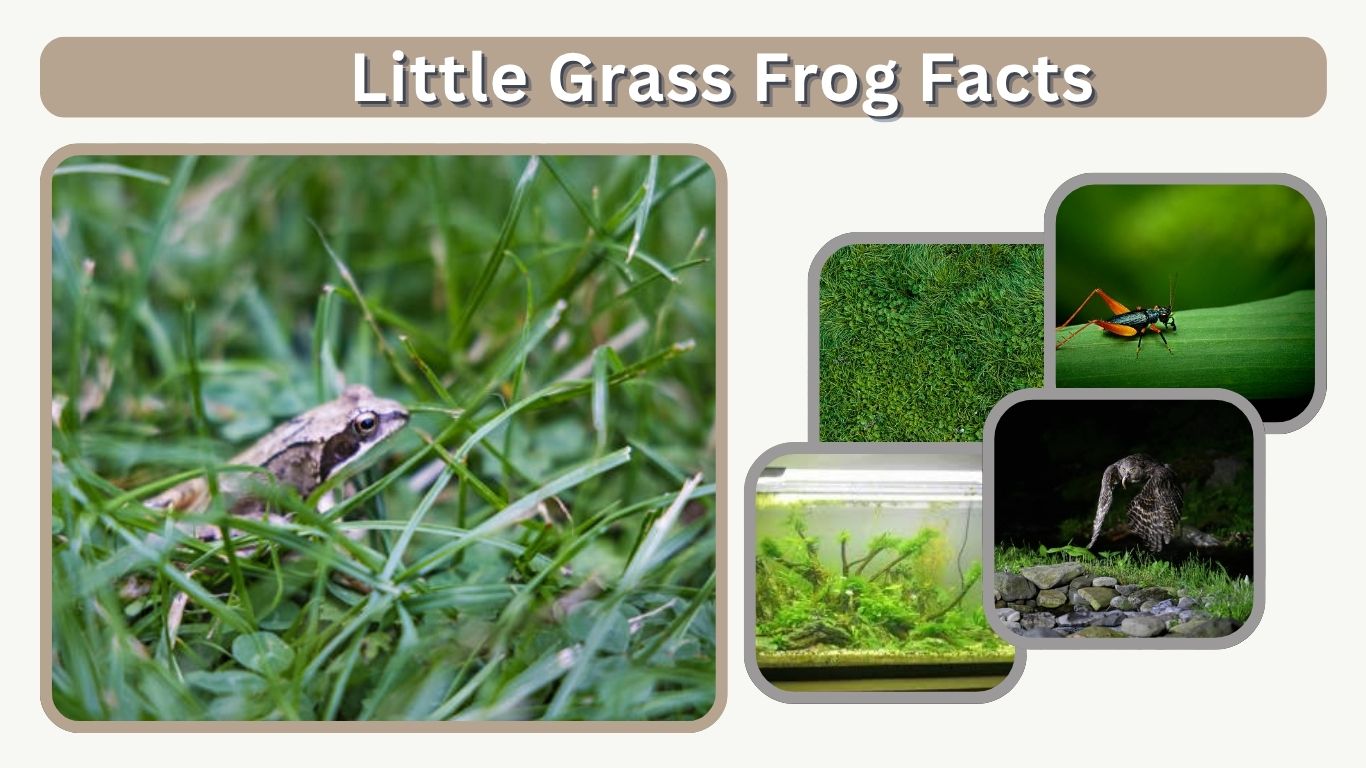
The little grass frog (Pseudacris ocularis) is one of the most fascinating yet often overlooked amphibians in North America. Known for its extremely small size and insect-like call, this tiny frog thrives in grassy wetlands and damp environments, especially in Florida and nearby regions. Despite its size, it plays an important role in controlling insect populations and maintaining ecological balance. Understanding its habitat, behavior, and diet helps reveal why this species is so unique and important in its ecosystem.
Scientific Classification and Identification
Understanding the classification of the little grass frog helps place it within the broader amphibian family. It belongs to the tree frog family, although it is often found closer to the ground than many tree-dwelling species. Its scientific name is Pseudacris ocularis, and it is closely related to other chorus frogs.
Key Identification Features
- Scientific name: Pseudacris ocularis
- Slender body with smooth skin
- Dark stripe running through the eye
Little Grass Frogs Physical Characteristics and Size
The little grass frog is extremely small, typically measuring less than an inch in length. Its compact body and pointed snout make it well-suited for navigating through dense grass. Coloration varies from brown to green or gray, helping it stay hidden from predators.
Size and Appearance Details
- Length ranges from about 0.4 to 0.6 inches
- Colors vary for camouflage
- Lightweight body for quick movement
Little Grass Frogs Habitat and Geographic Distribution

The little grass frog thrives in warm, humid regions of the southeastern United States. It is especially common in Florida but can also be found in parts of South Carolina and Virginia. These frogs prefer grassy wetlands, marsh edges, and damp areas where moisture is consistently available.
Where They Are Commonly Found
They are typically seen in low-lying grassy areas that remain moist throughout the year. Unlike many frogs, they can survive in places with very little standing water, as long as the environment stays damp. This adaptability allows them to occupy habitats that other amphibians might avoid.
Behavior and Unique Adaptations

The behavior of the little grass frog reflects its need to survive in small, often temporary habitats. It is mostly active at night and relies heavily on camouflage to avoid predators. Its ability to remain hidden among grass makes it difficult to spot.
Adaptations for Survival
- Camouflage that matches grassy environments
- Nocturnal activity to avoid predators
- Ability to live in small, damp spaces
Little Grass Frogs Life Cycle and Reproduction
The life cycle of the little grass frog is closely tied to moisture and seasonal rainfall. These frogs breed in shallow water or damp environments, making them well-adapted to areas that do not have permanent ponds. Their reproductive strategy allows them to survive in changing conditions.
Eggs and Breeding Behavior
Eggs are laid in moist areas or shallow water, often after rainfall. This timing ensures that the developing embryos have enough moisture to survive during early stages.
Tadpoles and Development
Once hatched, tadpoles develop quickly, often maturing into small frogs in a short period. This rapid development helps them survive in temporary water sources.
Hatching in Minimal Water
One of their most unique traits is the ability to hatch in damp conditions with very little standing water. This adaptation gives them a survival advantage in environments where water levels change frequently.
Little Grass Frogs Diet and Feeding Habits

The little grass frog plays an important role in controlling insect populations in its habitat. Due to its small size, it feeds on tiny invertebrates that are abundant in grassy and damp environments. Its feeding behavior is simple but effective, helping maintain ecological balance.
What Do Little Grass Frogs Eat
- Ants, beetles, and other small insects
- Tiny spiders and invertebrates
- Soft-bodied insects found in grass
Little Grass Frogs Predators and Natural Threats
Despite their ability to hide well, little grass frogs face many natural threats in the wild. Their small size makes them an easy target for a variety of predators, and environmental changes can also impact their survival.
Common Predators
- Birds that hunt in grassy wetlands
- Snakes and larger amphibians
- Small mammals in wetland areas
Are Little Grass Frogs Poisonous?
Many people wonder whether the little grass frog is harmful, especially when found near homes or pets. In general, these frogs are harmless and do not pose a significant threat to humans or animals.
Are They Dangerous to Humans
Little grass frogs are not poisonous to humans. They do not produce toxins that can harm people, and they are not aggressive. Handling them briefly is usually safe, although it is always best to avoid unnecessary contact with wild animals.
Are They Poisonous to Dogs or Pets
These frogs are generally safe for pets. However, if a dog or cat tries to eat one, it may experience mild irritation or discomfort. This reaction is usually not serious but should still be monitored.
Sounds and Communication
The little grass frog is more often heard than seen. Its call is unique and can easily be mistaken for an insect, which adds to its mysterious presence in grassy habitats.
What Does the Call Sound Like
The sound is a high-pitched chirp, similar to that of insects. It is soft but consistent, especially during breeding seasons or at night.
Purpose of Their Calls
These calls are mainly used to attract mates and establish territory. Males typically produce the sound to signal their presence to females and other frogs nearby.
Can Little Grass Frogs Be Kept as Pets?

While their small size makes them seem like an interesting pet option, keeping little grass frogs requires careful consideration. They are delicate creatures that are better suited to life in the wild.
Care Requirements
- A moist enclosure with proper humidity
- Small insects as a regular food source
- Natural vegetation for hiding and comfort
Challenges of Keeping Them
- Very fragile and sensitive to handling
- Difficult to maintain proper habitat conditions
- Better observed in nature than kept in captivity
Conservation Status and Environmental Role
The little grass frog is not currently considered endangered, but it still faces risks from habitat loss and environmental changes. Wetland destruction and pollution can reduce suitable living areas. These frogs are important for controlling insect populations and also serve as indicators of ecosystem health, making their presence valuable in maintaining balance within their environment.
Interesting Facts About Little Grass Frogs
The little grass frog has several unique traits that make it stand out despite its small size. These interesting details help explain why it is such a fascinating species.
Quick Facts
- Smallest frog in North America
- Often mistaken for insects because of its call
- Can live in areas with very little water
- Extremely hard to spot due to camouflage
FAQs
What do little grass frogs eat?
Little grass frogs mainly eat tiny insects such as ants, beetles, and small spiders. Their diet consists of whatever small invertebrates they can find in grassy and damp environments, helping them play a role in natural pest control.
How big do little grass frogs get?
These frogs are extremely small, usually measuring between 0.4 and 0.6 inches in length. This makes them the smallest frog species in North America and one of the tiniest amphibians in the region.
Where can I find little grass frogs in Florida?
They are commonly found in grassy wetlands, marsh edges, and damp fields throughout Florida. They prefer moist environments with plenty of vegetation, where they can stay hidden and find food easily.
Are little grass frogs poisonous?
No, little grass frogs are not poisonous to humans. They do not produce harmful toxins and are generally safe to observe. However, it’s always best to avoid handling wild animals unnecessarily.
Can little grass frogs live without standing water?
Yes, they can survive in damp environments without permanent water sources. Their eggs and life cycle are adapted to develop in moist conditions, allowing them to thrive in areas with temporary or minimal water.
