
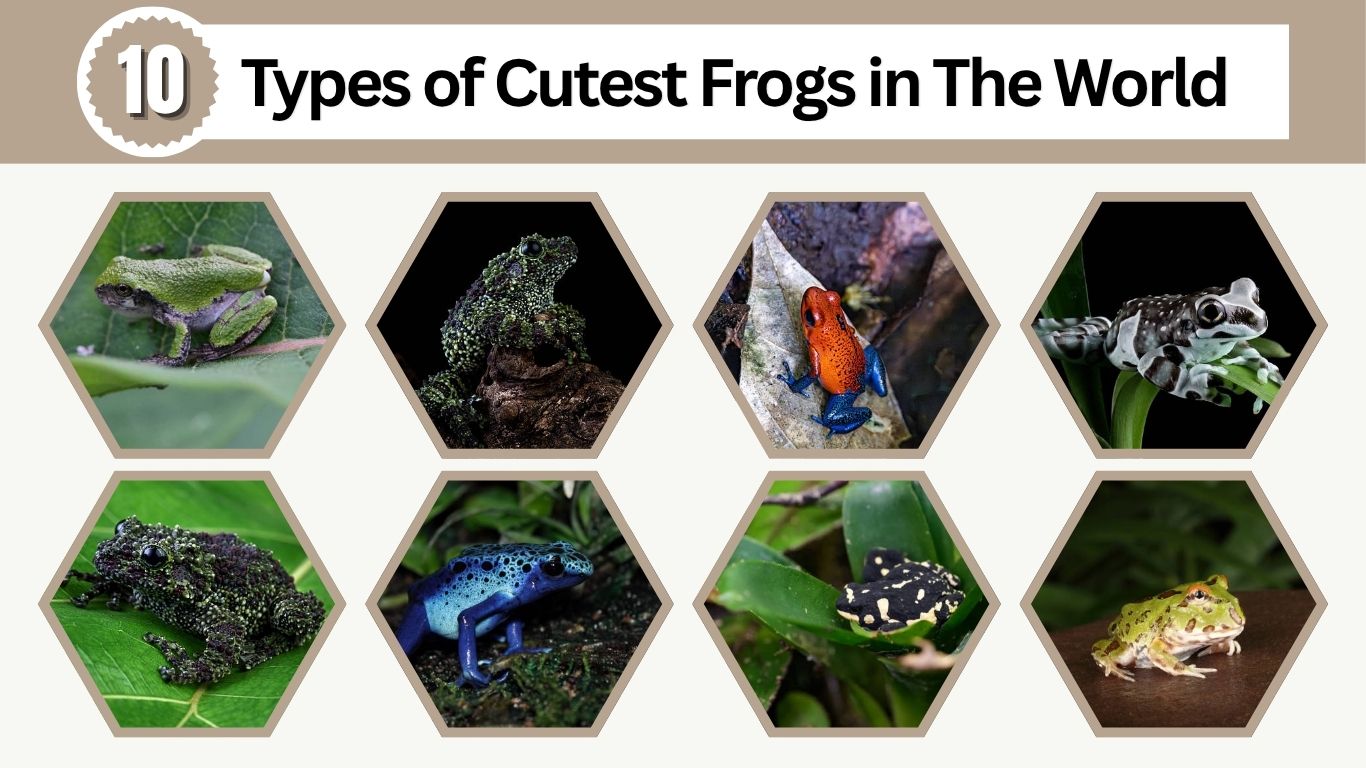
Frogs come in many shapes, sizes, and colors, but some stand out for their incredibly cute and charming appearance. From tiny, brightly colored dart frogs to soft-looking tree frogs with big eyes, these amphibians capture attention with their unique features. In this list, you’ll discover ten of the cutest frogs from around the world, each with its own special look, habitat, and behavior. Whether you love wildlife or just enjoy adorable creatures, these frogs are sure to impress and fascinate you.
1. Glass Frog

Glass frogs are among the most unique and delicate-looking amphibians in the world. Known for their translucent skin, they offer a fascinating glimpse into their internal organs, making them both adorable and scientifically intriguing. Their soft green color and gentle appearance make them one of the cutest frogs on the planet.
Identification
- Transparent or semi-transparent underside, often revealing internal organs
- Bright lime-green back, sometimes with tiny yellow, white, or black spots
- Smooth skin with a slightly glossy appearance
- Large, forward-facing eyes that give a gentle, expressive look
- Small size, typically ranging from 3 to 7 cm in length
Habitat
Glass frogs are primarily found in the tropical rainforests of Central and South America, including countries like Costa Rica, Panama, Colombia, and Ecuador. They thrive in humid environments, especially near fast-flowing streams and rivers. These locations are essential because they provide both the moisture required for survival and safe breeding grounds. Glass frogs often stay on leaves and branches that hang over water, which helps protect them from ground predators. The dense vegetation of rainforests also offers camouflage, allowing them to blend in with their surroundings and avoid detection.
Behaviors
Glass frogs are mostly nocturnal, meaning they are active at night. During the day, they rest quietly on the underside of leaves, using their green coloring to stay hidden. At night, males call out softly to attract females, often guarding their territory from rivals. Some species show parental care, with males protecting eggs from predators and dehydration. Their slow and careful movements help them avoid attention, and their transparency adds an extra layer of defense by making them harder to see.
Diet and Lifecycle
Glass frogs mainly feed on small insects such as ants, flies, and spiders. They hunt at night, using their keen eyesight to spot prey. During the breeding season, females lay eggs on leaves above water. After hatching, the tadpoles fall into the stream below, where they continue developing. Over time, they undergo metamorphosis, gradually transforming into adult frogs. This life cycle is closely tied to clean water sources, making them sensitive to environmental changes and habitat loss.
2. Red-Eyed Tree Frog

The red-eyed tree frog is one of the most iconic and visually striking frogs in the world. With its vibrant colors and big, bright eyes, it is often considered a symbol of tropical wildlife. Despite its bold appearance, it is harmless and relies on camouflage and surprise to stay safe.
Identification
- Bright green body with smooth skin
- Large, vivid red eyes with vertical pupils
- Blue and yellow striped sides
- Orange or red feet with sticky pads for climbing
- Medium size, usually around 5 to 7 cm in length
Habitat
Red-eyed tree frogs are commonly found in the tropical rainforests of Central America, especially in countries like Costa Rica, Nicaragua, and Panama. They prefer warm, humid environments with plenty of trees and vegetation. These frogs spend most of their lives in the canopy, clinging to leaves and branches. They are often found near ponds, rivers, or other water sources, which are important for breeding. The dense forest provides both protection from predators and ideal conditions for moisture retention, which is essential for their skin.
Behaviors
These frogs are nocturnal and become active after sunset. During the day, they rest on leaves with their legs tucked in and eyes closed, blending perfectly with the greenery. When threatened, they suddenly open their bright red eyes and reveal their colorful sides to startle predators, a behavior known as “flash coloration.” They are excellent climbers thanks to their sticky toe pads and can move quickly through trees. Males often call loudly at night to attract females during the breeding season.
Diet and Lifecycle
Red-eyed tree frogs mainly eat insects such as crickets, moths, flies, and small beetles. They hunt at night using their sharp vision and quick reflexes. During reproduction, females lay eggs on leaves that hang over water. When the eggs hatch, the tadpoles drop into the water below, where they continue growing. Over several weeks, they transform into froglets through metamorphosis. Their lifecycle depends heavily on clean water and stable environmental conditions.
3. Pacman Frog

The Pacman frog is famous for its round body, huge mouth, and adorable yet slightly grumpy expression. Named after the classic video game character, this frog looks like it could eat almost anything that moves. Its chubby appearance and bright colors make it one of the cutest and most recognizable frogs.
Identification
- Large, round body with a wide mouth
- Short legs and almost no visible neck
- Bright colors such as green, yellow, brown, or albino variations
- Smooth or slightly bumpy skin with patterns for camouflage
- Medium to large size, often 10 to 15 cm in length
Habitat
Pacman frogs are native to South America, especially in countries like Argentina, Brazil, and Paraguay. They live in tropical and subtropical forests, grasslands, and areas with loose, moist soil. These frogs prefer humid environments where they can burrow and stay hidden. They often bury themselves in the ground with only their eyes and mouth visible, waiting for prey. Their habitat usually includes leaf litter and soft soil, which helps them stay cool and retain moisture. During dry periods, they may go into a state similar to hibernation to survive harsh conditions.
Behaviors
Unlike many active tree frogs, Pacman frogs are ambush predators. They remain still for long periods, relying on patience rather than speed. When prey comes close, they strike quickly with their powerful jaws. They can be quite aggressive for their size and will attempt to eat anything they can fit into their mouths. These frogs are mostly nocturnal but may also be active during the day in damp conditions. Their behavior is simple but effective, focused mainly on eating and conserving energy.
Diet and Lifecycle
Pacman frogs have a very strong appetite and eat a wide range of prey, including insects, worms, small rodents, and even other frogs. Young frogs start with smaller prey like insects and gradually move to larger food as they grow. Females lay eggs in water, and the tadpoles develop there before transforming into froglets. As they mature, they transition to a more land-based lifestyle, continuing their growth into bulky adult frogs.
4. Bumblebee Toad

The bumblebee toad is a tiny, brightly colored amphibian that stands out because of its striking black and yellow pattern. Its bold colors resemble a bumblebee, making it both eye-catching and incredibly cute. Despite its small size, it has a strong presence in its natural habitat.
Identification
- Black body with bright yellow or orange stripes or patches
- Very small size, usually around 1.5 to 2.5 cm
- Smooth or slightly textured skin
- Short limbs with a compact body shape
- Bright coloration used as a warning to predators
Habitat
Bumblebee toads are native to South America, particularly in countries like Brazil. They live in tropical rainforests where humidity is high and vegetation is dense. These toads are often found on the forest floor among leaf litter, moss, and low plants. They prefer moist environments close to small water sources such as streams or puddles, which are important for breeding. The thick forest canopy helps maintain the damp conditions they need to survive, while also providing shelter from predators and extreme temperatures.
Behaviors
These toads are mostly active during the day, making them diurnal, which is different from many other frog species. Their bright colors act as a warning signal to predators, indicating that they may be toxic or unpalatable. Instead of jumping long distances, they often move with short hops or slow crawling motions. Bumblebee toads are generally shy and prefer to stay hidden under leaves or debris when not active. During the breeding season, males may call softly to attract females.
Diet and Lifecycle
Bumblebee toads mainly feed on tiny insects such as ants, mites, and small beetles. Their small size limits them to very tiny prey, which they hunt on the forest floor. For reproduction, females lay eggs in moist environments, often near water. The eggs hatch into tadpoles, which develop in water before undergoing metamorphosis into small toads. Their lifecycle is closely tied to the availability of moisture, making them sensitive to environmental changes.
5. Blue Poison Dart Frog

The blue poison dart frog is one of the most stunning and vibrant frogs in the world. Its bright blue color combined with dark spots gives it a striking and almost unreal appearance. Despite its name, it is admired more for its beauty than feared, making it a favorite among frog enthusiasts.
Identification
- Bright blue body with black or dark blue spots
- Smooth, slightly shiny skin
- Medium-small size, usually around 3 to 5 cm
- Slender body with long legs
- Sticky toe pads for climbing
Habitat
Blue poison dart frogs are native to the rainforests of Suriname in South America. They live in warm, humid environments with dense vegetation. These frogs are often found on the forest floor or climbing low plants and ծառ trunks. They prefer areas near water sources, such as streams or small pools, which are important for reproduction. The rainforest provides a stable climate with high humidity, which is essential for keeping their skin moist and healthy. Fallen leaves, roots, and shaded areas offer protection and shelter from predators.
Behaviors
Unlike many frogs, blue poison dart frogs are active during the day, making them diurnal. Their bright coloration serves as a warning to predators that they are toxic. They are quite active and often move around their territory in search of food. Males can be territorial and will call to attract females, especially during the breeding season. These frogs are also known for their interesting parental behavior, where adults may help transport tadpoles to safe water sources.
Diet and Lifecycle
Blue poison dart frogs mainly feed on small insects such as ants, termites, and tiny beetles. Their diet plays a role in their toxicity, as chemicals from their prey contribute to their دفاع mechanisms. During reproduction, females lay eggs in moist areas, and once they hatch, the tadpoles are often carried by the parents to small pools of water. There, they continue to grow and eventually transform into adult frogs through metamorphosis.
6. Mossy Frog

The mossy frog is one of the most unique and adorable frogs due to its incredible camouflage. Its body looks just like a patch of moss or lichen, helping it blend perfectly into its surroundings. This natural disguise, combined with its textured appearance, gives it a charming and unusual kind of cuteness.
Identification
- Dark green body with black spots and rough, bumpy texture
- Skin resembles moss, algae, or lichen
- Medium size, usually around 7 to 9 cm
- Wide head with large eyes
- Strong limbs adapted for climbing and gripping
Habitat
Mossy frogs are native to Vietnam and nearby regions in Southeast Asia. They are commonly found in humid forests, especially near caves, rocky streams, and cliffs. These environments are rich in moisture and shaded areas, which are ideal for their survival. The rocky surfaces covered in moss and vegetation provide perfect camouflage, allowing them to hide from predators. They often stay close to water sources, as these are important for both hydration and reproduction.
Behaviors
Mossy frogs are mostly nocturnal and become active at night. During the day, they remain very still, relying on their camouflage to avoid detection. When threatened, they may freeze completely or even play dead to trick predators. They are excellent climbers and can move across wet, rocky surfaces with ease. Their slow and careful movements help them stay hidden, and they rarely make sudden motions unless necessary.
Diet and Lifecycle
These frogs feed on insects such as crickets, worms, and small invertebrates. They hunt mainly at night, using their keen eyesight to locate prey. For reproduction, females lay eggs in water-filled rock cavities or small pools. The tadpoles develop in these aquatic environments before transforming into froglets. As they grow, they adapt to life on land while still staying close to moist habitats.
7. Amazon Milk Frog

The Amazon milk frog is a charming and gentle-looking amphibian known for its smooth skin and soft, pastel-like colors. Its calm expression and slightly chubby body give it an irresistibly cute appearance, making it a favorite among frog lovers.
Identification
- Light blue, gray, or mint-green body
- Dark brown or black banding patterns across the body
- Smooth, rubbery skin that produces a milky secretion
- Large golden or bronze eyes with a calm expression
- Medium size, typically around 6 to 10 cm
Habitat
Amazon milk frogs are found in the rainforests of South America, particularly in the Amazon Basin, including countries like Brazil, Colombia, and Peru. They live high in the trees, preferring humid environments with dense vegetation. These frogs are often associated with areas near slow-moving water or temporary pools, which are important for breeding. Tree holes filled with rainwater are commonly used as safe spots for laying eggs. The warm and moist climate of the rainforest is essential for their survival and skin health.
Behaviors
These frogs are mostly nocturnal and become active at night. During the day, they rest in tree hollows or among leaves to stay hidden and conserve moisture. They are strong climbers, using their sticky toe pads to move easily through branches. When threatened, they secrete a sticky, milky substance from their skin, which helps deter predators. Their movements are generally slow and calm, adding to their gentle appearance.
Diet and Lifecycle
Amazon milk frogs feed on insects such as crickets, moths, and flies. They hunt at night, using their sharp vision and quick tongue to catch prey. During reproduction, females lay eggs in water-filled tree cavities. Once hatched, the tadpoles grow in these small pools, feeding and developing until they transform into young frogs. As they mature, they move out into the surrounding trees and continue their life cycle in the forest canopy.
8. Strawberry Poison Dart Frog

The strawberry poison dart frog is a tiny, brightly colored frog that stands out for its bold red body and contrasting blue or black legs. Its vibrant appearance and small size make it one of the cutest and most eye-catching frogs in the world.
Identification
- Bright red or strawberry-colored body
- Blue, black, or dark-colored legs depending on the variety
- Smooth and slightly shiny skin
- Very small size, usually around 2 to 3 cm
- Slender body with delicate limbs
Habitat
Strawberry poison dart frogs are commonly found in Central America, especially in countries like Costa Rica and Nicaragua. They live in tropical rainforests where humidity is high and vegetation is dense. These frogs are usually found on the forest floor, among leaf litter, or climbing low plants. They prefer areas near small water sources, which are essential for breeding. The warm, moist environment of the rainforest helps keep their skin hydrated and supports their overall survival.
Behaviors
These frogs are diurnal, meaning they are active during the day. Their bright colors act as a warning to predators that they are toxic. Despite their small size, they are quite active and often move around their territory in search of food. Males are known to be territorial and will defend their space while calling to attract females. They also display interesting parental care behaviors, especially during the breeding season.
Diet and Lifecycle
Strawberry poison dart frogs feed mainly on small insects like ants, mites, and tiny beetles. Their diet contributes to their toxicity in the wild. During reproduction, females lay eggs in moist places such as leaves. After hatching, the female often carries the tadpoles on her back to small water-filled spots like bromeliad plants. There, the tadpoles grow and eventually transform into adult frogs through metamorphosis.
9. Vietnamese Mossy Frog

The Vietnamese mossy frog is a fascinating and adorable amphibian known for its rough, moss-like appearance. Its unique texture and natural camouflage make it look like a living piece of forest, giving it a special kind of charm and cuteness.
Identification
- Dark green and brown body with black spots
- Extremely bumpy, rough skin resembling moss and lichen
- Medium size, usually around 7 to 9 cm
- Broad head with large, alert eyes
- Strong limbs suited for climbing and gripping wet surfaces
Habitat
Vietnamese mossy frogs are native to northern Vietnam and nearby regions. They are typically found in humid, mountainous forests, especially around caves, rocky cliffs, and slow-moving streams. These environments are rich in moisture and shaded areas, which are essential for their survival. The rocks and surfaces in these habitats are often covered in moss, allowing the frogs to blend in perfectly. They stay close to water sources, which are necessary for hydration and reproduction.
Behaviors
These frogs are mostly nocturnal and become active at night. During the day, they remain still to maintain their camouflage and avoid predators. When threatened, they may freeze or curl up to resemble a clump of moss. They are skilled climbers and can move easily across slippery, wet rocks. Their movements are slow and cautious, helping them stay hidden in their natural environment.
Diet and Lifecycle
Vietnamese mossy frogs feed on insects such as crickets, worms, and other small invertebrates. They hunt primarily at night using their sharp vision. During reproduction, females lay eggs in water-filled rock cavities or shallow pools. The tadpoles develop in these aquatic spaces before undergoing metamorphosis into young frogs. As they grow, they adapt to life on land while staying close to moist, shaded habitats.
10. Gray Tree Frog

The gray tree frog is a small and adorable amphibian known for its ability to change color and its soft, calm appearance. Its gentle look, combined with its tree-climbing lifestyle, makes it one of the cutest frogs found in North America.
Identification
- Gray, green, or brown body that can change color for camouflage
- Slightly bumpy skin with darker patches or patterns
- Bright yellow or orange coloring on the inner thighs
- Large toe pads for climbing
- Small size, usually around 3 to 5 cm
Habitat
Gray tree frogs are found in North America, particularly in the United States and parts of Canada. They live in forests, woodlands, and suburban areas with plenty of trees and vegetation. These frogs spend most of their time in trees, but they also come down to the ground during breeding season. They prefer habitats near ponds, lakes, or temporary pools, which are important for reproduction. Their ability to adapt allows them to survive in both wild and human-populated areas.
Behaviors
These frogs are mainly nocturnal and are most active at night. During the day, they rest quietly on tree bark or leaves, blending in perfectly with their surroundings. One of their most interesting traits is their ability to change color to match their environment. Males produce a musical, trilling call during the breeding season to attract females. They are excellent climbers and can move easily on vertical surfaces.
Diet and Lifecycle
Gray tree frogs feed on small insects such as moths, flies, and beetles. They hunt at night, using their sticky tongues to catch prey. During reproduction, females lay eggs in water, often in shallow ponds or temporary pools. The tadpoles develop in water before transforming into froglets through metamorphosis. As they mature, they move to trees and continue their life cycle in a more arboreal environment.
FAQs
What makes frogs look cute?
Frogs are often considered cute because of their small size, big eyes, and smooth or colorful skin. Features like round bodies, bright colors, and gentle expressions make many species appear friendly and appealing to humans.
Are all colorful frogs poisonous?
Not all colorful frogs are poisonous, but many bright-colored species use their colors as a warning to predators. This is called warning coloration. Some frogs are harmless despite their appearance, while others can be toxic in the wild.
Where do most cute frogs live?
Many of the cutest frogs live in tropical rainforests, especially in Central and South America. These regions provide warm temperatures, high humidity, and plenty of vegetation, which are ideal conditions for frogs to thrive.
Do frogs make good pets?
Some frog species can be kept as pets, but they require proper care, including the right habitat, humidity, and diet. It’s important to research the species first and ensure it is legal and ethically sourced before keeping one as a pet.
How long do frogs usually live?
Frog lifespan varies by species. Smaller frogs may live around 3 to 6 years, while larger or well-cared-for frogs can live 10 years or more. In captivity, frogs often live longer due to protection from predators and controlled environments.
