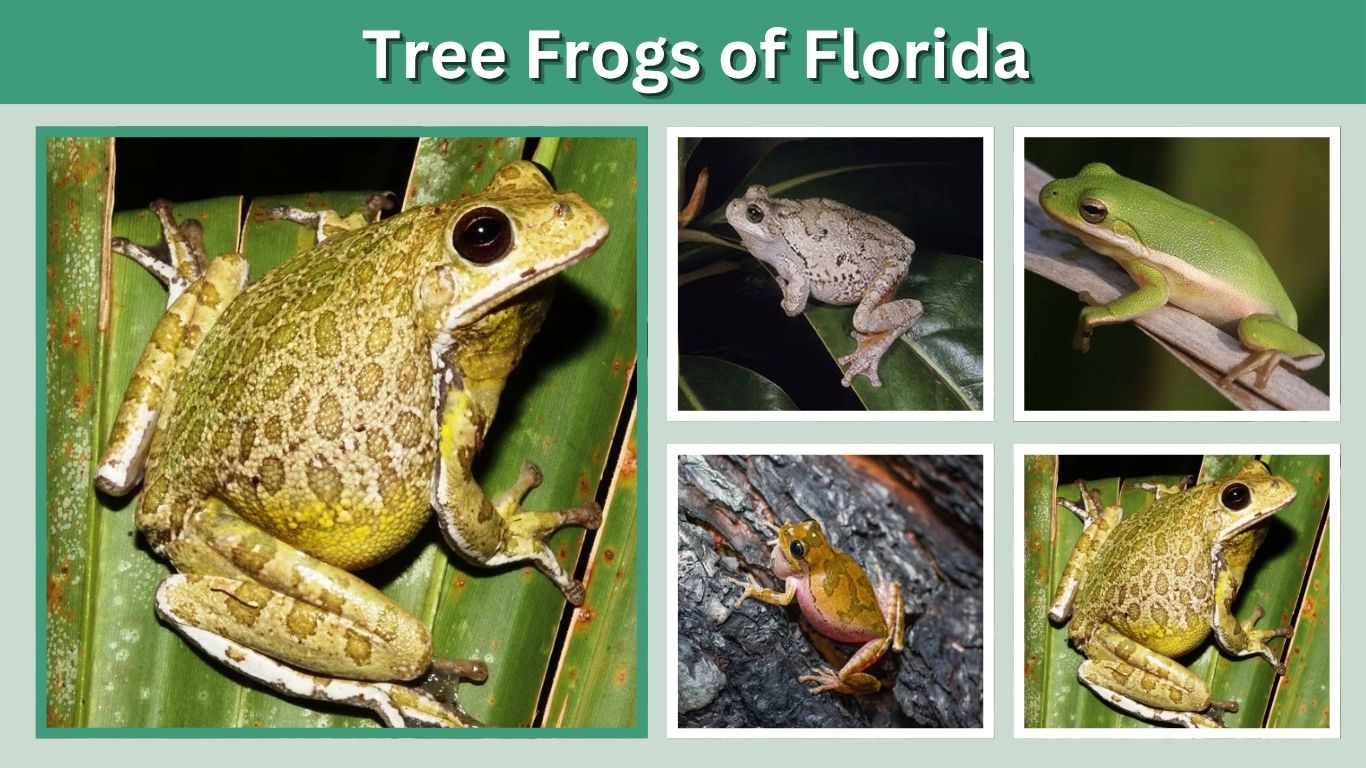
Tree frogs of Florida are fascinating amphibians found throughout the state’s forests, wetlands, gardens, and residential neighborhoods. These small climbing frogs are known for their colorful bodies, sticky toe pads, and distinctive nighttime calls. Florida supports several native tree frog species, including green tree frogs, barking tree frogs, and squirrel tree frogs. However, invasive Cuban tree frogs also inhabit the state and threaten native wildlife. Understanding the different types of Florida tree frogs, their appearances, habitats, sounds, and behaviors makes identifying these remarkable amphibians much easier.
Types of Tree Frogs in Florida
Florida has seven native species commonly recognized as tree frogs, although their distribution varies throughout the state. Four species are widespread, while others primarily inhabit northern Florida and the Panhandle.
The following table highlights their identifying characteristics.
| Tree Frog Species | Typical Size | Identification |
| Green Treefrog | 1–2.5 inches | Green body, often with white side stripes |
| Squirrel Treefrog | 1–1.5 inches | Small, green or brown, smooth skin |
| Barking Treefrog | 2–2.5 inches | Stout body, round dark spots |
| Pinewoods Treefrog | 1–1.5 inches | Dark facial mask, spotted hind legs |
| Cope’s Gray Treefrog | 1.25–2 inches | Mottled gray skin, yellow-orange inner thighs |
| Bird-voiced Treefrog | Around 2 inches | Gray-green skin, pale marking below eye |
| Pine Barrens Treefrog | 1–2 inches | Bright green body, broad brown side stripe |
7 Native Tree Frogs of Florida
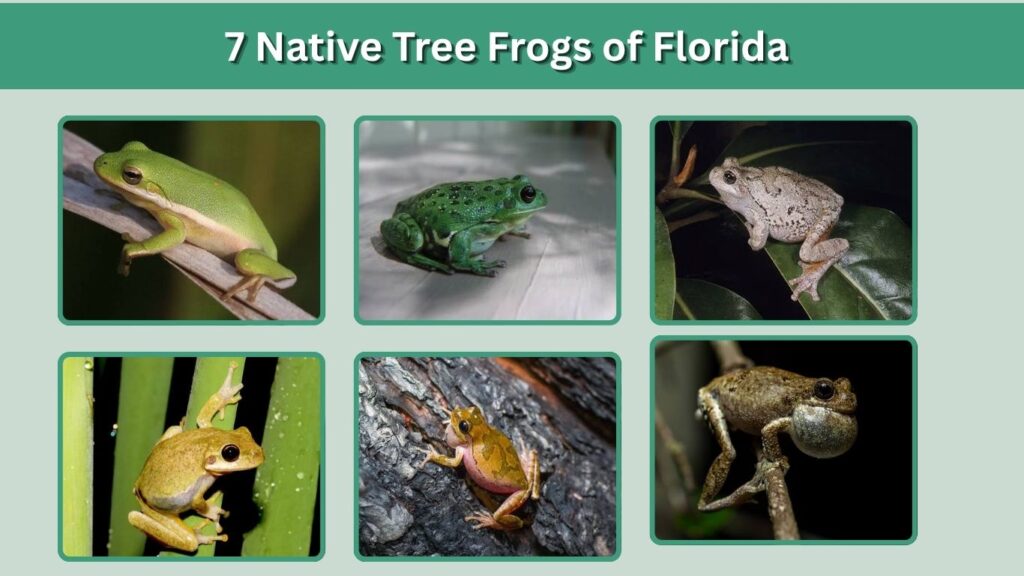
Florida’s native tree frogs differ in coloration, size, habitat, and vocalizations. Some are commonly encountered near homes, while others occupy specialized forest or wetland habitats.
1. Green Treefrog
The green treefrog (Hyla cinerea) is one of Florida’s most recognizable native amphibians. Its smooth, bright green skin often features a narrow white or yellowish stripe running along each side.
These frogs inhabit ponds, marshes, wetlands, and suburban gardens throughout Florida. They frequently climb vegetation near water and hunt insects attracted to outdoor lights.
Their distinctive call resembles a repeated nasal honk or bell-like sound. Green treefrogs are primarily nocturnal and become especially active during warm, humid evenings.
2. Squirrel Treefrog
The squirrel treefrog (Hyla squirella) is a small, adaptable species commonly found throughout Florida. Its coloration ranges from bright green to brown, gray, or tan, occasionally featuring darker markings.
These frogs inhabit forests, wetlands, residential gardens, and urban neighborhoods. During daylight hours, they hide beneath loose bark, inside tree cavities, or among vegetation.
Squirrel treefrogs produce nasal, duck-like calls, particularly during rainy weather. Their small size and flexible habitat preferences make them frequent visitors around Florida homes.
3. Barking Treefrog
The barking treefrog (Hyla gratiosa) is Florida’s largest native treefrog. It has a stout body, somewhat bumpy skin, and variable green, gray, or brown coloration.
Many individuals display distinctive rounded dark spots across their backs.
Barking treefrogs prefer sandy pine forests, woodland habitats, and wetlands near shallow breeding pools. Their loud calls resemble repeated dog barks, making them relatively easy to recognize.
During colder or drier conditions, these frogs sometimes burrow into loose soil for protection.
4. Pinewoods Treefrog
The pinewoods treefrog (Hyla femoralis) is a small native species associated with Florida’s pine forests. Its skin can appear gray, green, brown, or tan, often with irregular darker markings.
A distinguishing characteristic is the yellowish or orange spotting on the hidden surfaces of its hind legs.
These frogs climb longleaf pines and shelter beneath bark or among vegetation. Their calls resemble rapid tapping or Morse code signals, particularly during the breeding season.
They reproduce in shallow temporary pools and other suitable freshwater habitats.
5. Cope’s Gray Treefrog
Cope’s gray treefrog (Hyla chrysoscelis) inhabits portions of northern and north-central Florida, including the Panhandle.
Its mottled gray, brown, or greenish skin provides excellent camouflage against tree bark. Yellow-orange coloring on the hidden surfaces of its hind legs helps distinguish it from some other frogs.
This species spends much of its time climbing trees and vegetation, becoming active after sunset.
Males produce a rapid, musical trill during breeding periods. Their calls are especially useful for identification because similar gray treefrog species can look almost identical.
6. Bird-voiced Treefrog
The bird-voiced treefrog (Hyla avivoca) is a native species primarily associated with Florida’s Panhandle.
Its body is usually gray, brown, or greenish, with irregular markings and a distinctive pale patch beneath each eye.
These frogs prefer wooded swamps near streams and rivers, where they climb low vegetation and small trees.
Their unusual calls resemble repeated bird-like whistles, often described as “wit-wit-wit.” Although mostly nocturnal, they may occasionally call during daylight hours.
7. Pine Barrens Treefrog
The pine barrens treefrog (Hyla andersonii) is among Florida’s more localized native tree frogs.
Its bright green body features a broad brown stripe extending from the face toward the hind legs, bordered by narrow pale lines.
In Florida, this species occurs in limited areas of the Panhandle, particularly around acidic seepage bogs and nearby vegetation.
Habitat destruction threatens its populations, making conservation particularly important. The species is classified as Near Threatened by the IUCN.
Cuban Tree Frogs in Florida: An Invasive Species
The Cuban treefrog (Osteopilus septentrionalis) is an invasive amphibian originally native to parts of the Caribbean. It was first recorded in Florida during the 1920s, likely arriving accidentally through imported cargo.
Unlike native Florida tree frogs, Cuban treefrogs can grow exceptionally large, with some females exceeding six inches in body length.
Their identifying characteristics include unusually large toe pads, prominent eyes, irregularly bumpy skin, and variable gray, brown, or green coloration.
Cuban treefrogs threaten native amphibians by eating smaller frogs and competing for resources. They can also enter residential buildings and plumbing systems.
How to Identify Florida Tree Frog Sounds
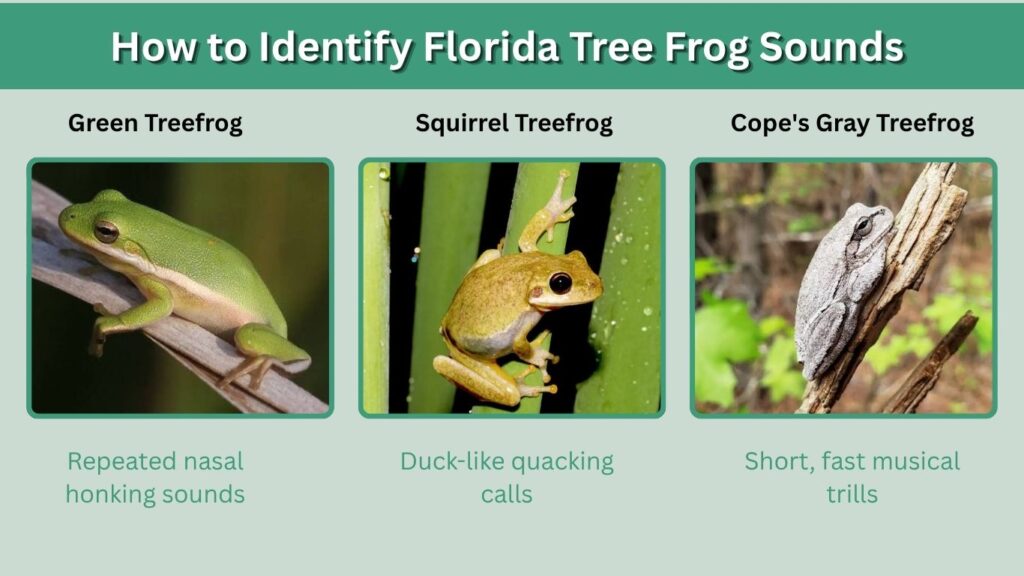
Florida tree frogs produce different vocalizations, especially during warm evenings and rainy weather. Most calls are made by males attempting to attract mates.
- Green Treefrog: Repeated nasal honking sounds.
- Squirrel Treefrog: Short, duck-like quacking calls.
- Barking Treefrog: Deep calls resembling distant barking dogs.
- Pinewoods Treefrog: Rapid tapping similar to Morse code.
- Cope’s Gray Treefrog: Short, fast musical trills.
- Bird-voiced Treefrog: Repeated bird-like whistles.
How to Get Rid of Cuban Tree Frogs in Florida
Managing invasive Cuban treefrogs can help protect native frog populations. However, correctly identifying the species is essential because native frogs should not be mistaken for invasive ones.
Recommended management methods include:
- Confirm identification: Compare body size, skin texture, and toe pads with reliable identification guides.
- Reduce outdoor lighting: Turn off unnecessary lights that attract insects and hunting frogs.
- Remove artificial breeding sites: Empty unused containers holding standing water.
- Prevent indoor entry: Install suitable screens and cover plumbing vents without obstructing airflow.
- Use appropriate capture methods: UF/IFAS describes using PVC pipe refuges to capture and identify treefrogs.
The University of Florida recommends humane euthanasia for positively identified Cuban treefrogs and provides specific instructions. Do not relocate or release captured invasive frogs elsewhere, and never use pesticides or harmful household chemicals to kill frogs.
Florida Tree Frog Habitat, Diet, and Lifespan
Most Florida tree frogs occupy environments with suitable moisture, vegetation, shelter, and access to freshwater breeding sites.
Their diets mainly consist of insects, spiders, and other small invertebrates. They help maintain ecological balance by consuming numerous insects.
Lifespan varies considerably among species and environments. For example, barking treefrogs have been documented living more than ten years, but this should not be treated as the typical lifespan of every Florida treefrog.
Native frogs are best appreciated in their natural habitats. Anyone considering keeping a captive frog should research species-specific care, enclosure requirements, and applicable Florida wildlife regulations.
FAQs
1. Are Florida Tree Frogs Poisonous?
Most native Florida tree frogs are not considered dangerous to humans. However, amphibians can carry bacteria, and some species produce irritating skin secretions. Avoid unnecessary handling, wash your hands after contact, and prevent pets from licking or swallowing frogs.
2. What Is the Largest Tree Frog in Florida?
The invasive Cuban treefrog is Florida’s largest treefrog and can exceed six inches in body length. Among native species, the barking treefrog is the largest. It generally measures around two to two and a half inches, although some grow larger.
3. How Long Do Florida Tree Frogs Live?
Florida tree frog lifespans vary by species, habitat, predators, and environmental conditions. Some individuals survive several years, while barking treefrogs have been documented living beyond ten years. Reliable average lifespans are not available for every native Florida tree frog species.
4. How Do You Take Care of a Florida Tree Frog?
Captive Florida tree frogs need appropriate humidity, temperature, ventilation, climbing structures, clean water, and suitable live insects. Care requirements differ between species. Avoid collecting wild frogs without checking regulations, and consult an experienced amphibian veterinarian before establishing a captive enclosure.
5. What Tree Frogs Are Found in Northwest Florida?
Northwest Florida supports several native tree frogs, including green, squirrel, barking, pinewoods, Cope’s gray, and bird-voiced treefrogs. The pine barrens treefrog also occupies specialized habitats in parts of the Panhandle. Species distribution depends on local forests, wetlands, and breeding habitats.
