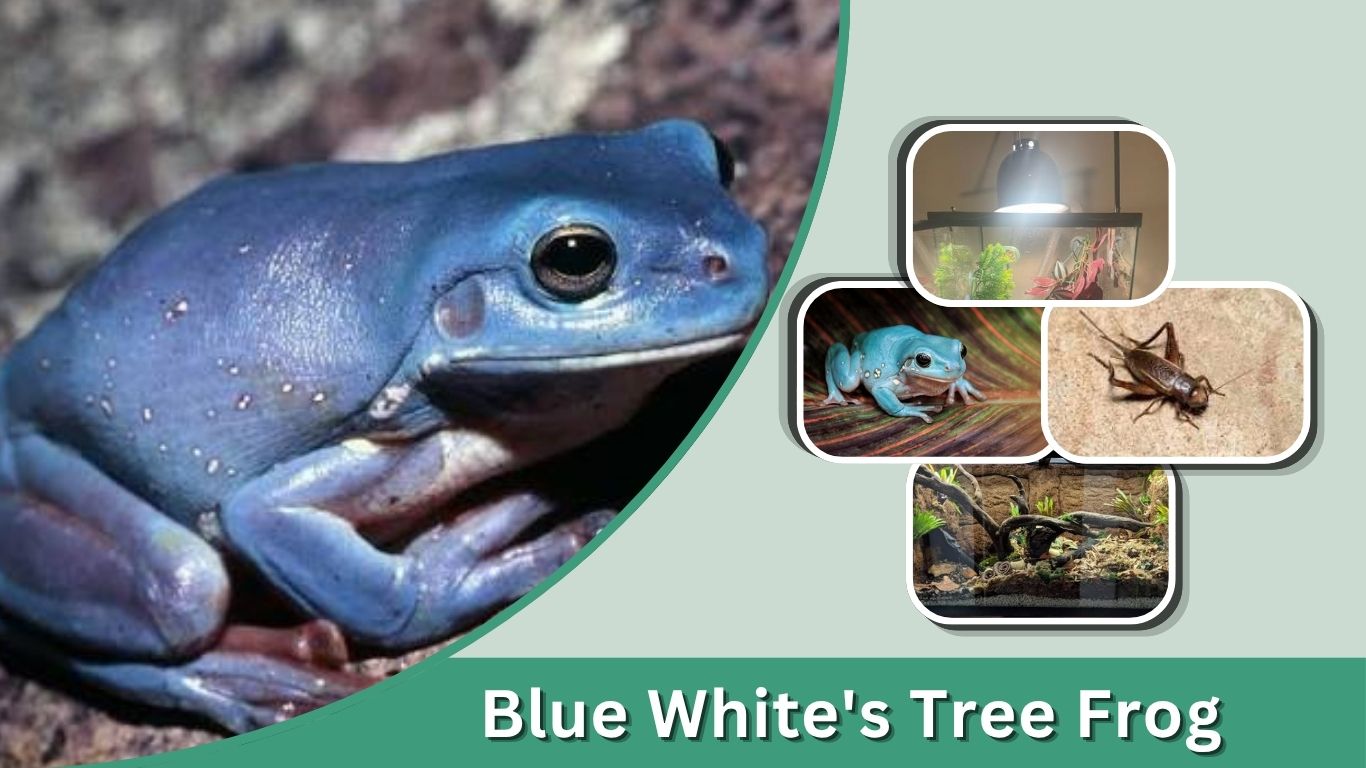
The Blue White’s Tree Frog is a beautiful color variation of the popular Australian White’s tree frog, known for its striking blue-green skin, rounded body, and gentle-looking appearance. Often called the blue phase White’s tree frog, this amphibian has become increasingly popular among frog enthusiasts and exotic pet owners. Some varieties also feature unusual blue eyes, honey-colored bodies, or distinctive white markings. Understanding the different blue White’s tree frog morphs, their natural characteristics, habitat requirements, feeding habits, and proper care can help owners keep these fascinating amphibians healthy.
What Is a Blue White’s Tree Frog?
The Blue White’s Tree Frog is a color variation of Litoria caerulea, commonly called White’s tree frog, Australian green tree frog, or dumpy tree frog. Despite its unusual appearance, it belongs to the same species as the standard green variety.
These frogs naturally occur in Australia and New Guinea, where they inhabit forests, woodlands, and areas near human settlements.
Their most distinctive characteristics include rounded bodies, large eyes, smooth skin, and specialized adhesive toe pads. While typical individuals appear green, some have naturally bluish or turquoise coloration.
Blue White’s tree frogs are primarily nocturnal and spend much of their time resting on branches or hiding among vegetation.
Blue White’s Tree Frog Appearance and Identification
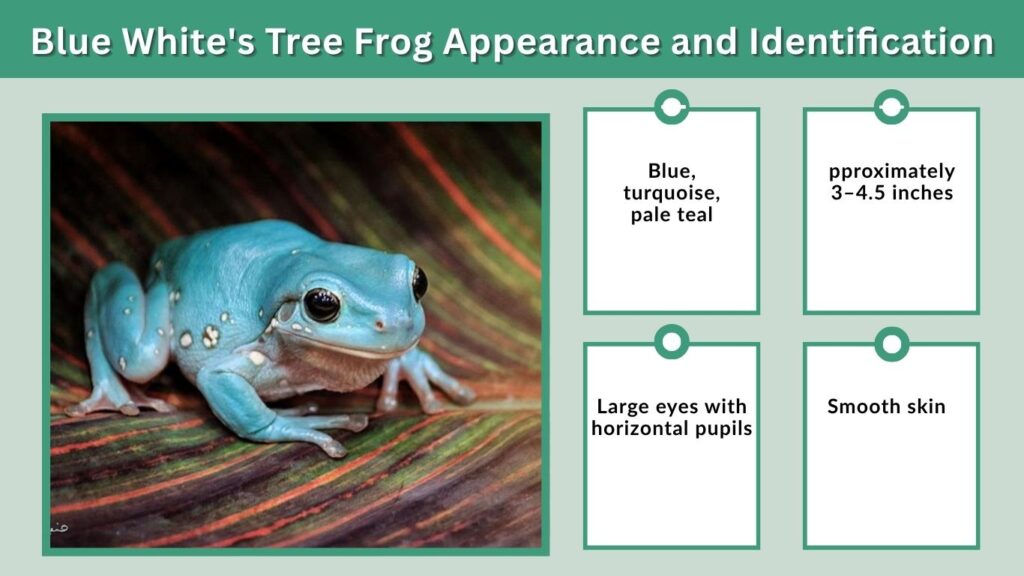
Blue White’s tree frogs are recognizable by their beautiful coloration and stocky appearance. Their exact shade varies between individuals, with some appearing light turquoise and others displaying deeper blue-green tones.
Important identification characteristics include:
- Body color: Blue, turquoise, pale teal, or bluish-green.
- Body size: Adults typically measure approximately 3–4.5 inches.
- Eyes: Large eyes with horizontal pupils; some varieties have blue irises.
- Skin texture: Smooth skin with occasional small white markings.
- Toe pads: Large adhesive pads that support climbing.
- Body shape: Rounded head, broad body, and relatively short limbs.
Blue coloration may appear more noticeable under certain lighting conditions. However, the intensity of the color depends largely on the individual frog.
Blue White’s Tree Frog vs. Normal White’s Tree Frog
The main difference between blue and normal White’s tree frogs is their coloration. Standard White’s tree frogs generally display bright green, olive green, or grayish-green bodies, while blue-phase individuals show stronger turquoise or blue tones.
Both varieties have similar body structures, feeding habits, behavior, and habitat requirements.
They also belong to the same species, meaning their basic care needs are essentially identical.
The blue variety is particularly attractive to collectors because of its distinctive appearance. However, blue pigmentation does not necessarily indicate that a frog is healthier or more suitable as a pet.
Popular Blue White’s Tree Frog Morphs
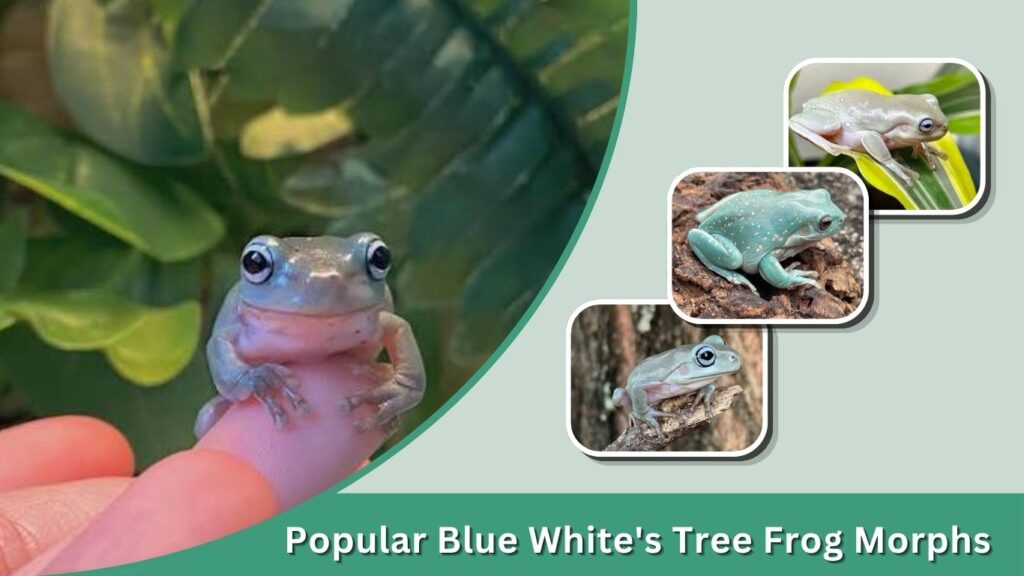
Several blue White’s tree frog varieties are available through captive breeding. These morphs differ mainly in skin coloration, eye color, and markings.
Although sellers use specific names to describe their appearance, these are generally trade names rather than separate scientific classifications.
1. Blue Phase White’s Tree Frog
The blue phase White’s tree frog has a distinctive blue-green or turquoise body. Some individuals appear almost sky blue, while others retain noticeable green undertones.
This variety is especially popular among amphibian enthusiasts because of its unusual coloration.
Blue-phase frogs have the same basic feeding, temperature, humidity, and enclosure requirements as standard White’s tree frogs.
2. Blue-Eyed White’s Tree Frog
The blue-eyed White’s tree frog is recognized by its striking blue-colored irises. Unlike blue-phase frogs, which are primarily identified by body coloration, blue-eyed varieties are distinguished by their unusual eye appearance.
Their bodies may be green, cream-colored, pale gray, or bluish-green.
This color variation is particularly appealing to collectors interested in uncommon captive-bred amphibians.
3. Honey Blue-Eyed White’s Tree Frog
The honey blue-eyed White’s tree frog combines pale honey, yellowish, or creamy body coloration with distinctive blue eyes.
Its lighter skin and contrasting eye color create an unusual appearance compared with standard green frogs.
Breeders sometimes combine honey and blue-eye characteristics with other markings, producing additional variations within captive-bred populations.
4. Blue Snowflake White’s Tree Frog
The blue snowflake White’s tree frog features a blue or turquoise body decorated with scattered white markings.
These spots vary in size, number, and distribution between individual frogs.
Some captive-bred frogs combine blue-phase coloration, snowflake markings, and blue eyes. Such combinations may be described as blue-eyed snowflake White’s tree frogs.
Blue White’s Tree Frog Natural Habitat and Behavior
Blue White’s tree frogs share the natural habitat preferences of ordinary White’s tree frogs. The species occurs in northern and eastern Australia and parts of New Guinea.
These amphibians inhabit tropical forests, open woodlands, and other environments that provide suitable shelter.
They spend much of their time above ground, resting on branches, leaves, or tree trunks. Their large adhesive toe pads help them climb smooth surfaces.
During daylight hours, they generally remain inactive. At night, they become more active and search for insects.
Their adaptable behavior also allows wild White’s tree frogs to occupy gardens, buildings, and other human-modified environments.
Blue White’s Tree Frog Care Guide
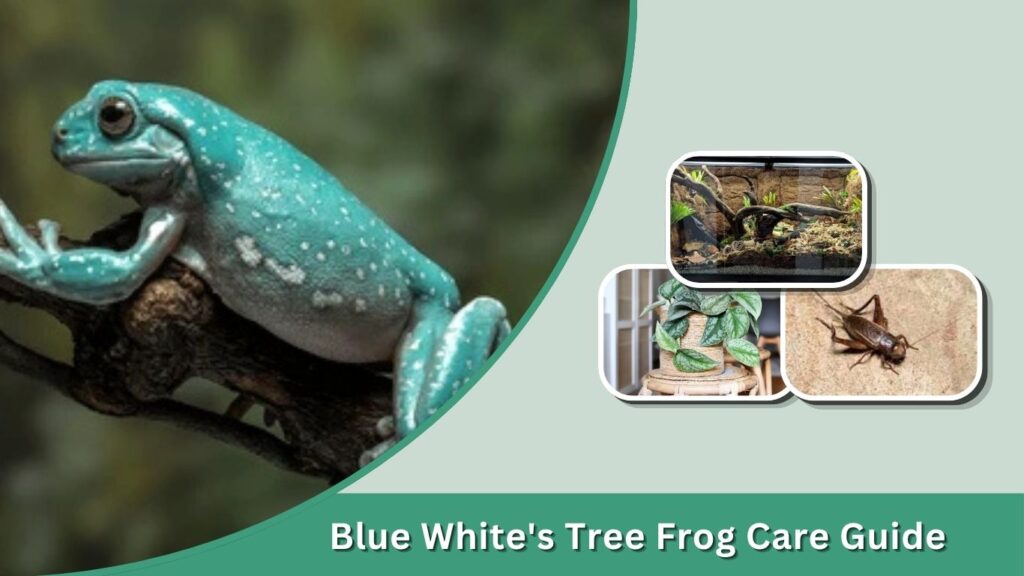
Proper blue White’s tree frog care involves providing appropriate temperatures, humidity, nutrition, and climbing opportunities. Although these frogs are relatively hardy, they still require specialized amphibian care.
Their unusual coloration does not change their fundamental environmental requirements.
Tank Size and Setup
A vertically oriented terrarium is ideal because White’s tree frogs naturally climb and rest above ground.
An enclosure measuring approximately 18 × 18 × 24 inches provides a practical starting point for one adult frog, although a larger enclosure is preferable.
Include strong branches, broad leaves, hiding areas, and stable climbing platforms.
Coconut fiber or another suitable amphibian-safe substrate can help maintain moisture. Always ensure the enclosure has appropriate ventilation and a secure lid.
Temperature and Humidity
Blue White’s tree frogs generally thrive with daytime ambient temperatures around 75–80°F (24–27°C), a controlled warmer basking area around 82–85°F (28–29°C), and a cooler nighttime period.
Humidity around 50–70% is commonly recommended, with occasional increases after misting.
Avoid keeping the enclosure constantly wet because poor ventilation and excessive moisture can encourage skin problems.
Use reliable thermometers and hygrometers to monitor conditions accurately.
Diet and Feeding
Blue White’s tree frogs are insectivores, meaning they primarily eat insects and other small invertebrates.
Suitable captive foods include crickets, dubia roaches, locusts, and appropriately sized feeder insects.
Juvenile frogs generally need more frequent feeding, while adults commonly eat two or three times weekly.
Feeder insects should be gut-loaded and supplemented with calcium and vitamins according to an appropriate feeding plan.
Avoid overfeeding because White’s tree frogs can become overweight.
Cleaning and Handling
Maintaining a clean enclosure is essential for preventing bacterial contamination and keeping frogs healthy.
Remove waste and uneaten food regularly, and provide fresh, dechlorinated water every day.
White’s tree frogs have delicate, absorbent skin, so unnecessary handling should be avoided.
When handling is essential, use clean, damp, powder-free gloves. Never expose frogs to soap, lotion, or chemical residues.
How Big Do Blue White’s Tree Frogs Get?
A full-grown blue White’s tree frog typically reaches approximately 3–4.5 inches in body length, although individual sizes vary.
Females are generally larger and heavier than males. Young frogs are relatively small but gradually develop broader bodies and more prominent facial features.
Healthy adult frogs have rounded bodies without excessive fat deposits.
Their growth depends on nutrition, environmental conditions, genetics, and overall health.
Blue White’s Tree Frog Lifespan
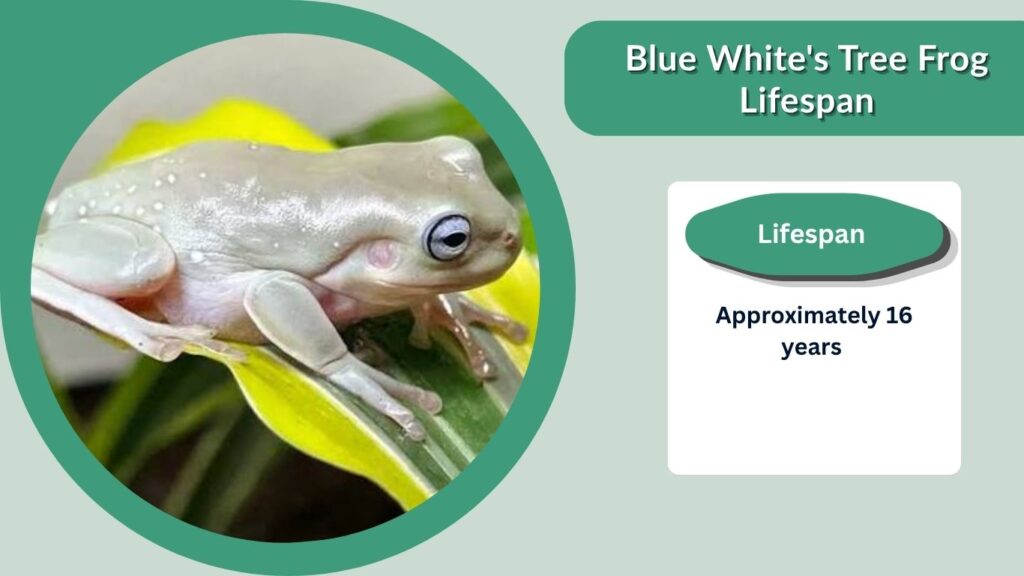
Blue White’s tree frogs can live for many years under proper captive conditions.
A lifespan of 10–15 years is commonly reported, although some White’s tree frogs survive considerably longer.
The Smithsonian’s National Zoo reports an average lifespan of approximately 16 years and records an individual reaching 21 years in human care.
Providing balanced nutrition, suitable temperatures, clean water, and regular veterinary care can support long-term health.
Where to Find Blue White’s Tree Frogs for Sale
Blue White’s tree frogs may be available through specialist amphibian breeders, reputable exotic pet stores, and established reptile exhibitions.
Blue-eyed, honey, and snowflake varieties may be less widely available than standard blue-phase individuals.
Before purchasing, confirm that the frog is captive-bred, actively feeding, and free from visible injuries or skin abnormalities.
Buyers should also verify the specific color morph with the breeder, since names and descriptions may vary.
Always check local wildlife ownership laws and ensure access to appropriate veterinary care before acquiring an exotic amphibian.
Are Blue White’s Tree Frogs Poisonous?
Blue White’s tree frogs are not highly poisonous to humans, but they produce defensive skin secretions that may cause irritation.
These substances can be uncomfortable if they contact sensitive areas such as the eyes or mouth.
Like other amphibians, White’s tree frogs can also carry Salmonella bacteria.
Avoid kissing frogs or touching your face after handling them. Wash your hands thoroughly after enclosure maintenance, feeding, or any contact with amphibians.
FAQs
1. Are Blue White’s Tree Frogs Rare?
Blue White’s tree frogs are less common than standard green varieties, particularly those with blue eyes or unusual markings. However, captive breeding has increased their availability. Their rarity varies depending on the specific morph, breeder, and geographic location.
2. What Is the Difference Between Blue-Eyed and Blue-Phase White’s Tree Frogs?
Blue-eyed White’s tree frogs are distinguished by their blue irises, while blue-phase frogs are identified by their blue or turquoise body coloration. These characteristics are different and may occur independently, although some captive-bred individuals display both features together.
3. Do Blue White’s Tree Frogs Stay Blue?
Blue White’s tree frogs generally retain their characteristic color tendencies, but their shade can change with lighting, temperature, and environmental conditions. Some appear turquoise during certain periods and greener or darker at other times. Individual genetics also influence their appearance.
4. How Long Do Blue White’s Tree Frogs Live?
Blue White’s tree frogs commonly live 10–15 years in captivity, with some individuals surviving longer. Their lifespan depends on proper nutrition, stable environmental conditions, cleanliness, and veterinary care. Healthy frogs may remain active and responsive throughout much of their lives.
5. Are Blue White’s Tree Frogs Good Pets?
Blue White’s tree frogs can be suitable pets for beginners willing to provide specialized care. They are relatively hardy and fascinating to observe. However, they require a properly maintained enclosure, appropriate insects, clean water, and minimal handling to remain healthy.
