
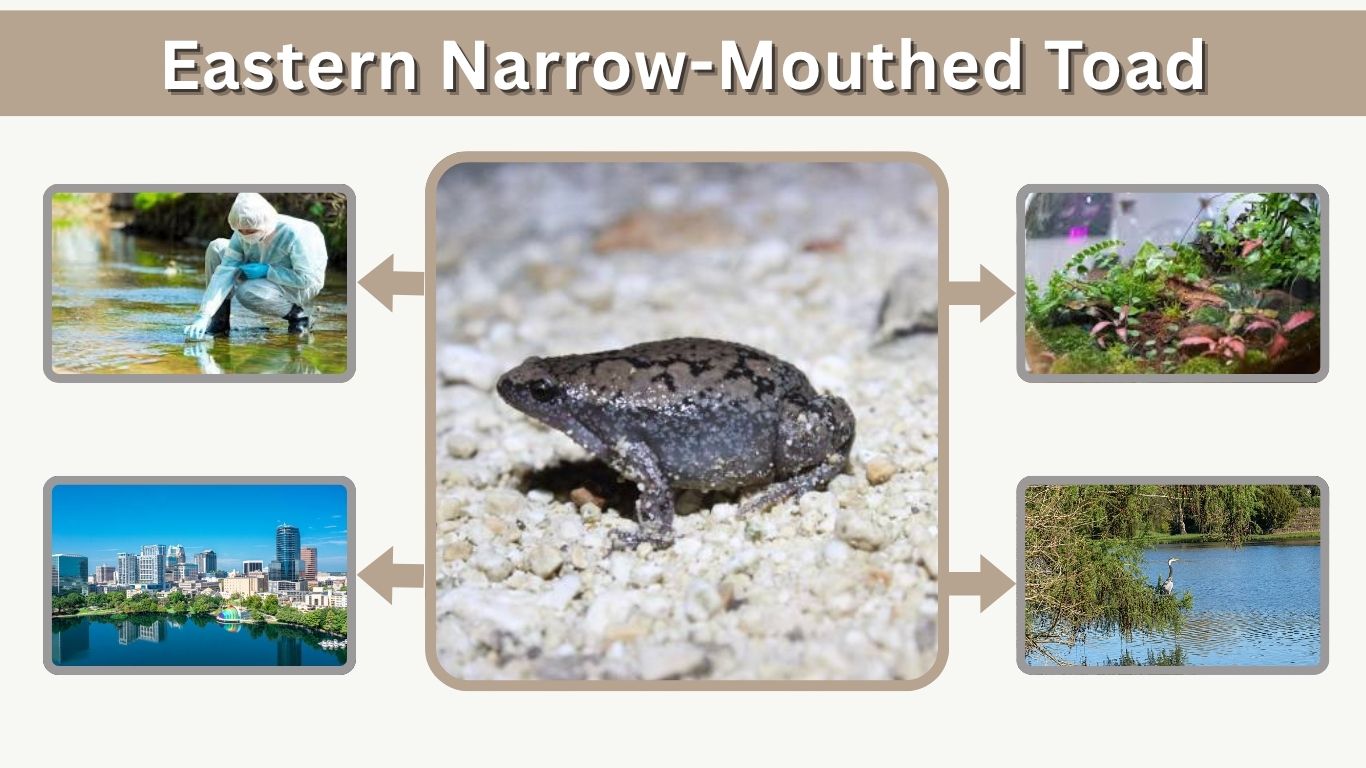
The eastern narrow-mouthed toad is a small, secretive amphibian often overlooked due to its size and burrowing habits. Despite its name, it is not a true toad but belongs to a different family entirely. Known for its unique call and ant-based diet, this species plays an important role in controlling insect populations. Understanding its behavior, habitat, and characteristics can help you easily identify and appreciate this fascinating creature.
What Is the Eastern Narrow-Mouthed Toad?

The eastern narrow-mouthed toad (Gastrophryne carolinensis) is a tiny amphibian commonly found in the southeastern United States. Unlike typical toads, it has smooth skin and a narrow, pointed mouth that gives it a distinctive appearance. It belongs to the Microhylidae family, often called narrow-mouthed frogs.
Scientific Classification
This species is part of a unique group of amphibians that differ significantly from true toads. It is classified under the genus Gastrophryne, which includes several similar species adapted to warm and humid environments.
General Description
The eastern narrow-mouthed toad has a rounded, plump body with a small head and short limbs. Its skin is smooth rather than warty, usually appearing in shades of gray, brown, or olive. A dark stripe often runs from the snout through the eye, helping distinguish it from other small frogs and toads.
Eastern Narrow-Mouthed Toad Size and Physical Characteristics
Understanding the size and physical traits of this toad makes identification much easier, especially since it is often confused with juvenile frogs or other small amphibians.
Average Size
- Adults typically measure between 1 and 1.5 inches in length
- Females are usually slightly larger than males
- Their small size allows them to hide easily in leaf litter and soil
Key Features
- Narrow, pointed mouth adapted for eating small insects
- Smooth, moist skin instead of rough, bumpy texture
- Short legs and a rounded body shape that limits jumping ability
Eastern Narrow-Mouthed Toad Habitat and Distribution

The eastern narrow-mouthed toad thrives in warm, humid environments and is widely distributed across parts of the United States.
Natural Habitat
- Moist forests, wetlands, and grassy areas
- Often found under logs, rocks, and leaf litter
- Frequently burrows underground to retain moisture
Geographic Range
This species is commonly found in:
- Florida and other southeastern states
- Louisiana and surrounding Gulf regions
- Parts of Kansas and Maryland
Environmental Preferences
These toads prefer areas with high humidity and access to temporary water sources. They are especially active after rainfall, when the environment is moist and suitable for feeding and breeding.
Eastern Narrow-Mouthed Toad Behavior and Adaptations
The eastern narrow-mouthed toad has developed several unique behaviors and adaptations that help it survive in its environment.
Nocturnal Lifestyle
- Primarily active at night to avoid heat and predators
- Spends most of the day hidden underground or under debris
- Emerges during rainy or humid conditions
Unique Adaptations
- Burrowing ability helps conserve moisture
- Sticky skin secretions deter predators
- Specialized tongue designed for catching ants and termites
Sound and Call
One of the most recognizable features of the eastern narrow-mouthed toad is its unusual call, which is very different from typical frog croaks.
What Does It Sound Like?
The call is high-pitched and nasal, often compared to the bleating of a sheep or goat. This distinctive sound makes it easier to identify the species even when it is hidden from view.
When Do They Call?
These toads usually call during warm, rainy nights, especially in the breeding season. Males gather near temporary pools of water and call to attract females, creating a chorus of unusual, buzzing sounds.
Eastern Narrow-Mouthed Toad Diet and Feeding Habits
The diet of the eastern narrow-mouthed toad is highly specialized, which sets it apart from many other amphibians.
What Do Eastern Narrow-Mouthed Toads Eat?
- Ants and termites form the majority of their diet
- Small insects and other tiny invertebrates
- Occasionally other soft-bodied arthropods
Feeding Behavior
Rather than actively chasing prey, these toads rely on a quick, sticky tongue to capture insects. Their narrow mouth is perfectly adapted for feeding on small prey, especially ants, which many other amphibians avoid.
Eastern Narrow-Mouthed Toad Life Cycle and Reproduction
The eastern narrow-mouthed toad has a rapid and efficient life cycle, allowing it to thrive in temporary water environments where many other amphibians cannot survive.
Egg Laying
- Females lay eggs in shallow, temporary pools formed after rain
- Eggs are usually attached to vegetation or float on the water surface
- Breeding often occurs during warm, wet conditions
Tadpole Stage
After hatching, tadpoles develop quickly due to the short lifespan of temporary pools. They are specially adapted to grow in environments that may dry up within days or weeks.
Growth to Adult
The transformation from tadpole to adult happens relatively fast compared to other amphibians. Once fully developed, young toads leave the water and begin a terrestrial, burrowing lifestyle.
Are Eastern Narrow-Mouthed Toads Poisonous?
Many people wonder whether these small toads are dangerous, especially when found near homes or pets.
Toxicity Explained
Eastern narrow-mouthed toads produce mild skin secretions as a defense mechanism. These secretions can taste unpleasant to predators and may cause slight irritation, but they are not considered dangerous to humans.
Safety Tips
- Avoid touching your eyes after handling a toad
- Wash your hands thoroughly after contact
- Keep pets from licking or biting them
Predators and Threats

Like most small amphibians, these toads face several natural and environmental challenges.
Natural Predators
- Snakes and birds
- Larger frogs and amphibians
- Small mammals
Environmental Threats
- Habitat loss due to urban development
- Pollution affecting water quality
- Climate changes altering rainfall patterns
Conservation Notes
Although the species is generally stable across much of its range, some local populations may face pressure due to habitat destruction. Monitoring and habitat protection are important for long-term survival.
Eastern Narrow-Mouthed Toad as a Pet
While some amphibians are popular pets, this species presents a few challenges.
Can You Keep Them?
Keeping an eastern narrow-mouthed toad as a pet is possible, but not always recommended. In some areas, collecting them from the wild may be restricted by local laws.
Pros and Cons
- Pros: Small size, low space requirements
- Cons: Specialized diet, secretive behavior, rarely visible
Caring for an Eastern Narrow-Mouthed Toad

Proper care is essential if you decide to keep one in captivity.
Enclosure Setup
- Use a small terrarium with moist substrate
- Maintain high humidity levels
- Provide hiding spots like bark or leaf litter
Feeding in Captivity
Their specialized diet can be difficult to replicate. They require small insects such as ants or termites, which may not be readily available.
Maintenance Tips
- Keep the enclosure clean and moist
- Avoid handling too often
- Monitor for signs of stress or dehydration
Common Issues: Toads in Pools
It is not uncommon to find these toads in swimming pools, especially after rain.
Why They Appear in Pools
Pools can resemble natural breeding sites, attracting toads looking for water to lay eggs.
How to Handle It
If you find one in your pool, gently remove it using a container and release it in a nearby safe, shaded area.
Prevention
- Use a pool cover when not in use
- Reduce outdoor lighting that attracts insects
- Keep the surrounding area less inviting
Interesting Facts
The eastern narrow-mouthed toad has several unique traits that make it stand out among amphibians.
- It is not a true toad despite its name
- Its call sounds more like a sheep than a frog
- It plays an important role in controlling ant and termite populations
FAQs
Are eastern narrow-mouthed toads dangerous to humans?
They are not dangerous to humans. Although they secrete a mild defensive substance, it only causes slight irritation in rare cases. Basic hygiene, such as washing hands after handling, is enough to prevent any issues.
What do eastern narrow-mouthed toads eat?
They mainly eat ants and termites, using a specialized tongue to capture small prey. This diet makes them useful in reducing pest populations in their natural habitat.
Where are eastern narrow-mouthed toads commonly found?
They are widely distributed across the southeastern United States. They prefer warm, humid environments such as forests, wetlands, and grassy areas with access to moisture.
Can eastern narrow-mouthed toads live in dry areas?
They can tolerate dry conditions by burrowing underground to retain moisture. However, they thrive best in humid environments where water is available for feeding and reproduction.
