
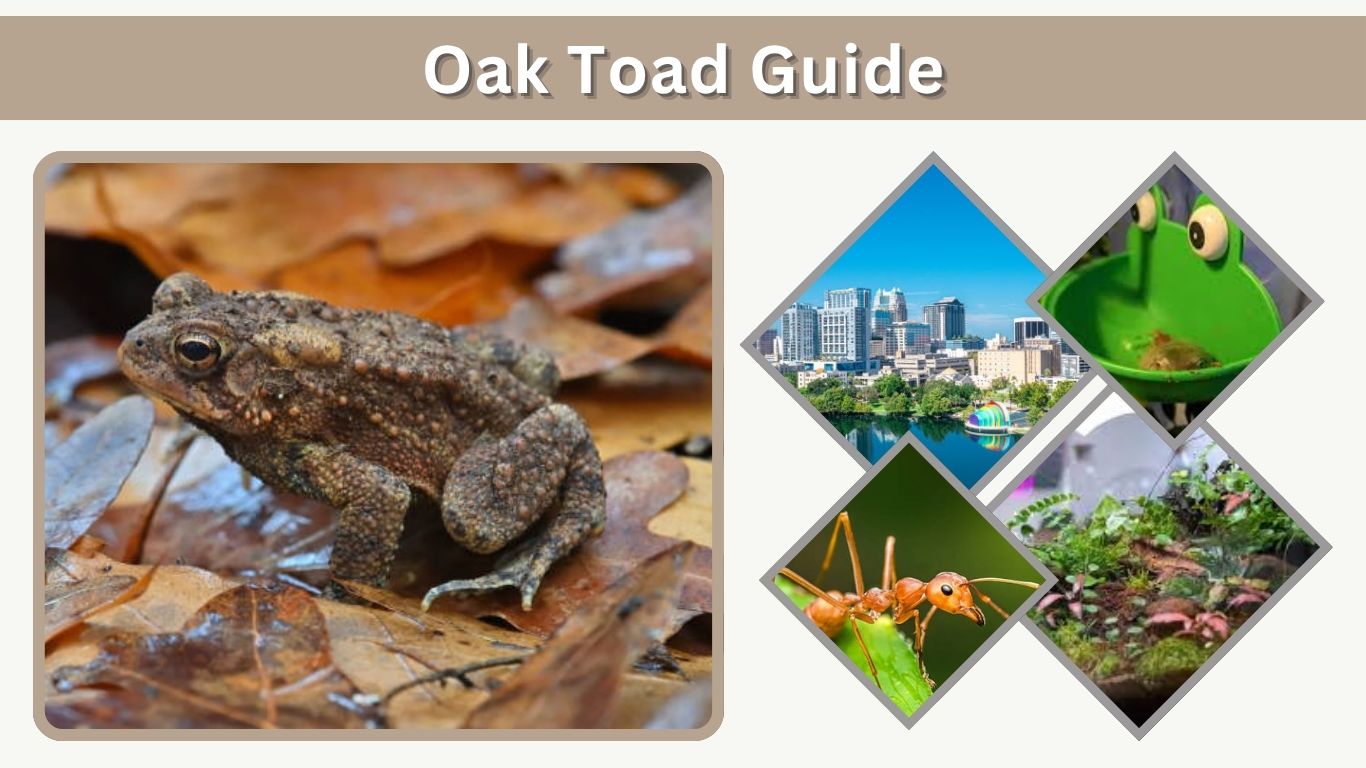
The oak toad (Anaxyrus quercicus) is the smallest toad species in North America, known for its tiny size and distinctive high-pitched call. Found mainly in the southeastern United States, this species thrives in sandy, open habitats like pine forests and oak woodlands. Despite its small size, the oak toad plays an important ecological role by controlling insect populations and contributing to biodiversity in its environment.
What Is an Oak Toad?
The oak toad is a unique amphibian that differs from many other toads in both size and behavior. It belongs to the Bufonidae family and is easily recognized by its small body and pale stripe along its back.
Scientific Classification
The oak toad’s scientific name is Anaxyrus quercicus. It is part of the genus Anaxyrus, which includes other North American toads like the American toad. Unlike larger relatives, this species has adapted to warmer climates and sandy soils.
General Description
- Small, compact body with short legs
- Light-colored stripe running down the center of the back
- Skin ranges from gray to brown with slight roughness
Oak Toad Size and Physical Characteristics
The oak toad is notable for its extremely small size and simple but distinctive appearance, making it easy to identify compared to other toads.
How Big Can an Oak Toad Get?
Most adult oak toads measure between 0.75 and 1.25 inches in length, making them the smallest toads in North America. Females are generally slightly larger than males, especially during the breeding season.
Key Features
- Thin white or pale stripe along the back
- Short limbs and rounded body shape
- Slightly warty skin texture compared to frogs
Oak Toad Habitat and Distribution

The oak toad prefers warm, dry environments with sandy soil, which allows it to burrow and stay protected from extreme conditions. It is most commonly found in the southeastern United States.
Natural Habitat
Oak toads live in open pine forests, oak savannas, and sandy scrublands. These habitats provide loose soil for burrowing and plenty of small insects for food. They are often seen during the day, especially after rain.
Geographic Range
- Florida, where they are most abundant
- Alabama and Georgia
- South Carolina and North Carolina
- Parts of Virginia
Range Insight
Their distribution is mostly limited to the southeastern coastal plain. They are rarely found in colder northern regions, as they depend on warm temperatures to survive and reproduce.
Oak Toad Behavior and Ecology
The oak toad shows several behaviors that set it apart from other toad species. It is one of the few toads that are active during the day.
Daily Activity
Unlike many amphibians that are nocturnal, oak toads are diurnal. This means they are often active during daylight hours, especially in moist conditions. They move slowly and rely on camouflage to avoid predators.
Ecological Role
Oak toads help maintain balance in their ecosystem by feeding on small insects. Their presence is a sign of a healthy environment with stable soil and vegetation conditions.
Oak Toad Sound and Call
The oak toad produces a distinctive call that is quite different from the deep croaks of larger toads.
What Does an Oak Toad Sound Like?
The call is a short, high-pitched peeping sound that can resemble a chirp. It is usually repeated in quick succession and can be heard from a distance during active periods.
When Do They Call?
- During the breeding season
- After rainfall
- In warm and humid conditions
Oak Toad Diet and Feeding Habits

The oak toad has a simple but effective feeding strategy that focuses on very small prey.
What Do Oak Toads Eat?
- Ants and termites
- Small beetles and insects
- Tiny invertebrates
How Do Oak Toads Eat?
They use a quick flick of their sticky tongue to catch prey. Because of their small size, they rely on tiny food sources and typically feed on insects that many larger amphibians ignore.
Oak Toad Life Cycle and Reproduction
The life cycle of the oak toad is adapted to warm climates and temporary water sources, allowing it to reproduce efficiently.
Breeding Behavior
Breeding usually occurs during warmer months after heavy rain. Males gather near shallow water and call to attract females. The mating process, known as amplexus, involves the male holding onto the female as she lays eggs.
Eggs and Tadpoles
- Eggs are laid in shallow pools or temporary water bodies
- Tadpoles develop quickly due to changing water conditions
- Rapid growth helps them survive drying environments
Growth and Lifespan
After metamorphosis, young toads leave the water and begin life on land. Their lifespan varies depending on environmental conditions, but many live several years in the wild.
Are Oak Toads Poisonous?
Oak toads, like many amphibians, produce mild skin secretions as a natural defense against predators. These toxins are not dangerous to humans but can cause irritation if handled improperly. Understanding their toxicity helps prevent unnecessary fear and ensures safe interaction with this small species.
Toxicity Explained
Oak toads secrete a mild toxin through their skin when threatened. This substance tastes unpleasant to predators and discourages them from attacking. While it is not harmful to humans, it can cause slight irritation if it comes into contact with sensitive areas.
Are Oak Toads Poisonous to Dogs?
- Can cause drooling or mild irritation if licked
- Rarely dangerous unless ingested in large amounts
- Rinse your pet’s mouth and consult a vet if symptoms appear
Oak Toad Predators and Threats
Oak toads face several natural predators and environmental challenges that affect their survival in the wild. Despite their small size, they rely on camouflage and toxins to avoid danger.
Natural Predators
- Snakes that hunt small amphibians
- Birds that feed on ground-dwelling prey
- Small mammals and larger frogs
Environmental Threats
- Habitat loss from urban development
- Pollution affecting breeding pools
- Climate changes disrupting rainfall patterns
Conservation Status
Although oak toads are not currently considered endangered, local populations may decline due to habitat destruction. Conservation efforts focus on protecting natural habitats and maintaining healthy ecosystems.
Oak Toad vs Southern Toad

The oak toad is often confused with the southern toad, but several key differences can help with identification.
Key Differences
- Oak toads are much smaller in size
- They have a distinct light stripe down the back
- Southern toads have more prominent ridges and warts
Identification Tips
By observing size, markings, and behavior, it becomes easier to distinguish between these species in the wild.
Oak Toad as a Pet
While oak toads may seem appealing due to their small size, they are not commonly kept as pets. Their specialized needs and natural behavior make them better suited to the wild.
Can You Keep an Oak Toad?
In some areas, it may be legal to keep them, but regulations vary. It is important to check local wildlife laws before considering one as a pet.
Pros and Cons
- Pros: Small size, minimal space required
- Cons: Specialized diet, difficult to observe, sensitive to environment
Oak Toad Care Guide

Caring for an oak toad requires attention to its natural habitat and dietary needs. Replicating its environment is key to keeping it healthy.
Enclosure Setup
- Use a small terrarium with moist, sandy substrate
- Maintain moderate humidity levels
- Provide hiding spots like bark or leaf litter
Feeding Schedule
- Feed small insects such as ants or fruit flies
- Offer food several times per week
- Ensure prey size matches the toad’s mouth
Care Tips
- Avoid frequent handling
- Keep the enclosure clean
- Monitor hydration and behavior regularly
Interesting Facts
Oak toads are fascinating despite their small size and often overlooked presence in the wild.
- They are the smallest toad species in North America
- Unlike most toads, they are active during the day
- Their high-pitched call sounds more like a chirp than a croak
FAQs
Are oak toads dangerous to humans?
Oak toads are not dangerous to humans. They produce mild toxins as a defense, but these are harmless unless they come into contact with sensitive areas. Washing your hands after handling is enough to avoid irritation.
What do oak toads eat in captivity?
In captivity, oak toads eat small live insects such as ants, fruit flies, and tiny beetles. Their diet must match their natural feeding habits, which focus on very small prey items.
Where are oak toads found?
Oak toads are mainly found in the southeastern United States, especially in Florida, Alabama, and the Carolinas. They prefer sandy, warm environments like pine forests and open woodlands.
How long do oak toads live?
Oak toads typically live for several years in the wild. Their lifespan depends on environmental conditions, availability of food, and exposure to predators.
