
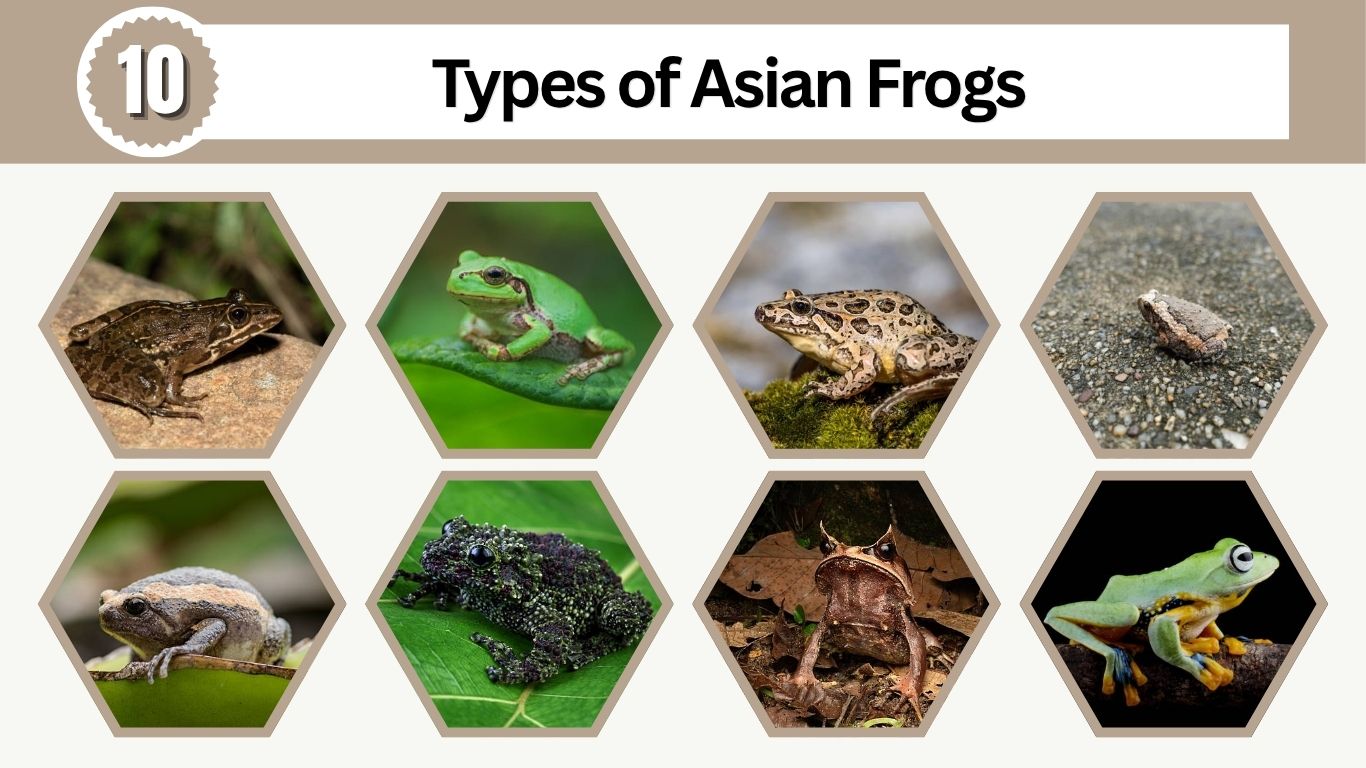
Asian frogs are a diverse group of amphibians found across forests, wetlands, mountains, and even urban areas throughout Asia. They vary widely in size, color, and behavior, from tree-dwelling gliders to burrowing ground species. These frogs play a vital role in ecosystems by controlling insect populations and serving as indicators of environmental health. Many species are adapted to unique habitats, making them fascinating to study. However, habitat loss and pollution threaten several species, highlighting the importance of understanding and protecting these remarkable amphibians.
1. Asian Bullfrog

The Asian Bullfrog is one of the largest frog species found across parts of South and Southeast Asia. It is well known for its strong build, loud calls, and adaptability to different environments. This species is commonly seen near water bodies and plays an important role in controlling insect populations. Its ability to survive in both natural and human-altered habitats makes it widely distributed.
Identification
- Large, robust body with smooth, moist skin
- Color varies from greenish to brown with darker patches
- Males develop bright yellow coloration during breeding season
- Strong hind legs adapted for jumping and swimming
Habitat
The Asian Bullfrog is commonly found in wetlands, ponds, rice fields, and slow-moving streams. It prefers areas with abundant water and vegetation, which provide shelter and breeding grounds. During dry periods, it may burrow into soil to retain moisture.
Behaviors
This frog is mostly active during the night and becomes especially vocal during the breeding season. Males produce loud calls to attract females. It is a strong jumper and swimmer, often escaping predators by quickly diving into water or hiding in vegetation.
Diet and Lifecycle
The Asian Bullfrog is carnivorous, feeding on insects, small fish, and other invertebrates. Larger individuals may even eat smaller frogs. Its lifecycle begins as eggs laid in water, which hatch into tadpoles. These tadpoles gradually develop into adult frogs through metamorphosis.
2. Indian Bullfrog

The Indian Bullfrog is a large and eye-catching frog species commonly found across the Indian subcontinent. It is especially known for its bright yellow color during the breeding season and its loud mating calls. This frog thrives in wet environments and is often seen during monsoon periods. It plays an important ecological role by controlling insect populations.
Identification
- Large body with smooth, moist skin
- Color changes from dull brown or green to bright yellow during breeding
- Males have blue vocal sacs that inflate when calling
- Strong hind legs for jumping and swimming
Habitat
The Indian Bullfrog is typically found in ponds, lakes, rice fields, and marshy areas. It prefers freshwater environments with plenty of vegetation. During dry seasons, it may hide in burrows or moist soil to avoid dehydration.
Behaviors
This frog is mostly nocturnal and becomes highly active during the rainy season. Males are very vocal, producing loud calls to attract females. It is a strong swimmer and often escapes danger by quickly diving into water. It remains less active during dry or cold conditions.
Diet and Lifecycle
The Indian Bullfrog is carnivorous, feeding on insects, worms, small fish, and even smaller frogs. It begins life as eggs laid in water, which hatch into tadpoles. Over time, these tadpoles undergo metamorphosis, developing legs and lungs to become adult frogs.
3. Chinese Gliding Frog

The Chinese Gliding Frog is a unique tree-dwelling species known for its ability to glide between trees. Found in forested regions of Southeast Asia, it uses its large webbed feet to control movement in the air. This adaptation helps it escape predators and move efficiently through its habitat. It is often seen near water sources during breeding seasons.
Identification
- Medium-sized frog with a slender body
- Bright green coloration with lighter underside
- Large webbed feet used for gliding
- Sticky toe pads for climbing trees
Habitat
The Chinese Gliding Frog lives in tropical and subtropical forests, especially in areas with tall trees and nearby water sources. It prefers humid environments where it can easily move between branches. Breeding usually occurs near ponds or slow-moving streams within forests.
Behaviors
This frog is mostly arboreal, spending much of its life in trees. It is active at night and uses its gliding ability to move from branch to branch. During the breeding season, males call to attract females. It avoids predators by quickly gliding away or hiding among leaves.
Diet and Lifecycle
The Chinese Gliding Frog is carnivorous, feeding mainly on insects and small invertebrates. It lays eggs near water, often on leaves hanging above ponds. After hatching, tadpoles drop into the water where they continue developing until they transform into adult frogs.
4. Malayan Horned Frog

The Malayan Horned Frog is a striking species known for its leaf-like appearance and camouflage. Found in Southeast Asian rainforests, it blends perfectly with forest floor debris, making it difficult to spot. Its unique “horns” above the eyes give it a distinctive look. This frog is an ambush predator, relying on stealth rather than speed.
Identification
- Large, flat body with a leaf-like shape
- Brown or tan coloration resembling dead leaves
- Pointed “horns” above the eyes
- Wide mouth adapted for catching prey
Habitat
The Malayan Horned Frog lives in tropical rainforests, especially on the forest floor. It prefers areas with thick leaf litter, fallen leaves, and damp soil. These conditions provide excellent camouflage and help it stay hidden from predators and prey alike.
Behaviors
This frog is mostly nocturnal and spends much of its time motionless. It relies on camouflage to avoid detection. When prey comes close, it quickly strikes using its wide mouth. It is not very active and prefers to stay hidden rather than move frequently.
Diet and Lifecycle
The Malayan Horned Frog is carnivorous, feeding on insects, small reptiles, and even other frogs. It lays eggs in water, where they hatch into tadpoles. These tadpoles grow and eventually transform into adult frogs through metamorphosis.
5. Vietnamese Mossy Frog

The Vietnamese Mossy Frog is a unique and highly camouflaged species found in northern Vietnam. It is famous for its moss-like appearance, which helps it blend perfectly into rocky, damp environments. This frog is often found near streams and caves, where its natural camouflage provides excellent protection from predators.
Identification
- Bumpy, moss-like skin with green and black patterns
- Medium-sized body with rough texture
- Skin resembles wet moss or lichen
- Large eyes adapted for low-light conditions
Habitat
The Vietnamese Mossy Frog lives in humid, rocky environments such as forest streams, caves, and cliff areas. It prefers cool, damp habitats with plenty of water and shade. These conditions help maintain its skin moisture and support its survival.
Behaviors
This frog is mostly nocturnal and remains very still during the day to avoid detection. It relies heavily on camouflage rather than movement for protection. When disturbed, it may freeze or slowly move to stay hidden. It is a quiet species compared to other frogs.
Diet and Lifecycle
The Vietnamese Mossy Frog is carnivorous, feeding on insects and small invertebrates. It breeds in water, where eggs are laid and hatch into tadpoles. These tadpoles develop over time and undergo metamorphosis to become adult frogs.
6. Asian Painted Frog

The Asian Painted Frog is a small but colorful species found across South and Southeast Asia. It is known for its rounded body and distinctive patterns, which help it blend into sandy or muddy environments. This frog is often seen during rainy seasons and is well adapted to burrowing and surviving in dry conditions.
Identification
- Small, rounded body with smooth skin
- Brown or gray coloration with light stripes or patterns
- Short limbs compared to other frogs
- Narrow head with a pointed snout
Habitat
The Asian Painted Frog is commonly found in grasslands, agricultural fields, and open areas with loose soil. It prefers environments where it can easily burrow to escape heat and dryness. During the rainy season, it appears near temporary water bodies for breeding.
Behaviors
This frog is mostly nocturnal and spends much of its time hidden underground. It emerges during rainfall to feed and reproduce. It is not a strong jumper but moves by short hops. Its burrowing behavior helps it survive harsh environmental conditions.
Diet and Lifecycle
The Asian Painted Frog feeds on insects, ants, termites, and other small invertebrates. It breeds in temporary pools formed during rains. Eggs hatch into tadpoles, which quickly develop into frogs before the water dries up, ensuring survival in seasonal habitats.
7. Banded Bullfrog

The Banded Bullfrog is a stout and burrowing frog species commonly found in parts of South and Southeast Asia. It is known for its thick body and ability to survive in dry conditions by staying underground. This frog becomes highly active during the rainy season and is often heard calling loudly after heavy rains.
Identification
- Round, bulky body with smooth skin
- Brown or gray coloration with dark bands or patches
- Short limbs adapted for digging rather than jumping
- Wide mouth and large head
Habitat
The Banded Bullfrog lives in grasslands, agricultural fields, and semi-arid regions. It prefers loose soil where it can burrow to escape heat and dryness. During the rainy season, it emerges near temporary water bodies for breeding.
Behaviors
This frog is mostly inactive during dry periods, staying underground to conserve moisture. It becomes active at night, especially after rainfall. Males produce loud calls to attract females during breeding season. It is not very mobile and relies more on burrowing than jumping.
Diet and Lifecycle
The Banded Bullfrog is carnivorous, feeding on insects, worms, and small invertebrates. It breeds in temporary rainwater pools, where eggs hatch into tadpoles. These tadpoles develop quickly to complete their lifecycle before the water dries up.
8. Himalayan Cascade Frog

The Himalayan Cascade Frog is a stream-dwelling species found in mountainous regions of South Asia. It is well adapted to fast-flowing water environments and rocky terrains. This frog is known for its agility and ability to cling to wet surfaces. It plays an important role in maintaining the balance of aquatic ecosystems in its habitat.
Identification
- Medium-sized frog with a slender body
- Brown or gray coloration that blends with rocks
- Strong limbs with toe pads for gripping surfaces
- Smooth, moist skin adapted to wet environments
Habitat
The Himalayan Cascade Frog lives near fast-flowing streams, rivers, and waterfalls in hilly and mountainous regions. It prefers cool, moist environments with plenty of rocks and vegetation. These habitats provide both shelter and access to water for breeding and survival.
Behaviors
This frog is active both during the day and night, especially in humid conditions. It is an excellent climber and can move easily on wet rocks near streams. When threatened, it quickly jumps into water or hides among stones. Its movements are quick and precise.
Diet and Lifecycle
The Himalayan Cascade Frog feeds mainly on insects and small aquatic invertebrates. It lays eggs in water, often attaching them to rocks or submerged surfaces. Tadpoles develop in flowing water and eventually transform into adult frogs through metamorphosis.
9. Japanese Tree Frog

The Japanese Tree Frog is a small and adaptable species commonly found in Japan and nearby regions. It is well known for its climbing ability and distinctive calls, especially during the breeding season. This frog is often seen in both natural and urban environments, making it one of the more familiar frog species in its range.
Identification
- Small body with smooth, moist skin
- Bright green coloration, sometimes changing to brown
- Sticky toe pads for climbing surfaces
- Slender limbs and rounded head
Habitat
The Japanese Tree Frog lives in forests, grasslands, rice fields, and even gardens. It prefers areas with access to water for breeding but can also survive in human-altered environments. It is commonly found on plants, trees, and walls.
Behaviors
This frog is mostly nocturnal and highly active during the breeding season. It is an excellent climber and often rests on leaves or branches. Males produce loud calls to attract females, especially near water bodies. It can adapt well to different environments.
Diet and Lifecycle
The Japanese Tree Frog feeds on insects and small invertebrates. It lays eggs in water, where they hatch into tadpoles. These tadpoles grow and eventually undergo metamorphosis to become adult frogs.
10. Sri Lankan Rock Frog

The Sri Lankan Rock Frog is a lesser-known species found in rocky and forested regions of Sri Lanka. It is well adapted to life among stones and moist surfaces, often staying close to water sources. This frog is important for maintaining ecological balance by controlling insect populations in its habitat.
Identification
- Medium-sized frog with a slender body
- Brown or gray coloration with darker markings
- Smooth skin that helps retain moisture
- Strong limbs suited for climbing rocks
Habitat
The Sri Lankan Rock Frog lives in rocky forests, stream edges, and moist environments with plenty of shade. It prefers areas with flowing water and natural rock formations, which provide shelter and breeding grounds.
Behaviors
This frog is mostly active during the night and in humid conditions. It is a good climber and often moves across rocks near water. When threatened, it quickly hides in crevices or jumps into nearby water to escape danger.
Diet and Lifecycle
The Sri Lankan Rock Frog feeds on insects and small invertebrates. It lays eggs in or near water, where they hatch into tadpoles. These tadpoles develop over time and transform into adult frogs through metamorphosis.
FAQs
What do Asian frogs eat?
Most Asian frogs are carnivorous and feed mainly on insects, worms, and other small invertebrates. Larger species, like bullfrogs, may also eat small fish or even other frogs. Their diet helps control insect populations and maintain ecological balance.
Where do Asian frogs live?
Asian frogs live in a wide range of habitats, including forests, wetlands, rice fields, streams, and even urban areas. Most species prefer moist environments with access to water for breeding and survival.
Are Asian frogs poisonous?
Most Asian frogs are not dangerous to humans, but some species may secrete mild toxins through their skin as a defense mechanism. These toxins are usually not harmful unless ingested or touched with sensitive areas.
How long do Asian frogs live?
The lifespan of Asian frogs varies by species, but most live between 5 to 15 years. Some larger species may live longer in protected environments or captivity with proper care.
Why are some Asian frogs endangered?
Many Asian frog species are threatened due to habitat loss, pollution, climate change, and disease. Deforestation and water contamination reduce their breeding grounds, making conservation efforts important for their survival.
