
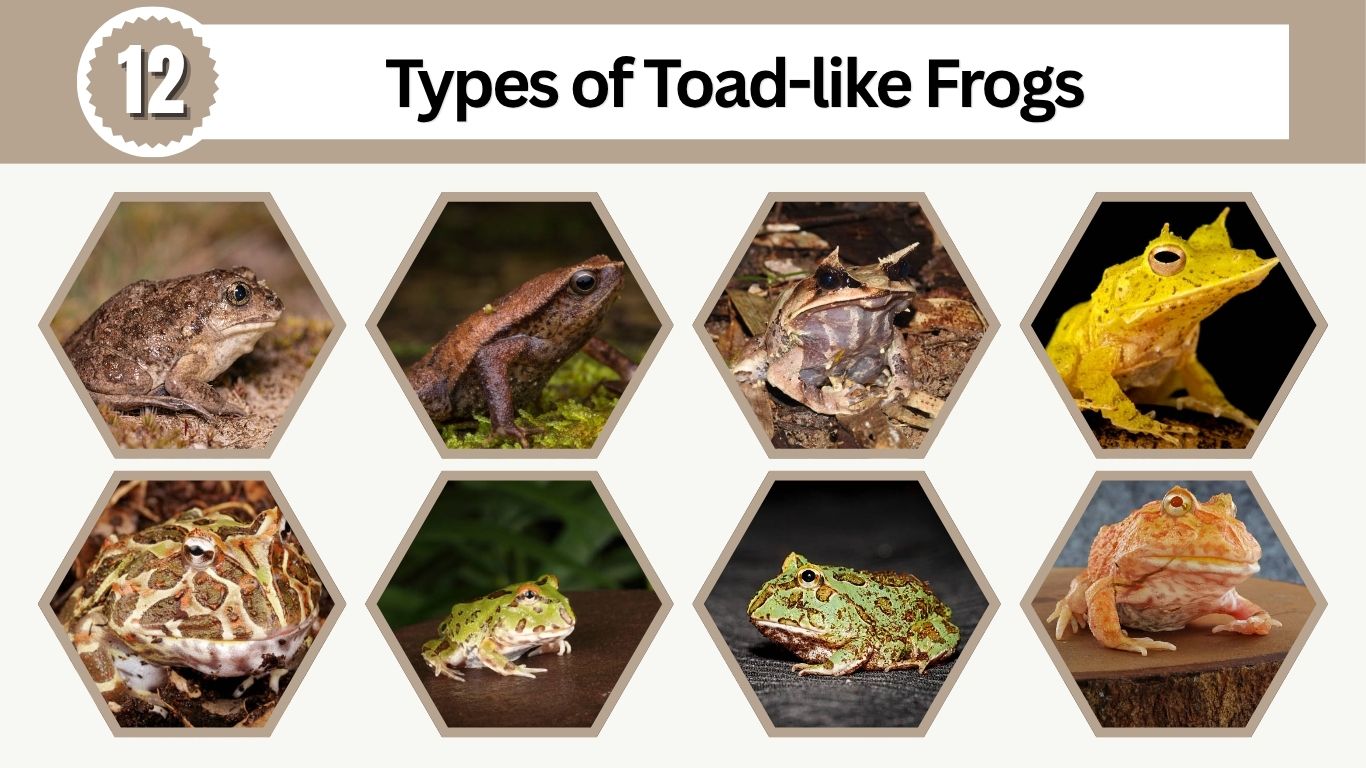
Toad-like frogs are fascinating amphibians that combine features of both frogs and toads, giving them a unique appearance and behavior. These species are often characterized by their round bodies, wide mouths, and ambush hunting style. Found in various regions around the world, especially in warm and humid climates, they adapt to a wide range of habitats. This guide explores 12 types of toad-like frogs, helping you understand their identification, habitat, behavior, and lifecycle in a simple and clear way.
1. Budgett’s Frog

Budgett’s Frog is a unique, toad-like amphibian known for its flattened body and wide mouth. Native to South America, it has an unusual appearance and behavior that sets it apart from typical frogs. This species is highly aquatic and spends most of its life in shallow water, often blending into muddy environments.
Identification
- Medium-sized frog, usually 4–5 inches in length
- Flattened body with a broad, round shape
- Large, wide mouth that gives it a comical appearance
- Skin is smooth but may appear slightly wrinkled
- Color ranges from grayish-green to brown with darker spots
- Short limbs compared to most frogs
Habitat and Distribution
Budgett’s Frog is found in parts of Argentina, Paraguay, and Bolivia. It inhabits shallow ponds, marshes, and slow-moving waters, especially in regions that experience seasonal flooding. This frog prefers muddy, warm environments where it can remain partially submerged and hidden from predators.
Behavior and Diet
This species is mostly aquatic and spends much of its time resting at the bottom of shallow water. It is known for its aggressive feeding behavior and will attempt to eat almost anything it can fit into its mouth. Its diet includes insects, small fish, other frogs, and even small vertebrates.
Lifecycle
Budgett’s Frog begins life as a tadpole in temporary water bodies formed during the rainy season. The tadpoles develop quickly due to the limited lifespan of these habitats. As they mature, they transform into fully aquatic adults. Their lifecycle is closely tied to seasonal water availability, which influences breeding and development timing.
2. Surinam Horned Frog

The Surinam Horned Frog is a large, toad-like amphibian known for its wide mouth and horn-like projections above its eyes. Native to South America, it has a powerful appearance and is often grouped with “Pacman frogs” due to its round body shape. This species is mostly terrestrial and relies on camouflage to ambush prey.
Identification
- Large frog, typically 4–6 inches in length
- Round, bulky body with a wide head
- Distinct horn-like projections above the eyes
- Skin is rough and textured, resembling a toad
- Color varies from green to brown with dark patterns
- Extremely large mouth relative to body size
Habitat and Distribution
The Surinam Horned Frog is found in tropical regions of South America, including Suriname, Brazil, and surrounding areas. It prefers rainforest floors, leaf litter, and moist environments near water sources. This frog thrives in warm, humid climates and often stays partially buried for camouflage.
Behavior and Diet
This species is an ambush predator, remaining still for long periods while waiting for prey. It is known for its aggressive feeding behavior and will strike quickly at anything that moves nearby. Its diet includes insects, small mammals, other frogs, and even birds in some cases.
Lifecycle
The Surinam Horned Frog breeds in temporary pools formed during the rainy season. Eggs hatch into tadpoles that develop in water before transforming into froglets. As they grow, they transition to a more land-based lifestyle, relying on moisture and cover to survive.
3. Argentine Horned Frog

The Argentine Horned Frog is a well-known toad-like amphibian famous for its round body and enormous mouth. Native to South America, it is often called a “Pacman frog” due to its shape and appetite. This species is mostly terrestrial and relies on camouflage and ambush tactics to capture prey.
Identification
- Large frog, typically 4–7 inches in length
- Round, bulky body with a very wide mouth
- Short horn-like projections above the eyes
- Skin is slightly rough with bold green, brown, and yellow patterns
- Strong, powerful jaws
- Females are larger than males
Habitat and Distribution
The Argentine Horned Frog is found in Argentina, Uruguay, and Brazil. It inhabits grasslands, forest edges, and moist lowland areas. This species prefers humid environments with soft soil where it can partially bury itself while waiting for prey.
Behavior and Diet
This frog is a classic ambush predator, remaining still for long periods before striking quickly. It is known for its aggressive feeding behavior and will attempt to eat almost anything it can overpower. Its diet includes insects, rodents, small reptiles, and other amphibians.
Lifecycle
Breeding usually occurs during the rainy season in temporary pools or shallow water. Eggs hatch into aquatic tadpoles that grow rapidly before metamorphosing into froglets. As adults, they adopt a mostly terrestrial lifestyle, relying on moisture and camouflage for survival.
4. Cranwell’s Horned Frog

Cranwell’s Horned Frog is a toad-like amphibian commonly found in South America and widely known in the pet trade. It has a rounded body and large mouth, similar to other horned frogs, giving it a distinctive appearance. This species is mostly terrestrial and relies on camouflage to blend into its surroundings while waiting for prey.
Identification
- Medium to large size, typically 4–6 inches in length
- Round, compact body with a wide head
- Short horn-like ridges above the eyes
- Skin is slightly rough with patterns of green, brown, or tan
- Large mouth with strong jaws
- Females are generally larger than males
Habitat and Distribution
Cranwell’s Horned Frog is native to Argentina, Bolivia, Paraguay, and Brazil. It inhabits grasslands, forests, and moist lowland areas. This frog prefers environments with soft soil and sufficient humidity, allowing it to partially bury itself for camouflage and protection.
Behavior and Diet
This species is an ambush predator that spends much of its time buried in soil or leaf litter. It remains still until prey comes close, then strikes quickly. Cranwell’s Horned Frog is known for its strong appetite and will eat insects, small rodents, reptiles, and other amphibians.
Lifecycle
Breeding occurs during the rainy season in shallow, temporary water bodies. Eggs develop into tadpoles that grow quickly due to limited water availability. After metamorphosis, the young frogs transition to land, adopting the same ambush lifestyle as adults.
5. Ornate Horned Frog

The Ornate Horned Frog is a striking, toad-like amphibian known for its bold colors and patterns. Native to South America, it is one of the most visually distinctive horned frogs. Its round body and large mouth give it the classic “Pacman frog” appearance, and it is primarily terrestrial, relying on camouflage and stillness to hunt.
Identification
- Medium to large size, typically 4–6 inches in length
- Round, bulky body with a very wide mouth
- Short horn-like projections above the eyes
- Bright coloration with green, yellow, red, and brown patterns
- Skin is slightly rough with a decorative appearance
- Females are larger than males
Habitat and Distribution
The Ornate Horned Frog is found in Argentina, Uruguay, and Brazil. It lives in grasslands, forest edges, and humid lowland areas. This species prefers environments with soft soil and good moisture levels, allowing it to burrow partially and stay hidden.
Behavior and Diet
This frog is an ambush predator, remaining motionless for long periods while waiting for prey. It is known for its aggressive feeding behavior and powerful bite. Its diet includes insects, small mammals, reptiles, and other amphibians that come within striking distance.
Lifecycle
Breeding occurs during the rainy season in shallow, temporary pools. Eggs hatch into tadpoles that develop rapidly due to limited water availability. After metamorphosis, the young frogs become terrestrial and adopt the same hunting and hiding behaviors as adults.
6. Amazon Horned Frog

The Amazon Horned Frog is a large, toad-like amphibian native to the Amazon Basin. It is known for its massive head, wide mouth, and bold appearance. Like other horned frogs, it is an ambush predator that relies on camouflage and stillness to capture prey. This species is mostly terrestrial and thrives in warm, humid rainforest environments.
Identification
- Large frog, typically 4–7 inches in length
- Round, heavy body with a very wide mouth
- Prominent horn-like projections above the eyes
- Skin is rough with green, brown, and dark patterned coloration
- Strong jaws capable of handling large prey
- Females are larger and bulkier than males
Habitat and Distribution
The Amazon Horned Frog is found throughout the Amazon rainforest in countries like Brazil, Peru, and Colombia. It prefers moist forest floors, leaf litter, and areas near temporary water sources. High humidity and warm temperatures are essential for its survival.
Behavior and Diet
This species is a classic ambush predator, staying partially buried and motionless until prey approaches. It is highly aggressive when feeding and will attempt to eat anything it can overpower. Its diet includes insects, small mammals, reptiles, birds, and other amphibians.
Lifecycle
Breeding takes place during the rainy season when temporary pools form. Eggs are laid in water and hatch into tadpoles that grow quickly. After metamorphosis, the young frogs move onto land and begin their solitary, ambush-based lifestyle.
7. Pacman Frog

The Pacman Frog is a popular name used for several horned frog species due to their round shape and large mouths, resembling the classic game character. These toad-like frogs are native to South America and are known for their voracious appetite and sedentary lifestyle. They are mostly terrestrial and rely on camouflage to hunt effectively.
Identification
- Medium to large size, typically 4–7 inches in length
- Round, bulky body with an extremely wide mouth
- Short horn-like ridges above the eyes
- Bright or earthy coloration, including green, brown, yellow, or albino variations
- Skin is slightly rough with irregular patterns
- Females are larger than males
Habitat and Distribution
Pacman Frogs are found in South American regions such as Argentina, Brazil, and Paraguay. They inhabit grasslands, forest edges, and humid lowland areas. These frogs prefer environments with soft soil and high moisture, allowing them to bury themselves partially for camouflage and protection.
Behavior and Diet
This species is an ambush predator that spends most of its time buried and motionless. It is known for its aggressive feeding behavior and will attack almost anything that moves nearby. Its diet includes insects, small mammals, reptiles, and other amphibians.
Lifecycle
Breeding occurs during the rainy season in shallow, temporary pools. Eggs hatch into aquatic tadpoles that grow rapidly. After metamorphosis, the young frogs transition to a terrestrial lifestyle, adopting the same ambush hunting behavior as adults.
8. Painted Horned Frog

The Painted Horned Frog is a toad-like amphibian known for its decorative patterns and rounded body shape. Native to South America, it resembles other horned frogs but stands out due to its distinct coloration. This species is mostly terrestrial and relies on camouflage and stillness to ambush prey.
Identification
- Medium-sized frog, typically 4–6 inches in length
- Round, compact body with a wide head
- Short horn-like ridges above the eyes
- Skin displays patterned coloration with shades of brown, green, and tan
- Slightly rough texture that resembles a toad
- Large mouth adapted for swallowing sizable prey
Habitat and Distribution
The Painted Horned Frog is found in parts of South America, especially in forest edges and grassland regions. It prefers moist environments with soft soil, allowing it to burrow partially. This species thrives in warm climates with seasonal rainfall that supports breeding.
Behavior and Diet
This frog is an ambush predator that remains motionless for long periods. It waits for prey to come close before striking quickly. It has a strong appetite and feeds on insects, small reptiles, amphibians, and occasionally small mammals.
Lifecycle
Breeding occurs during the rainy season in shallow water bodies. Eggs develop into tadpoles that grow rapidly due to limited water availability. After metamorphosis, the young frogs move onto land and begin their solitary, ambush-based lifestyle similar to adults.
9. Colombian Horned Frog

The Colombian Horned Frog is a toad-like amphibian native to northern South America. It is known for its broad body, large head, and powerful jaws. Like other horned frogs, it is an ambush predator that relies on camouflage and stillness to catch prey. This species is mostly terrestrial and thrives in warm, humid environments.
Identification
- Medium to large size, typically 4–6 inches in length
- Round, bulky body with a very wide mouth
- Short horn-like projections above the eyes
- Skin is slightly rough with brown, green, or mixed patterns
- Strong jaws adapted for capturing large prey
- Females are larger than males
Habitat and Distribution
The Colombian Horned Frog is found in Colombia and nearby regions. It inhabits tropical forests, grasslands, and moist lowland areas. This species prefers environments with soft soil and high humidity, allowing it to partially bury itself for camouflage and protection.
Behavior and Diet
This frog is an ambush predator that remains motionless for long periods. It strikes quickly when prey comes within reach and is known for its aggressive feeding behavior. Its diet includes insects, small reptiles, amphibians, and occasionally small mammals.
Lifecycle
Breeding typically occurs during the rainy season in temporary water bodies. Eggs hatch into aquatic tadpoles that grow rapidly. After metamorphosis, the young frogs transition to land and adopt the same ambush hunting behavior as adults.
10. Ecuadorian Horned Frog

The Ecuadorian Horned Frog is a toad-like amphibian native to regions of Ecuador and nearby parts of South America. It is known for its rounded body, large mouth, and camouflaged appearance. Like other horned frogs, it is primarily terrestrial and depends on stillness and disguise to hunt effectively in its natural environment.
Identification
- Medium-sized frog, typically 4–6 inches in length
- Round, bulky body with a wide head
- Short horn-like ridges above the eyes
- Skin is slightly rough with brown, green, or mixed patterns
- Large mouth suited for swallowing sizable prey
- Females are generally larger than males
Habitat and Distribution
The Ecuadorian Horned Frog is found in tropical and subtropical regions of Ecuador. It inhabits forest floors, grasslands, and moist lowland areas. This species prefers warm, humid environments with soft soil, allowing it to partially bury itself for camouflage and protection.
Behavior and Diet
This frog is an ambush predator that remains motionless for long periods while waiting for prey. It is known for its aggressive feeding behavior and will attempt to eat almost anything it can overpower. Its diet includes insects, small reptiles, amphibians, and occasionally small mammals.
Lifecycle
Breeding occurs during the rainy season in temporary pools or shallow water bodies. Eggs hatch into tadpoles that develop quickly due to limited water availability. After metamorphosis, the young frogs move onto land and adopt the same ambush-based lifestyle as adults.
11. Smooth-sided Toad-like Frog

The Smooth-sided Toad-like Frog is a unique amphibian known for its rounded body and relatively smooth skin compared to other toad-like frogs. It has a compact appearance and a secretive lifestyle, often staying hidden in moist environments. This species is well adapted to terrestrial living and relies on camouflage to avoid predators.
Identification
- Small to medium size, typically 2–4 inches in length
- Rounded, compact body shape
- Smooth or slightly textured skin compared to true toads
- Color ranges from brown to gray with subtle patterns
- Short limbs and a broad head
- Eyes are relatively large and prominent
Habitat and Distribution
Smooth-sided Toad-like Frogs are found in tropical and subtropical regions, often in forests, grasslands, and moist lowland areas. They prefer environments with leaf litter, soft soil, and high humidity. These frogs are usually located near temporary water sources, especially during breeding seasons.
Behavior and Diet
This species is mostly nocturnal and spends much of the day hidden under leaves, soil, or debris. It is an opportunistic feeder, consuming insects and other small invertebrates. The frog relies on stillness and camouflage rather than speed to avoid predators and capture prey.
Lifecycle
Breeding typically occurs during the rainy season when temporary water bodies form. Eggs are laid in shallow water, where they develop into tadpoles. The tadpoles grow and eventually undergo metamorphosis into froglets, which then move onto land and adopt a terrestrial lifestyle.
12. Spadefoot Toad

The Spadefoot Toad is a toad-like amphibian known for its burrowing ability and unique adaptations to dry environments. Unlike true toads, it has smoother skin and a more frog-like appearance. This species is highly adapted to arid and semi-arid regions, where it spends much of its life underground.
Identification
- Small to medium size, typically 2–3 inches in length
- Smooth skin compared to most toads
- Vertical pupils, similar to a cat’s eyes
- Color ranges from gray to brown with subtle markings
- Distinct “spade” on each hind foot used for digging
- Short, rounded body with relatively long hind legs
Habitat and Distribution
Spadefoot Toads are found in North America, Europe, and parts of Asia, depending on the species. They inhabit dry grasslands, deserts, and sandy soils. These toads spend most of their time buried underground and emerge mainly during rainy periods to breed in temporary pools.
Behavior and Diet
This species is primarily nocturnal and remains underground during dry conditions. It emerges quickly after rain to feed and reproduce. Spadefoot Toads are opportunistic feeders, consuming insects, spiders, and other small invertebrates. Their burrowing behavior helps them avoid heat and dehydration.
Lifecycle
Spadefoot Toads have a rapid lifecycle adapted to temporary water conditions. After heavy rains, they breed in shallow pools where eggs hatch into tadpoles. These tadpoles develop quickly, sometimes in just a few weeks, before the water dries up. The young toads then burrow into the soil to continue their underground lifestyle.
FAQs
What are toad-like frogs?
Toad-like frogs are amphibians that resemble true toads in appearance, often having round bodies, short limbs, and rough or textured skin. However, they may belong to different frog families. Many of them share similar behaviors, such as burrowing or ambush hunting.
Where do toad-like frogs live?
Toad-like frogs are found in various regions around the world, especially in South and Central America. They typically inhabit forests, grasslands, wetlands, and areas with soft soil. Most prefer warm, humid environments, though some species adapt to dry or seasonal habitats.
What do toad-like frogs eat?
Most toad-like frogs are carnivorous and feed on insects, worms, and other small invertebrates. Larger species, like horned frogs, may also eat small mammals, reptiles, and other amphibians. They are usually ambush predators that wait for prey to come close.
Are toad-like frogs dangerous?
Toad-like frogs are generally not dangerous to humans. Some species may have mild toxins on their skin as a defense against predators, but they are not harmful if handled carefully. However, it is always best to avoid touching wild amphibians unnecessarily.
How long do toad-like frogs live?
The lifespan of toad-like frogs varies by species, but many can live between 5 to 15 years in the wild. With proper care in captivity, some species may live even longer, depending on environmental conditions and diet.
