
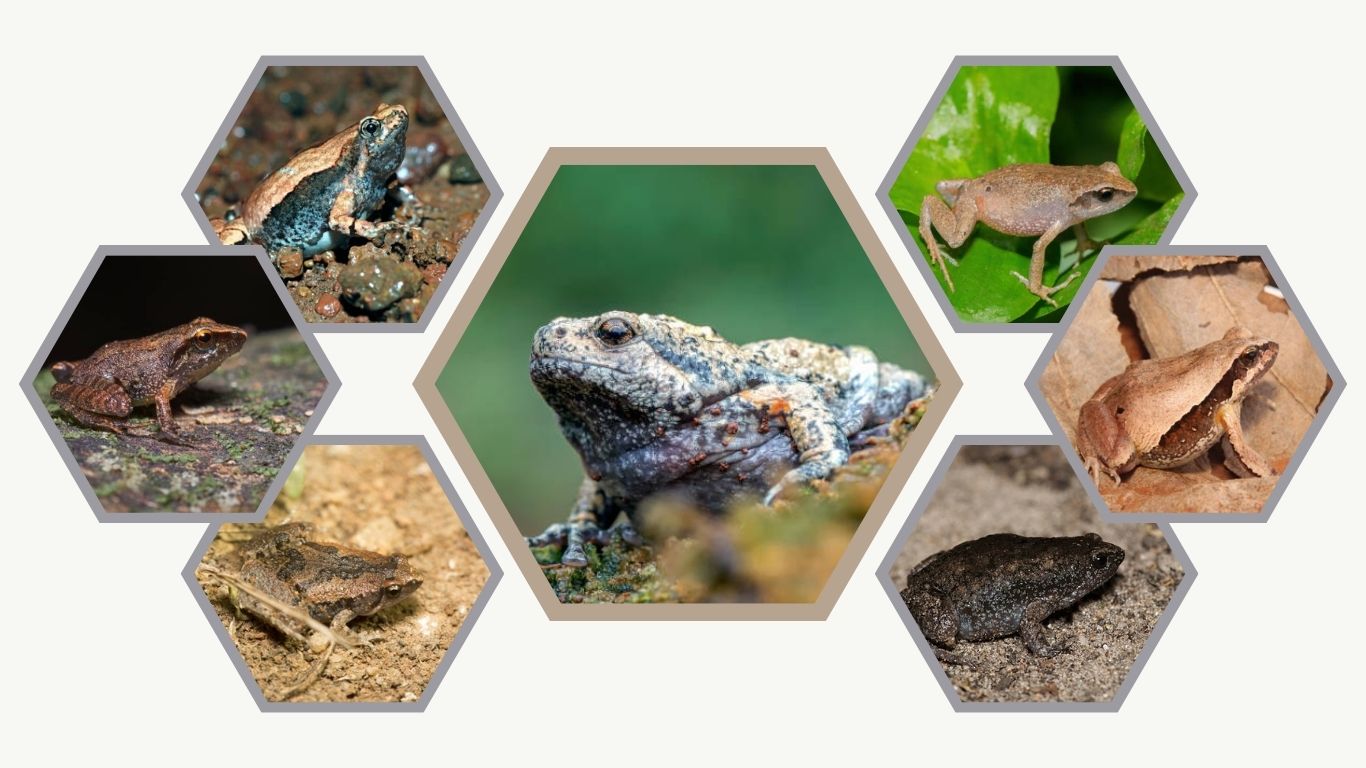
Narrow-mouthed frogs are small, secretive amphibians known for their pointed snouts, rounded bodies, and unique feeding habits. Belonging to the Microhylidae family, these frogs are commonly found in tropical and subtropical regions around the world, often hiding under leaf litter, logs, or soil.
This guide covers 10 types of narrow-mouthed frogs, highlighting their identification features, habitats, and behaviors. It will help you recognize these fascinating, often overlooked frogs and better understand their role in different ecosystems.
1. Eastern Narrow-mouthed Frog

The Eastern Narrow-mouthed Frog is a small, secretive amphibian known for its pointed snout and smooth, moist skin. Despite its name, it is actually a type of microhylid frog rather than a true toad, and it is commonly found in warm, humid environments.
Identification
- Small, oval-shaped body
- Gray to brown coloration with a darker stripe along the back
- Narrow, pointed snout
- Smooth skin and short limbs
Habitat
This species prefers moist environments such as forests, grasslands, wetlands, and suburban areas. It is often found under logs, leaf litter, or other ground cover where humidity is high.
Lifecycle & Diet
Eggs are laid in shallow water or temporary pools. Tadpoles develop quickly before transforming into frogs. Their diet mainly consists of ants, termites, and other small insects, which they capture using a sticky tongue.
Behavior
Eastern Narrow-mouthed Frogs are primarily nocturnal and spend most of their time hidden. They are known for their high-pitched, nasal call, often compared to the sound of a sheep bleating.
2. Western Narrow-mouthed Toad

The Western Narrow-mouthed Toad is a small, burrowing amphibian known for its rounded body and narrow snout. Despite its name, it is actually a frog and is adapted to dry environments where it spends much of its time hidden underground.
Identification
- Small, rounded body with smooth skin
- Gray to brown coloration with subtle mottling
- Narrow, pointed snout
- Short limbs with digging ability
Habitat
This species is commonly found in grasslands, deserts, and open woodlands. It prefers loose soil where it can burrow and often emerges after rainfall.
Lifecycle & Diet
Eggs are laid in temporary rain pools. Tadpoles develop rapidly to take advantage of short-lived water sources. The diet mainly includes ants, termites, and other small insects.
Behavior
Western Narrow-mouthed Toads are nocturnal and secretive. They spend most of their time underground and become active after rain, producing soft, buzzing calls during breeding.
3. Texas Narrow-mouthed Frog

The Texas Narrow-mouthed Frog is a small and adaptable species known for its pointed snout and preference for warm, humid conditions. It is commonly found in southern regions with suitable moisture.
Identification
- Small body with smooth, moist skin
- Gray or brown coloration with darker patterns
- Narrow, pointed snout
- Compact body with short limbs
Habitat
This species inhabits grasslands, forests, and suburban areas. It prefers moist environments and is often found under debris, logs, or leaf litter.
Lifecycle & Diet
Females lay eggs in shallow water or temporary pools. Tadpoles develop quickly before transforming into adults. Their diet consists mainly of ants, termites, and other small invertebrates.
Behavior
Texas Narrow-mouthed Frogs are nocturnal and remain hidden during the day. They become active at night, especially after rainfall, and produce nasal, buzzing calls during the breeding season.
4. Great Plains Narrow-mouthed Frog

The Great Plains Narrow-mouthed Frog is a small, burrowing species adapted to life in open and semi-arid regions. It is known for its rounded body and ability to remain hidden for long periods underground.
Identification
- Small, plump body with smooth skin
- Gray to brown coloration with darker blotches
- Narrow, pointed snout
- Short limbs adapted for digging
Habitat
This species is commonly found in grasslands, prairies, and open woodlands. It prefers loose, sandy soils where it can burrow and often emerges after rainfall.
Lifecycle & Diet
Eggs are laid in temporary rain pools. Tadpoles develop quickly due to short-lived water sources. Adults feed mainly on ants, termites, and other small insects.
Behavior
Great Plains Narrow-mouthed Frogs are nocturnal and highly secretive. They spend most of their time underground and become active after rain, producing soft, nasal calls during breeding.
5. Tropical Narrow-mouthed Frog

The Tropical Narrow-mouthed Frog is a widely distributed species known for its adaptability and small size. It thrives in warm, humid environments and is often found close to human settlements.
Identification
- Small, compact body with smooth skin
- Brown to gray coloration with subtle markings
- Narrow, pointed snout
- Short limbs and rounded shape
Habitat
This species inhabits tropical forests, grasslands, gardens, and urban areas. It prefers moist environments and is often found under leaf litter, logs, or debris.
Lifecycle & Diet
Females lay eggs in temporary pools or shallow water. Tadpoles develop rapidly before transforming into frogs. Their diet mainly includes ants, termites, and other tiny invertebrates.
Behavior
Tropical Narrow-mouthed Frogs are nocturnal and remain hidden during the day. They become active at night, especially after rainfall, and produce soft, buzzing calls during the breeding season.
6. Malaysian Narrow-mouthed Frog

The Malaysian Narrow-mouthed Frog is a small, secretive species commonly found in Southeast Asia. It is known for its compact body and ability to thrive in humid tropical environments.
Identification
- Small, rounded body with smooth skin
- Dark brown to gray coloration, sometimes with lighter markings
- Narrow, pointed snout
- Short limbs with a slightly plump appearance
Habitat
This species inhabits tropical rainforests, plantations, and gardens. It prefers moist areas with plenty of ground cover such as leaf litter and fallen logs.
Lifecycle & Diet
Eggs are laid in shallow water or temporary pools. Tadpoles develop quickly before metamorphosing into adults. The diet mainly consists of ants, termites, and other small insects.
Behavior
Malaysian Narrow-mouthed Frogs are nocturnal and highly secretive. They spend most of their time hidden and become active at night, especially after rainfall, producing soft, buzzing calls.
7. Indian Narrow-mouthed Frog

The Indian Narrow-mouthed Frog is a common species found across the Indian subcontinent. It is well adapted to both natural and human-modified environments and is often seen during the rainy season.
Identification
- Small, oval-shaped body with smooth skin
- Brown to gray coloration with darker patterns
- Narrow, pointed snout
- Short limbs and compact build
Habitat
This species is found in forests, grasslands, agricultural fields, and urban areas. It prefers moist environments and is often located under debris, stones, or leaf litter.
Lifecycle & Diet
Females lay eggs in temporary rain pools. Tadpoles develop rapidly to complete their lifecycle before water sources dry up. Their diet mainly includes ants, termites, and other small invertebrates.
Behavior
Indian Narrow-mouthed Frogs are nocturnal and remain hidden during the day. They become active at night, especially during the monsoon season, producing nasal calls to attract mates.
8. Sri Lankan Narrow-mouthed Frog

The Sri Lankan Narrow-mouthed Frog is a small, ground-dwelling species known for its secretive lifestyle and adaptability to humid environments. It is commonly encountered during wet conditions when it becomes more active.
Identification
- Small, rounded body with smooth skin
- Brown to dark gray coloration with faint patterns
- Narrow, pointed snout
- Short limbs with a compact structure
Habitat
This species inhabits tropical forests, gardens, and agricultural lands. It prefers moist areas with dense ground cover such as leaf litter, soil, and debris.
Lifecycle & Diet
Eggs are laid in temporary rain pools or shallow water bodies. Tadpoles develop quickly due to short-lived water sources. Adults feed mainly on ants, termites, and other small insects.
Behavior
Sri Lankan Narrow-mouthed Frogs are nocturnal and spend most of the day hidden. They become active after rainfall and produce soft, nasal calls during the breeding season.
9. Banded Narrow-mouthed Frog

The Banded Narrow-mouthed Frog is a distinctive species recognized for its striped or banded body pattern. Its coloration helps it blend into its surroundings while remaining visually unique.
Identification
- Small body with smooth skin
- Brown or gray coloration with visible bands or stripes
- Narrow, pointed snout
- Compact body with short limbs
Habitat
This species is found in tropical and subtropical regions, including forests, grasslands, and wetlands. It prefers moist habitats with access to temporary water sources.
Lifecycle & Diet
Females lay eggs in shallow water or rain pools. Tadpoles develop rapidly before transforming into adults. Their diet mainly consists of ants, termites, and other small invertebrates.
Behavior
Banded Narrow-mouthed Frogs are nocturnal and secretive. They remain hidden during the day and emerge at night, especially after rain, producing soft, buzzing calls to attract mates.
10. Painted Narrow-mouthed Frog

The Painted Narrow-mouthed Frog is a visually distinct species known for its patterned body and small size. Its markings provide effective camouflage, helping it blend into leaf litter and forest floors.
Identification
- Small body with smooth skin
- Brown or gray coloration with contrasting painted-like patterns
- Narrow, pointed snout
- Compact shape with short limbs
Habitat
This species is commonly found in tropical and subtropical forests, grasslands, and moist lowland areas. It prefers habitats with dense ground cover such as leaf litter and loose soil.
Lifecycle & Diet
Eggs are laid in temporary pools or shallow water after rainfall. Tadpoles develop quickly to adapt to short-lived water sources. Adults mainly feed on ants, termites, and other small invertebrates.
Behavior
Painted Narrow-mouthed Frogs are nocturnal and highly secretive. They remain hidden during the day and become active at night, especially after rain, producing soft, nasal calls during the breeding season.
FAQs
What are narrow-mouthed frogs?
Narrow-mouthed frogs are small amphibians belonging to the Microhylidae family. They are known for their pointed snouts, compact bodies, and specialized diet. Despite sometimes being called toads, they are true frogs and differ in structure and behavior.
Where do narrow-mouthed frogs live?
They are commonly found in tropical and subtropical regions across Asia, Africa, and the Americas. These frogs prefer moist environments such as forests, grasslands, wetlands, and even gardens or urban areas.
What do narrow-mouthed frogs eat?
Narrow-mouthed frogs mainly feed on ants, termites, and other tiny invertebrates. Their diet is specialized, and they use a sticky tongue to capture small prey efficiently.
Are narrow-mouthed frogs dangerous?
These frogs are harmless to humans. They do not produce dangerous toxins and are non-aggressive. Their primary defense is hiding and remaining still to avoid predators.
When are narrow-mouthed frogs most active?
They are mostly nocturnal and become active at night. Many species are especially active after rainfall, when humidity is high and breeding conditions are favorable.
