
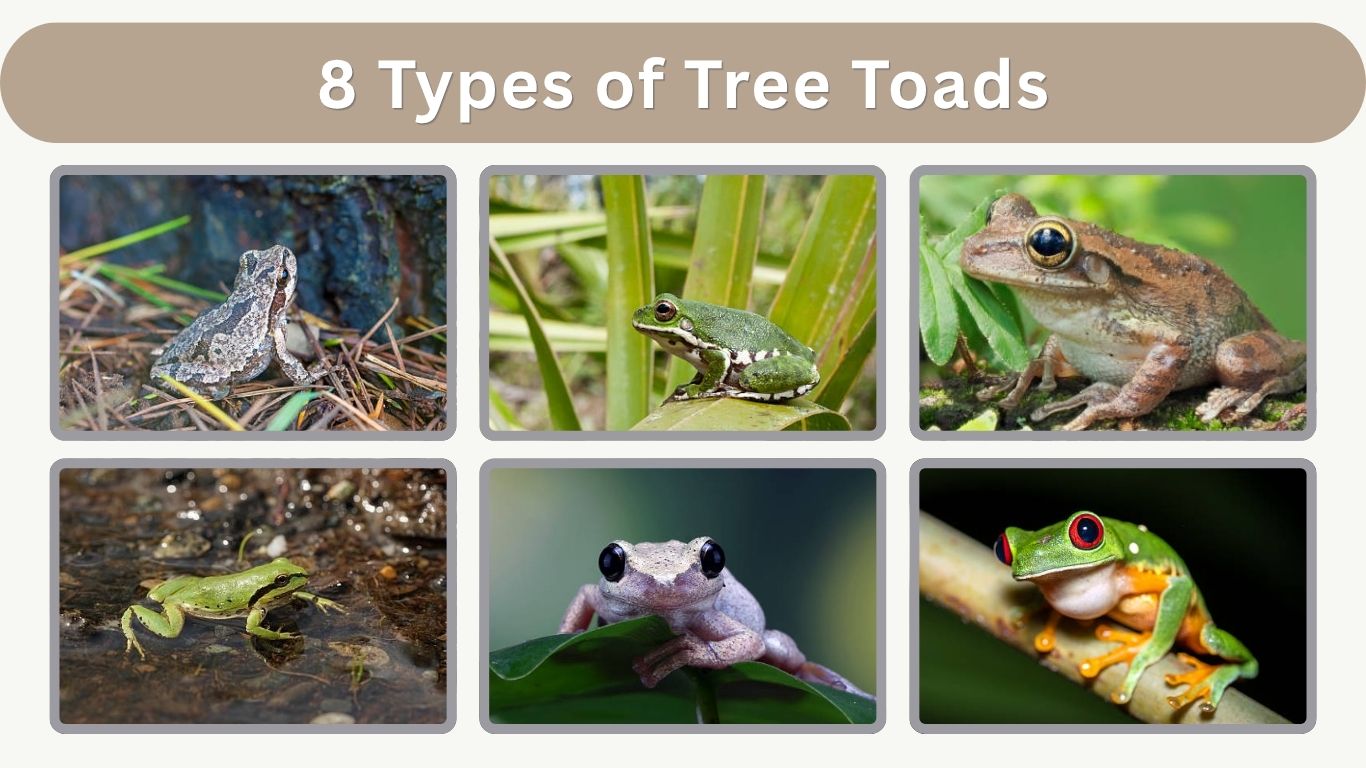
Tree toads, commonly known as tree frogs, are fascinating amphibians found in forests, wetlands, rainforests, and humid environments around the world. These small climbers are recognized for their sticky toe pads, colorful appearances, and loud nighttime calls during breeding seasons. Different species vary in size, color, habitat, and behavior, making them interesting to study and observe in nature. From the bright Red-Eyed Tree Frog to the adaptable Gray Treefrog, each species has unique characteristics that help it survive in diverse ecosystems across different regions of the world.
1. Gray Treefrog

Gray Treefrogs are small tree-dwelling amphibians native to eastern North America. They are well known for their remarkable camouflage abilities, allowing them to blend into bark, leaves, and branches. These nocturnal frogs produce loud musical trills during breeding season and are commonly found near forests, wetlands, ponds, and suburban gardens with abundant moisture and vegetation throughout warm months.
Identification
- Gray, green, or brown body coloration
- Rough skin with irregular dark patches
- Bright yellow or orange inner thighs
- Large sticky toe pads for climbing
- Usually 1.5 to 2 inches in length
Habitat and Distribution
Gray Treefrogs inhabit forests, wooded swamps, ponds, marshes, and residential gardens across eastern regions of North America. They prefer moist environments with dense vegetation and spend most of their time climbing trees, shrubs, and branches near temporary breeding pools during spring and summer months.
Behavior and Diet
These frogs are nocturnal hunters that feed mainly on insects, spiders, moths, beetles, and other small invertebrates. During daytime hours, they remain hidden on bark or leaves using camouflage for protection. Males create loud trilling calls at night to attract females during the breeding season.
Lifecycle
Breeding usually begins in late spring when males gather near shallow ponds and wetlands. Females lay clusters of eggs in water, where tadpoles hatch and develop over several weeks. After metamorphosis, young frogs leave the water and begin living among trees and surrounding vegetation.
2. Green Tree Frog

Green Tree Frogs are bright-colored amphibians commonly found in warm, humid regions of the southeastern United States. Their smooth green skin and sticky toe pads make them excellent climbers in trees and wetland plants. These frogs are highly vocal during rainy evenings and are often seen near ponds, marshes, lakes, and garden water sources throughout the warmer seasons of the year.
Identification
- Bright green body with smooth skin
- White or yellow stripe along the sides
- Large round eyes with golden coloration
- Sticky toe pads for climbing surfaces
- Usually grows 1.5 to 2.5 inches long
Habitat and Distribution
Green Tree Frogs live in swamps, marshes, ponds, lakes, and other wet environments throughout the southeastern United States. They prefer warm climates with dense vegetation and are commonly found resting on reeds, branches, leaves, and plants close to freshwater habitats during humid weather conditions.
Behavior and Diet
These frogs are mostly active during nighttime and feed on insects such as flies, mosquitoes, moths, beetles, and crickets. They are skilled climbers and spend much of their time on plants above water. Males produce repeated calls during breeding season to attract nearby females.
Lifecycle
Breeding takes place during late spring and summer when females lay eggs in shallow freshwater areas. Tadpoles hatch from the eggs and grow in water for several weeks before transforming into froglets. Young frogs then move into nearby vegetation and begin their tree-climbing lifestyle.
3. Red-Eyed Tree Frog

Red-Eyed Tree Frogs are colorful tropical amphibians famous for their striking red eyes and vibrant green bodies. Native to Central American rainforests, these frogs are excellent climbers that spend most of their lives in trees near water sources. Their bright appearance helps scare predators, while their nocturnal lifestyle allows them to hunt insects safely during humid nighttime conditions.
Identification
- Bright green body with smooth skin
- Large red eyes with vertical black pupils
- Blue and yellow stripes along the sides
- Orange or reddish feet with sticky toe pads
- Usually measures 2 to 3 inches long
Habitat and Distribution
Red-Eyed Tree Frogs are commonly found in tropical rainforests across Central America, especially near ponds, rivers, and humid forest environments. They prefer warm climates with abundant vegetation and spend most of their time resting on leaves and branches high above the forest floor during daytime hours.
Behavior and Diet
These frogs are nocturnal and become active after sunset to hunt insects, flies, moths, crickets, and small invertebrates. During the day, they remain motionless on leaves with closed eyes for camouflage. Their sudden display of bright red eyes can startle predators and provide time to escape danger.
Lifecycle
Breeding occurs during rainy seasons when females lay eggs on leaves hanging above water. After hatching, tadpoles fall into the water below and continue developing there. Over several weeks, they transform into young frogs and eventually move into surrounding rainforest vegetation and tree canopies.
4. White’s Tree Frog

White’s Tree Frog, also called the Australian Green Tree Frog, is a large and friendly amphibian native to Australia and New Guinea. These frogs are popular in the pet trade because of their calm behavior and unique facial expressions. They thrive in warm, humid environments and are skilled climbers that spend much of their time resting on branches, leaves, and other elevated surfaces.
Identification
- Smooth green or bluish-green skin
- Large body with a rounded appearance
- Golden or copper-colored eyes
- Sticky toe pads for climbing
- Usually grows 3 to 5 inches long
Habitat and Distribution
White’s Tree Frogs inhabit rainforests, woodlands, swamps, and urban areas throughout Australia and New Guinea. They prefer warm regions with access to moisture and are often found near water sources, inside tree hollows, or around houses, gardens, and outdoor lights where insects gather frequently.
Behavior and Diet
These frogs are nocturnal and feed on insects, spiders, small reptiles, and other tiny animals. They are slow-moving compared to many other tree frogs and often remain calm when disturbed. White’s Tree Frogs conserve moisture by producing a waxy coating over their skin during dry conditions.
Lifecycle
Breeding usually takes place during rainy periods when males call near ponds and temporary pools. Females lay eggs in freshwater, where tadpoles hatch and develop over several weeks. After metamorphosis, young frogs leave the water and gradually adapt to life in trees and surrounding vegetation.
5. Pacific Tree Frog

Pacific Tree Frogs are small, adaptable amphibians commonly found along the western coast of North America. They are famous for their loud nighttime calls and impressive climbing abilities despite their tiny size. These frogs can survive in many environments, including forests, grasslands, wetlands, and suburban areas, making them one of the most widespread and recognizable tree frog species in western regions.
Identification
- Green, brown, or tan body coloration
- Dark stripe running through the eyes
- Smooth skin with slender body shape
- Sticky toe pads for climbing surfaces
- Usually grows 1 to 2 inches long
Habitat and Distribution
Pacific Tree Frogs inhabit forests, marshes, ponds, grasslands, mountains, and residential gardens across western North America. They are highly adaptable and can survive in both moist and dry conditions. These frogs are commonly found near freshwater breeding sites during spring and rainy weather periods.
Behavior and Diet
These frogs are mostly active at night and feed on insects, ants, spiders, beetles, flies, and other small invertebrates. Pacific Tree Frogs are excellent jumpers and climbers that often rest on plants or rocks during daytime hours. Males produce loud repeated calls to attract females during breeding season.
Lifecycle
Breeding begins during late winter or spring when adults gather near shallow ponds and wetlands. Females lay eggs in clusters attached to underwater plants. Tadpoles develop in water for several weeks before transforming into froglets and moving onto land to begin their adult lifestyle.
6. Cuban Tree Frog

Cuban Tree Frogs are large, highly adaptable amphibians native to the Caribbean region. They are known for their strong climbing abilities, sticky toe pads, and varied coloration that helps them blend into surroundings. These frogs are active mainly at night and often appear near lights, gardens, ponds, and buildings where insects are plentiful during warm and humid weather conditions.
Identification
- Green, gray, or brown body coloration
- Warty skin with rough texture
- Large toe pads for strong climbing grip
- Prominent eyes with golden or bronze color
- Usually grows 2 to 5 inches long
Habitat and Distribution
Cuban Tree Frogs are commonly found in forests, wetlands, gardens, urban areas, and near freshwater habitats throughout Cuba, the Caribbean, and parts of the southeastern United States. They thrive in warm, humid climates and frequently hide in trees, pipes, walls, and outdoor structures during daytime hours.
Behavior and Diet
These frogs are nocturnal hunters that feed on insects, spiders, smaller frogs, lizards, and other tiny animals. They are aggressive feeders and often gather around lights where insects are abundant. Cuban Tree Frogs are excellent climbers and use their sticky toe pads to move easily across vertical surfaces.
Lifecycle
Breeding usually occurs during warm rainy seasons when males call loudly near ponds, canals, and shallow water sources. Females lay large clusters of eggs in water, where tadpoles hatch and develop rapidly. After metamorphosis, young frogs leave the water and begin climbing vegetation and nearby structures.
7. Barking Tree Frog

Barking Tree Frogs are large, colorful amphibians named after their unique barking-like calls during breeding season. Native to the southeastern United States, these frogs are excellent climbers that prefer warm, humid habitats near water sources. Their bright green bodies and spotted patterns provide camouflage among vegetation, while their nocturnal behavior helps them avoid predators and hunt insects more effectively at night.
Identification
- Bright green body with dark spots
- Smooth skin with strong limbs
- Yellow or cream-colored underside
- Large sticky toe pads for climbing
- Usually grows 2 to 3 inches long
Habitat and Distribution
Barking Tree Frogs inhabit swamps, wetlands, forests, ponds, and marshy areas across the southeastern United States. They prefer warm environments with dense vegetation and nearby freshwater sources. These frogs spend much of their time climbing trees, shrubs, and tall plants during humid evenings and rainy conditions.
Behavior and Diet
These frogs are nocturnal and feed mainly on insects, spiders, beetles, moths, and other small invertebrates. Males produce loud barking calls to attract females during breeding season. Barking Tree Frogs are skilled climbers and often rest quietly on leaves and branches throughout the daytime hours.
Lifecycle
Breeding occurs during spring and summer when adults gather near shallow ponds and wetlands. Females lay eggs in freshwater, where tadpoles hatch and continue developing for several weeks. After metamorphosis, young frogs leave the water and begin living among nearby trees, plants, and surrounding vegetation.
8. Pine Woods Tree Frog

Pine Woods Tree Frogs are small amphibians commonly found in pine forests and wetland habitats of the southeastern United States. These frogs are known for their distinctive calls, slender bodies, and excellent climbing abilities. Their coloration helps them blend into grasses and tree bark, while their nocturnal lifestyle allows them to remain hidden from predators during daylight hours in warm environments.
Identification
- Brown, green, or reddish body coloration
- Dark stripe running along the sides
- Smooth skin with slender appearance
- Sticky toe pads for climbing plants
- Usually grows 1 to 1.5 inches long
Habitat and Distribution
Pine Woods Tree Frogs inhabit pine forests, marshes, swamps, ponds, and grassy wetlands across the southeastern United States. They prefer warm, humid regions with shallow freshwater sources and dense vegetation. These frogs are often found resting on grasses, shrubs, and low tree branches near breeding areas.
Behavior and Diet
These frogs are nocturnal and feed on insects, ants, flies, spiders, and other small invertebrates. Males create sharp whistling calls during breeding season to attract females near wetlands. Pine Woods Tree Frogs are agile climbers that remain hidden among grasses and vegetation throughout daytime hours for protection.
Lifecycle
Breeding usually takes place during spring and summer after heavy rains. Females lay eggs in shallow freshwater habitats where tadpoles hatch and develop over several weeks. Once metamorphosis is complete, young frogs leave the water and move into nearby forest vegetation and grassy environments.
FAQs
What do tree frogs eat?
Tree frogs mainly eat insects and other small invertebrates. Their diet commonly includes flies, mosquitoes, moths, crickets, beetles, ants, and spiders. Larger species may also consume tiny reptiles or smaller frogs. They usually hunt at night using quick movements and sticky tongues to capture prey.
Where do tree frogs live?
Tree frogs live in forests, wetlands, swamps, rainforests, gardens, and areas near freshwater sources. Most species prefer warm and humid environments with abundant vegetation. They spend much of their time climbing trees, shrubs, grasses, and leaves using their sticky toe pads for support and movement.
Are tree frogs poisonous?
Most tree frogs are harmless to humans, although some species produce mild skin secretions for protection against predators. A few tropical species can be toxic if touched or eaten by animals. It is always best to avoid handling wild frogs frequently and wash hands after contact.
Why are tree frogs active at night?
Tree frogs are nocturnal because cooler nighttime temperatures help them retain moisture and avoid dehydration. Night activity also protects them from many daytime predators. Insects are more active after sunset as well, making nighttime the ideal period for hunting and breeding behaviors.
How long do tree frogs live?
The lifespan of tree frogs depends on the species and environmental conditions. Many tree frogs live between 3 and 10 years in the wild, while some species kept in proper captivity may survive even longer with suitable food, humidity, temperature, and protection from predators or disease.
