
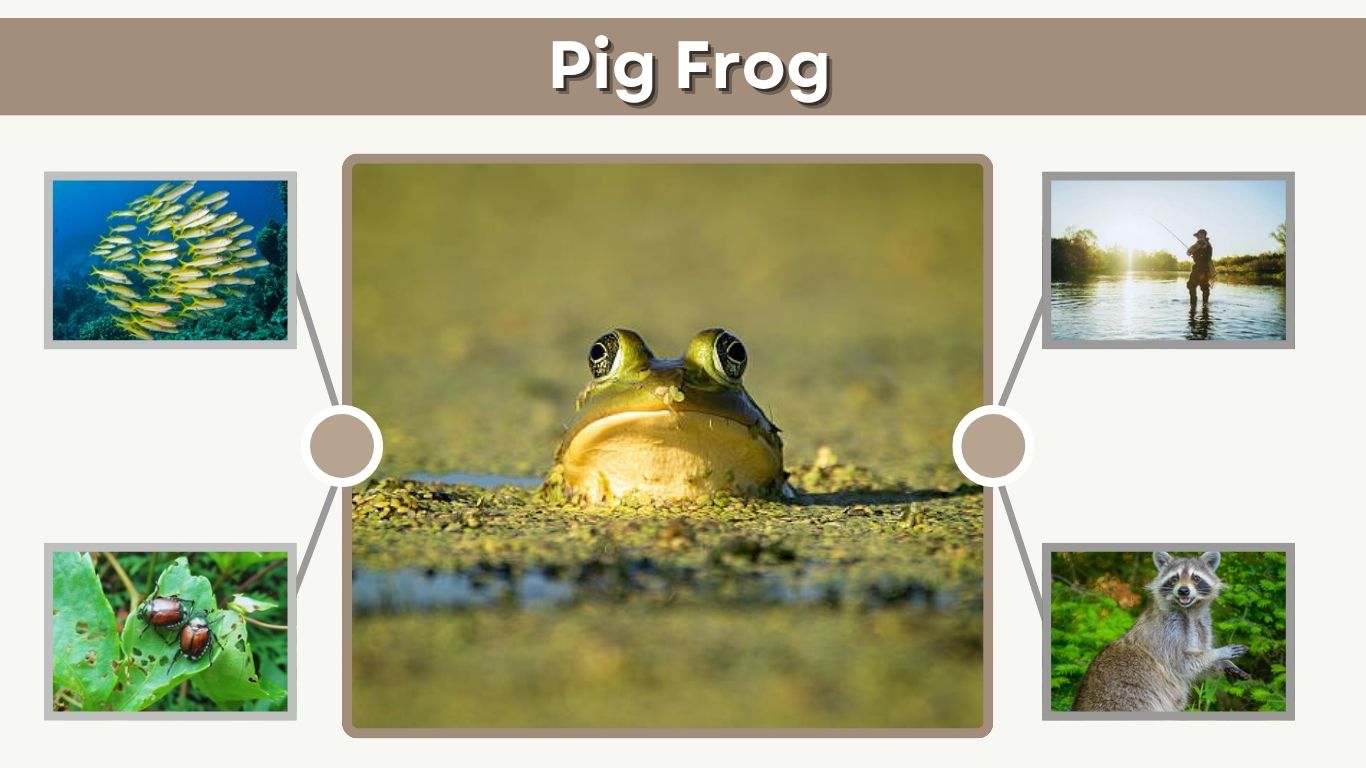
The pig frog is a large aquatic amphibian native to the southeastern United States. It is best known for its deep call, which resembles the sound of a pig grunting. Pig frogs are commonly found in wetlands, marshes, lakes, and swampy environments where they play an important role in maintaining ecological balance. These frogs help control insect populations and serve as food for many predators. Because of their unique appearance and biological features, pig frogs are also frequently studied in anatomy and comparative biology courses.
What Is a Pig Frog?
Pig frogs are large water-loving frogs that belong to the true frog family. They are especially common in Florida and other warm southern regions with abundant freshwater habitats. Their scientific name is Lithobates grylio, and they are closely related to bullfrogs.
Scientific Classification
The pig frog belongs to a group of amphibians adapted for life near freshwater environments. Scientists classify this species within the Ranidae family, which includes many common frogs found throughout North America.
Why Is It Called a Pig Frog?
The pig frog received its name because of its distinctive vocalization. The call sounds similar to the grunting noise made by pigs, especially during breeding season when males become highly vocal at night.
Amazing Facts About Pig Frogs
Pig frogs possess several interesting characteristics that help them survive in wetland ecosystems.
Important facts include:
- Strong swimming ability with fully webbed feet
- Large muscular body adapted for aquatic movement
- Deep vocal sounds used during breeding
- Ability to remain hidden among aquatic vegetation
- Carnivorous feeding behavior
Pig Frog Habitat and Distribution

Pig frogs thrive in warm freshwater habitats with dense vegetation and shallow water areas. Their populations are concentrated in the southeastern United States where wetlands provide ideal breeding and feeding conditions.
Pig Frog Range
The species is commonly found in Florida, Alabama, Georgia, and nearby coastal regions. Large populations also inhabit the Everglades and swamp systems throughout the Gulf Coast.
Preferred Habitat Conditions
Pig frogs prefer environments that provide shelter, moisture, and easy access to prey. They spend most of their lives near water and rarely travel far from aquatic habitats.
Typical habitat features include:
- Marshes and swamps
- Freshwater ponds and lakes
- Slow-moving canals
- Vegetated shorelines
- Wetland ecosystems with warm temperatures
Pig Frog Environmental Role
Pig frogs are important members of aquatic ecosystems because they help regulate insect populations and contribute to food chain stability. Their presence often indicates a healthy wetland environment with sufficient biodiversity and water quality.
Pig Frog Identification and Physical Features

Pig frogs are often confused with bullfrogs because both species are large and aquatic. However, pig frogs have several unique characteristics that make identification easier for researchers and wildlife observers.
How to Identify a Pig Frog
Pig frogs generally display olive green, brown, or dark green coloration that helps them blend into muddy water and vegetation. Their bodies are broad and muscular, allowing efficient swimming in marsh environments.
Physical Characteristics
Adult pig frogs are usually larger than many other native frogs found in southern wetlands. Their eyes are positioned high on the head, helping them remain partially submerged while observing predators and prey.
Common identification features include:
- Large body size
- Smooth skin texture
- Fully webbed hind feet
- Dark mottled coloration
- Broad flattened head
Bullfrog vs Pig Frog
Although pig frogs resemble bullfrogs, there are important differences between the two species. Pig frogs usually have more pointed snouts and produce deeper, pig-like calls. Bullfrogs, in contrast, create louder booming vocalizations and often inhabit a wider range of freshwater habitats.
Pig Frog Calls and Behavior
Pig frogs become most active during the evening and nighttime hours. Their loud calls are commonly heard near lakes, marshes, and swamps during warm weather.
Pig Frog Calls
Male pig frogs use vocalizations to attract mates and establish territory during breeding season. Their calls resemble low grunting noises that can carry long distances across wetland habitats.
Female Pig Frog Calls
Females produce fewer vocalizations than males, but communication still plays a role in reproductive behavior and mating interactions during breeding periods.
Nocturnal Activity
Pig frogs spend much of the day hidden among aquatic plants or submerged in shallow water. At night, they emerge to hunt insects, fish, and smaller amphibians while avoiding daytime predators.
Pig Frog Diet and Feeding Behavior

Pig frogs are carnivorous predators with highly adaptable feeding habits. Their diet changes depending on habitat conditions and prey availability within wetland ecosystems.
What Pig Frogs Eat
Pig frogs consume a wide variety of small animals found near freshwater habitats.
Common prey items include:
- Insects and beetles
- Small fish
- Crayfish
- Tadpoles
- Smaller frogs
Hunting Techniques
Pig frogs rely on ambush hunting methods to capture prey. They remain motionless near vegetation or muddy shorelines before quickly striking at nearby animals with powerful jaws and sticky tongues.
Pig Frog Anatomy and Comparative Biology
Pig frogs are frequently studied in biology classes because their anatomy helps researchers and students understand vertebrate body systems. Their internal organs and skeletal structure share several similarities with other amphibians while also showing major differences compared to mammals such as pigs.
Comparative Anatomy of Frogs and Pigs
Scientists often compare frogs and pigs to study evolutionary adaptations and organ development. Although frogs are amphibians and pigs are mammals, both animals possess similar body systems that support circulation, respiration, digestion, and movement.
Difference Between Frog and Pig Circulatory Systems
Pig frogs have a three-chambered heart, while pigs have a four-chambered heart. This difference affects how oxygen-rich and oxygen-poor blood circulate throughout the body. Mammals possess more advanced circulatory systems that support higher metabolic activity and body temperature regulation.
Differences in Frog and Pig Respiratory Systems
Pig frogs rely on both lungs and skin respiration to absorb oxygen. Their moist skin allows gas exchange directly with the environment. Pigs, however, depend entirely on complex lung structures for breathing and oxygen delivery.
Frog and Fetal Pig Dissection Studies
Dissection activities involving frogs and fetal pigs remain common in biology education because they help students understand internal anatomy and organ relationships. Comparative laboratory studies also improve knowledge of vertebrate evolution and physiological adaptation.
Frog and Fetal Pig Dissection Lab
Biology laboratories use frog and fetal pig dissections to demonstrate organ placement, muscle structure, and nervous system organization. Students learn how different vertebrates perform similar biological functions using specialized anatomical features.
AP Biology Frog and Pig Studies
Advanced biology courses frequently compare frogs, pigs, worms, fish, and birds to examine similarities among vertebrates and invertebrates. These activities support lessons related to evolution, comparative anatomy, and environmental adaptation.
Important anatomy topics include:
- Digestive system organization
- Nervous system structure
- Respiratory adaptations
- Circulatory system comparisons
- Muscle and skeletal anatomy
Pig Frog Predators and Ecological Importance

Pig frogs are an important part of freshwater food chains because they function as both predators and prey. Their population health often reflects the condition of wetland ecosystems throughout the southeastern United States.
Natural Predators of Pig Frogs
Many animals prey on pig frogs during different stages of their life cycle. Eggs and tadpoles are especially vulnerable to aquatic predators, while adult frogs face threats from larger animals near wetland habitats.
Common predators include:
- Water snakes
- Herons and wading birds
- Raccoons
- Opossums
- Large fish
Why Pig Frogs Matter in Wetlands
Pig frogs help control insect populations and maintain ecological balance in freshwater environments. Because they consume insects, fish, and smaller amphibians, they support stable food web interactions within marshes and swamps.
Wetlands containing healthy frog populations often provide better biodiversity and improved environmental conditions for other wildlife species.
Environmental Threats to Pig Frogs
Pig frogs face increasing environmental pressures due to habitat destruction and pollution. Wetland ecosystems throughout the southeastern United States continue shrinking because of urban development and drainage projects.
Habitat Loss and Pollution
Destruction of marshes, ponds, and swamps reduces breeding locations and feeding areas for pig frogs. Pollution from chemicals and agricultural runoff also harms water quality, affecting eggs, tadpoles, and adult frogs.
Climate and Ecosystem Changes
Rising temperatures and changing rainfall patterns may alter wetland conditions that pig frogs depend upon for survival. Long periods of drought can reduce breeding success and limit access to aquatic habitats.
Wetland Conservation Efforts
Conservation programs focus on protecting wetlands and restoring damaged aquatic habitats. Wildlife researchers continue monitoring pig frog populations to better understand ecosystem health and biodiversity changes across southern wetlands.
FAQs
What does a pig frog sound like?
A pig frog produces a deep grunting call that resembles the sound made by pigs. These calls are most commonly heard during breeding season at night near wetlands and freshwater habitats.
Where are pig frogs commonly found?
Pig frogs are mainly found in the southeastern United States, especially in Florida, Alabama, Georgia, and the Everglades. They prefer warm freshwater wetlands with dense vegetation.
Are pig frogs poisonous?
Pig frogs are not considered dangerous to humans, although their skin may produce mild defensive secretions. They are generally safe to observe but should not be handled excessively.
How are pig frogs different from bullfrogs?
Pig frogs usually have more pointed snouts and deeper grunting calls compared to bullfrogs. Bullfrogs also occupy a wider habitat range and produce louder booming vocalizations.
Why are pig frogs important to ecosystems?
Pig frogs help maintain wetland balance by controlling insect populations and serving as prey for birds, snakes, and mammals. Their presence often indicates a healthy freshwater ecosystem.
