
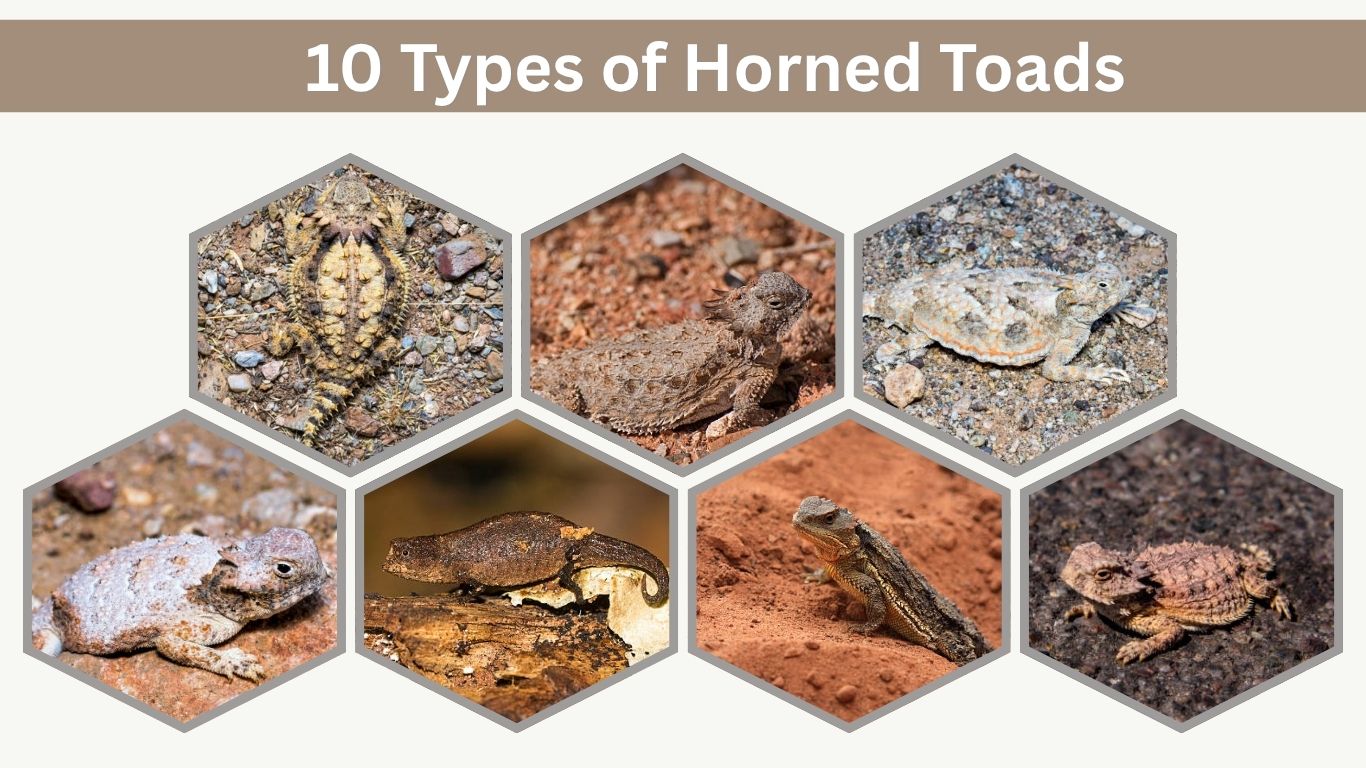
Horned toads, also known as horned lizards, are fascinating reptiles recognized for their flattened bodies, sharp horns, and excellent camouflage abilities. These desert-adapted creatures are commonly found in dry regions of North and Central America, where they survive harsh climates and feed mainly on ants and small insects. Different species vary in size, coloration, habitat, and defensive behavior, making them unique among reptiles. From the well-known Texas Horned Lizard to the rare Flat-Tail Horned Lizard, each species has special characteristics that help it survive in rocky deserts, grasslands, and arid landscapes.
1. Texas Horned Lizard

The Texas Horned Lizard is one of the most recognizable horned toad species in North America. Known for its flattened body and crown of sharp horns, this reptile is well adapted to dry desert and grassland environments. Its natural camouflage helps it blend into sandy soil and avoid predators in harsh climates.
Identification
- Broad, flattened body shape
- Sharp horns around the back of the head
- Brown, tan, or reddish coloration
- Rough, spiny scales across the body
- Usually grows 2.5 to 5 inches long
Habitat and Distribution
Texas Horned Lizards are commonly found in deserts, grasslands, scrublands, and open plains across Texas, Oklahoma, Kansas, and parts of northern Mexico. They prefer dry environments with loose sandy soil where they can hide, burrow, and search for food while remaining protected from predators and extreme heat.
Behavior and Diet
These lizards are mostly active during warm daytime hours and spend much of their time basking in sunlight. Their diet mainly consists of ants, especially harvester ants, along with beetles and other small insects. Texas Horned Lizards rely heavily on camouflage and stillness to avoid danger in the wild.
Lifecycle
Breeding usually occurs during spring and early summer when females lay eggs in sandy soil or shallow burrows. After several weeks, hatchlings emerge fully independent and begin hunting small insects immediately. Young lizards grow gradually while developing stronger defensive adaptations and survival skills in their natural habitat.
2. Regal Horned Lizard

The Regal Horned Lizard is a large and striking reptile native to desert regions of the southwestern United States and northern Mexico. This species is recognized for its long sharp horns, rough scales, and excellent camouflage abilities. It thrives in hot, dry habitats where its coloration blends perfectly with rocky ground and sandy desert landscapes.
Identification
- Large flattened body with spiny appearance
- Long sharp horns on the back of the head
- Brown, gray, or reddish body coloration
- Rough scales with dark blotched patterns
- Usually grows 4 to 6 inches long
Habitat and Distribution
Regal Horned Lizards inhabit deserts, dry grasslands, rocky plains, and scrublands throughout Arizona, New Mexico, and northern Mexico. They prefer hot environments with loose soil and scattered vegetation. These lizards are commonly found near ant colonies where food is abundant and hiding places are available.
Behavior and Diet
These lizards are active during daytime hours and spend time basking in sunlight to regulate body temperature. Their diet mainly consists of harvester ants, although they also eat beetles and other insects. Regal Horned Lizards rely on camouflage, flattening their bodies against the ground when threatened by predators.
Lifecycle
Breeding takes place during spring and early summer when females lay eggs in shallow underground nests. After incubation, hatchlings emerge fully formed and independent. Young lizards begin feeding immediately on small insects and gradually develop the larger horns and rough scales seen in mature adults.
3. Desert Horned Lizard

The Desert Horned Lizard is a hardy reptile adapted to life in arid desert environments across the southwestern United States and Mexico. Its flattened body, rough scales, and sandy coloration provide excellent camouflage against desert soil and rocks. This species is well known for surviving extreme heat and feeding mainly on ants in harsh dry habitats.
Identification
- Flattened body with pointed horns
- Sandy brown or gray body coloration
- Rough scales with dark markings
- Wide head with spiny edges
- Usually grows 3 to 5 inches long
Habitat and Distribution
Desert Horned Lizards live in deserts, sandy plains, rocky valleys, and scrublands throughout the southwestern United States and northern Mexico. They prefer dry habitats with loose soil for burrowing and hiding. These reptiles are often found near sparse vegetation and areas with large populations of ants.
Behavior and Diet
These lizards are active during warm daytime hours and spend time basking in sunlight to maintain body temperature. Their diet mainly includes harvester ants, termites, beetles, and other small insects. Desert Horned Lizards depend on camouflage and stillness to avoid predators in open desert environments.
Lifecycle
Breeding occurs during spring and early summer when females lay eggs in shallow underground nests. After several weeks, hatchlings emerge and begin searching for insects independently. Young lizards gradually develop stronger horns, rougher scales, and defensive behaviors as they mature in their desert surroundings.
4. Coast Horned Lizard

The Coast Horned Lizard is a small reptile native to coastal and inland regions of California and northwestern Mexico. This species is recognized for its spiny body, flattened shape, and natural camouflage that blends well with dry soil and leaf litter. It thrives in warm habitats with sandy ground and scattered vegetation for shelter and hunting.
Identification
- Flattened body with short sharp horns
- Brown, gray, or tan body coloration
- Rough scales with dark blotched markings
- Broad head with spiny edges
- Usually grows 2.5 to 4 inches long
Habitat and Distribution
Coast Horned Lizards inhabit coastal sage scrub, grasslands, woodlands, and dry open areas throughout California and parts of Baja California. They prefer warm habitats with loose soil and low vegetation. These lizards are often found in sunny areas where ants and other small insects are abundant.
Behavior and Diet
These lizards are active during the daytime and spend hours basking in sunlight for warmth. Their diet mainly consists of ants, especially harvester ants, along with beetles and termites. Coast Horned Lizards use camouflage and motionless behavior to remain hidden from predators in their natural surroundings.
Lifecycle
Breeding usually occurs during spring when females lay eggs in shallow underground nests. Hatchlings emerge after incubation and immediately begin feeding on tiny insects. Young lizards gradually grow larger while developing stronger horns, rough scales, and improved camouflage for survival in dry environments.
5. Short-Horned Lizard

The Short-Horned Lizard is a small and adaptable reptile found across western North America. Unlike many other horned lizards, this species can survive in cooler climates and higher elevations. Its short horns, rounded body, and earth-toned coloration provide excellent camouflage in grasslands, rocky areas, and desert environments where it hunts insects and avoids predators.
Identification
- Rounded flattened body with short horns
- Brown, gray, or reddish body coloration
- Rough scales with small dark spots
- Short crown of horns behind the head
- Usually grows 2 to 5 inches long
Habitat and Distribution
Short-Horned Lizards inhabit grasslands, deserts, rocky hillsides, forests, and mountain regions throughout western North America. They can survive in both hot deserts and cooler high-altitude environments. These reptiles prefer areas with loose soil, scattered vegetation, and abundant insect populations for feeding and shelter.
Behavior and Diet
These lizards are active during the daytime and feed mainly on ants, beetles, spiders, and other small insects. They often remain motionless to blend into their surroundings when threatened. Short-Horned Lizards are also known for their ability to tolerate cooler temperatures better than many other horned lizard species.
Lifecycle
Breeding usually takes place during spring and early summer. Unlike many horned lizards that lay eggs, some Short-Horned Lizards give birth to live young. Newborn lizards are fully independent and immediately begin searching for insects while learning survival behaviors in their natural habitat.
6. Pygmy Short-Horned Lizard

The Pygmy Short-Horned Lizard is one of the smallest horned lizard species found in western North America. Its compact body, short horns, and earth-colored scales help it blend perfectly into rocky and sandy environments. This reptile is highly adaptable and survives in dry grasslands, shrublands, and mountainous regions with limited vegetation and harsh weather conditions.
Identification
- Small flattened body with short horns
- Gray, brown, or reddish body coloration
- Rough textured scales with dark markings
- Rounded head with tiny spines
- Usually grows 1.5 to 3 inches long
Habitat and Distribution
Pygmy Short-Horned Lizards inhabit dry grasslands, rocky hillsides, shrublands, deserts, and mountainous areas across parts of western North America. They prefer loose soil and open sunny spaces where they can bask, hide, and search for insects while remaining camouflaged against natural surroundings and predators.
Behavior and Diet
These lizards are active during daylight hours and spend time basking to regulate body temperature. Their diet mainly consists of ants, beetles, spiders, and other small insects. Pygmy Short-Horned Lizards rely heavily on camouflage and remain still when threatened to avoid detection by predators.
Lifecycle
Breeding generally occurs during spring and early summer. Females may give birth to live young instead of laying eggs, depending on environmental conditions. Newborn lizards are fully independent from birth and quickly begin hunting insects while developing survival skills and protective camouflage in their habitat.
7. Flat-Tail Horned Lizard

The Flat-Tail Horned Lizard is a unique desert reptile known for its extremely flat body and broad tail. Native to the deserts of the southwestern United States and northwestern Mexico, this species blends perfectly with sandy environments. Its specialized body shape helps it hide from predators while surviving in harsh desert climates with intense heat and limited vegetation.
Identification
- Extremely flat body and tail shape
- Sandy brown or pale gray coloration
- Short horns around the back of the head
- Rough scales with subtle dark markings
- Usually grows 3 to 4 inches long
Habitat and Distribution
Flat-Tail Horned Lizards inhabit sandy deserts, dunes, dry plains, and sparse scrublands in Arizona, California, and northwestern Mexico. They prefer loose sandy soil where they can bury themselves partially for camouflage and protection. These reptiles are commonly found in hot, open environments with minimal vegetation.
Behavior and Diet
These lizards are active during warm daytime hours and feed mainly on ants, termites, beetles, and other small insects. They rely heavily on camouflage and their flattened shape to remain hidden from predators. Flat-Tail Horned Lizards often bury themselves in sand to stay cool and avoid danger.
Lifecycle
Breeding usually takes place during spring and early summer when females lay eggs in shallow sandy nests. After incubation, hatchlings emerge fully independent and begin searching for insects immediately. Young lizards gradually develop stronger camouflage patterns and survival behaviors suited for life in desert environments.
8. Roundtail Horned Lizard

The Roundtail Horned Lizard is a small desert reptile recognized for its rounded tail and compact body shape. Native to the southwestern United States and parts of Mexico, this species is highly adapted to dry desert habitats. Its sandy coloration and rough scales provide effective camouflage, helping it remain hidden among rocks, gravel, and loose desert soil.
Identification
- Rounded tail with flattened body shape
- Brown, tan, or gray body coloration
- Short horns behind the head
- Rough spiny scales across the body
- Usually grows 2 to 4 inches long
Habitat and Distribution
Roundtail Horned Lizards inhabit deserts, rocky plains, dry valleys, and scrublands throughout Arizona, New Mexico, Texas, and northern Mexico. They prefer warm environments with sandy or gravelly soil where they can burrow, bask in sunlight, and hide from predators during extreme daytime heat.
Behavior and Diet
These lizards are active during daylight hours and feed mainly on ants, beetles, termites, and other small insects. They spend time basking in the sun to regulate body temperature and rely heavily on camouflage for protection. When threatened, they often remain motionless to avoid being noticed by predators.
Lifecycle
Breeding generally occurs during spring and early summer when females lay eggs in shallow underground nests. Hatchlings emerge after incubation and begin feeding independently on tiny insects. Young Roundtail Horned Lizards gradually develop stronger defensive behaviors and improved camouflage as they mature in desert environments.
9. Sonoran Horned Lizard

The Sonoran Horned Lizard is a desert-dwelling reptile native to the Sonoran Desert regions of the southwestern United States and northwestern Mexico. This species is well adapted to extreme heat and dry environments with its flattened body, rough scales, and natural camouflage. Its appearance allows it to blend easily with rocky ground and sandy desert landscapes.
Identification
- Flattened body with sharp head horns
- Brown, gray, or reddish body coloration
- Rough spiny scales with dark patterns
- Broad head with short pointed horns
- Usually grows 3 to 5 inches long
Habitat and Distribution
Sonoran Horned Lizards inhabit deserts, scrublands, rocky plains, and dry valleys throughout Arizona and northern Mexico. They prefer hot environments with loose sandy soil and scattered vegetation. These reptiles are commonly found in open desert areas where ants and other insects are plentiful for feeding.
Behavior and Diet
These lizards are active during daytime hours and spend much of their time basking in sunlight. Their diet mainly consists of ants, beetles, termites, and other small insects. Sonoran Horned Lizards rely on camouflage and stillness to avoid predators and often flatten their bodies against the ground for protection.
Lifecycle
Breeding usually occurs during spring and early summer when females lay eggs in shallow underground nests. Hatchlings emerge after several weeks and immediately begin hunting tiny insects. Young lizards gradually develop stronger horns, rougher scales, and improved survival skills while adapting to harsh desert conditions.
10. Giant Horned Lizard

The Giant Horned Lizard is one of the largest horned lizard species found in arid regions of North America. Its broad body, long horns, and rough scales provide excellent defense and camouflage in desert environments. This reptile is highly adapted to hot climates and spends much of its time basking, hunting insects, and hiding among rocks and sandy ground.
Identification
- Large flattened body with long horns
- Brown, tan, or reddish body coloration
- Rough spiny scales across the back
- Wide head with prominent sharp horns
- Usually grows 5 to 7 inches long
Habitat and Distribution
Giant Horned Lizards inhabit deserts, rocky plains, dry grasslands, and scrublands in parts of the southwestern United States and northern Mexico. They prefer hot, dry habitats with loose soil and scattered vegetation. These reptiles are often found near ant colonies and open sunny areas suitable for basking.
Behavior and Diet
These lizards are active during daytime hours and feed mainly on ants, beetles, termites, and other small insects. Giant Horned Lizards rely heavily on camouflage and remain motionless when threatened. They also flatten their bodies against the ground to reduce shadows and avoid detection by predators.
Lifecycle
Breeding generally occurs during spring and early summer when females lay eggs in shallow underground nests. Hatchlings emerge fully independent and begin feeding on tiny insects immediately. Young lizards gradually grow larger while developing stronger horns, rough scales, and defensive adaptations needed for survival in desert habitats.
FAQs
Why are horned lizards called horned toads?
Horned lizards are often called horned toads because of their rounded body shape and short legs, which make them resemble toads. However, they are actually reptiles, not amphibians. They belong to the lizard family and are covered with scales rather than moist skin like true toads.
What do horned lizards eat?
Horned lizards mainly eat ants, especially harvester ants, which form the largest part of their diet. They also consume beetles, termites, spiders, and other small insects. These reptiles use quick tongue movements to capture prey while foraging across sandy or rocky ground in dry habitats.
Where do horned lizards live?
Horned lizards are commonly found in deserts, grasslands, scrublands, and rocky regions throughout North and Central America. They prefer warm, dry environments with loose soil and scattered vegetation. Many species inhabit areas with abundant ants and sunny spaces suitable for basking and camouflage.
How do horned lizards protect themselves from predators?
Horned lizards rely heavily on camouflage to avoid predators by blending into desert soil and rocks. They often flatten their bodies against the ground to reduce shadows. Some species can also puff up their bodies or use sudden movements to scare predators and escape danger.
Are horned lizards dangerous to humans?
Horned lizards are harmless to humans and are generally shy reptiles. They do not attack people and prefer to hide when disturbed. Although their scales and horns may appear intimidating, they are defensive features used mainly for protection against predators in their natural environments.
