
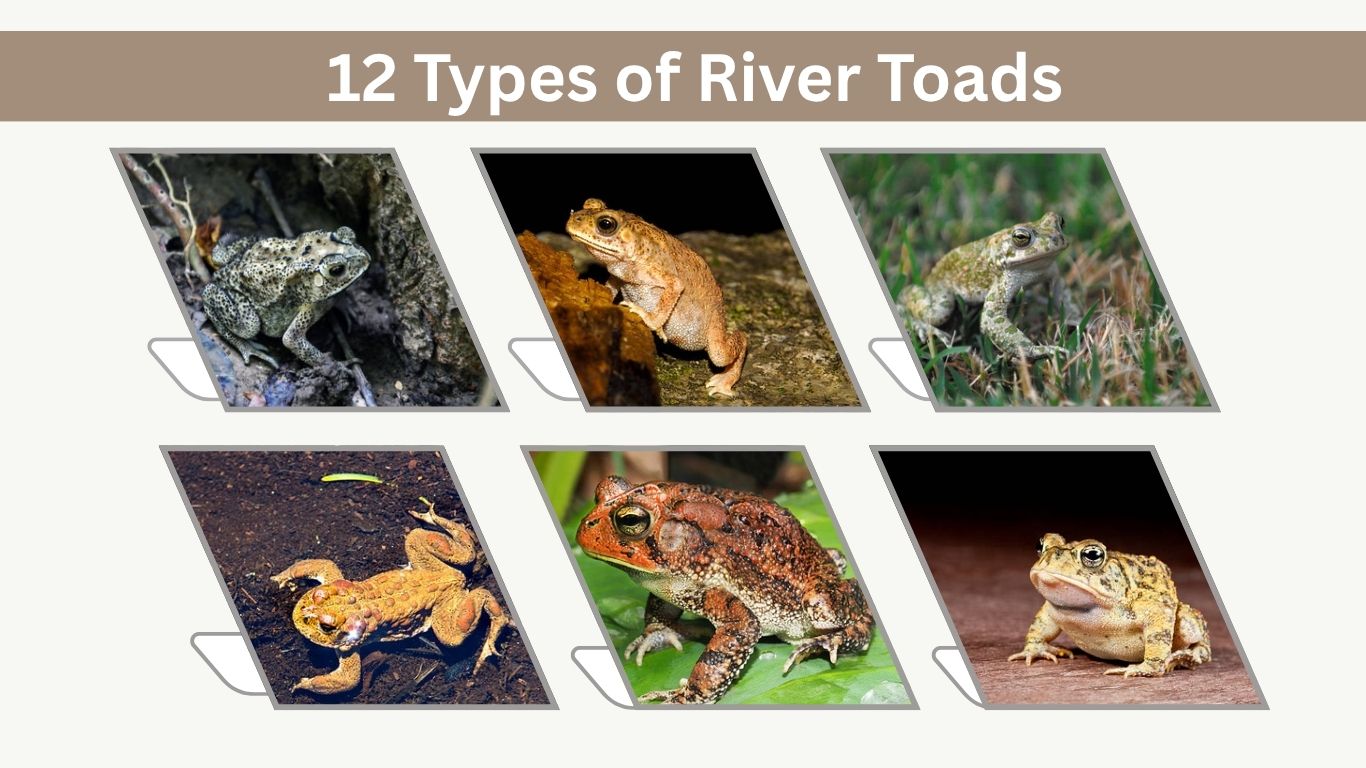
River toads are fascinating amphibians commonly found near rivers, wetlands, ponds, marshes, and other freshwater habitats around the world. These adaptable creatures are known for their rough skin, strong legs, and ability to survive in both aquatic and terrestrial environments. Different species vary in size, coloration, habitat preferences, and behavior, making them important members of many ecosystems. From the large Cane Toad to the colorful European Green Toad, each species has unique features and survival adaptations. Their feeding habits and breeding cycles also play an important role in maintaining ecological balance in wetland environments.
1. Cane Toad

The Cane Toad is a large and highly adaptable amphibian native to Central and South America. It is well known for its tough skin, large body, and ability to survive in a wide range of environments. This species is commonly found near rivers, wetlands, forests, and human settlements in warm tropical and subtropical regions.
Identification
- Large, heavy body with rough skin
- Brown, olive, or gray body coloration
- Prominent poison glands behind the eyes
- Short legs with broad feet
- Usually grows 4 to 9 inches long
Habitat and Distribution
Cane Toads inhabit riversides, wetlands, forests, grasslands, agricultural areas, and urban environments across Central America, South America, Australia, and parts of Asia. They prefer warm and humid climates with access to freshwater sources and often remain near ponds, streams, canals, and slow-moving rivers.
Behavior and Diet
These toads are mostly active during nighttime and feed on insects, spiders, snails, small reptiles, and other tiny animals. Cane Toads are opportunistic feeders that can adapt easily to different food sources. They rely on toxic skin secretions and large size to defend themselves from predators.
Lifecycle
Breeding usually occurs during rainy seasons when females lay thousands of eggs in long strings within freshwater habitats. Tadpoles hatch quickly and continue developing in water before transforming into young toads. Juveniles gradually mature while adapting to land environments near rivers, ponds, and wetlands.
2. Colorado River Toad

The Colorado River Toad, also known as the Sonoran Desert Toad, is a large amphibian native to desert regions of the southwestern United States and northern Mexico. This species is recognized for its smooth skin, powerful body, and strong defensive toxins. It is commonly found near rivers, streams, canals, and temporary desert water sources during warm seasons.
Identification
- Large body with smooth olive-green skin
- Broad head with prominent poison glands
- Cream or pale-colored underside
- Strong legs with short toes
- Usually grows 4 to 7 inches long
Habitat and Distribution
Colorado River Toads inhabit desert scrublands, river valleys, floodplains, and wetlands across Arizona, California, and northern Mexico. They prefer warm environments close to seasonal water sources and spend much of their time hidden underground during dry periods to avoid extreme desert heat and dehydration.
Behavior and Diet
These toads are mostly nocturnal and become active after rainfall or during humid nights. Their diet includes insects, spiders, beetles, small rodents, and other tiny animals. Colorado River Toads rely on camouflage and toxic skin secretions to protect themselves from predators in their harsh desert habitat.
Lifecycle
Breeding usually occurs during summer rainy seasons when adults gather near temporary pools, rivers, and flooded areas. Females lay long strings of eggs in shallow water where tadpoles hatch and develop rapidly. Young toads leave the water after metamorphosis and gradually adapt to dry desert conditions.
3. American Toad

The American Toad is a common amphibian widely distributed across North America. Known for its rough skin and distinctive trilling call, this species adapts well to forests, gardens, wetlands, and riverbanks. It thrives in moist environments and is often active during warm evenings when hunting insects and searching for breeding areas near freshwater habitats.
Identification
- Stout body with rough, warty skin
- Brown, gray, olive, or reddish coloration
- Large poison glands behind the eyes
- Light-colored belly with dark spots
- Usually grows 2 to 4 inches long
Habitat and Distribution
American Toads inhabit forests, meadows, wetlands, riverbanks, ponds, gardens, and suburban areas throughout eastern and central North America. They prefer moist environments with loose soil for burrowing and are commonly found near freshwater habitats during breeding seasons in spring and early summer.
Behavior and Diet
These toads are mainly nocturnal and feed on insects, worms, spiders, slugs, and other small invertebrates. American Toads often remain hidden during the day beneath logs, rocks, or leaf litter to conserve moisture. Their camouflage and toxic skin secretions help protect them from predators in the wild.
Lifecycle
Breeding occurs during spring when males gather near ponds and slow-moving water sources to call for females. Females lay long strings of eggs in shallow water, where tadpoles hatch and develop over several weeks. Young toads eventually leave the water and begin adapting to life on land.
4. Fowler’s Toad

Fowler’s Toad is a medium-sized amphibian commonly found in eastern North America near rivers, ponds, beaches, and open woodlands. This species is recognized for its rough skin, excellent camouflage, and nasal breeding call. Fowler’s Toad adapts well to sandy and moist environments where it hunts insects and shelters beneath soil or vegetation during daytime hours.
Identification
- Gray, brown, or olive body coloration
- Rough warty skin with dark spots
- Pale underside with little spotting
- Large poison glands behind the eyes
- Usually grows 2 to 3.5 inches long
Habitat and Distribution
Fowler’s Toads inhabit riverbanks, sandy beaches, forests, grasslands, wetlands, and suburban gardens throughout eastern North America. They prefer moist environments with loose soil for burrowing and are commonly found near lakes, ponds, and slow-moving rivers during breeding seasons and humid weather conditions.
Behavior and Diet
These toads are mainly nocturnal and feed on insects, beetles, ants, spiders, worms, and other small invertebrates. During daytime hours, they often bury themselves in sand or loose soil to conserve moisture and avoid predators. Fowler’s Toads rely on camouflage and toxic skin secretions for defense.
Lifecycle
Breeding usually occurs during late spring and summer when males call near shallow freshwater habitats. Females lay long strings of eggs in ponds or calm water areas where tadpoles hatch and develop over several weeks. Young toads leave the water after metamorphosis and begin living on land near moist habitats.
5. Gulf Coast Toad

The Gulf Coast Toad is a large amphibian commonly found in the southern United States and northeastern Mexico. This species is known for its loud nighttime calls, rough skin, and ability to adapt to both natural and urban environments. It frequently lives near rivers, ponds, wetlands, gardens, and canals in warm and humid regions.
Identification
- Large body with rough warty skin
- Gray, brown, or olive body coloration
- Distinct light stripe along the back
- Prominent poison glands behind the eyes
- Usually grows 2 to 4 inches long
Habitat and Distribution
Gulf Coast Toads inhabit wetlands, forests, grasslands, riverbanks, suburban gardens, and agricultural areas across the Gulf Coast region of the United States and parts of Mexico. They prefer warm climates with reliable moisture and are commonly found near ponds, drainage canals, streams, and slow-moving rivers.
Behavior and Diet
These toads are mostly active at night and feed on insects, beetles, spiders, worms, and other small invertebrates. Gulf Coast Toads often gather near outdoor lights where insects are abundant. They rely on camouflage, burrowing behavior, and toxic skin secretions to protect themselves from predators and environmental threats.
Lifecycle
Breeding usually occurs during warm rainy months when males gather near freshwater habitats and produce loud calls to attract females. Females lay long strings of eggs in shallow water, where tadpoles hatch and develop rapidly before transforming into young toads adapted for life on land.
6. Southern Toad

The Southern Toad is a medium-sized amphibian native to the southeastern United States. It is recognized for its rough skin, short ridges on the head, and ability to survive in forests, wetlands, and suburban areas. This species is commonly found near rivers, ponds, marshes, and moist environments where insects and freshwater sources are plentiful throughout warm seasons.
Identification
- Stout body with rough warty skin
- Brown, reddish, or gray body coloration
- Large poison glands behind the eyes
- Distinct raised ridges on the head
- Usually grows 2 to 4 inches long
Habitat and Distribution
Southern Toads inhabit forests, wetlands, grasslands, riverbanks, gardens, and coastal plains throughout the southeastern United States. They prefer warm and humid habitats with access to freshwater and loose soil for burrowing. These toads are often found near ponds, marshes, streams, and slow-moving rivers during breeding periods.
Behavior and Diet
These toads are mainly nocturnal and feed on insects, spiders, ants, beetles, worms, and other small invertebrates. Southern Toads often remain hidden under logs, leaf litter, or soil during the daytime to conserve moisture. Their camouflage and toxic skin secretions provide protection against predators in natural environments.
Lifecycle
Breeding usually takes place during spring and summer when males gather near shallow freshwater habitats and produce calls to attract females. Females lay long strings of eggs in water, where tadpoles hatch and develop over several weeks before transforming into young toads ready for life on land.
7. Oak Toad

The Oak Toad is the smallest toad species native to North America and is commonly found in the southeastern United States. This tiny amphibian is recognized for its light stripe down the back and high-pitched breeding call. It thrives in sandy habitats near wetlands, ponds, rivers, and pine forests with warm and humid environmental conditions.
Identification
- Small body with rough warty skin
- Gray, brown, or black body coloration
- Distinct white or pale stripe on the back
- Short legs with compact body shape
- Usually grows 1 to 1.5 inches long
Habitat and Distribution
Oak Toads inhabit pine forests, sandy grasslands, wetlands, riverbanks, marshes, and open woodlands throughout the southeastern United States. They prefer warm habitats with moist soil and shallow freshwater sources. These toads are commonly found near ponds, ditches, and temporary pools during rainy seasons and breeding periods.
Behavior and Diet
These toads are active mainly during the evening and nighttime hours. Their diet includes ants, beetles, spiders, termites, and other tiny insects. Oak Toads often remain hidden beneath leaves or soil during the day to conserve moisture and avoid predators in hot and dry conditions.
Lifecycle
Breeding usually occurs during spring and summer after heavy rains when males gather near shallow water and produce high-pitched calls. Females lay eggs in freshwater habitats where tadpoles hatch and develop quickly. Young toads leave the water after metamorphosis and begin adapting to life in moist terrestrial environments.
8. Great Plains Toad

The Great Plains Toad is a large amphibian commonly found in grasslands and river valleys across central North America. This species is known for its distinctive dark blotches, loud breeding calls, and ability to survive in dry environments. It becomes especially active after rainfall and is often seen near ponds, streams, and temporary wetlands during warm seasons.
Identification
- Large body with rough warty skin
- Gray, brown, or olive body coloration
- Dark blotches outlined with light borders
- Prominent poison glands behind the eyes
- Usually grows 3 to 5 inches long
Habitat and Distribution
Great Plains Toads inhabit grasslands, prairies, river valleys, floodplains, and open scrublands throughout central North America. They prefer dry environments with loose soil for burrowing and access to temporary freshwater sources. These toads are commonly found near ponds, streams, and wetlands after heavy rainfall.
Behavior and Diet
These toads are mostly nocturnal and feed on insects, beetles, ants, spiders, and other small invertebrates. Great Plains Toads often burrow underground during dry conditions to conserve moisture and avoid heat. Their camouflage and toxic skin secretions help protect them from predators in open habitats.
Lifecycle
Breeding usually takes place after heavy spring or summer rains when adults gather near temporary pools and shallow wetlands. Females lay long strings of eggs in freshwater habitats where tadpoles hatch and develop rapidly. Young toads leave the water after metamorphosis and begin adapting to terrestrial life.
9. Yosemite Toad

The Yosemite Toad is a rare amphibian native to the high mountain regions of California’s Sierra Nevada. This species is recognized for its colorful breeding patterns, rough skin, and preference for cool wet meadows near streams and rivers. It survives in alpine environments where snowmelt provides freshwater habitats during warmer months of the year.
Identification
- Stout body with rough warty skin
- Brown, olive, yellow, or green coloration
- Dark blotches scattered across the body
- Light-colored stripe along the back
- Usually grows 1.5 to 3 inches long
Habitat and Distribution
Yosemite Toads inhabit alpine meadows, wetlands, riverbanks, ponds, and mountain streams in California’s Sierra Nevada region. They prefer cool, moist habitats at high elevations with shallow freshwater pools created by melting snow. These toads remain close to wetlands and grassy areas throughout active seasons.
Behavior and Diet
These toads are mainly active during daytime and evening hours in warmer months. Their diet includes insects, beetles, ants, spiders, and other small invertebrates. Yosemite Toads often hide beneath vegetation or moist soil to avoid dehydration and rely on camouflage to remain protected from predators.
Lifecycle
Breeding occurs during late spring and summer after snowmelt fills mountain wetlands and shallow pools. Females lay eggs in calm freshwater areas where tadpoles hatch and develop in cold water. Young toads complete metamorphosis before winter and gradually adapt to alpine terrestrial environments.
10. European Green Toad

The European Green Toad is a colorful amphibian widely distributed across Europe and parts of Asia. This species is recognized for its green blotched patterns, rough skin, and strong adaptability to dry and semi-arid environments. It is commonly found near rivers, wetlands, grasslands, and agricultural areas where freshwater is available during breeding seasons.
Identification
- Light-colored body with green blotches
- Rough warty skin with scattered red spots
- Broad head with prominent eyes
- Strong legs adapted for movement on land
- Usually grows 2.5 to 5 inches long
Habitat and Distribution
European Green Toads inhabit grasslands, wetlands, riverbanks, farmlands, deserts, and suburban regions throughout Europe and western Asia. They prefer warm environments with access to shallow freshwater habitats for breeding. These toads can survive in dry conditions and are often found near temporary pools after rainfall.
Behavior and Diet
These toads are mostly nocturnal and feed on insects, spiders, beetles, worms, and other small invertebrates. European Green Toads spend much of the daytime hidden beneath rocks, soil, or vegetation to conserve moisture. Their camouflage and toxic skin secretions help protect them from predators in open habitats.
Lifecycle
Breeding usually occurs during spring and early summer when adults gather near ponds, wetlands, and temporary water sources. Females lay long strings of eggs in shallow water where tadpoles hatch and develop over several weeks before transforming into young toads adapted for terrestrial life.
11. Asian Common Toad

The Asian Common Toad is a widespread amphibian found throughout South and Southeast Asia. This adaptable species thrives in forests, wetlands, agricultural lands, villages, and urban environments near rivers and ponds. Known for its rough skin and strong survival abilities, the Asian Common Toad is commonly active during humid nights when insects are abundant.
Identification
- Stout body with rough warty skin
- Brown, olive, or gray body coloration
- Large poison glands behind the eyes
- Cream or pale-colored underside
- Usually grows 3 to 6 inches long
Habitat and Distribution
Asian Common Toads inhabit forests, grasslands, wetlands, riverbanks, gardens, farms, and urban areas across South and Southeast Asia. They prefer warm and humid climates with reliable freshwater sources. These toads are commonly found near ponds, canals, streams, and slow-moving rivers during breeding seasons and rainy weather.
Behavior and Diet
These toads are mostly nocturnal and feed on insects, beetles, spiders, worms, ants, and other small invertebrates. Asian Common Toads often hide beneath rocks, logs, or soil during the day to avoid dehydration. Their toxic skin secretions and camouflage help protect them from predators in natural environments.
Lifecycle
Breeding generally occurs during rainy seasons when adults gather near freshwater habitats and males produce loud calls to attract females. Females lay long strings of eggs in shallow water where tadpoles hatch and develop rapidly before transforming into young toads prepared for life on land.
12. Black-Spined Toad

The Black-Spined Toad is a rugged amphibian native to parts of Central and South America. This species is recognized for its dark spiny skin, sturdy body, and ability to survive in humid river valleys and forest habitats. It is commonly found near streams, wetlands, and tropical environments where moisture and insects are available throughout the year.
Identification
- Dark brown or black body coloration
- Rough spiny skin with raised bumps
- Broad body with short strong legs
- Large poison glands behind the eyes
- Usually grows 3 to 5 inches long
Habitat and Distribution
Black-Spined Toads inhabit tropical forests, wetlands, riverbanks, marshes, and humid lowland regions of Central and South America. They prefer warm climates with abundant moisture and freshwater access. These toads are often found near slow-moving rivers, streams, and flooded forest areas during rainy seasons.
Behavior and Diet
These toads are mostly nocturnal and feed on insects, spiders, beetles, worms, and other small invertebrates. Black-Spined Toads spend daytime hours hidden beneath vegetation, logs, or moist soil to conserve moisture and avoid predators. Their rough skin and toxic secretions provide additional protection in the wild.
Lifecycle
Breeding usually occurs during rainy periods when adults gather near shallow freshwater habitats and streams. Females lay long strings of eggs in calm water where tadpoles hatch and develop over several weeks. Young toads leave the water after metamorphosis and gradually adapt to humid terrestrial environments near rivers and forests.
FAQs
What are river toads?
River toads are toad species commonly found near rivers, streams, wetlands, ponds, and other freshwater habitats. These amphibians depend on moist environments for breeding and survival. Although many species spend time on land, they usually remain close to water sources, especially during rainy seasons and reproduction periods.
What do river toads eat?
River toads mainly feed on insects, spiders, worms, beetles, ants, snails, and other small invertebrates. Larger species may also eat tiny reptiles or amphibians. They usually hunt at night using their sticky tongues and strong sense of movement to capture prey in moist environments.
Are river toads poisonous?
Many river toads produce toxic skin secretions as a defense against predators. These toxins can irritate predators and sometimes harm pets if swallowed. However, most river toads are not dangerous to humans when left undisturbed. It is still recommended to wash hands after handling any wild toad.
Where do river toads live?
River toads live in wetlands, forests, grasslands, riverbanks, marshes, swamps, and tropical environments around the world. They prefer warm and moist habitats with access to freshwater for breeding. Some species can also survive near farms, gardens, canals, and urban areas with suitable environmental conditions.
How long do river toads live?
The lifespan of river toads depends on the species and environmental conditions. Many toads live between 5 and 10 years in the wild, while some larger species may survive even longer. Proper moisture, food availability, shelter, and protection from predators greatly influence their overall lifespan.
