
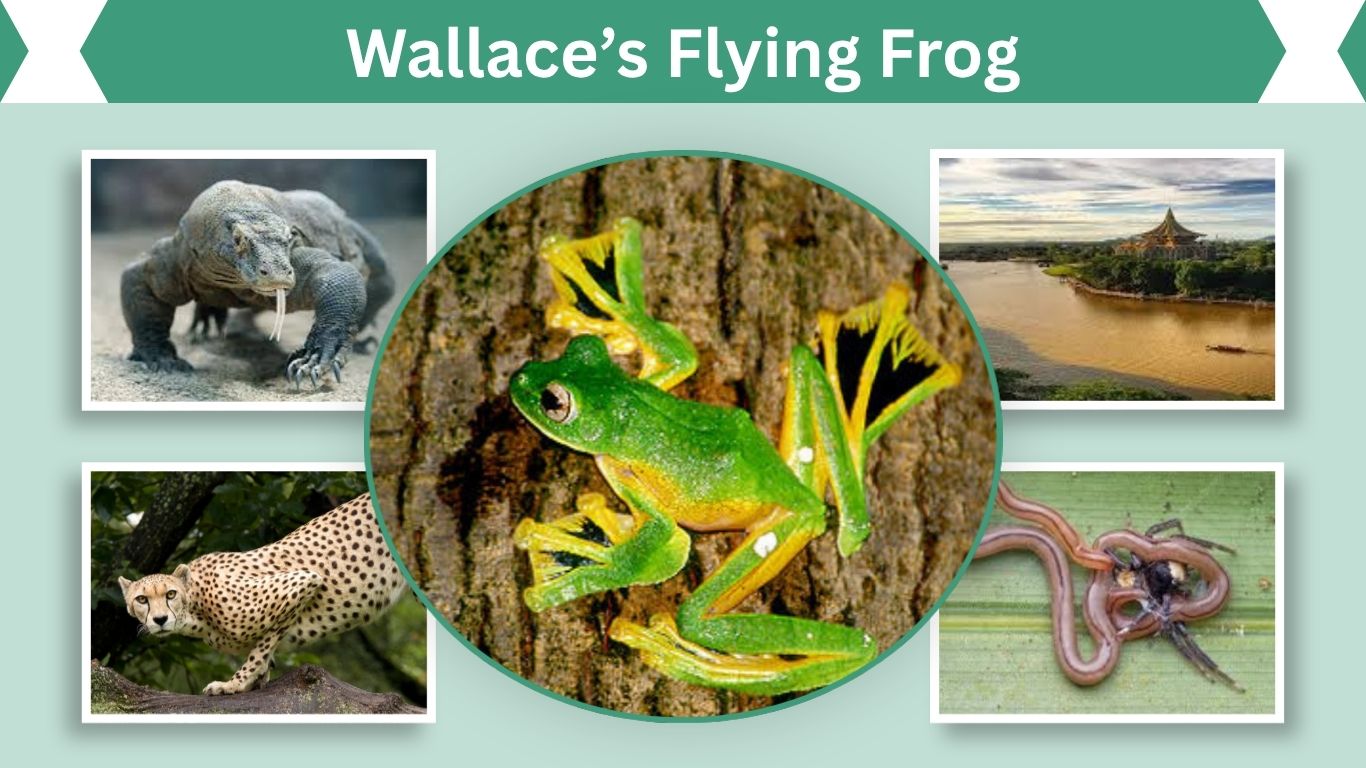
Wallace’s flying frog is one of the most unusual frogs in the world because it can glide through the air using its large webbed feet. This rainforest amphibian lives high in tropical trees and uses special body adaptations to move safely between branches. Its bright green color also helps it blend into leaves and avoid predators.
Named after naturalist Alfred Russel Wallace, this frog is popular for its gliding behavior and unique appearance. This guide explains its habitat, adaptations, diet, lifespan, and interesting survival features.
What Is Wallace’s Flying Frog?
Wallace’s flying frog is a tropical tree frog known for its ability to glide between trees. Although it cannot truly fly like birds, it spreads its large webbed feet to slow its fall and control movement through the rainforest canopy. This unusual adaptation helps the frog escape predators and travel efficiently.
Scientific Name and Classification
Wallace’s flying frog belongs to the species Rhacophorus nigropalmatus. It is part of the tree frog family and is closely related to other gliding frogs found in Southeast Asia.
Why It Is Called a Flying Frog
The frog earned its name because it can glide through the air. Its large toe webbing acts almost like a parachute while jumping from high branches.
Alfred Russel Wallace and the Frog
The frog was named after Alfred Russel Wallace, a famous naturalist who studied wildlife in Southeast Asia. His observations helped scientists learn more about rainforest animals.
Wallace’s Flying Frog vs Tree Frogs
- Larger webbed feet than many tree frogs
- Better gliding ability
- Lives higher in rainforest canopies
- Strong climbing skills
Wallace’s Flying Frog Physical Characteristics
This frog has several physical features that help it survive in tropical rainforests. Its body is built for climbing, gliding, and hiding among leaves high above the forest floor.
Size and Body Shape
Adult Wallace’s flying frogs can grow fairly large compared to many tree frog species. Their bodies are slim but muscular enough for powerful jumps between branches.
Color and Skin Texture
- Bright green upper body
- Pale underside
- Smooth skin texture
- Dark webbing between toes
Large Webbed Feet
The frog’s most famous feature is its oversized webbed feet. These wide membranes create air resistance while gliding and help control direction during jumps.
Eye and Toe Features
Sticky toe pads allow the frog to grip wet branches and leaves. Large eyes improve nighttime vision, helping the frog hunt insects in dark rainforest environments.
Wallace’s Flying Frog Habitat
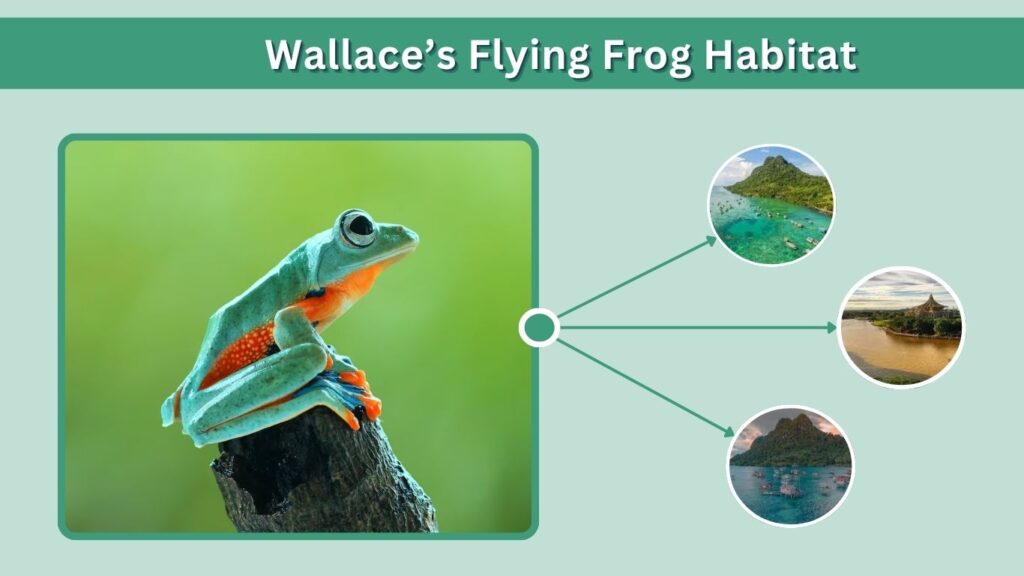
Wallace’s flying frog lives mainly in warm tropical rainforests with high humidity and dense tree cover. These forests provide water, shelter, insects, and safe breeding locations.
Tropical Rainforest Habitat
The frog spends most of its life in rainforest trees near rivers, ponds, and slow-moving water sources. Humid environments prevent its sensitive skin from drying out.
Geographic Location
- Borneo
- Malaysia
- Indonesia
- Southeast Asian rainforests
Trees and Water Sources
Wallace’s flying frogs prefer tall trees with branches hanging over water. During breeding season, they lay eggs near pools where tadpoles can develop safely.
Why Rainforests Are Important
Rainforests provide protection, moisture, and food for the frog. Dense leaves also help camouflage the frog from predators like snakes and birds.
Wallace’s Flying Frog Adaptations
Wallace’s flying frog has developed several important adaptations that help it move through trees, avoid predators, and survive in rainforest conditions.
Gliding Adaptations
- Large webbed feet increase air resistance
- Long legs improve jumping power
- Lightweight body supports gliding
- Wide limbs help control landing direction
Camouflage and Protection
Its green body blends with rainforest leaves, making it difficult for predators to spot the frog during daytime rest.
Climbing Adaptations
Sticky toe pads help the frog grip slippery surfaces. Strong legs and flexible joints also improve climbing ability in tall trees.
Behavioral Adaptations
Wallace’s flying frogs are mostly nocturnal. Staying active at night helps them avoid daytime predators and reduces water loss from heat exposure.
Wallace’s Flying Frog Diet
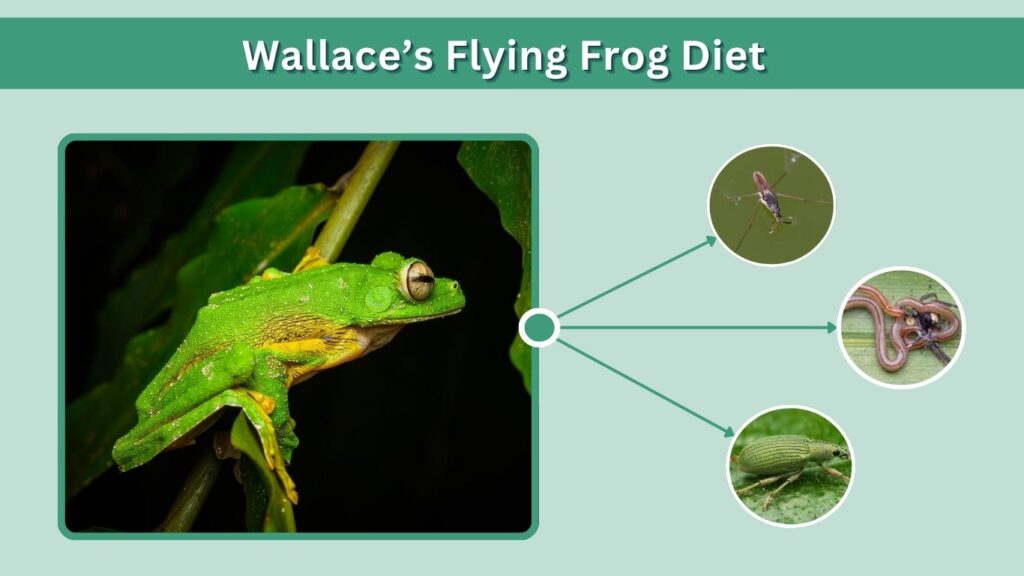
Wallace’s flying frog mainly feeds on insects and other small invertebrates found in tropical forests. It hunts at night while moving through branches and leaves.
What Does Wallace’s Flying Frog Eat?
- Crickets
- Beetles
- Moths
- Spiders
- Small insects
Hunting Behavior
The frog waits quietly on branches before quickly capturing prey with its sticky tongue. Its strong eyesight helps detect movement in low light conditions.
Role in the Ecosystem
By eating insects, Wallace’s flying frog helps control insect populations in rainforest ecosystems. It also serves as prey for larger rainforest animals.
Feeding Habits in Captivity
Pet owners usually feed captive frogs crickets, mealworms, and other live insects. Proper nutrition and vitamin supplements are important for healthy growth.
Wallace’s Flying Frog Behavior
Wallace’s flying frog spends most of its life in trees and becomes active mainly during the night. Its behavior is closely connected to rainforest survival, helping it avoid predators and find food more safely in dark and humid environments.
Nocturnal Lifestyle
The frog usually hides during the daytime among leaves and branches. At night, it climbs, glides, hunts insects, and searches for mates during the breeding season.
Gliding Between Trees
- Jumps from high branches
- Spreads webbed feet while gliding
- Controls direction in the air
- Lands safely on tree trunks or leaves
Communication and Calls
Male frogs produce calls during the breeding season to attract females. These sounds often become louder after rainfall in tropical forests.
Defensive Behaviors
When threatened, Wallace’s flying frog may quickly leap away and glide to another tree. Its camouflage also helps it remain hidden from predators.
Wallace’s Flying Frog Life Cycle
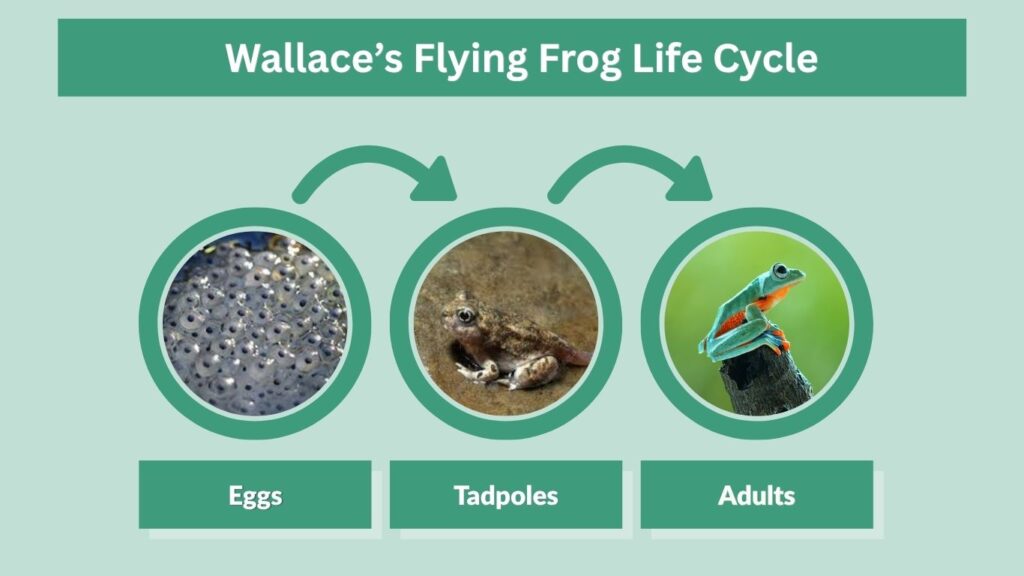
The life cycle of Wallace’s flying frog includes egg, tadpole, juvenile, and adult stages. Like many amphibians, it depends heavily on water during reproduction and early development.
Mating Season
Breeding usually happens during rainy periods when water sources are plentiful. Increased humidity also improves survival conditions for eggs and tadpoles.
Egg Laying Process
Female frogs create foam nests attached to branches above ponds or pools. After hatching, tadpoles fall into the water below.
Tadpole Development
- Tadpoles live in water
- They feed and grow over several weeks
- Legs gradually develop
- Tails shrink during metamorphosis
Growth Into Adults
Young frogs slowly move into nearby trees after completing metamorphosis. Their gliding abilities improve as they mature.
Wallace’s Flying Frog Lifespan
Wallace’s flying frogs may live for several years depending on habitat quality, food availability, and predator pressure. Captive frogs often survive longer with proper care.
Average Lifespan in the Wild
Life in the rainforest can be dangerous because of predators and environmental changes. Many frogs face threats before reaching old age.
Lifespan in Captivity
- Proper humidity improves health
- Balanced diets increase survival
- Veterinary care may extend lifespan
- Protected environments reduce predator risk
Factors Affecting Longevity
Temperature, moisture, disease, and habitat destruction all influence how long Wallace’s flying frogs survive in the wild.
Health and Survival Challenges
Fungal infections, pollution, and deforestation can threaten frog populations by damaging breeding areas and reducing food sources.
Predators and Natural Enemies
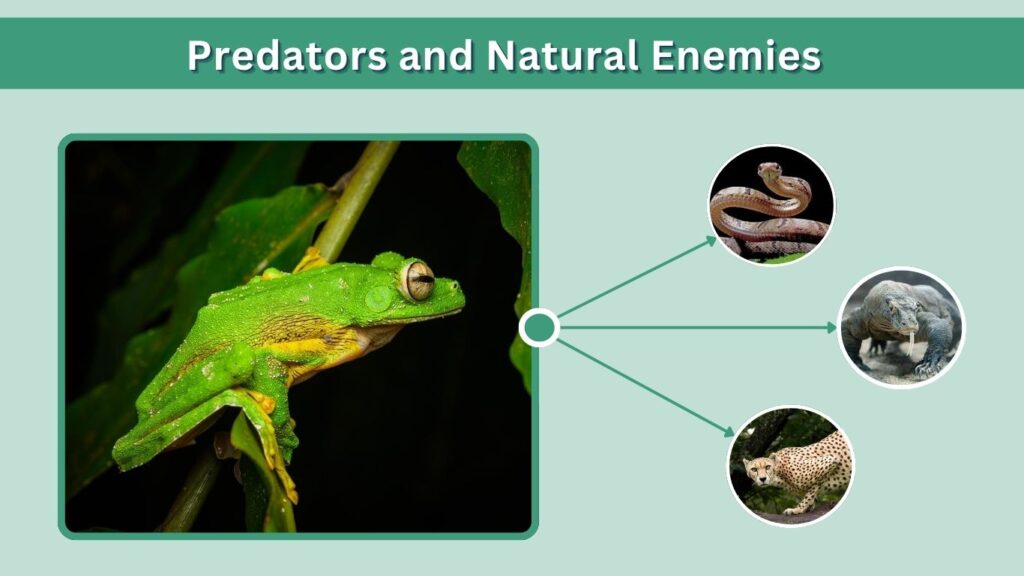
Despite their gliding abilities, Wallace’s flying frogs still face many natural predators in rainforest ecosystems. Their camouflage and quick movement are important survival tools.
Common Predators
- Snakes
- Birds
- Large lizards
- Carnivorous mammals
How Gliding Helps Escape
Gliding allows the frog to move quickly between trees and escape danger without climbing down to the forest floor.
Camouflage Against Predators
The frog’s green coloration helps it blend into leaves, making it difficult for predators to detect while resting.
Human-Related Threats
Habitat destruction and illegal wildlife collection may reduce populations in some rainforest regions.
Are Wallace’s Flying Frogs Poisonous?
Many people wonder whether Wallace’s flying frog is dangerous because of its unusual appearance. These frogs are generally not considered highly poisonous to humans.
Do They Produce Toxins?
Like many amphibians, they may produce mild skin secretions that help protect them from predators and bacteria.
Are They Dangerous to Humans?
Wallace’s flying frogs are not known to be seriously harmful to humans. However, handling wild frogs should always be done carefully and minimally.
Safe Handling Tips
- Wash hands after contact
- Avoid stressing the frog
- Do not touch eyes or mouth
- Handle with clean wet hands if necessary
Differences From Poison Dart Frogs
Unlike poison dart frogs, Wallace’s flying frogs do not produce strong toxins dangerous to humans.
Wallace’s Flying Frog as a Pet
Some amphibian enthusiasts keep Wallace’s flying frogs in large tropical terrariums. However, they require specialized care and carefully controlled environments.
Can You Keep Wallace’s Flying Frogs?
In some places, keeping exotic frogs may require permits or legal approval. Owners should always check local wildlife laws.
Tank Setup Requirements
- Tall enclosure with climbing branches
- Warm temperatures
- High humidity
- Clean water source
- Live or artificial plants
Feeding and Care
Captive frogs usually eat live insects such as crickets and roaches. Regular cleaning and proper humidity are important for health.
Challenges of Ownership
Wallace’s flying frogs are sensitive animals that require stable environmental conditions and experienced care.
FAQs
How big is Wallace’s flying frog?
Wallace’s flying frog can grow up to about 4 inches long. Females are usually larger than males, and their large webbed feet make them appear even bigger while gliding.
Why does Wallace’s flying frog have webbed feet?
Its large webbed feet help it glide between trees by creating air resistance. The webbing also improves climbing and landing control in rainforest environments.
Is Wallace’s flying frog endangered?
Wallace’s flying frog is not currently considered critically endangered, but habitat destruction and rainforest loss may threaten some local populations.
What is the main adaptation of Wallace’s flying frog?
The frog’s biggest adaptation is its oversized webbing between the toes, which allows it to glide through the air and escape predators more effectively.
Can Wallace’s flying frog be kept with other frogs?
Experienced keepers sometimes house compatible tree frogs together, but careful monitoring is needed to avoid stress, competition, or disease spread.
