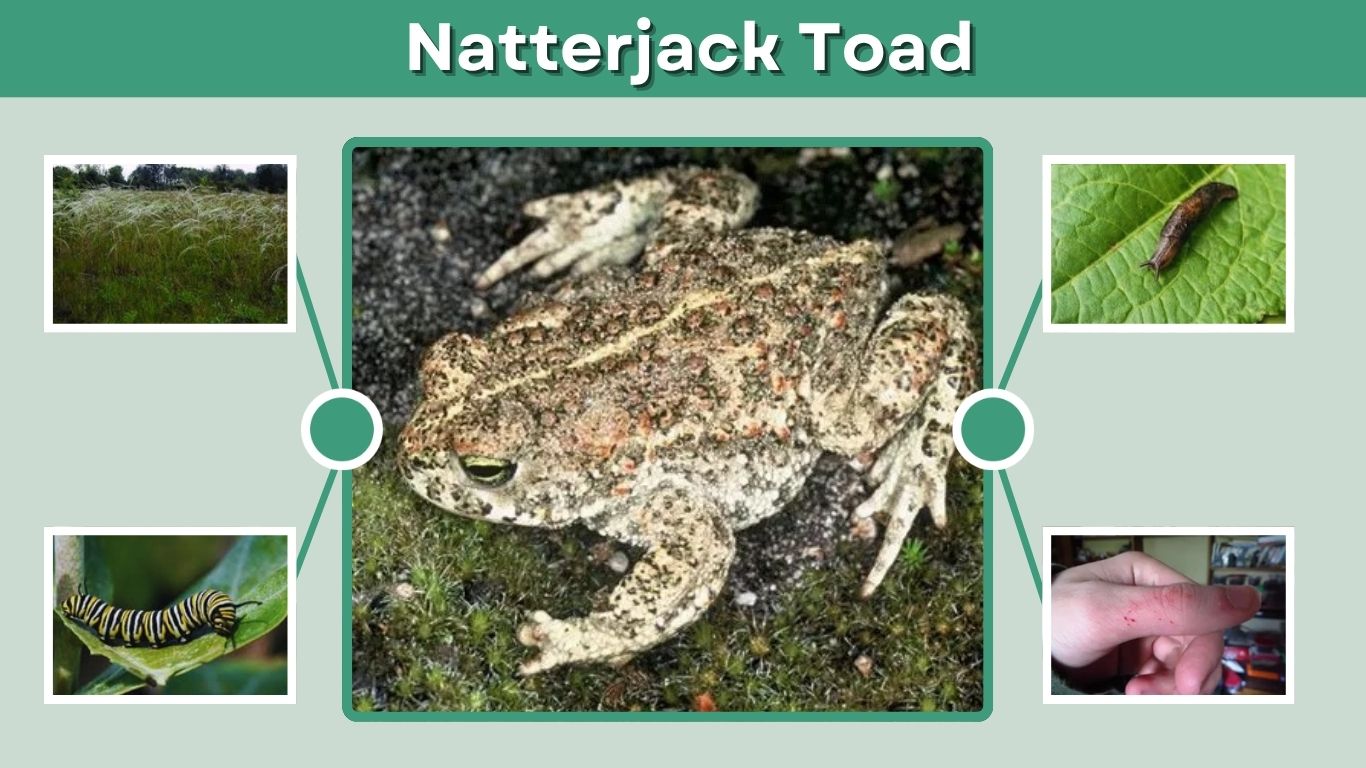
The natterjack toad (Epidalea calamita) is one of Europe’s most distinctive amphibians. Known for its bright yellow dorsal stripe, loud mating call, and unusual running behavior, this species has captured the interest of wildlife enthusiasts and conservationists alike. Unlike many other toads that move by hopping, natterjack toads are famous for running across sandy landscapes. Found in select areas of the United Kingdom, Ireland, and mainland Europe, these amphibians play an important role in their ecosystems while facing increasing conservation challenges.
What Is a Natterjack Toad?
The natterjack toad is a medium-sized amphibian belonging to the Bufonidae family. It was previously known by the scientific name Bufo calamita but is now classified as Epidalea calamita. This species is recognized by its distinctive appearance and preference for open sandy habitats.
Scientific Classification
The natterjack toad is native to various parts of Europe and thrives in environments that provide shallow breeding pools and loose sandy soil. Its unique adaptations allow it to survive in habitats that many other amphibians find challenging.
Physical Appearance
Several characteristics make the natterjack toad easy to identify:
- Bright yellow stripe running down the center of the back
- Olive-green or brown skin with dark patches
- Short legs compared to many frog species
- Prominent eyes with horizontal pupils
- Warty skin that helps reduce water loss
Adult natterjack toads typically reach between 6 and 8 centimeters in length, although some individuals may grow slightly larger under favorable conditions.
Natterjack Toad Habitat
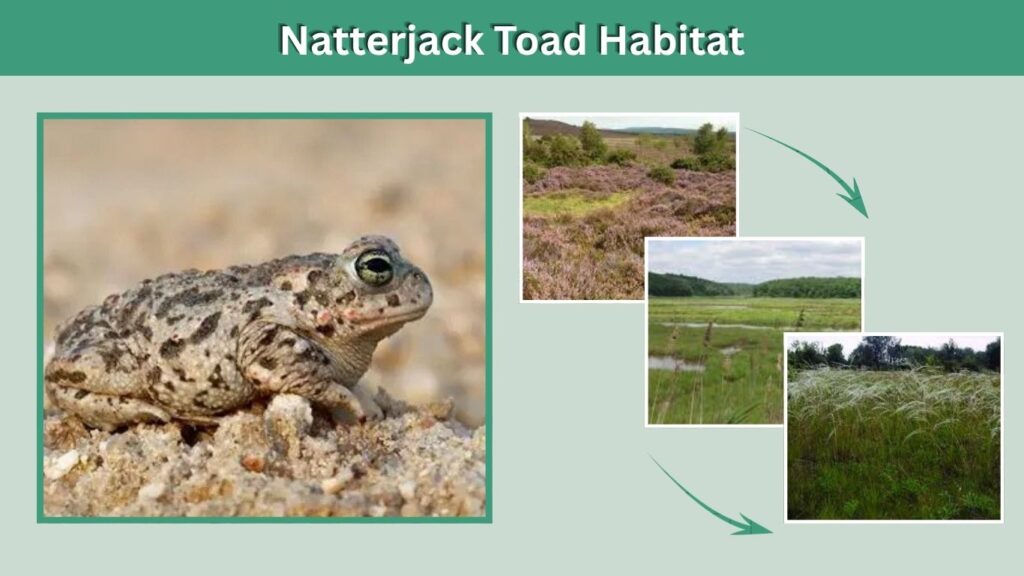
The natterjack toad occupies specialized habitats that provide suitable breeding conditions and protection from predators. These environments are often characterized by sandy soils and sparse vegetation.
Preferred Habitat Types
The species is commonly associated with:
- Coastal sand dunes
- Heathlands
- Salt marshes
- Sandy grasslands
- Open scrubland areas
These habitats provide ideal conditions for burrowing, feeding, and breeding activities throughout the year.
Habitat Requirements
Successful natterjack toad populations depend on specific environmental conditions. Shallow temporary pools are particularly important because they warm quickly in spring, helping tadpoles develop faster. Open landscapes with minimal vegetation allow adults to move efficiently while hunting for food and locating breeding sites.
Conservation programs often focus on maintaining these habitats because even small changes in water availability or vegetation cover can affect breeding success.
Natterjack Toad Distribution
The natterjack toad has a fragmented distribution across Europe. Although it was once more widespread, habitat loss has reduced many populations over time.
Distribution in the United Kingdom
The United Kingdom supports several important populations that are carefully monitored by conservation organizations.
Notable locations include:
- Coastal areas of northwest England
- Parts of Cumbria
- Merseyside and Lancashire
- Selected sites in Dorset
- A few protected locations in Scotland
These populations are often restricted to protected reserves where habitat management supports long-term survival.
Distribution in Ireland and Europe
Ireland hosts its primary natterjack toad population in County Kerry, particularly around the Castlegregory area. Across mainland Europe, the species can be found in countries such as France, Spain, Germany, the Netherlands, Belgium, and Denmark.
Population sizes vary significantly between regions, with some areas supporting healthy numbers while others face ongoing declines.
Natterjack Toad Diet
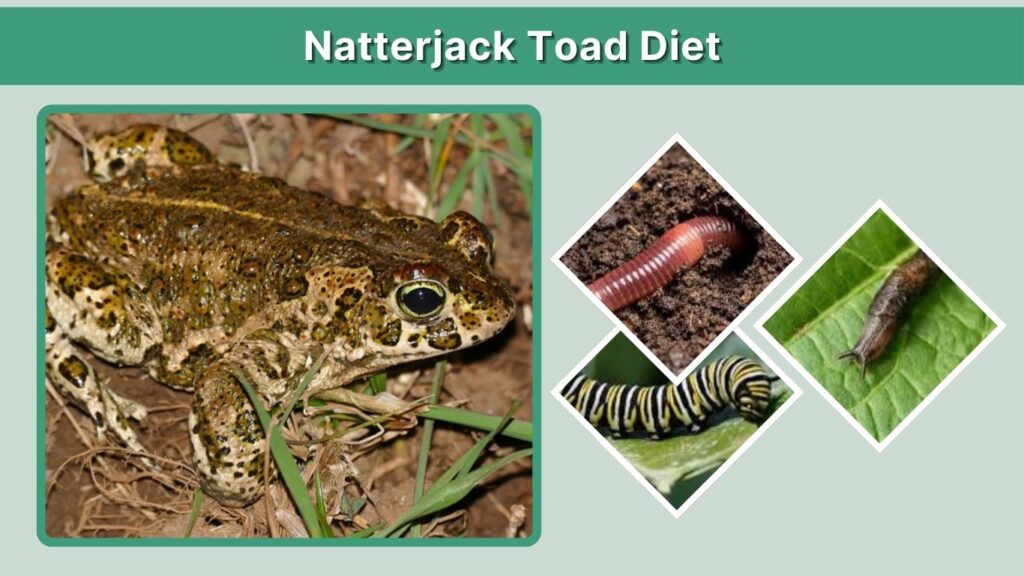
The natterjack toad is a carnivorous predator that feeds on a wide range of small invertebrates. Its diet helps control insect populations and contributes to ecological balance.
What Do Natterjack Toads Eat?
Adult natterjack toads commonly consume:
- Beetles
- Ants
- Spiders
- Worms
- Small slugs
- Caterpillars
- Other small invertebrates
They usually hunt during the evening and nighttime hours when temperatures are cooler and prey is more active.
Feeding Behavior
Unlike some amphibians that wait motionless for prey, natterjack toads actively search for food across open ground. Their running movement allows them to cover larger areas than many other toad species. This behavior increases hunting opportunities and helps them locate food in habitats where prey may be widely dispersed.
Young tadpoles feed primarily on algae, plant material, and microscopic organisms found in shallow ponds. As they develop, their dietary needs gradually change until they become fully carnivorous adults.
Interesting Natterjack Toad Facts
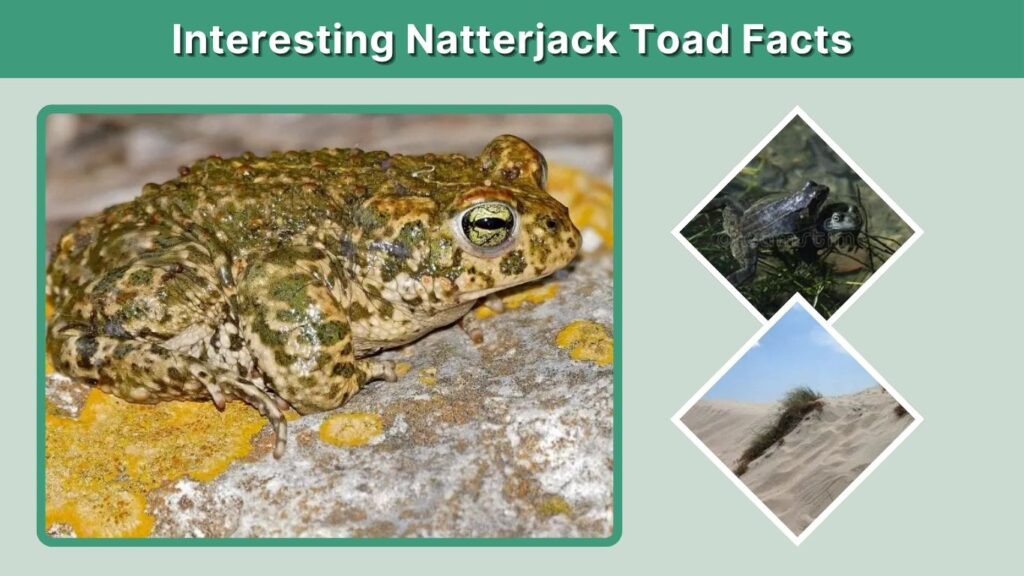
The natterjack toad possesses several remarkable characteristics that distinguish it from other amphibians.
Unique Adaptations
One of the most unusual features of the species is its method of movement. Rather than hopping like many frogs and toads, it typically runs using short, rapid strides. This adaptation is particularly useful in sandy environments.
Another notable characteristic is its exceptionally loud mating call. During the breeding season, male natterjack toads produce a powerful rasping sound that can travel over considerable distances. This call helps attract females to breeding ponds and is often heard on warm spring evenings.
The species is also highly adapted to temporary water bodies. Tadpoles can develop quickly, allowing them to complete metamorphosis before breeding pools dry out during warmer months.
Natterjack Toad Life Cycle
The life cycle of the natterjack toad is closely linked to seasonal weather patterns and the availability of suitable breeding ponds. Like other amphibians, it undergoes a remarkable transformation from egg to tadpole and finally to adult toad.
Breeding Season
Breeding typically begins during spring and can continue into early summer, depending on local climate conditions. Males arrive at breeding ponds first and establish calling positions to attract females.
Eggs and Spawn
Female natterjack toads lay long strings of eggs in shallow water. These egg strings are attached to aquatic vegetation or submerged objects, providing stability during development.
A single female can produce thousands of eggs during one breeding season. However, only a small percentage survive to adulthood due to predators, weather conditions, and habitat quality.
Tadpole Development
After hatching, tadpoles feed on algae and organic matter found in the pond. Development is often rapid because breeding pools may dry out during summer.
The transformation process includes:
- Growth of hind and front legs
- Development of lungs
- Gradual absorption of the tail
- Transition from aquatic to terrestrial life
Once metamorphosis is complete, young toads leave the water and begin life on land.
Lifespan
In the wild, natterjack toads can live for 10 to 15 years under favorable conditions. Survival rates depend on habitat quality, food availability, weather patterns, and predator pressure.
Natterjack Toad Call and Sound
The natterjack toad is famous for having one of the loudest calls among European amphibians. During the breeding season, the sound produced by males can be heard from considerable distances.
Why Do Natterjack Toads Call?
Male toads use vocalizations primarily to attract females. The louder and more persistent the call, the greater the chance of attracting a mate.
The call is often described as a harsh, rasping, or rattling sound that continues for extended periods during warm evenings. Large breeding groups can create an impressive chorus that carries across dunes, marshes, and heathlands.
How the Call Is Produced
Males possess a large vocal sac that inflates dramatically while calling. This structure acts as a resonating chamber, amplifying the sound and allowing it to travel over long distances.
The call serves several important purposes:
- Attracting breeding females
- Competing with other males
- Establishing presence at breeding sites
- Coordinating breeding activity within populations
Are Natterjack Toads Poisonous?
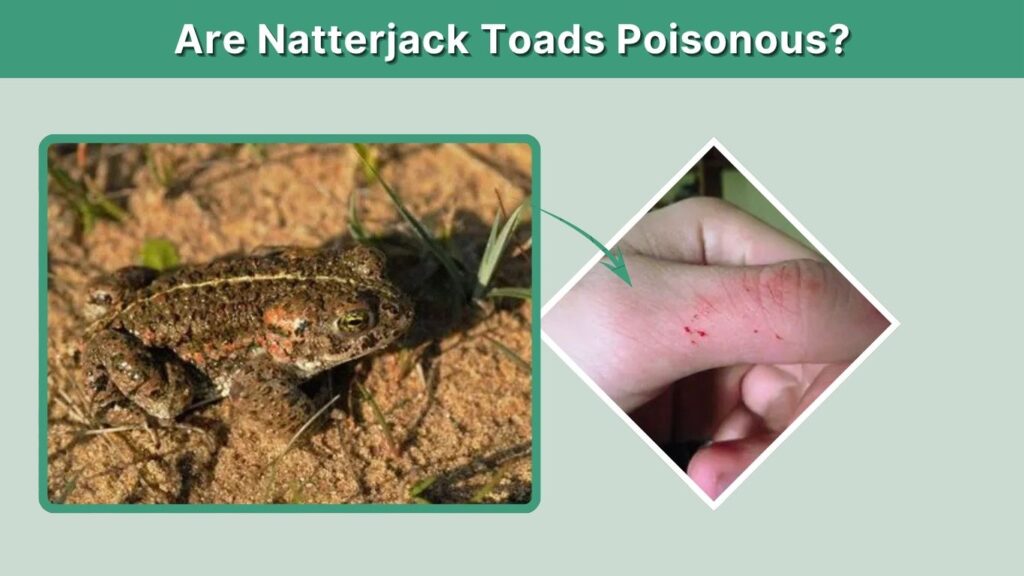
Many people wonder whether natterjack toads are dangerous to humans or pets. Like most true toads, they produce defensive secretions from specialized skin glands.
Toxic Secretions
The skin contains mild toxins that help deter predators. These secretions can cause irritation if they come into contact with sensitive tissues such as the eyes or mouth.
For humans, the toxins are generally not considered dangerous when the animal is simply handled carefully. Washing hands after contact is recommended to avoid accidental irritation.
Risks to Pets
Dogs are more likely than humans to experience problems if they attempt to bite or lick a natterjack toad.
Possible symptoms include:
- Excessive drooling
- Mouth irritation
- Temporary discomfort
- Nausea in some cases
Pet owners should discourage animals from interacting with wild toads and seek veterinary advice if unusual symptoms occur.
Are Natterjack Toads Endangered?
The conservation status of the natterjack toad varies across its range. While the species is not globally endangered, many local populations have experienced significant declines.
Why Are Natterjack Toads Declining?
Several factors have contributed to population reductions over the past century.
The most important threats include habitat destruction, drainage of wetlands, urban development, agricultural intensification, and changes in land management practices. Because the species depends on specialized habitats, even small environmental changes can have serious consequences.
Climate change may also affect breeding success by altering rainfall patterns and reducing the availability of temporary breeding pools.
Current Conservation Status
Conservation organizations continue to monitor populations across Europe. In the United Kingdom and Ireland, the species receives special attention because many populations are small and isolated.
Habitat restoration projects have helped stabilize some populations, demonstrating that targeted conservation efforts can be highly effective.
Natterjack Toad Conservation and Legal Protection
Protecting the natterjack toad requires long-term habitat management and legal safeguards. Conservation programs focus on restoring breeding ponds and maintaining open landscapes suitable for the species.
Conservation Measures
Key conservation actions include:
- Creating and restoring shallow ponds
- Managing vegetation growth
- Monitoring breeding populations
- Protecting important habitats
- Supporting scientific research
These efforts have contributed to the recovery of several local populations throughout the United Kingdom and Europe.
Are Natterjack Toads Protected?
Yes, natterjack toads receive legal protection in many countries. In the UK, they are protected under wildlife legislation that prohibits harming, capturing, or disturbing the animals and their breeding sites without appropriate authorization.
Because of these protections, collecting natterjack toads from the wild or keeping them as pets is generally not permitted.
FAQs
What Does a Natterjack Toad Look Like?
A natterjack toad is easily recognized by the bright yellow stripe running down the center of its back. It has olive-green or brown warty skin, short legs, and prominent eyes. Adults typically grow between 6 and 8 centimeters long.
How Many Natterjack Toads Are Left in the UK?
Exact numbers vary from year to year, but natterjack toads remain one of the UK’s rarest amphibians. Most populations are concentrated in protected coastal dune systems, heathlands, and a few carefully managed conservation sites.
Can You Keep a Natterjack Toad as a Pet?
In many countries, including the United Kingdom, natterjack toads are protected by law. Capturing, keeping, or disturbing wild natterjack toads without proper authorization is generally illegal.
Why Do Natterjack Toads Run Instead of Hop?
Unlike many frogs and toads, natterjack toads move by running with short, quick strides. This adaptation helps them travel efficiently across sandy habitats such as dunes and heathlands where hopping may be less effective.
Where Can You Find Natterjack Toads?
Natterjack toads are found in parts of the United Kingdom, Ireland, and mainland Europe. They prefer coastal dunes, heathlands, salt marshes, and other open sandy environments that contain shallow breeding ponds.
