
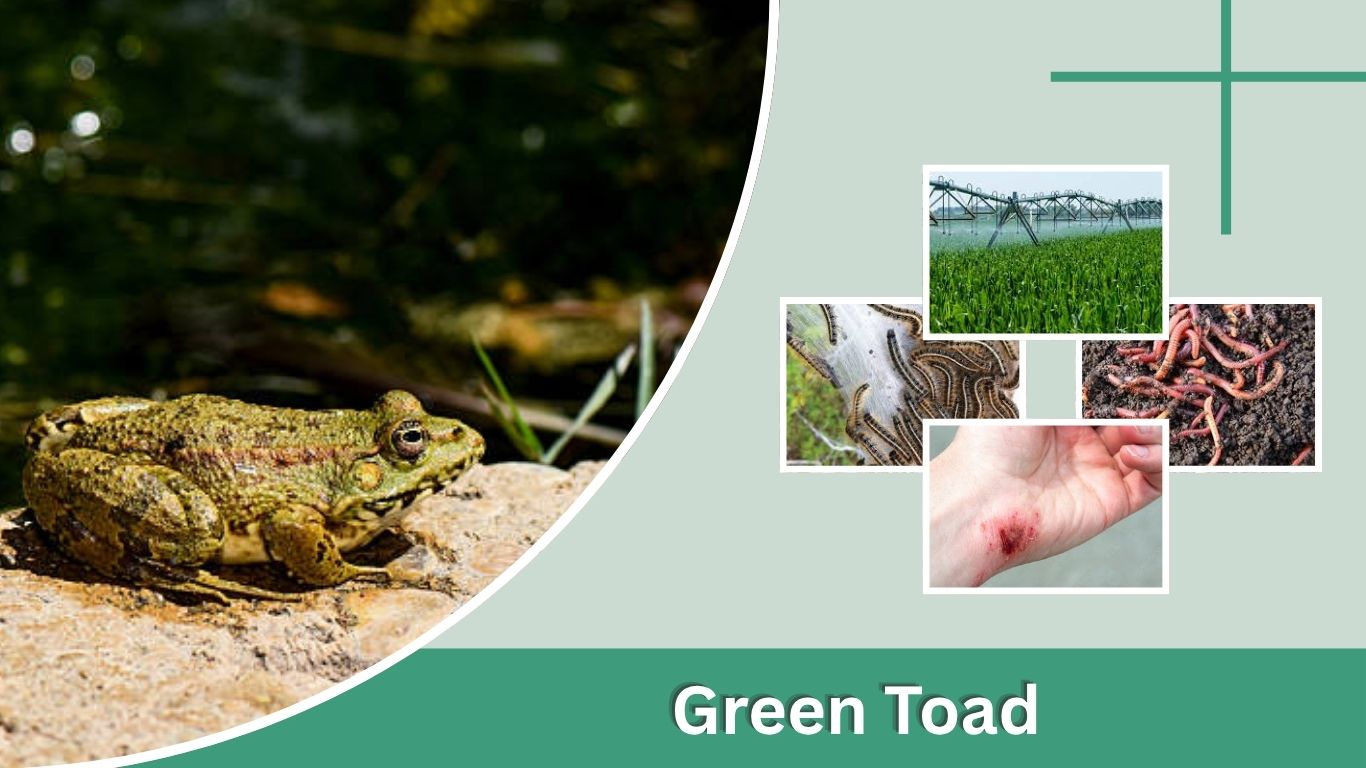
The green toad is a distinctive amphibian known for its striking green patches, remarkable adaptability, and wide geographic distribution. Found across parts of Europe and Asia, this species thrives in environments ranging from grasslands to urban areas. Unlike many amphibians that require consistently wet habitats, green toads can tolerate relatively dry conditions and extreme temperatures. Their unique appearance, nocturnal behavior, and important ecological role make them one of the most fascinating members of the toad family.
What Is a Green Toad?
The green toad belongs to the Bufonidae family and is scientifically known as Bufotes viridis. It is recognized for its mottled green coloration, which provides excellent camouflage in natural environments. This species is highly adaptable and can survive in a variety of habitats where other amphibians may struggle. Green toads are primarily nocturnal and spend much of their time hiding during daylight hours.
Scientific Classification
The green toad is part of a complex group of closely related species distributed throughout Europe and Asia. Scientists have studied its classification extensively because populations in different regions often display unique characteristics.
Physical Appearance
Several features help identify a green toad:
- Bright green patches across the body
- Light-colored background skin
- Warty skin texture
- Golden or copper-colored eyes
- Compact body with relatively short legs
Adult green toads generally grow between 7 and 10 centimeters in length, although size can vary depending on habitat conditions and food availability.
Green Toad Habitat
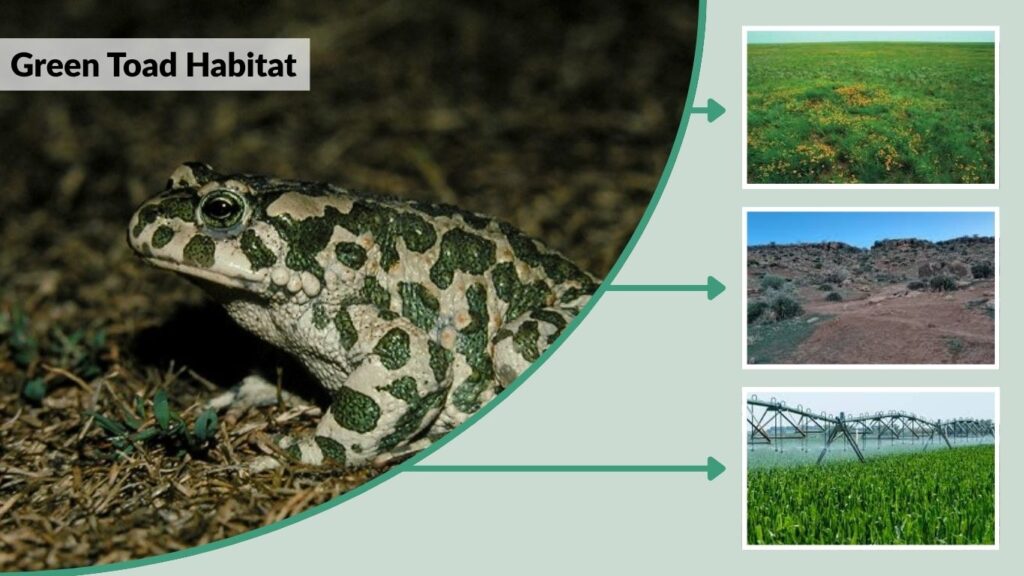
The green toad is highly adaptable and occupies a wider range of habitats than many other amphibian species. Its ability to survive in both natural and human-modified landscapes has contributed to its broad distribution. Suitable habitats provide shelter, breeding sites, and access to abundant insect prey throughout the year.
Natural Habitats
Green toads commonly occur in:
- Grasslands
- Steppes
- Semi-desert regions
- Agricultural fields
- Urban parks and gardens
These environments provide open spaces where the toads can forage and locate breeding ponds during the reproductive season.
Habitat Requirements
Although adaptable, green toads still require access to freshwater breeding sites. Temporary ponds, flooded fields, and shallow wetlands are commonly used for reproduction. Loose soil and rocky shelters are also important because they provide protection from predators and extreme weather conditions.
The species is particularly well adapted to environments that experience seasonal droughts and temperature fluctuations.
Green Toad Distribution
Green toads have one of the broadest distributions among European amphibians. Their range extends across much of Europe and into parts of western and central Asia.
Distribution Across Europe
The species can be found in numerous European countries, including Germany, Austria, Hungary, Poland, the Czech Republic, and several Balkan nations. Population densities vary depending on habitat availability and local environmental conditions.
Distribution Across Asia
In Asia, green toads occur in regions that offer suitable breeding habitats and favorable climate conditions. Their range extends through parts of Turkey, Kazakhstan, and neighboring areas.
The wide geographic distribution of the green toad demonstrates its remarkable adaptability. Unlike many amphibians that depend on specialized habitats, green toads can often persist in landscapes influenced by agriculture and urban development.
Green Toad Diet
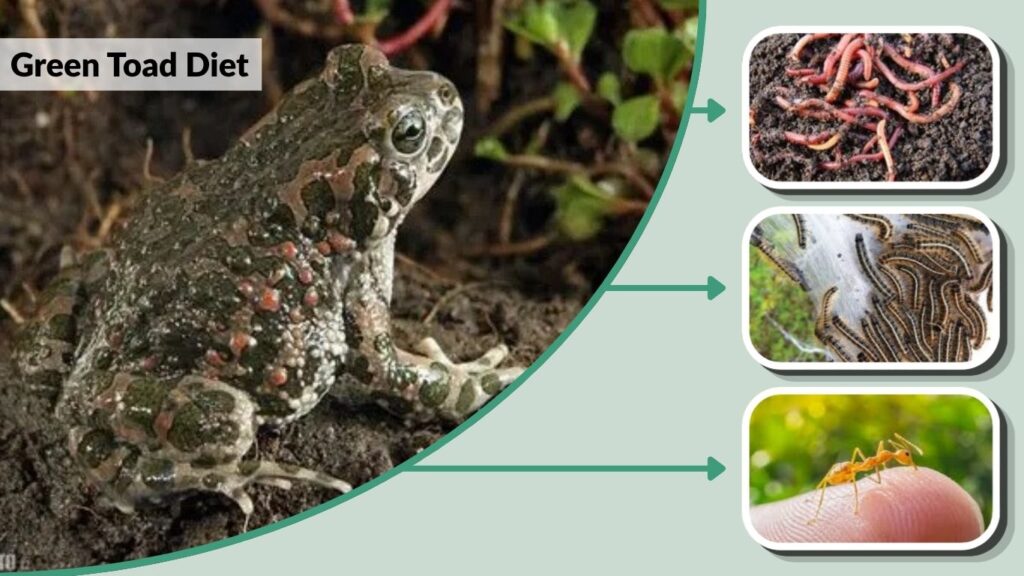
The green toad is a carnivorous amphibian that feeds primarily on small invertebrates. Its feeding habits help regulate insect populations and contribute to ecosystem balance.
What Do Green Toads Eat?
A typical green toad diet includes:
- Beetles
- Ants
- Flies
- Spiders
- Worms
- Caterpillars
- Small insects
The variety of prey consumed depends on seasonal availability and local habitat conditions.
Feeding Behavior
Green toads are active hunters that forage mainly at night. They rely on their keen eyesight to detect movement and capture prey using their sticky tongues. Because they consume many pest insects, green toads are often considered beneficial in agricultural and garden environments.
Young tadpoles feed on algae, plant material, and microscopic organisms before transitioning to a carnivorous diet after metamorphosis.
Green Toad Life Cycle
The life cycle of the green toad follows the typical amphibian pattern of egg, tadpole, and adult stages. Successful reproduction depends heavily on weather conditions and the availability of suitable breeding ponds.
Breeding Season
Green toads usually breed during spring and early summer when temperatures rise and rainfall creates temporary water bodies. Males gather at breeding sites and produce calls to attract females.
Eggs and Tadpoles
Females lay long strings of eggs in shallow water. After hatching, tadpoles begin feeding and growing rapidly. Development speed depends on water temperature, food availability, and environmental conditions.
The tadpole stage is particularly important because many breeding ponds are temporary. Rapid growth allows young toads to complete metamorphosis before water levels decline.
Metamorphosis
As development progresses, tadpoles gradually develop legs, lungs, and other adult characteristics. Once metamorphosis is complete, juvenile green toads leave the water and begin their terrestrial lives. Survival during this stage depends on finding suitable shelter, food resources, and protection from predators.
Green Toad Behavior and Adaptations
The green toad is known for its impressive adaptability and ability to survive in environments that would challenge many other amphibians. Its behavior and physical characteristics have evolved to help it cope with temperature extremes, limited water availability, and changing habitats. These adaptations have contributed significantly to the species’ widespread distribution.
Nocturnal Lifestyle
Green toads are primarily active during the evening and nighttime hours. By avoiding daytime heat, they reduce water loss and conserve energy. During the day, they typically hide beneath rocks, vegetation, or in burrows to remain cool and protected.
Survival Adaptations
Several adaptations help green toads thrive in diverse environments:
- Camouflage provided by green body markings
- Ability to tolerate dry conditions
- Burrowing behavior for protection
- Efficient water conservation
- Adaptability to urban environments
These characteristics allow green toads to occupy habitats ranging from natural grasslands to city parks and gardens.
Green Toad Call and Communication
Male green toads produce distinctive calls during the breeding season. These vocalizations help attract females and establish breeding territories. The calls are often heard near ponds and temporary wetlands on warm spring evenings.
Communication plays an essential role in reproductive success, especially in areas where breeding opportunities are limited.
Are Green Toads Poisonous?
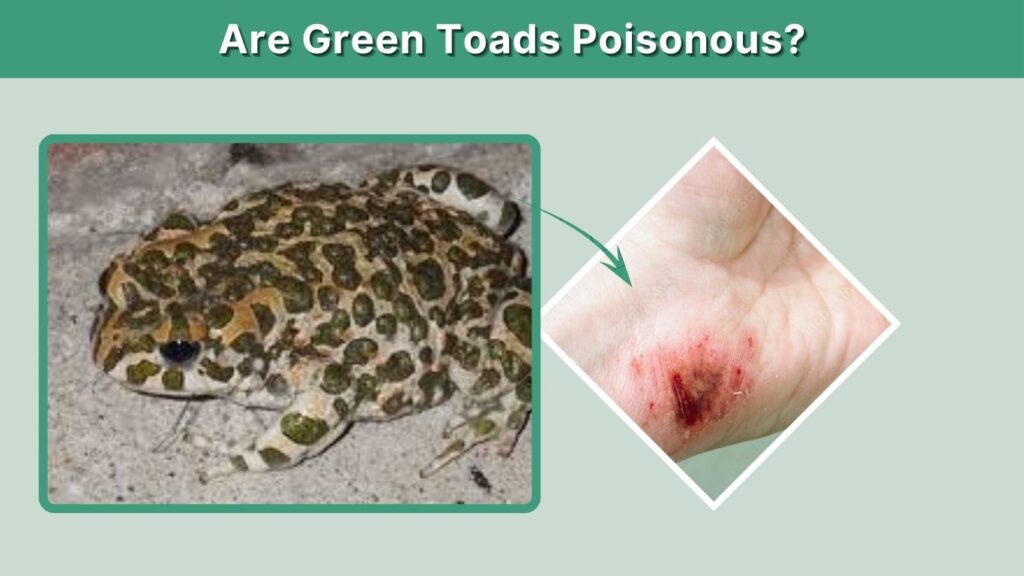
Many people wonder whether green toads pose any danger to humans or pets. Like most true toads, they possess skin glands that produce defensive substances. These secretions help protect them from predators in the wild.
Defensive Secretions
The skin of a green toad contains glands that release mild toxins when the animal feels threatened. These substances discourage predators from attacking and provide an important survival advantage.
For humans, contact with these secretions is generally harmless, although irritation may occur if the toxins come into contact with the eyes, nose, or mouth.
Effects on Pets
Dogs and cats are more likely to experience reactions if they bite or lick a green toad.
Possible symptoms include:
- Excessive drooling
- Mouth irritation
- Temporary discomfort
- Mild nausea
- Pawing at the mouth
Pet owners should prevent unnecessary contact between pets and wild toads and consult a veterinarian if symptoms persist.
Green Toad Conservation Status
Although green toads remain relatively widespread, some populations face increasing pressure from environmental changes. Conservation efforts are important to ensure that healthy populations continue to exist throughout their natural range.
Is the Green Toad Endangered?
The conservation status of green toads varies across different regions. While some populations remain stable, others have experienced declines due to habitat destruction and human activities.
Local conservation assessments often focus on specific populations because threats can differ greatly between countries and regions.
Major Threats
Several factors contribute to population declines:
- Habitat loss from development
- Wetland drainage
- Agricultural intensification
- Water pollution
- Climate change
These threats can reduce breeding success and limit the availability of suitable habitats.
Conservation Efforts
Wildlife organizations and conservation groups are working to protect green toads through habitat restoration and monitoring programs. Efforts often focus on preserving breeding ponds and maintaining suitable terrestrial habitats.
Public awareness campaigns also help promote understanding of the ecological importance of amphibians and encourage habitat protection.
Green Toad vs Common Toad
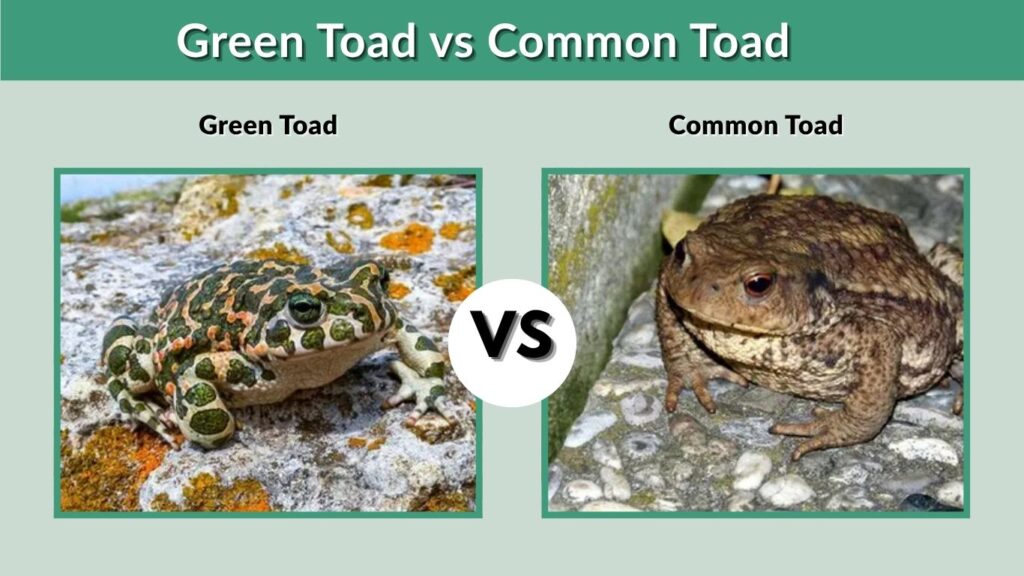
The green toad and common toad share many similarities, but several features distinguish these species. Understanding these differences can help wildlife enthusiasts identify them in the field.
Physical Differences
The most obvious distinction is coloration. Green toads display irregular green patches across a pale background, while common toads usually have a more uniform brown or gray appearance.
Other differences include body shape, habitat preferences, and geographic distribution. Green toads are generally better adapted to open and drier environments than common toads.
Behavioral Differences
Green toads often inhabit open landscapes and can tolerate warmer, drier conditions. Common toads are more frequently associated with woodlands, gardens, and moist habitats.
Breeding behavior also differs slightly, with green toads often relying on temporary water bodies that form after seasonal rainfall.
Interesting Green Toad Facts
The green toad possesses several fascinating characteristics that make it unique among amphibians.
Fascinating Facts About Green Toads
- Found across Europe and parts of Asia
- Recognized by distinctive green markings
- Highly adaptable to urban environments
- Active primarily at night
- Consumes large numbers of insects
- Can survive in relatively dry habitats
- Uses vocal calls to attract mates
- Plays an important ecological role in pest control
These remarkable traits have helped the green toad remain one of the most successful and widespread amphibians within its range.
FAQs
What Is the Scientific Name of the Green Toad?
The scientific name of the green toad is Bufotes viridis. It belongs to the Bufonidae family and is widely distributed across Europe and parts of Asia.
What Do Green Toads Eat?
Green toads primarily eat insects, beetles, ants, spiders, worms, and other small invertebrates. They are active hunters that feed mostly at night.
Are Green Toads Poisonous to Humans?
Green toads produce mild defensive toxins through their skin glands. These secretions are generally not dangerous to humans but may cause irritation if they contact sensitive areas.
Where Do Green Toads Live?
Green toads live in grasslands, steppes, agricultural areas, wetlands, and even urban environments throughout Europe and parts of Asia.
How Long Do Green Toads Live?
Green toads can live for approximately 10 to 15 years in the wild, depending on habitat quality, food availability, and environmental conditions.
