
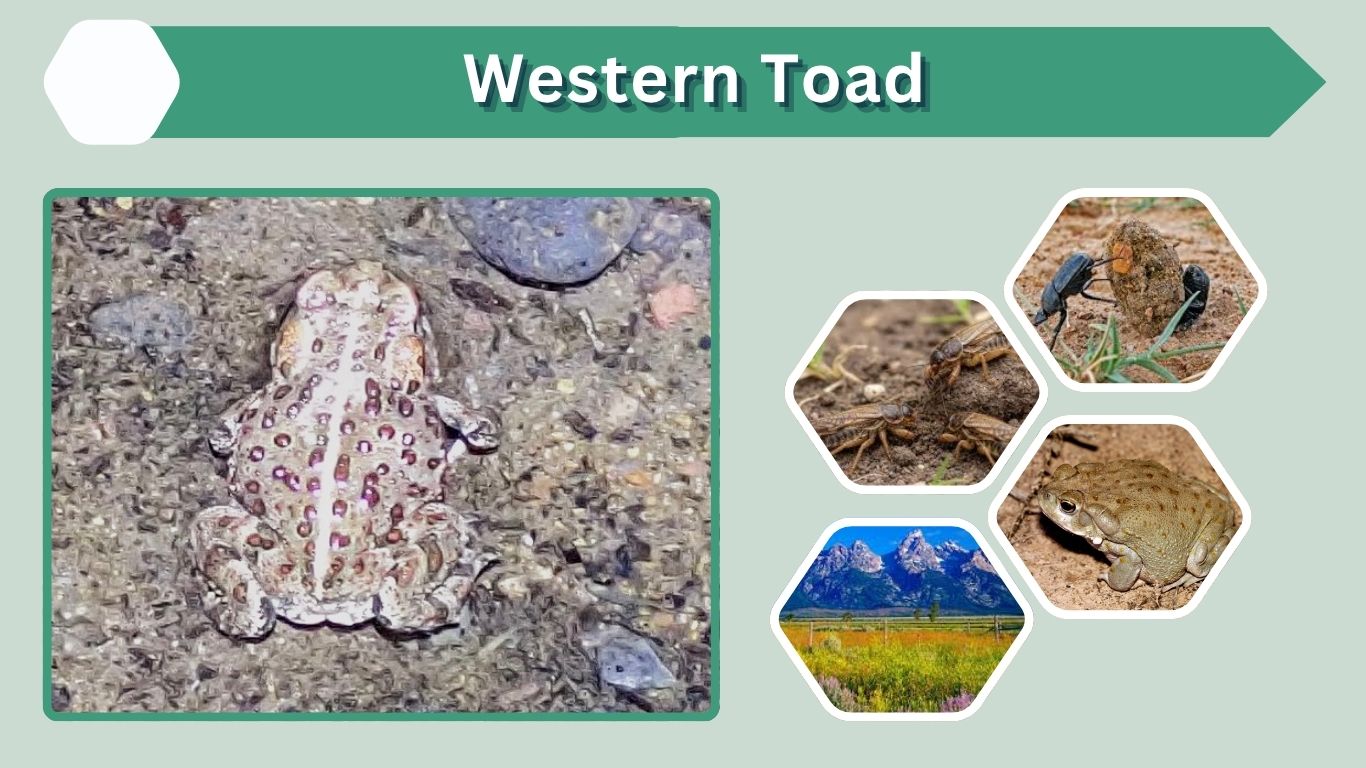
The Western Toad (Anaxyrus boreas) is one of the most widespread amphibians in western North America. Found in forests, wetlands, grasslands, and mountain regions, this adaptable species plays an important role in controlling insect populations and maintaining ecosystem balance. Known for its distinctive appearance and fascinating life cycle, the Western Toad has attracted the attention of researchers, wildlife enthusiasts, and conservationists alike. Understanding its habitat, diet, behavior, and challenges provides valuable insight into this remarkable amphibian.
What Is a Western Toad?
The Western Toad is a medium-sized member of the true toad family, Bufonidae. Native to western Canada, the United States, and parts of Mexico, it occupies a wide variety of habitats. Its ability to adapt to different environments has contributed to its broad distribution, although some populations have experienced declines due to habitat loss and disease.
Scientific Classification
The accepted scientific name of the Western Toad is Anaxyrus boreas. It was previously classified under the genus Bufo, which included many North American toads before taxonomic revisions.
Physical Characteristics
Western Toads are recognized by their rough, warty skin and a light-colored stripe that often runs down the center of the back. Their coloration ranges from brown and gray to olive green, helping them blend into their surroundings.
Quick Facts About Western Toads
- Scientific Name: Anaxyrus boreas
- Family: Bufonidae
- Average Length: 2 to 5 inches
- Habitat: Wetlands, forests, meadows
- Diet: Insects and small invertebrates
- Lifespan: Up to 10 years or more
- Activity: Primarily nocturnal
- Range: Western North America
Western Toad Identification
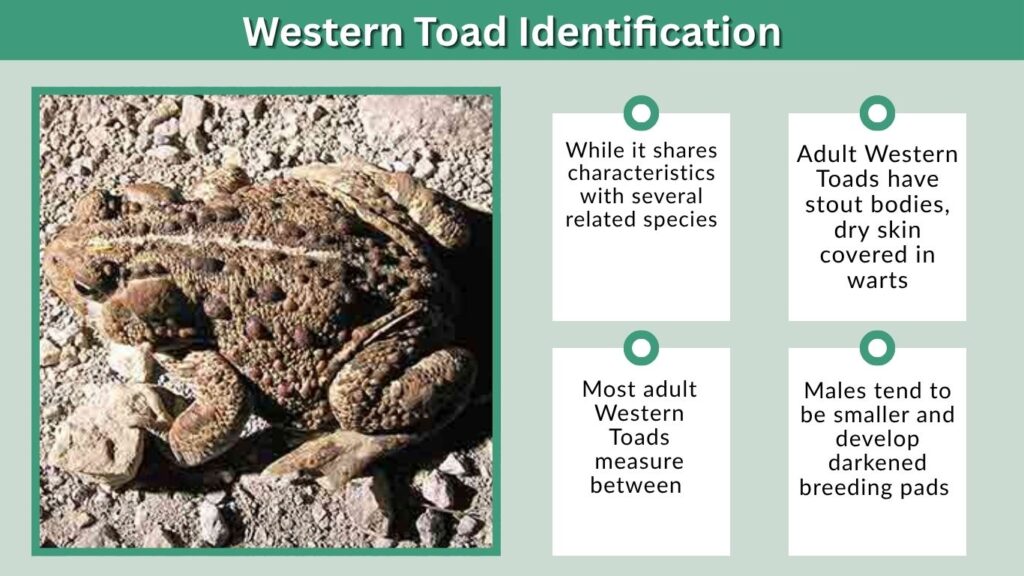
Identifying a Western Toad is relatively easy once you know its key features. While it shares characteristics with several related species, certain physical traits help distinguish it from other toads found throughout western North America.
What Does a Western Toad Look Like?
Adult Western Toads have stout bodies, dry skin covered in warts, and horizontal pupils. One of the most recognizable features is the pale stripe that extends along the center of the back. Their large parotoid glands behind the eyes contain defensive toxins used to deter predators.
How Big Do Western Toads Get?
Most adult Western Toads measure between two and five inches in length. Females are typically larger than males, especially during the breeding season when they carry eggs.
Male vs Female Western Toad
Males tend to be smaller and develop darkened breeding pads on their front feet during the mating season. Females are larger and heavier, allowing them to produce thousands of eggs during reproduction.
Western Toad Habitat and Range
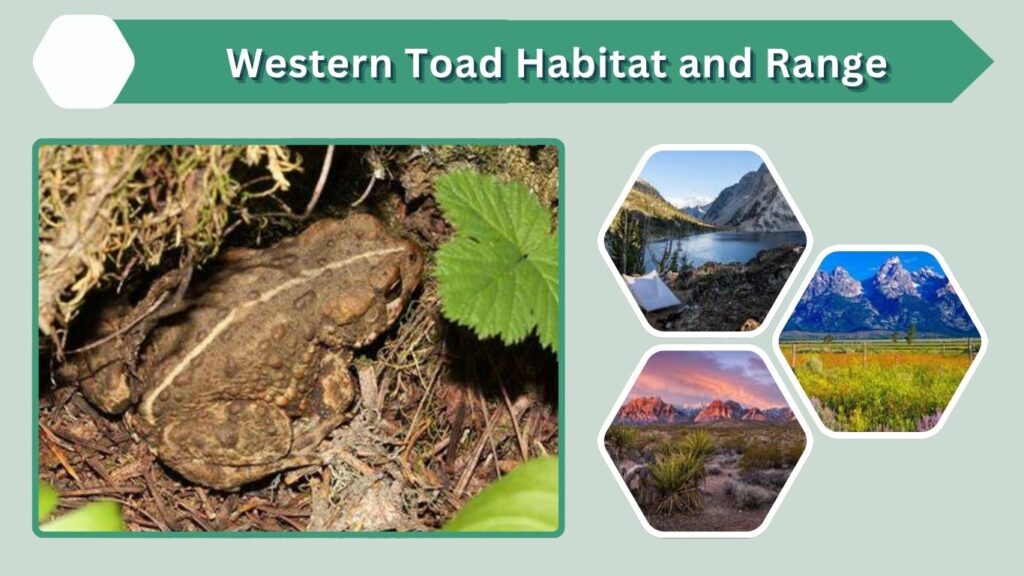
The Western Toad occupies one of the largest ranges of any North American toad. It can be found in diverse environments ranging from lowland wetlands to mountainous forests. Access to water for breeding and suitable shelter for protection are essential components of its habitat.
Where Do Western Toads Live?
Western Toads occur throughout much of western North America. Their distribution extends from British Columbia and Alberta south through the western United States and into portions of northern Mexico.
Preferred Habitat Conditions
These amphibians prefer habitats that provide moisture, breeding sites, and abundant food. They often inhabit areas near ponds, lakes, streams, marshes, and wet meadows.
Geographic Distribution
- British Columbia
- Alberta
- Washington
- Oregon
- California
- Montana
- Idaho
- Nevada
- Wyoming
- Northern Mexico
Western Toad Diet and Feeding Habits
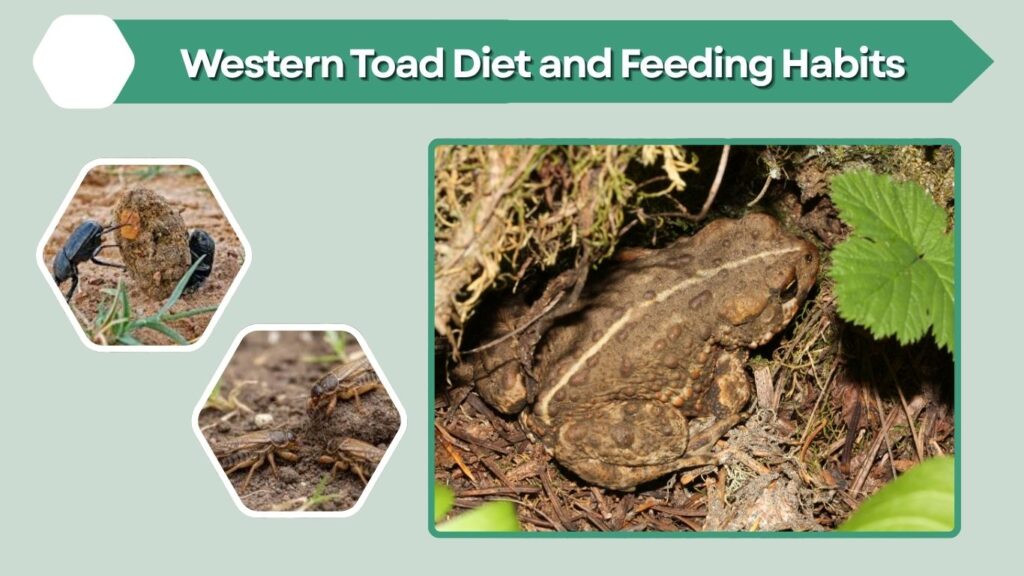
The Western Toad is an opportunistic predator that consumes a wide variety of small animals. Its feeding behavior helps control insect populations and contributes to ecosystem health. Most hunting activity occurs during the evening and nighttime hours when prey is more active.
What Do Western Toads Eat?
Western Toads rely primarily on insects and other invertebrates. They use a sticky tongue to quickly capture prey that comes within striking distance.
Common Food Sources
- Ants
- Beetles
- Crickets
- Flies
- Spiders
- Worms
- Moths
- Small larvae
Hunting Behavior
Rather than actively chasing prey, Western Toads usually wait patiently until an insect approaches. Once within range, they rapidly extend their tongue to capture and swallow the prey whole.
Western Toad Life Cycle
Like all amphibians, the Western Toad undergoes a remarkable transformation during its life. Beginning as an aquatic egg and eventually becoming a terrestrial adult, each stage of development plays an important role in the species’ survival.
Breeding Season
Breeding generally occurs during spring after snowmelt and seasonal rains. Adults migrate to ponds, lakes, and other water bodies where reproduction takes place.
Western Toad Eggs
Females lay long strings of eggs that may contain thousands of embryos. These eggs are deposited in shallow water where sunlight and warmth support development.
Life Cycle Stages
- Egg
- Tadpole
- Metamorphosis
- Juvenile Toad
- Adult Toad
Western Toad Tadpoles
Tadpoles hatch from eggs within several days and often gather in large schools. They feed on algae and organic matter while gradually developing legs and lungs. After several weeks, they complete metamorphosis and emerge onto land as tiny toads ready to begin their terrestrial lives.
Western Toad Call and Sounds
The Western Toad uses vocalizations primarily during the breeding season. While not as vocal as some frog species, males produce calls that help attract females and establish their presence at breeding sites. Scientists often use these calls to monitor populations and determine breeding activity in wetlands and other aquatic habitats.
What Does a Western Toad Call Sound Like?
The call of a Western Toad is generally described as a soft, bird-like chirp or short musical trill. Unlike many frogs that produce loud choruses, Western Toad calls are relatively quiet and can be difficult to hear from a distance.
Why Do Western Toads Call?
Male Western Toads vocalize during the breeding season to attract mates. Calling activity usually increases during warm evenings when environmental conditions are favorable for reproduction.
Importance of Calls
- Attract breeding partners
- Identify active breeding sites
- Help scientists monitor populations
- Support conservation research
- Distinguish males during mating season
Are Western Toads Poisonous?
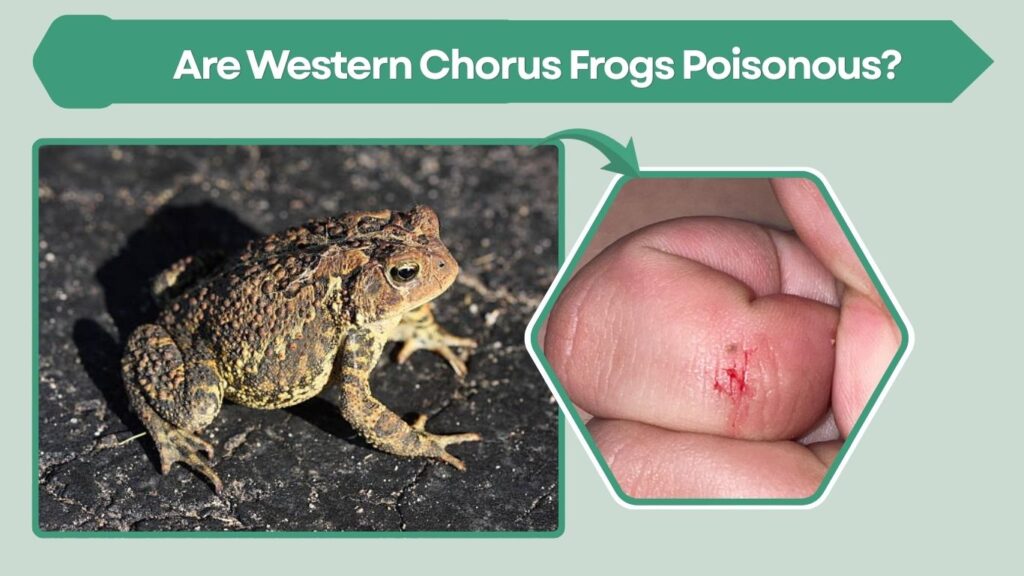
Western Toads possess natural defense mechanisms that help protect them from predators. Like many members of the true toad family, they produce toxins from specialized glands located behind their eyes.
How Western Toad Toxins Work
The parotoid glands release a milky secretion when the toad feels threatened. These toxins are designed to discourage predators from eating the toad and are generally effective against many mammals and birds.
Are Western Toads Poisonous to Dogs?
Dogs are the animals most commonly affected by toad toxins because they often investigate wildlife with their mouths. While Western Toad toxins are usually less dangerous than those of cane toads, they can still cause discomfort.
Common Symptoms in Dogs
- Excessive drooling
- Mouth irritation
- Pawing at the face
- Temporary vomiting
- Foaming around the mouth
Are Western Toads Poisonous to Humans?
Western Toads are not considered dangerous to humans. However, their skin secretions can irritate sensitive skin or eyes. Washing hands after handling any amphibian is always recommended.
Western Toad Behavior and Migration
Western Toads display several fascinating behaviors throughout the year. Their movements are often linked to seasonal weather patterns, breeding opportunities, and habitat conditions.
Daily Activity
Most Western Toads are active during the evening and nighttime hours. During the day, they typically shelter beneath logs, rocks, vegetation, or underground burrows to avoid predators and dehydration.
Seasonal Migration
Many populations undertake seasonal migrations between breeding ponds and upland habitats. Some individuals may travel surprisingly long distances to reach suitable breeding sites.
Winter Survival
As temperatures decline, Western Toads enter a dormant state known as brumation. They spend the winter underground or beneath protective cover where temperatures remain stable.
Predators and Threats
Although Western Toads possess chemical defenses, they still face numerous predators and environmental challenges. Natural predators target different life stages, while human activities continue to affect many populations.
Natural Predators
Various animals prey upon Western Toad eggs, tadpoles, juveniles, and adults despite their toxic defenses.
Common Predators
- Snakes
- Herons
- Hawks
- Raccoons
- Foxes
- Large fish
- Turtles
Human-Related Threats
Habitat destruction, road mortality, wetland drainage, and pollution remain significant concerns for many Western Toad populations. Climate change may also alter breeding habitats and seasonal movement patterns.
Are Western Toads Endangered?
The conservation status of the Western Toad varies depending on location. While the species remains widespread overall, some regional populations have experienced noticeable declines.
Population Trends
Researchers have documented population reductions in several areas due to disease outbreaks, habitat fragmentation, and environmental changes. Local populations may face greater risks than the species as a whole.
Conservation Efforts
Numerous organizations work to protect Western Toad populations through habitat restoration, monitoring programs, and scientific research.
Key Conservation Actions
- Wetland restoration
- Population surveys
- Disease monitoring
- Habitat protection
- Wildlife crossing projects
- Public education programs
Western Toad vs California Toad
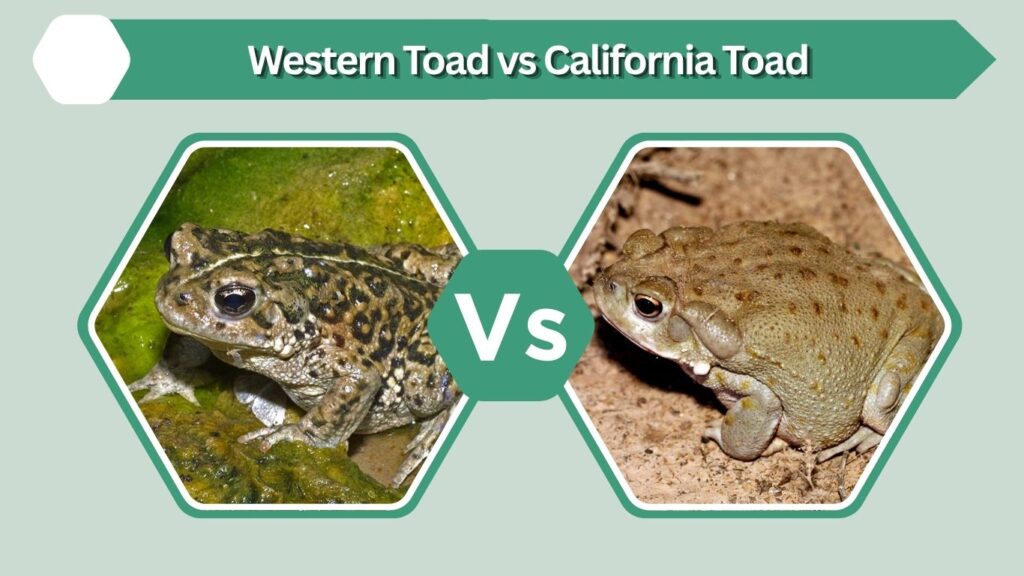
Western Toads are sometimes compared with California Toads because both occur in parts of the western United States. Although closely related, there are noticeable differences between the two.
Appearance Differences
Western Toads typically display a more pronounced dorsal stripe and different coloration patterns. Body size and habitat preferences may also vary depending on the region.
Habitat Differences
California Toads are generally associated with habitats found throughout California, while Western Toads occupy a much broader geographic range extending into Canada and several western states.
Interesting Western Toad Facts
The Western Toad possesses several remarkable characteristics that make it one of North America’s most interesting amphibians.
Fun Facts
- Can live more than 10 years in favorable conditions.
- Produces toxins to deter predators.
- Found from coastal wetlands to mountain forests.
- Undergoes complete metamorphosis.
- Helps control insect populations naturally.
- Migrates between breeding and feeding habitats.
- Occupies one of the largest ranges of any North American toad.
FAQs
What Is the Scientific Name of the Western Toad?
The scientific name of the Western Toad is Anaxyrus boreas.
How Long Do Western Toads Live?
Many Western Toads live between 7 and 10 years in the wild, although some individuals may survive even longer.
What Do Western Toads Eat?
Their diet consists mainly of insects and other small invertebrates, including ants, beetles, spiders, flies, and worms.
How Big Do Western Toads Get?
Adult Western Toads generally grow between 2 and 5 inches in length, with females often being larger than males.
Can Western Toads Be Kept as Pets?
Local regulations vary, and some areas restrict the collection of native wildlife. Anyone considering a pet toad should first review local laws and proper care requirements.
