
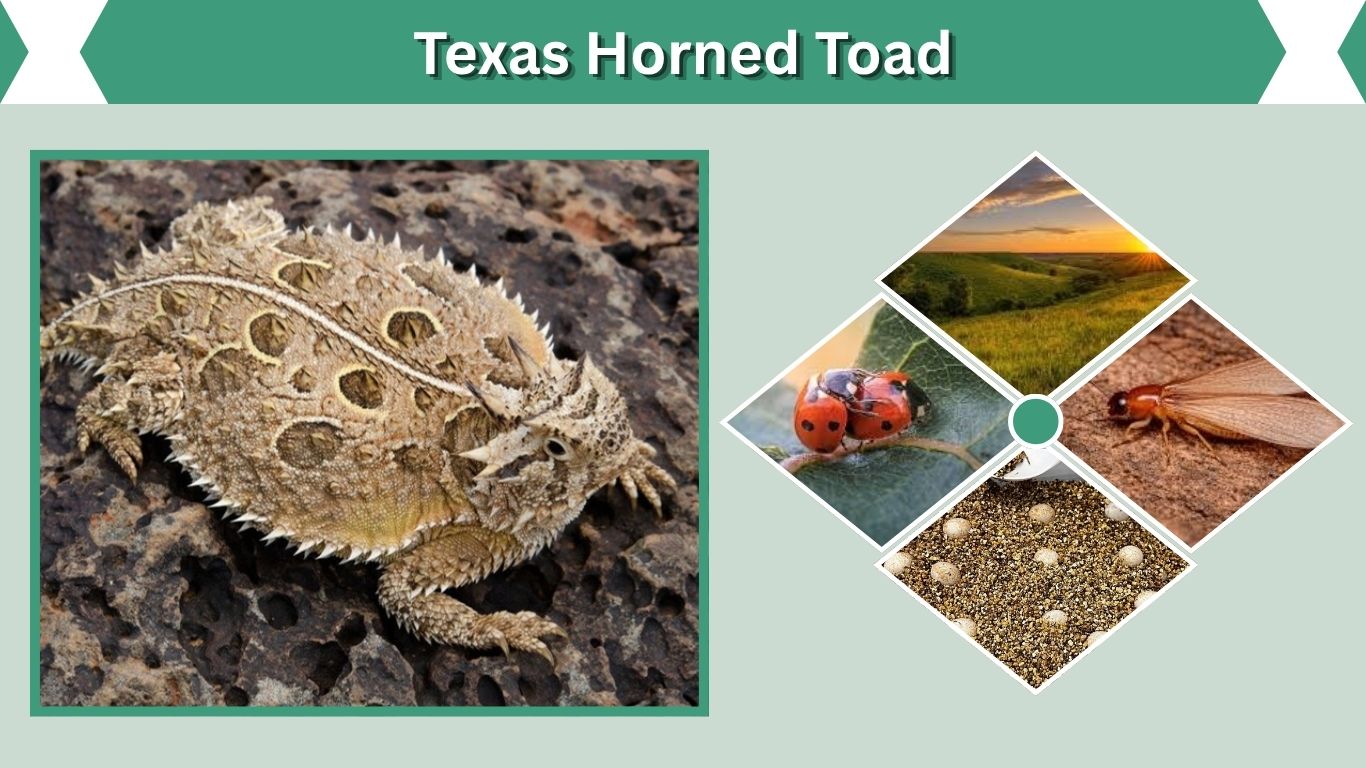
The Texas horned toad, scientifically known as Phrynosoma cornutum, is one of the most recognizable reptiles in North America. Despite its common name, it is not a toad but a lizard distinguished by its flattened body, spiny appearance, and crown-like horns. Native to Texas and surrounding regions, this fascinating reptile has captured the interest of wildlife enthusiasts for generations. Its unusual defense mechanisms, specialized diet, and important role in local ecosystems make it a remarkable species worthy of attention and conservation.
What Is a Texas Horned Toad?
The Texas horned toad is a unique reptile that belongs to the horned lizard family. It is famous for its horn-like projections and exceptional camouflage abilities. The species has become a symbol of Texas wildlife and is recognized as the official state reptile.
Scientific Classification
The Texas horned toad belongs to the genus Phrynosoma, which includes several species of horned lizards found across North America. Its scientific name, Phrynosoma cornutum, refers to its distinctive horned appearance.
Why It Is Called a Horned Toad
Many people mistakenly assume this reptile is a toad because of its rounded body shape and slow movement. However, it is actually a lizard. The nickname “horned toad” has remained popular for generations because of its resemblance to a small toad covered with horns.
Texas State Reptile
The Texas horned toad holds special cultural significance throughout the state. It was officially designated as the state reptile due to its historical importance and widespread recognition among Texans.
Texas Horned Toad Physical Characteristics
The Texas horned toad possesses several unique physical features that help it survive in harsh environments. Its appearance allows it to blend into sandy and rocky landscapes while deterring potential predators.
Size and Appearance
Adult Texas horned toads generally measure between 2.5 and 5 inches in length. Their broad, flattened bodies help them remain hidden among soil, rocks, and dry vegetation.
Distinctive Features
Some of the most recognizable characteristics include:
- Sharp horns extending from the back of the head
- Spiny scales covering the body
- Brown, gray, or tan coloration for camouflage
- Flattened body shape that blends into the ground
- Short legs designed for quick bursts of movement
Differences Between Males and Females
Female horned toads are usually larger than males. Males often possess slightly larger tail bases and different body proportions, although these differences can be difficult to observe without close examination.
Texas Horned Toad Habitat and Geographic Distribution
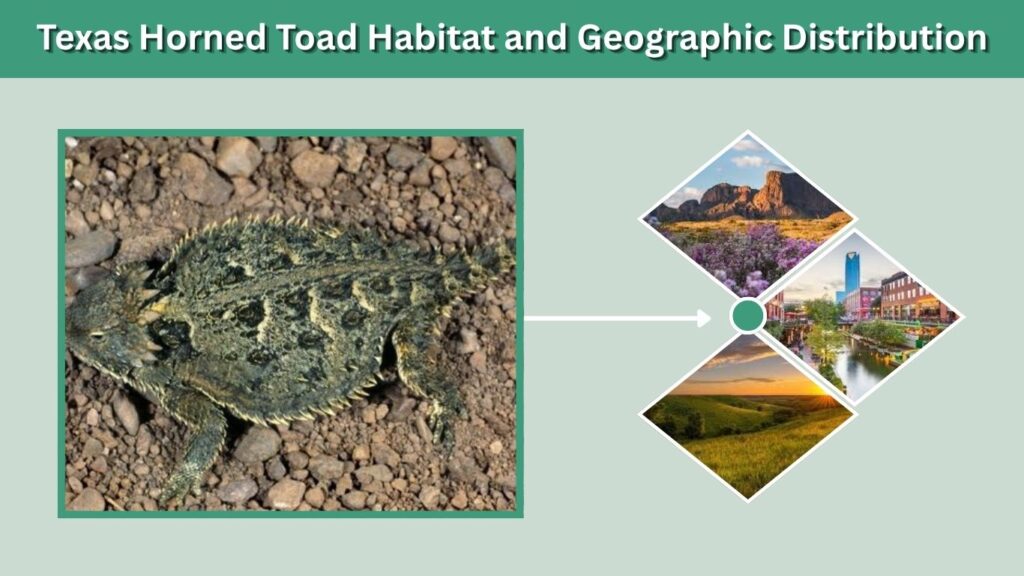
The Texas horned toad thrives in environments that provide warmth, open space, and access to its preferred food sources. Understanding its habitat helps explain both its success and the challenges it faces today.
Where Texas Horned Toads Live
This species is primarily found in:
- Texas
- Oklahoma
- Kansas
- New Mexico
- Northern Mexico
Historically, the Texas horned toad occupied a much larger range. However, habitat loss and environmental changes have reduced populations in many areas.
Preferred Habitat Conditions
Texas horned toads favor open landscapes with loose soil that allows easy burrowing. Grasslands, prairies, scrublands, and semi-arid regions provide ideal conditions. These habitats offer both protection and access to abundant insect populations.
Seasonal Behavior
During hot summer days, horned toads often seek shelter beneath vegetation or partially bury themselves in the soil. In colder months, they may enter a period of dormancy to conserve energy and survive unfavorable conditions.
Texas Horned Toad Diet and Feeding Habits
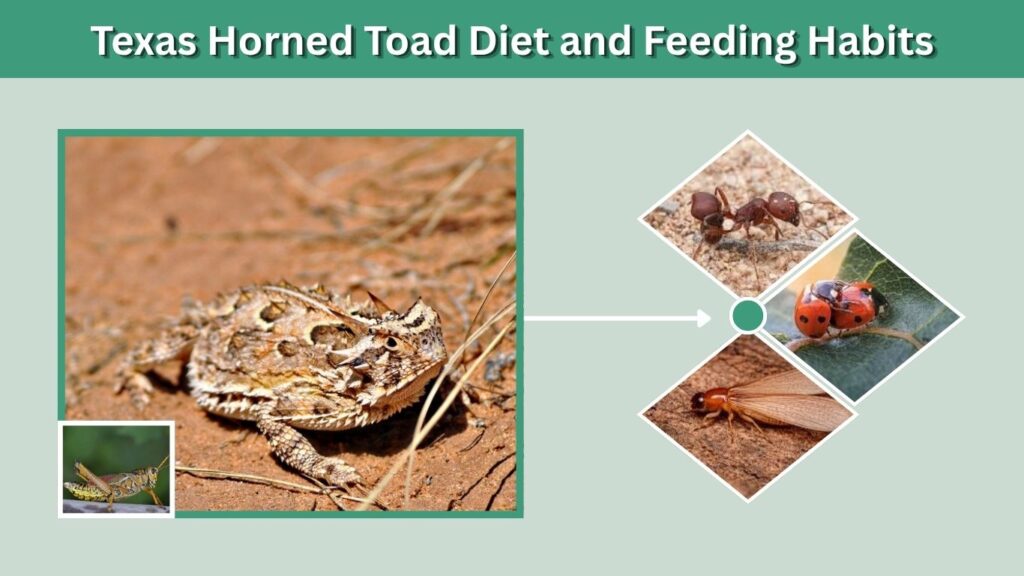
The Texas horned toad has a highly specialized diet that sets it apart from many other reptiles. Its feeding habits play a crucial role in maintaining healthy ecosystems and controlling insect populations.
Primary Food Sources
Unlike many lizards that consume a wide variety of insects, Texas horned toads depend heavily on ants for survival. Their diet commonly includes:
- Harvester ants
- Beetles
- Grasshoppers
- Termites
- Small insects and larvae
Why Harvester Ants Are Important
Harvester ants make up the majority of the Texas horned toad’s diet. These ants provide essential nutrients and are available in large colonies throughout the reptile’s natural range. A single horned toad may consume hundreds of ants in a single day.
Hunting Strategy
Rather than actively chasing prey, the Texas horned toad uses a sit-and-wait approach. Remaining motionless helps it avoid predators while allowing unsuspecting insects to come within striking distance. Once prey is close enough, the lizard quickly captures it with its sticky tongue.
Behavior and Survival Adaptations
The Texas horned toad has evolved remarkable adaptations that increase its chances of survival in challenging environments. These behaviors help protect it from predators and extreme weather conditions.
Camouflage and Concealment
One of the species’ greatest defenses is its ability to blend seamlessly with its surroundings. The combination of earth-toned colors and a flattened body makes it difficult for predators to detect.
Burrowing Behavior
Texas horned toads frequently burrow into loose soil to regulate body temperature and avoid danger. This behavior also helps them escape extreme heat during the summer months.
Daily Activity Patterns
These reptiles are primarily active during daylight hours. Most feeding occurs in the morning and late afternoon when temperatures are more comfortable and insect activity is high.
Amazing Defense Mechanisms
The Texas horned toad is famous for its unusual methods of avoiding predators. Over thousands of years, it has developed several defensive adaptations that help it survive in environments filled with natural threats.
Inflating the Body
When threatened, the Texas horned toad can expand its body by taking in air. This makes it appear larger and more difficult for predators to swallow. The expanded body also causes its sharp spines to become more prominent.
Natural Protective Features
Several physical traits contribute to the horned toad’s survival:
- Sharp horns around the head
- Spiny scales covering the body
- Camouflage that blends with the environment
- Flattened shape that reduces visibility
- Ability to remain motionless for long periods
Blood-Squirting Defense
One of the most remarkable defense mechanisms is the ability to squirt blood from the corners of its eyes. When under extreme stress, the horned toad increases blood pressure in tiny vessels near its eyes, causing them to rupture. The blood can travel several feet and often deters predators such as coyotes and wild dogs due to its unpleasant taste.
Texas Horned Toad Reproduction and Life Cycle
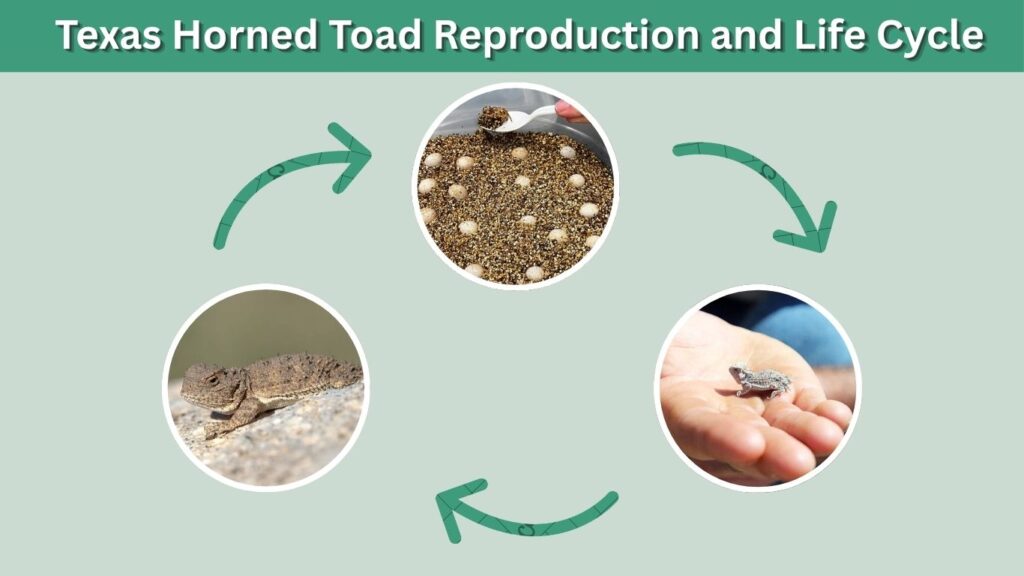
The reproductive cycle of the Texas horned toad is closely linked to seasonal weather patterns. Warm temperatures and suitable habitat conditions play important roles in successful breeding and development.
Mating Season
Breeding typically occurs during spring and early summer. During this period, males actively search for females and engage in courtship behaviors.
Egg Laying and Incubation
After mating, females dig shallow nests in sandy soil and deposit their eggs. Depending on environmental conditions, a female may lay dozens of eggs in a single clutch. The eggs remain buried until they hatch several weeks later.
Growth and Development
Young horned toads are independent from birth and receive no parental care. They must immediately begin finding food and avoiding predators. Survival rates are often low during the first year of life, making suitable habitat essential for population stability.
Threats Facing Texas Horned Toads
Although once common throughout much of Texas, horned toad populations have declined significantly. Multiple environmental and human-related factors have contributed to this decrease.
Habitat Loss
Urban development, road construction, and agricultural expansion have reduced the amount of suitable habitat available. As natural landscapes disappear, horned toads lose access to food, shelter, and breeding sites.
Decline of Harvester Ants
The reduction of harvester ant populations has had a direct impact on horned toads. Several factors contribute to this problem:
- Invasive fire ants competing with native ants
- Widespread pesticide use
- Habitat destruction
- Changes in land management practices
Because harvester ants are their primary food source, declines in ant populations often lead to declines in horned toad populations.
Predators and Human Activities
Domestic cats, dogs, and increased vehicle traffic pose additional risks. Road mortality remains a significant concern in areas where human development overlaps with natural habitats.
Conservation Efforts
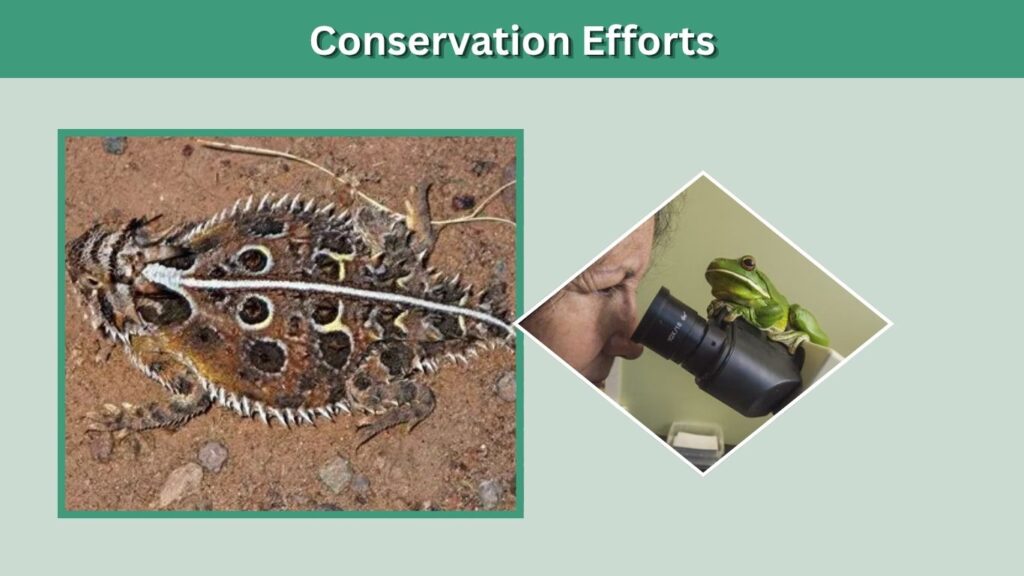
Conservation programs have become increasingly important for protecting the Texas horned toad. Researchers, wildlife organizations, and government agencies continue working to restore populations and preserve critical habitats.
Research and Monitoring Programs
Scientists monitor horned toad populations to better understand their distribution, behavior, and habitat needs. This information helps guide future conservation decisions and management strategies.
Captive Breeding Initiatives
Several organizations participate in breeding programs designed to increase population numbers and support reintroduction efforts. These initiatives aim to strengthen wild populations while improving scientific understanding of the species.
How People Can Help
Individuals can support conservation efforts in several ways:
- Protect native habitats
- Limit unnecessary pesticide use
- Preserve native ant populations
- Report sightings to wildlife agencies
- Educate others about the species
Small actions can contribute significantly to long-term conservation success.
FAQs
Is the Texas Horned Toad Dangerous to Humans?
No, the Texas horned toad is harmless to humans. It does not possess venom and rarely attempts to bite. When threatened, it relies on camouflage, body inflation, and other natural defenses rather than aggression.
How Long Do Texas Horned Toads Live?
In the wild, Texas horned toads typically live between 5 and 8 years, although some individuals may survive longer under favorable conditions. Lifespan depends on factors such as habitat quality, food availability, and predator pressure.
Where Can You See Texas Horned Toads in the Wild?
Texas horned toads are most commonly found in grasslands, prairies, scrublands, and semi-arid regions of Texas and neighboring states. They are often seen during warm months when they are actively searching for food.
Why Are Texas Horned Toad Populations Declining?
Population declines are largely caused by habitat loss, urban development, pesticide use, and the reduction of native harvester ant populations. Invasive fire ants have also contributed to the species’ decline by disrupting local ecosystems.
What Makes the Texas Horned Toad Unique?
The Texas horned toad is unique because of its horned appearance, excellent camouflage, specialized ant-based diet, and its rare ability to squirt blood from its eyes as a defense mechanism. These adaptations make it one of the most distinctive reptiles in North America.
