
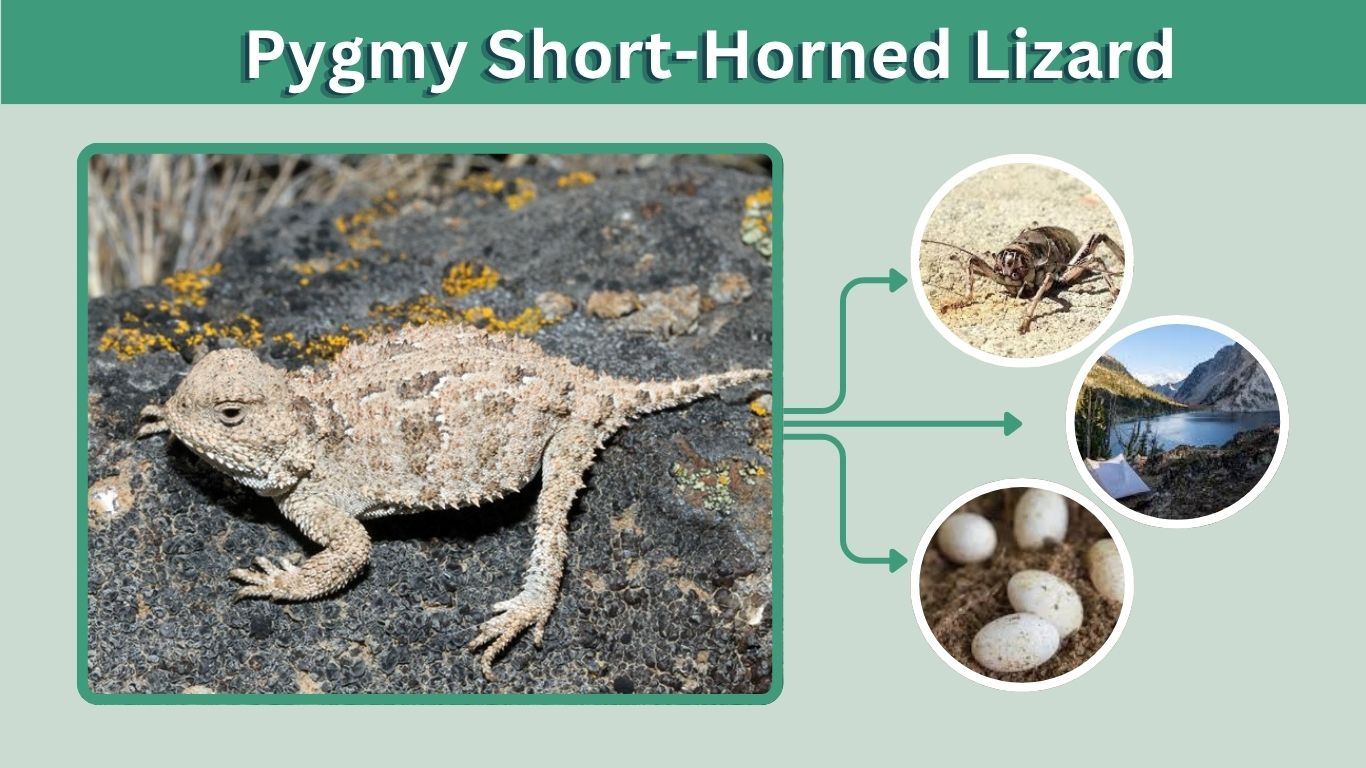
The pygmy short-horned lizard (Phrynosoma douglasii) is one of North America’s most fascinating reptiles. Known for its flattened body, short horns, and remarkable camouflage, this small lizard has adapted to survive in some of the continent’s harshest environments. It is commonly found in grasslands, shrublands, and semi-arid regions where it blends perfectly with the surrounding soil. Understanding its identification, habitat, diet, and size provides valuable insight into the unique adaptations that have helped this species thrive in the wild.
What Is a Pygmy Short-Horned Lizard?
The pygmy short-horned lizard is a small reptile belonging to the horned lizard family. Unlike many other lizards, it relies heavily on camouflage and defensive behavior rather than speed. Its compact body and horn-like scales make it one of the most recognizable reptiles in western North America. Although small in size, it plays an important ecological role by helping control insect populations.
Scientific Classification
The pygmy short-horned lizard is scientifically known as Phrynosoma douglasii. It belongs to the family Phrynosomatidae, a group of reptiles commonly referred to as horned lizards. This species is closely related to several other horned lizards found throughout the western United States and Mexico.
Key Characteristics
Several traits distinguish this species from other reptiles:
- Flattened, rounded body
- Short tail and broad head
- Horn-like scales on the back of the head
- Excellent camouflage abilities
- Small overall body size
These features help the lizard avoid predators and survive in open habitats.
Pygmy Short-Horned Lizard Identification
The pygmy short-horned lizard is one of the easiest horned lizards to recognize due to its flattened body, short horns, and excellent camouflage. Its appearance helps it blend into rocky and sandy environments, making it difficult for predators to spot. Although small in size, this reptile has several distinctive features that separate it from other lizard species found across western North America.
Key Identification Features
- Flattened, rounded body shape
- Short horn-like scales on the back of the head
- Gray, brown, or reddish coloration
- Rough, spiny scales covering the body
- Short tail compared to most lizards
- Broad head and compact appearance
- Excellent camouflage that matches surrounding soil and rocks
Male vs. Female Identification
- Females are generally larger than males
- Males often have slightly longer tails
- Females possess broader bodies, especially during breeding season
- Color patterns are usually similar in both sexes
How to Identify One in the Wild
- Look for a small, motionless lizard on bare ground
- Check for horn-like projections behind the head
- Observe its flattened body profile
- Notice its ability to blend into the surrounding landscape
- Watch for slow, cautious movements when disturbed
Pygmy Short-Horned Lizard Size
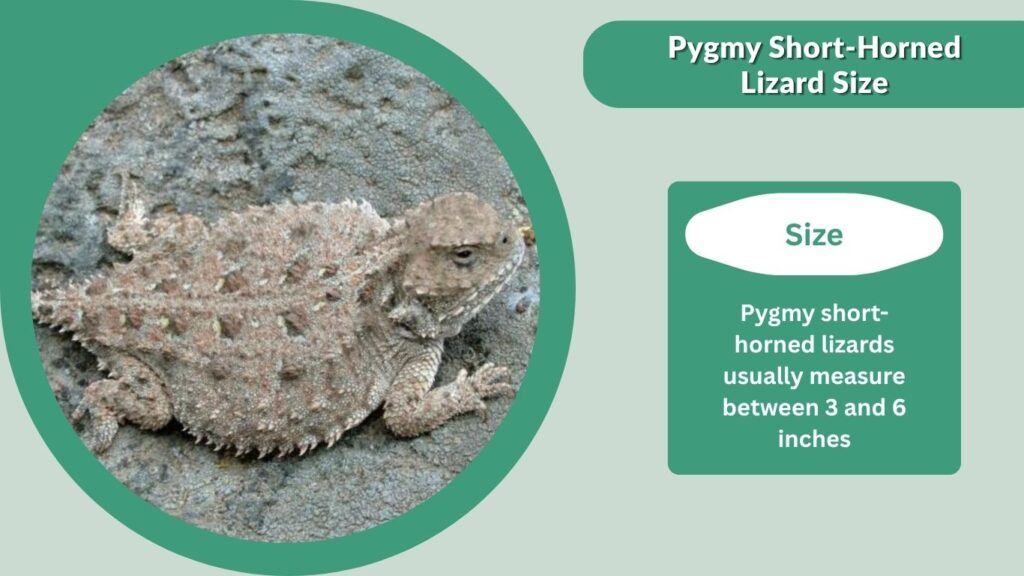
Despite its intimidating appearance, the pygmy short-horned lizard is one of the smallest members of the horned lizard family. Its compact size provides several advantages, including lower energy requirements and easier concealment from predators.
Average Length
Adult pygmy short-horned lizards usually measure between 3 and 6 inches (7.5 to 15 centimeters) in total length. Individuals may vary slightly depending on location, genetics, and environmental conditions.
Weight and Growth
These lizards are relatively lightweight compared to many other reptile species. Juveniles grow quickly during their first years of life, reaching maturity within a relatively short period. Growth rates depend on food availability, climate, and overall habitat quality.
Why Their Small Size Matters
The pygmy short-horned lizard’s small size offers several survival benefits:
- Requires less food than larger reptiles
- Easier to conceal from predators
- Can utilize small shelter sites
- Better adapted to harsh environments
- Conserves energy efficiently
These advantages contribute significantly to the species’ success throughout its range.
Pygmy Short-Horned Lizard Habitat
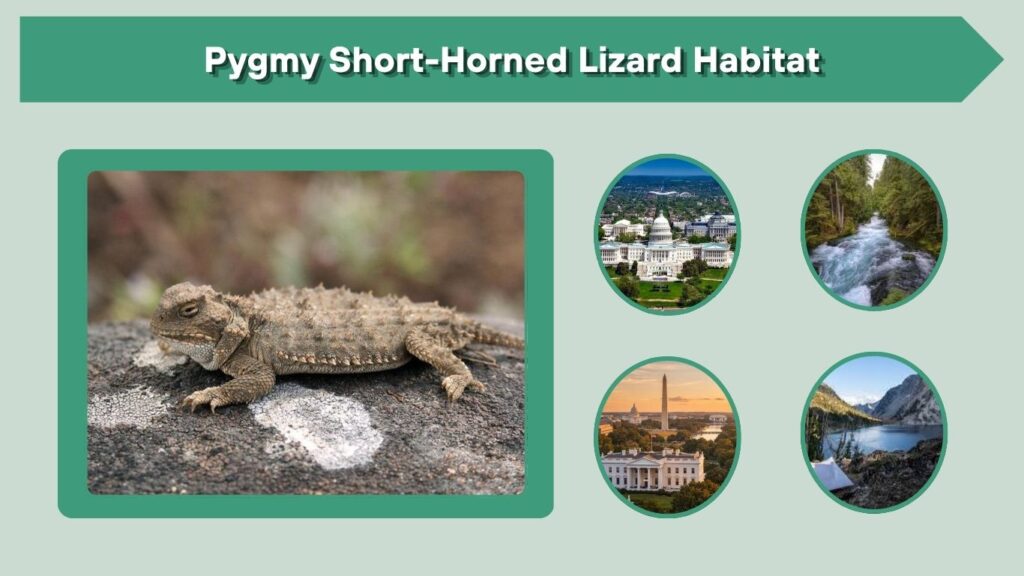
The pygmy short-horned lizard occupies a variety of habitats across western North America. Successful populations are generally associated with areas that provide suitable soil conditions, abundant insects, and adequate cover from predators. Habitat quality plays a critical role in determining population density and long-term survival.
Preferred Habitats
This species is commonly found in grasslands, sagebrush communities, shrublands, and open woodlands. It often favors dry regions where vegetation is sparse enough to allow effective basking while still providing concealment opportunities.
Environmental Requirements
The pygmy short-horned lizard depends on specific environmental conditions to thrive. Loose soil is important because it allows individuals to partially bury themselves for protection and temperature regulation. Access to sunny areas is equally important, as reptiles rely on external heat sources to regulate body temperature.
Geographic Distribution
The species occurs throughout portions of western North America, including regions of Washington, Oregon, Idaho, Montana, Wyoming, and parts of Canada. Its distribution reflects its ability to adapt to diverse climates while maintaining a dependence on suitable habitat and food resources.
Pygmy Short-Horned Lizard Diet
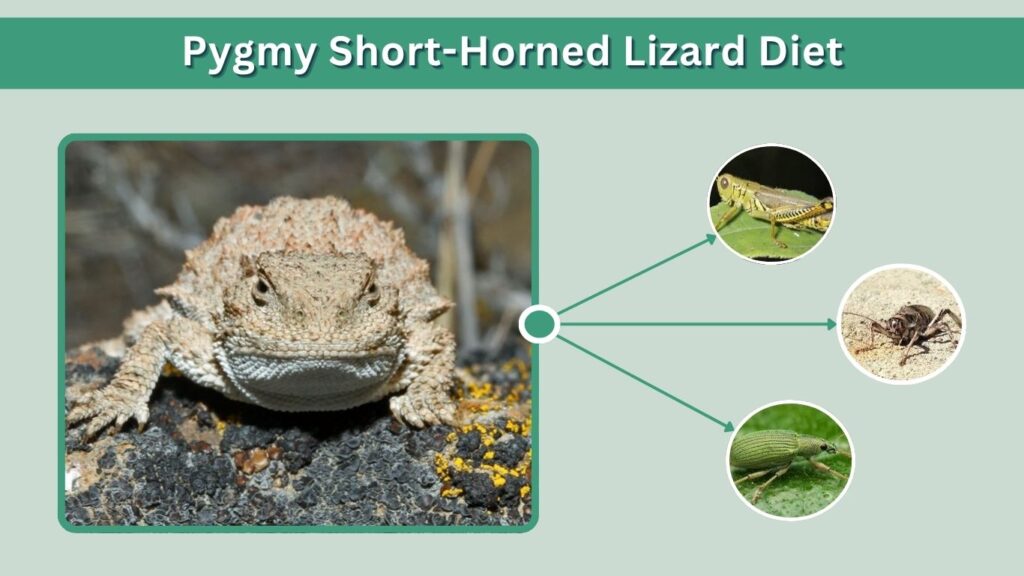
The pygmy short-horned lizard is primarily an insect-eating reptile that depends on a steady supply of small invertebrates for survival. Its feeding habits help regulate insect populations within its ecosystem. Although it consumes a variety of prey, ants often make up a significant portion of its diet. The species uses patience and camouflage to capture food while minimizing energy expenditure.
What Do Pygmy Short-Horned Lizards Eat?
The diet of this species commonly includes:
- Ants
- Beetles
- Spiders
- Grasshoppers
- Small insect larvae
The availability of prey varies throughout the year, causing seasonal changes in feeding behavior.
Hunting Behavior
Unlike active hunters that chase prey, the pygmy short-horned lizard uses a sit-and-wait strategy. It remains motionless for extended periods before quickly capturing passing insects with its sticky tongue. This approach conserves energy while maximizing hunting success.
Role in the Ecosystem
By feeding on insects, the pygmy short-horned lizard contributes to ecological balance. Its predation helps prevent excessive insect populations and supports the health of grassland and shrubland ecosystems.
Pygmy Short-Horned Lizard Adaptations
The pygmy short-horned lizard possesses several remarkable adaptations that allow it to survive in environments where food, water, and shelter can be limited. These specialized traits help it avoid predators, regulate body temperature, and remain hidden within its surroundings.
Camouflage Adaptations
One of the species’ most effective defenses is its ability to blend into the environment. The colors and patterns on its body closely resemble surrounding soil, rocks, and vegetation. This camouflage makes detection extremely difficult for both predators and prey.
Defensive Features
Several physical and behavioral adaptations help protect the lizard:
- Flattened body shape for concealment
- Horn-like scales that discourage predators
- Ability to remain motionless for long periods
- Burrowing behavior for protection
- Earth-toned coloration for camouflage
These defenses significantly improve survival in open habitats.
Temperature Regulation
As a reptile, the pygmy short-horned lizard depends on external heat sources. It spends time basking in the sun during cooler periods and seeks shade or burrows into loose soil during extreme heat. This behavior helps maintain a suitable body temperature throughout the day.
Lifecycle and Lifespan
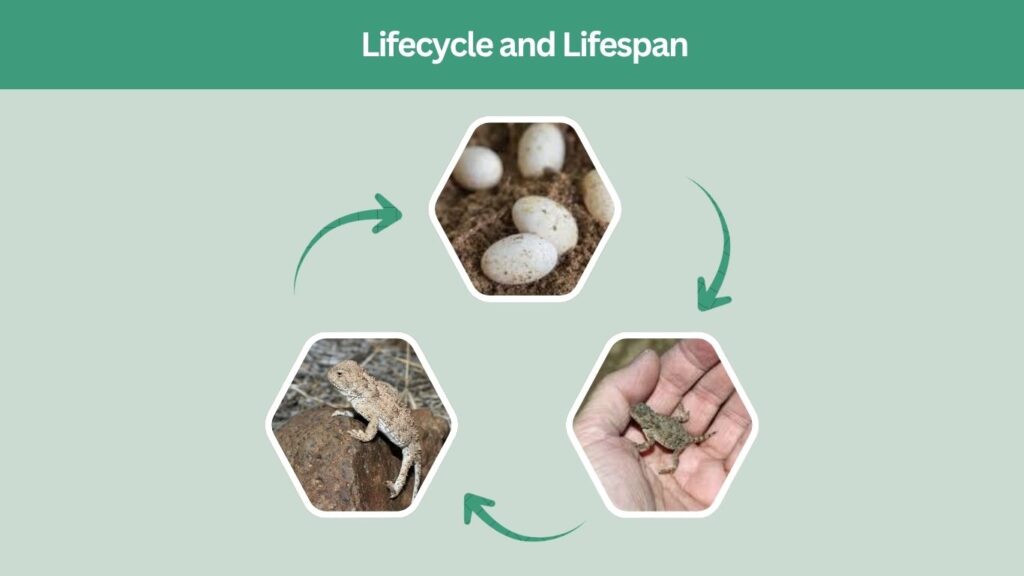
The lifecycle of the pygmy short-horned lizard is closely linked to seasonal environmental conditions. Reproduction, growth, and activity levels often depend on temperature and food availability. The species has evolved strategies that allow it to reproduce successfully even in challenging climates.
Reproduction
Breeding generally occurs during warmer months when food resources are abundant. Unlike many reptiles that lay eggs, the pygmy short-horned lizard gives birth to live young. This adaptation may improve offspring survival in cooler regions.
Development of Young
Newborn lizards are fully formed and capable of independent movement shortly after birth. They begin feeding on small insects almost immediately and continue growing rapidly during their first year of life.
Average Lifespan
The lifespan of a pygmy short-horned lizard varies depending on habitat quality and predator pressure. In favorable conditions, individuals may survive several years. However, many face challenges such as predation, disease, and environmental changes that can reduce longevity.
Predators and Threats
Although well adapted for survival, pygmy short-horned lizards face numerous threats in the wild. Their small size makes them vulnerable to a variety of predators, while human activities continue to impact suitable habitat across portions of their range.
Natural Predators
Common predators include:
- Hawks
- Owls
- Snakes
- Coyotes
- Foxes
These animals rely on sharp eyesight or hunting skills to locate lizards despite their camouflage.
Human-Related Threats
Habitat loss remains one of the most significant concerns for local populations. Urban development, agriculture, road construction, and pesticide use can reduce available habitat and decrease insect prey populations. Climate change may also alter environmental conditions that the species depends upon.
Interesting Pygmy Short-Horned Lizard Facts
The pygmy short-horned lizard is a unique reptile with many fascinating characteristics. Its specialized adaptations and unusual appearance have made it one of the most studied horned lizard species in North America.
Amazing Facts
- It is one of the smallest horned lizard species.
- It gives birth to live young instead of laying eggs.
- Ants are a major part of its diet.
- Its camouflage helps it avoid predators.
- It can partially bury itself in loose soil.
- Females are usually larger than males.
- It inhabits both lowland and mountain environments.
- It is native to western North America.
FAQs
What do pygmy short-horned lizards eat?
Pygmy short-horned lizards primarily feed on ants, beetles, spiders, grasshoppers, and other small insects. Ants often make up a large portion of their diet, making them important insect predators within their ecosystems.
How big is a pygmy short-horned lizard?
Adult pygmy short-horned lizards typically measure between 3 and 6 inches (7.5 to 15 centimeters) in total length. They are considered one of the smallest species within the horned lizard family.
Where do pygmy short-horned lizards live?
These lizards are found throughout western North America, including parts of Washington, Oregon, Idaho, Montana, Wyoming, and British Columbia. They commonly inhabit grasslands, sagebrush habitats, shrublands, and open woodlands.
Are pygmy short-horned lizards endangered?
The pygmy short-horned lizard is not currently classified as endangered across its entire range. However, some local populations face threats from habitat loss, urban development, climate change, and declining insect populations.
What animals eat pygmy short-horned lizards?
Natural predators include hawks, owls, snakes, coyotes, foxes, and other carnivorous animals. The lizard relies on camouflage, defensive behavior, and burrowing to reduce the risk of predation.
