
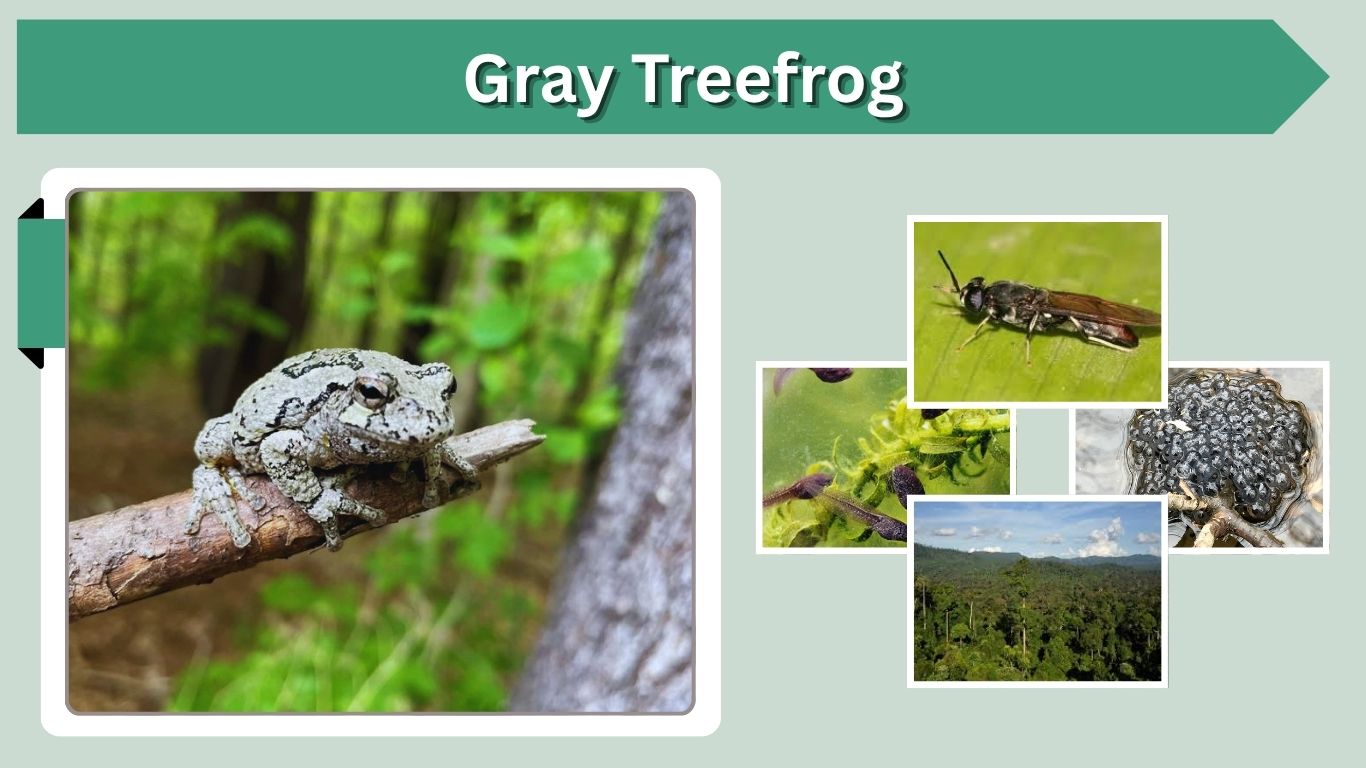
The gray treefrog is a fascinating amphibian known for its remarkable camouflage, loud breeding calls, and impressive climbing abilities. Found throughout much of eastern North America, this tree-dwelling frog includes two closely related species: the Gray Treefrog (Hyla versicolor) and Cope’s Gray Treefrog (Hyla chrysoscelis). Although nearly identical in appearance, they can often be distinguished by their calls. Understanding their identification, habitat, range, and behavior reveals why these adaptable frogs are among the most successful amphibians in North America.
What Is a Gray Treefrog?
The gray treefrog belongs to a group of small arboreal frogs that spend much of their lives in trees and shrubs. Their ability to climb vertical surfaces, blend into bark, and survive harsh seasonal conditions makes them highly adaptable. The gray treefrog complex includes two nearly identical species that share many physical and behavioral characteristics.
Scientific Classification
The gray treefrog belongs to the family Hylidae, commonly known as treefrogs. The two species most often discussed are Hyla versicolor (Gray Treefrog) and Hyla chrysoscelis (Cope’s Gray Treefrog). While they appear almost identical, genetic differences separate them into distinct species.
Key Characteristics
Gray treefrogs are known for several unique traits:
- Warty skin texture
- Large adhesive toe pads
- Excellent climbing ability
- Gray, green, or brown coloration
- Bright yellow-orange patches on inner thighs
These features help them survive in wooded habitats while avoiding predators.
Gray Treefrog Identification
Gray treefrogs are masters of camouflage and can be difficult to spot in the wild. Their coloration often matches tree bark, lichen, or surrounding vegetation. Despite their small size, several physical traits make them relatively easy to identify when viewed closely.
Physical Appearance
The gray treefrog has a compact body covered with slightly rough, warty skin. Its large eyes provide excellent vision during nighttime activity, while expanded toe pads allow it to cling to trees, branches, and even smooth surfaces. Coloration may vary from gray and green to brown depending on environmental conditions.
Gray Treefrog Size
Adult gray treefrogs typically measure between 1.25 and 2 inches (3 to 5 centimeters) in length. Females are generally larger than males, particularly during the breeding season. Their small size helps them move easily through vegetation and avoid detection by predators.
How to Identify a Gray Treefrog
Several features can help distinguish a gray treefrog:
- Gray, green, or brown body color
- Dark irregular markings on the back
- Bright yellow-orange hidden leg patches
- Large round toe pads
- Warty skin texture
These characteristics are useful for identifying both Gray Treefrogs and Cope’s Gray Treefrogs.
Gray Treefrog Habitat
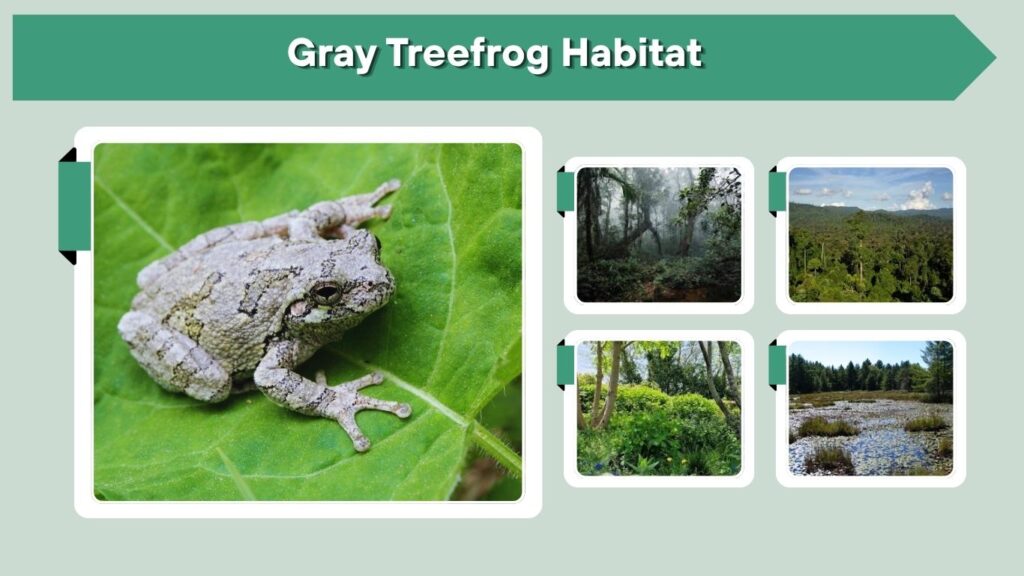
Gray treefrogs occupy a variety of habitats throughout their range. They are highly adaptable and can thrive in both natural and human-modified environments. Access to trees, moisture, and breeding water sources is essential for maintaining healthy populations.
Preferred Habitats
Gray treefrogs commonly inhabit deciduous forests, woodland edges, swamps, marshes, and suburban gardens. They spend most of their lives in trees and shrubs, descending mainly during breeding periods.
Habitat Requirements
Several environmental conditions support gray treefrog populations:
- Abundant trees and vegetation
- Nearby ponds or wetlands
- High humidity levels
- Suitable breeding sites
- Protection from predators
These factors contribute to successful reproduction and long-term survival.
Seasonal Habitat Changes
During spring and summer, gray treefrogs gather near ponds and temporary pools to breed. Outside the breeding season, they return to trees and shrubs where they feed, rest, and seek shelter from predators.
Gray Treefrog Range and Distribution
The gray treefrog complex is widely distributed across eastern North America. Its broad geographic range reflects the species’ adaptability to different climates and environmental conditions. Although both species occupy overlapping regions, some differences in distribution exist.
Geographic Range
Gray treefrogs can be found throughout much of the eastern and central United States as well as parts of southern Canada. Their range extends across forests, wetlands, and rural landscapes where suitable breeding habitats are available.
Eastern Gray Treefrog Range
The Eastern Gray Treefrog (Hyla versicolor) is common throughout the northeastern United States and portions of the Great Lakes region. It is frequently encountered in wooded habitats with access to seasonal wetlands.
Cope’s Gray Treefrog Range
Cope’s Gray Treefrog (Hyla chrysoscelis) occurs throughout much of the southeastern and central United States. In many areas, its range overlaps with that of the Eastern Gray Treefrog, making vocalizations one of the best identification tools.
Gray Treefrog Call and Sounds
The call of the gray treefrog is one of its most recognizable features. During the breeding season, males gather near ponds and wetlands to produce loud vocalizations that attract females. These calls are most commonly heard during warm spring and summer evenings. Because Gray Treefrogs and Cope’s Gray Treefrogs look nearly identical, their calls are often the best way to distinguish between the two species.
What Does a Gray Treefrog Sound Like?
The typical gray treefrog call is a musical trill that can be heard from considerable distances. Males may call repeatedly throughout the night, especially after rainfall when breeding activity increases.
Cope’s Gray Treefrog Call
Cope’s Gray Treefrog produces a faster and higher-pitched trill than the Eastern Gray Treefrog. Researchers often use call speed to identify the species in areas where both occur.
Eastern Gray Treefrog Call
The Eastern Gray Treefrog has a slower, more deliberate trill. While subtle, this difference allows experienced listeners to distinguish it from Cope’s Gray Treefrog.
Gray Treefrog Diet
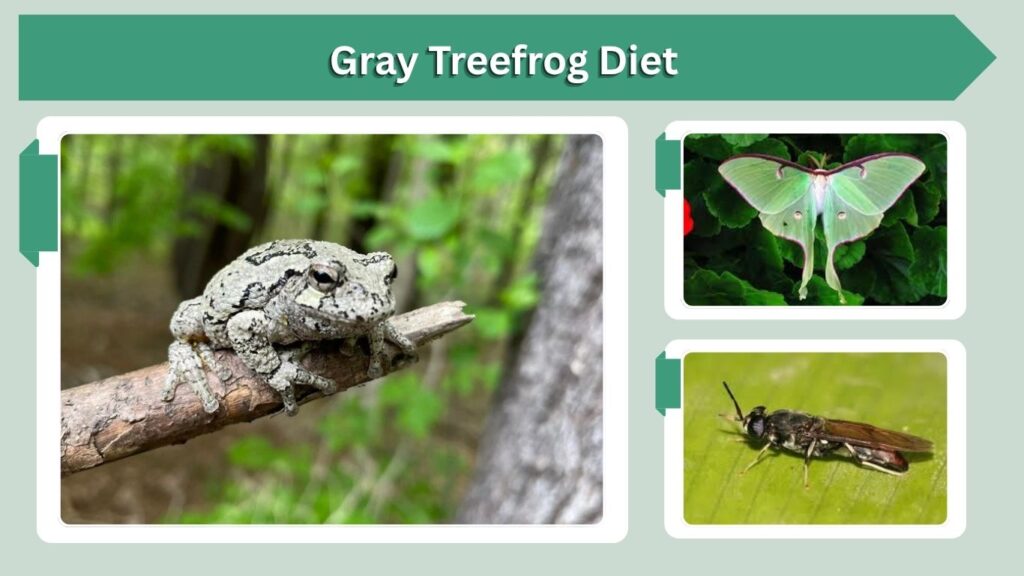
Gray treefrogs are primarily insectivores and play an important role in controlling insect populations. Their feeding habits help maintain ecological balance while providing them with the nutrients needed for growth, reproduction, and survival.
What Do Gray Treefrogs Eat?
Common prey items include:
- Crickets
- Beetles
- Moths
- Flies
- Spiders
These frogs typically hunt at night when insect activity is highest.
Hunting Behavior
Gray treefrogs are ambush predators that rely on patience and quick reflexes. They often remain motionless on leaves, branches, or tree trunks before rapidly capturing prey with their sticky tongues. Their excellent eyesight helps them locate moving insects in low-light conditions.
Tadpole Diet
Young tadpoles consume different foods than adults. Their diet usually includes algae, decaying plant material, and microscopic organisms found in ponds and temporary wetlands.
Gray Treefrog Lifecycle and Lifespan
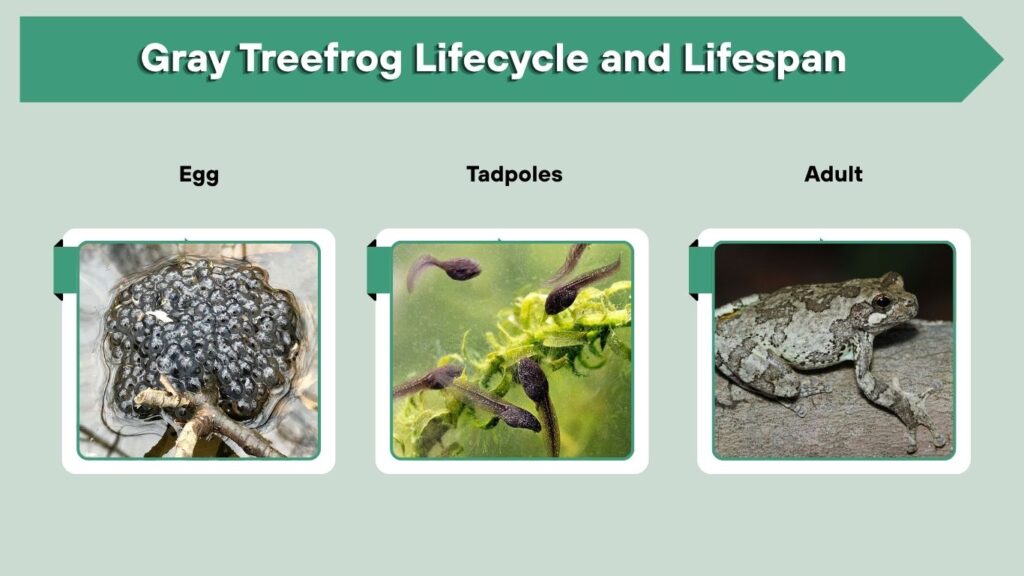
The gray treefrog undergoes a fascinating transformation from aquatic tadpole to tree-climbing adult. Its lifecycle depends heavily on seasonal weather patterns and the availability of suitable breeding habitats.
Breeding Season
Breeding usually occurs from late spring through summer. Males gather around ponds and wetlands where they call to attract females. Once mating occurs, females deposit clusters of eggs in shallow water.
Eggs and Tadpoles
Gray treefrog eggs hatch into aquatic tadpoles within a relatively short period. Tadpoles feed and grow in water before developing legs, lungs, and other adult characteristics during metamorphosis.
Gray Treefrog Lifespan
Most gray treefrogs live several years in the wild, although lifespan varies depending on habitat quality and predator pressure. In protected environments, some individuals may survive considerably longer than their wild counterparts.
Gray Treefrog Behavior
Gray treefrogs exhibit several behaviors that contribute to their survival. Their climbing abilities, seasonal adaptations, and nocturnal lifestyle help them avoid predators while maximizing access to food and breeding opportunities.
Daily Activity Patterns
Important behavioral traits include:
- Active primarily at night
- Hiding during daylight hours
- Climbing trees and shrubs
- Calling during breeding season
- Hunting insects after sunset
These behaviors reduce competition and minimize exposure to predators.
Winter Survival
One of the most remarkable features of gray treefrogs is their ability to survive freezing temperatures. During winter, they shelter beneath leaf litter, logs, or tree cavities. Their bodies produce compounds that protect cells from damage caused by freezing conditions.
Climbing Adaptations
Large adhesive toe pads enable gray treefrogs to climb vertical surfaces with ease. This adaptation allows them to access food sources, escape predators, and utilize habitats unavailable to many other amphibians.
Predators and Threats
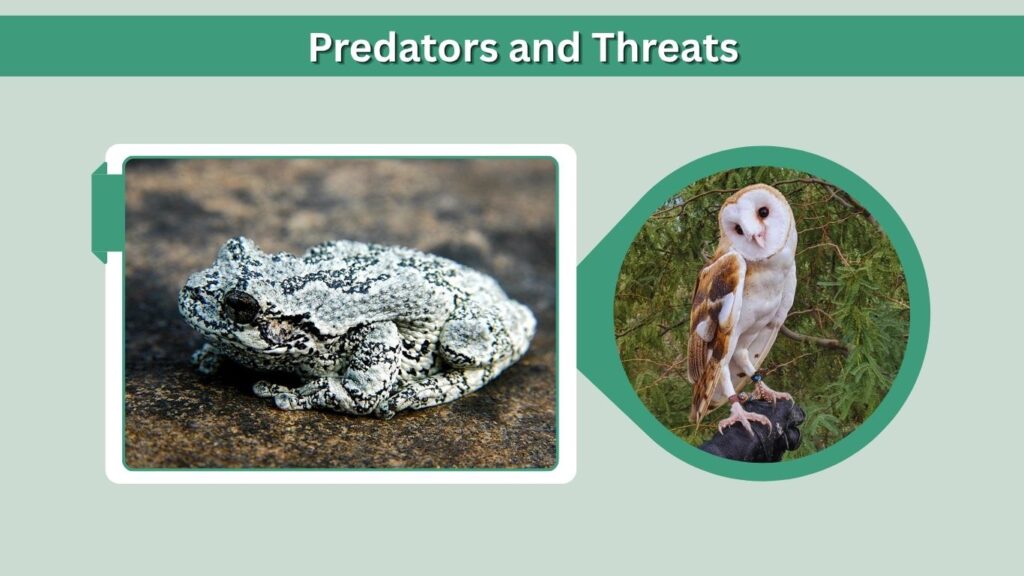
Although gray treefrogs possess excellent camouflage and climbing skills, they still face numerous threats in the wild. Predators and environmental changes can significantly affect local populations.
Natural Predators
Common predators include:
- Snakes
- Owls
- Hawks
- Raccoons
- Larger frogs
These predators rely on sight, sound, or scent to locate gray treefrogs despite their camouflage.
Human-Related Threats
Habitat destruction, wetland loss, pollution, pesticide use, and road mortality continue to impact amphibian populations throughout North America. Climate change may also alter breeding habitats and seasonal activity patterns.
FAQs
What is the scientific name of the gray treefrog?
The gray treefrog complex includes two closely related species: the Gray Treefrog (Hyla versicolor) and Cope’s Gray Treefrog (Hyla chrysoscelis). Although they appear nearly identical, they are genetically distinct species.
What does a gray treefrog sound like?
A gray treefrog produces a loud, musical trill that is commonly heard during spring and summer evenings. Cope’s Gray Treefrog has a faster, higher-pitched trill, while the Eastern Gray Treefrog’s call is slower and more deliberate.
Are gray treefrogs poisonous?
Gray treefrogs are not considered poisonous to humans. However, they produce mild skin secretions that may cause irritation if transferred to sensitive areas such as the eyes or mouth. Washing your hands after handling one is recommended.
How long do gray treefrogs live?
Gray treefrogs typically live between 5 and 9 years in the wild, although some individuals may survive longer under favorable conditions. Lifespan depends on habitat quality, predator pressure, and environmental conditions.
Can gray treefrogs be kept as pets?
Yes, gray treefrogs can be kept as pets where local regulations allow. They require a properly maintained enclosure with adequate humidity, climbing surfaces, hiding places, and a diet consisting of live insects such as crickets and flies.
