
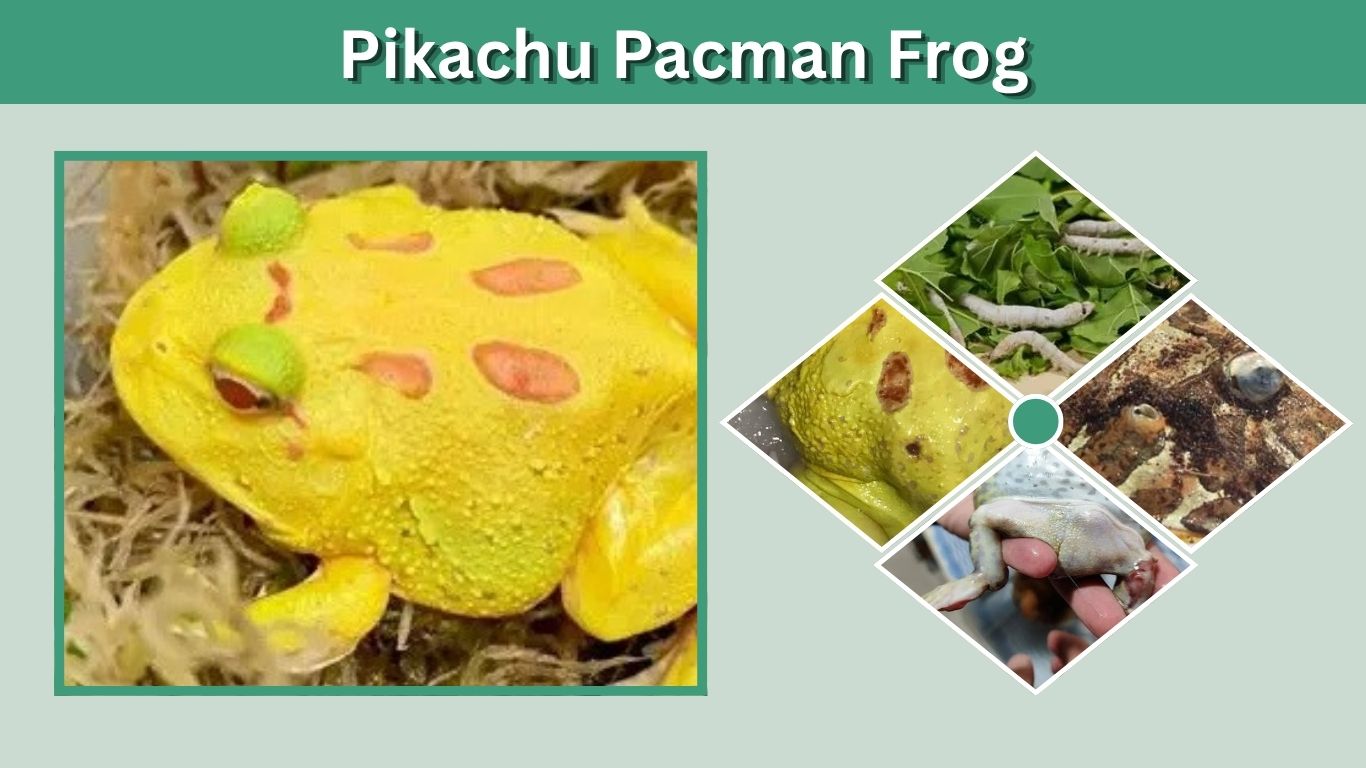
The Pikachu Pacman frog is a brilliantly colored form of the Cranwell’s horned frog, Ceratophrys cranwelli. Its vivid yellow body, reddish eyes, enormous mouth, and rounded shape have made it a sought-after amphibian among collectors. Despite its unusual appearance, it generally requires the same care as other Pacman frog morphs. Proper temperature, moisture, nutrition, and sanitation are essential because amphibians absorb substances through their sensitive skin. With suitable care, this striking frog can remain a fascinating pet for many years.
What Is a Pikachu Pacman Frog?
“Pikachu” is a pet-trade name rather than a separate species. Most frogs sold under this name are yellow albino or reduced-pattern forms of Ceratophrys cranwelli, a species commonly called the Cranwell’s horned frog.
Pikachu Pacman frogs are typically characterized by:
- A bright lemon-yellow or golden body
- Red, pink, or reddish-orange eyes
- Little or no dark pigmentation
- Orange, peach, or reddish markings
- A wide mouth and rounded body
- Small projections above the eyes
Albino Pacman frog lines lack the dark pigmentation found in normal green and brown animals. The Pikachu variety has been selectively bred for especially bright yellow coloration and reduced patterning. However, morph names are not completely standardized between breeders.
Pikachu vs. Super Pikachu Pacman Frog
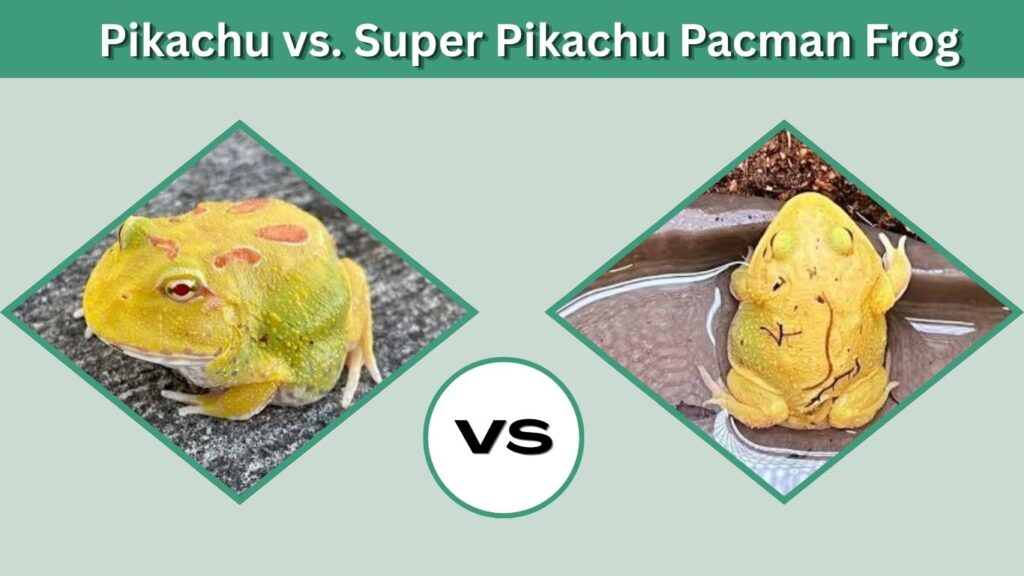
The terms “Pikachu” and “Super Pikachu” are sometimes used interchangeably. Other breeders reserve “Super Pikachu” for frogs with more intense yellow coloration, fewer visible markings, or an almost patternless appearance.
| Characteristic | Pikachu | Super Pikachu |
| Base color | Yellow to golden yellow | Usually intense, solid yellow |
| Pattern | May have orange or reddish spots | Often reduced or nearly absent |
| Eyes | Commonly red or pink | Commonly red or pink |
| Species | Usually C. cranwelli | Usually C. cranwelli |
| Care requirements | Standard Pacman frog care | Standard Pacman frog care |
| Official classification | Breeder or trade name | Breeder or trade name |
Because these labels are not governed by an official morph registry, buyers should judge each frog by its photographs and lineage rather than relying exclusively on its advertised name. Current marketplace listings use “Super Pikachu” for several bright-yellow, captive-bred frogs with varying amounts of pattern.
What Is a Lemon Drop Pikachu Pacman Frog?
“Lemon Drop” is another informal name that may describe an exceptionally bright, pale-yellow animal. It may also be used as a marketing name for a particular breeder’s line. A Lemon Drop Pikachu is not necessarily genetically different from every other Pikachu frog, so buyers should request information about the parents and breeding line.
Pikachu Pacman Frog Size and Lifespan
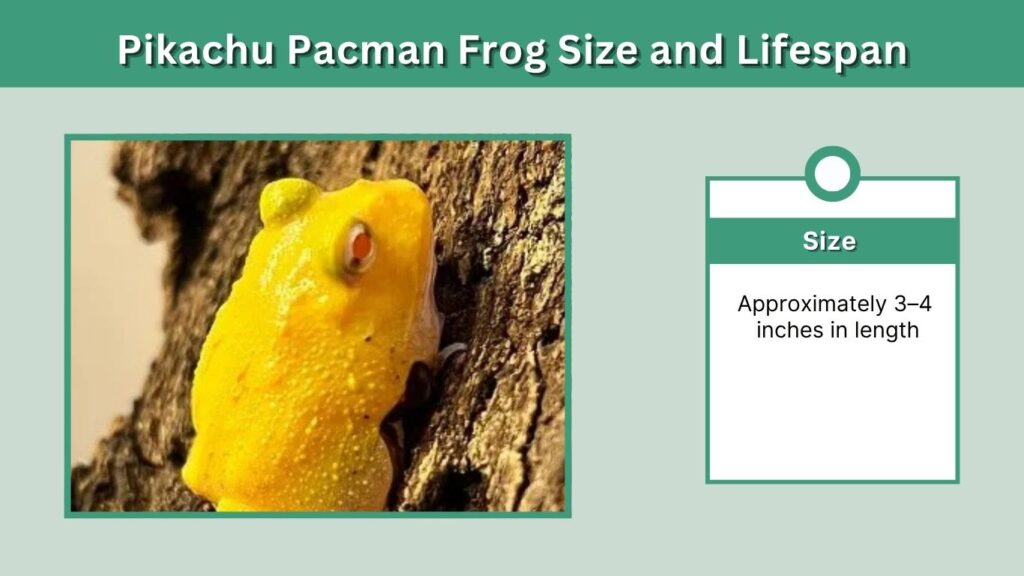
Pikachu coloration does not significantly alter the frog’s expected adult size. Its sex, genetics, feeding schedule, and general health are more important growth factors.
Male Pacman frogs generally reach approximately 3–4 inches in length, while females may grow from 4–8 inches. Young frogs can reach adult size within roughly six to twelve months under favorable conditions. Properly maintained Pacman frogs may live for 10–15 years, making them a substantial long-term commitment.
Male vs. Female Pikachu Pacman Frogs
Females are typically larger and may have broader bodies. Mature males normally remain smaller and can develop darker pads on their front feet during the breeding season. Males may also vocalize, especially at night, while females usually do not produce mating calls.
Sex can be difficult to determine in juveniles. Listings for young Pikachu Pacman frogs are therefore frequently marked “unsexed.”
Pikachu Pacman Frog Care
The Pikachu morph does not need a specialized enclosure based on its color. However, albino animals may be more sensitive to harsh, intense lighting, so bright lamps should not be directed at an exposed frog without shaded areas.
Enclosure and Substrate
One adult should be housed alone in a secure, horizontally oriented enclosure. Pacman frogs are territorial ambush predators and may injure or consume smaller enclosure mates. A 10–20-gallon habitat is generally recommended for one adult.
Provide several inches of moisture-retaining substrate so the frog can bury most of its body. Suitable materials include coconut fiber, amphibian-safe soil, or another loose substrate designed for humid terrariums.
Avoid gravel, wood chips, calcium sand, and other materials that may cause injury or intestinal blockage when accidentally swallowed. The substrate should feel damp but should never be flooded or swampy.
Temperature, Humidity, and Lighting
Use digital thermometers and a hygrometer rather than estimating the enclosure’s conditions.
| Care requirement | Recommended setup |
| Daytime temperature | Approximately 75–82°F |
| Night temperature | A modest nighttime decrease |
| Humidity | Generally 60–80% |
| Enclosure | 10–20 gallons for one adult |
| Substrate | Several inches of damp burrowing material |
| Water | Shallow dish with dechlorinated water |
| Lighting | Regular day-and-night cycle with shaded areas |
Temperatures should remain stable without overheating the substrate. Any heat source must be controlled by a thermostat. Hot rocks should never be used because they can burn the frog. A low-output UVB source may support normal calcium metabolism, but the frog must be able to retreat into shade or substrate. Veterinary guidance recommends a consistent 10–12-hour light cycle when UVB is provided.
Water and Humidity
Provide a shallow, easy-to-enter dish containing clean, dechlorinated water. It should not be deep enough to submerge the frog’s head because Pacman frogs are poor swimmers.
Replace dirty water promptly and mist as needed to maintain moisture. Constantly soaked substrate encourages bacterial growth, while excessively dry conditions can cause dehydration or dormancy.
What Does a Pikachu Pacman Frog Eat?
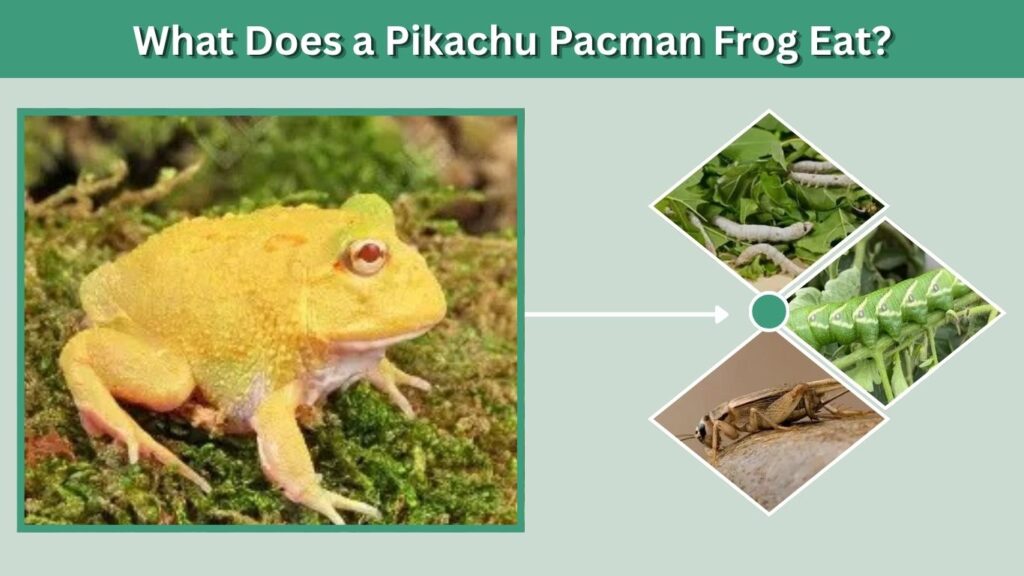
Pikachu Pacman frogs are carnivorous ambush predators. They should receive a varied diet rather than relying on a single feeder species.
Appropriate foods include:
- Earthworms and nightcrawlers
- Dubia roaches
- Crickets
- Silkworms
- Hornworms
- Occasional appropriately sized mealworms
- Commercially produced Pacman frog food
Juveniles require smaller, more frequent meals, while healthy adults are generally fed larger meals less frequently. Prey should be appropriately sized, gut-loaded when applicable, and supplemented according to guidance from an experienced exotic veterinarian.
Calcium and multivitamin supplementation helps prevent nutritional deficiencies. PetMD recommends varied, gut-loaded insects and calcium and vitamin supplementation as part of routine care.
Foods to Avoid
Do not regularly feed wild-caught insects because they may carry pesticides or parasites. Avoid oversized prey, seasoned meat, processed human food, and fatty vertebrate prey as routine meals.
Pacman frogs are enthusiastic feeders and can become overweight. Their round natural shape should not be mistaken for permission to feed them continuously.
Handling a Pikachu Pacman Frog
Pikachu Pacman frogs are display animals rather than pets that enjoy regular physical interaction. Amphibian skin is delicate and permeable, allowing it to absorb oils, chemicals, lotions, and other contaminants from human hands.
Only handle the frog when necessary. Use clean, powder-free gloves moistened with dechlorinated water. Never apply hand sanitizer, soap, perfume, or lotion immediately before contact.
Pacman frogs also have strong jaws and small teeth. A feeding response may cause them to bite fingers, so prey should be offered with suitable feeding tongs.
Common Health Problems
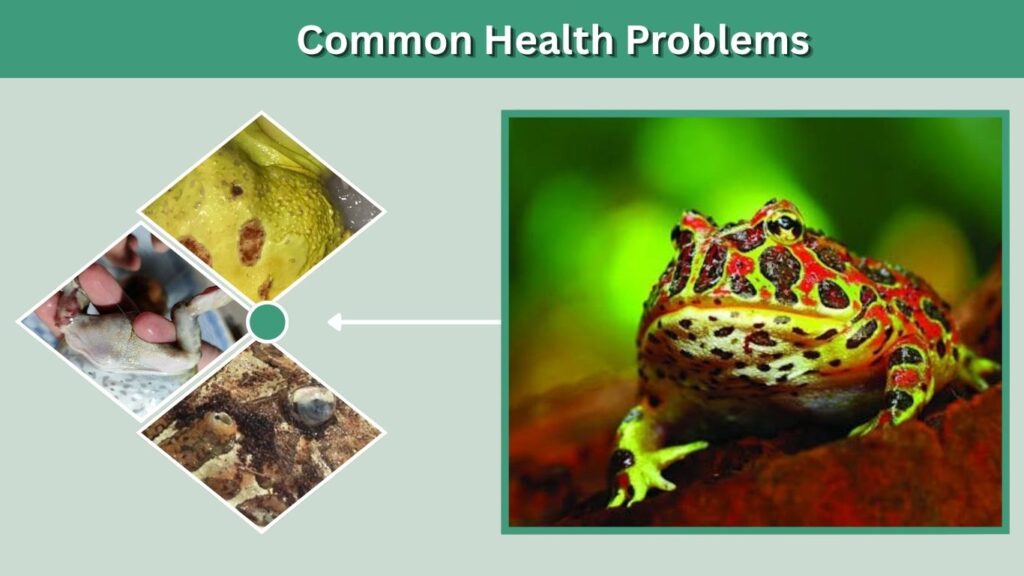
Incorrect husbandry can result in serious illness, even when a frog initially appears inactive but normal.
Watch for:
- Refusal to eat combined with weight loss
- Redness on the belly or legs
- Unusual swelling
- Cloudy eyes
- Weakness or poor coordination
- Persistent surface activity
- Difficulty shedding
- Abnormal lumps or wounds
- Remaining completely exposed despite suitable substrate
Potential problems include dehydration, bacterial or fungal infections, parasites, impaction, obesity, and metabolic bone disease. An amphibian-experienced veterinarian should evaluate persistent symptoms. Poor environmental conditions are a major contributor to skin, shedding, and nutritional disorders in captive Pacman frogs.
Buying a Pikachu Pacman Frog for Sale
Purchase from a reputable captive breeder that can explain the frog’s origin, feeding history, approximate age, and current care conditions. Captive-bred animals are preferable to wild-caught frogs because their history is usually clearer and their purchase does not increase collection pressure on wild populations.
Before purchasing, look for:
- Clear, open eyes
- Clean skin without sores
- A well-rounded but not severely bloated body
- Normal posture and movement
- An established feeding response
- Accurate photographs of the available frog
- Safe overnight shipping procedures
- A written live-arrival policy
Price varies with coloration, pattern reduction, size, breeder reputation, and availability. Remember that the enclosure, thermostat, lighting, supplements, feeders, and veterinary care may cost substantially more than the frog itself.
FAQs
Are Pikachu Pacman frogs rare?
They are less common than standard green or ordinary albino Pacman frogs, although captive breeding has made them increasingly available. Particularly bright or nearly patternless Super Pikachu frogs may be advertised as rarer and priced higher than frogs with more visible markings.
Are Pikachu Pacman frogs good pets?
They can be rewarding for keepers who prefer an attractive, mostly sedentary display animal. Their care is relatively manageable once the enclosure is correctly established, but they are unsuitable for people seeking a pet that can be handled frequently.
Can two Pikachu Pacman frogs live together?
No. Pacman frogs should generally be housed individually. They are territorial, have powerful feeding responses, and may bite or attempt to swallow another frog. Even similarly sized individuals can injure each other when food is introduced.
Does a Super Pikachu frog require special care?
It requires essentially the same care as other Ceratophrys cranwelli morphs. However, its pale albino eyes and skin may be more sensitive to intense illumination. Provide low-level lighting, shaded areas, deep substrate, and opportunities to remain concealed.
Why is my Pikachu Pacman frog changing color?
Pacman frogs may appear lighter or darker because of temperature, moisture, stress, shedding, age, or natural color development. Minor changes are often normal, but persistent discoloration accompanied by sores, redness, swelling, lethargy, or appetite loss requires veterinary attention.
