
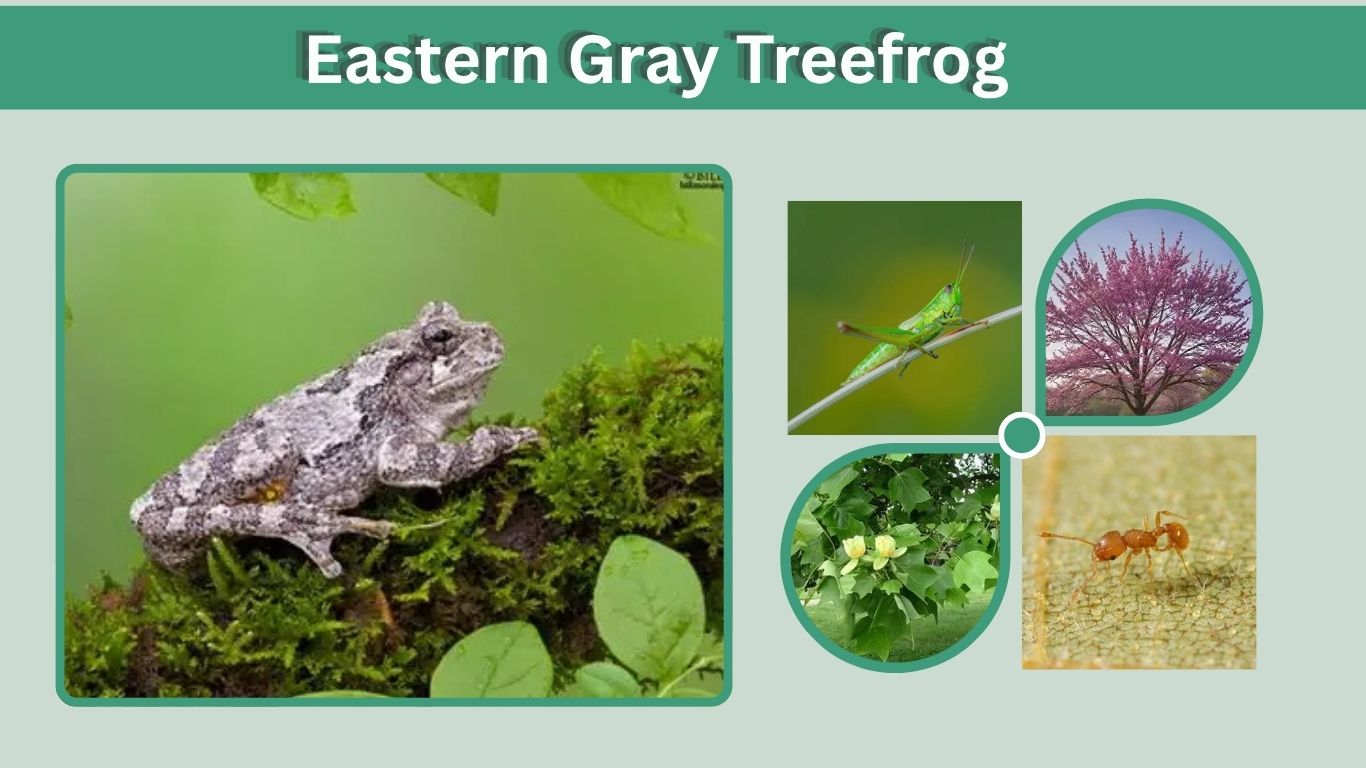
The eastern gray treefrog is a small, nocturnal amphibian famous for its changing colors, musical call and remarkable ability to survive freezing winter conditions. Although its name suggests a gray animal, this treefrog may appear green, brown, charcoal or almost white depending on temperature, activity and surroundings. It spends much of its life in trees and shrubs but returns to ponds and temporary wetlands to breed. Its scientific name is Dryophytes versicolor, although older sources may use Hyla versicolor.
Eastern Gray Treefrog Quick Facts
Eastern gray treefrogs belong to the family Hylidae. Enlarged pads on their toes help them grip bark, leaves, windows and other vertical surfaces.
| Feature | Information |
| Scientific name | Dryophytes versicolor |
| Former scientific name | Hyla versicolor |
| Size | About 1.25–2 inches |
| Color | Gray, green, brown or nearly black |
| Call | Slow, musical trill |
| Diet | Insects, spiders and other small invertebrates |
| Habitat | Forests and woodlots near water |
| Activity | Mainly nocturnal |
| Lifespan | Often reported as 7–9 years |
| Breeding season | Usually spring through midsummer |
Adults commonly measure between 1¼ and 2 inches long, although some individuals grow slightly larger.
What Does an Eastern Gray Treefrog Look Like?
The eastern gray treefrog has a compact body, rough skin and large adhesive toe pads. Its mottled pattern provides excellent camouflage against bark, lichen and leaves.
Identification Features
Look for these characteristics:
- Rough, slightly warty skin
- Gray, green, brown or charcoal coloration
- Irregular dark markings across the back
- A light-colored patch beneath each eye
- Large rounded toe pads
- White or cream-colored belly
- Bright yellow or orange inner thighs
- Darker throat in breeding males
The bright inner-thigh color is normally hidden when the frog is resting. It may suddenly become visible when the frog jumps, possibly startling or confusing a predator.
Eastern Gray Treefrog Color Change
The species can change from green to gray or brown. Color changes may be influenced by temperature, moisture, activity and the surface on which the frog is resting.
The change is not as immediate as a flashing color display, but a frog can look noticeably different within a relatively short period. Despite changing its background color, it usually retains some mottling and the pale patch beneath each eye.
Baby and Juvenile Treefrogs
Newly transformed froglets are often bright green and may lack the heavy gray mottling seen in adults. They gradually develop more variable coloration as they grow.
Juveniles have the same enlarged toe pads and basic body shape as adults but are much smaller. Tadpoles are olive-colored as they mature and may develop reddish or orange coloring in the tail.
Eastern Gray Treefrog Call and Sound
The male’s advertisement call is a short, rolling and musical trill. Calling is most frequent during the breeding season, especially on warm, humid or rainy nights.
The trill usually lasts around half a second to several seconds. Temperature affects its speed: males generally call faster during warmer weather and more slowly when conditions are cool.
Males call to attract females and establish breeding territories. They may continue calling away from breeding ponds during humid summer weather. The sound can come from shrubs, tree branches or vegetation hanging over shallow water.
Eastern Gray Treefrog vs. Cope’s Gray Treefrog
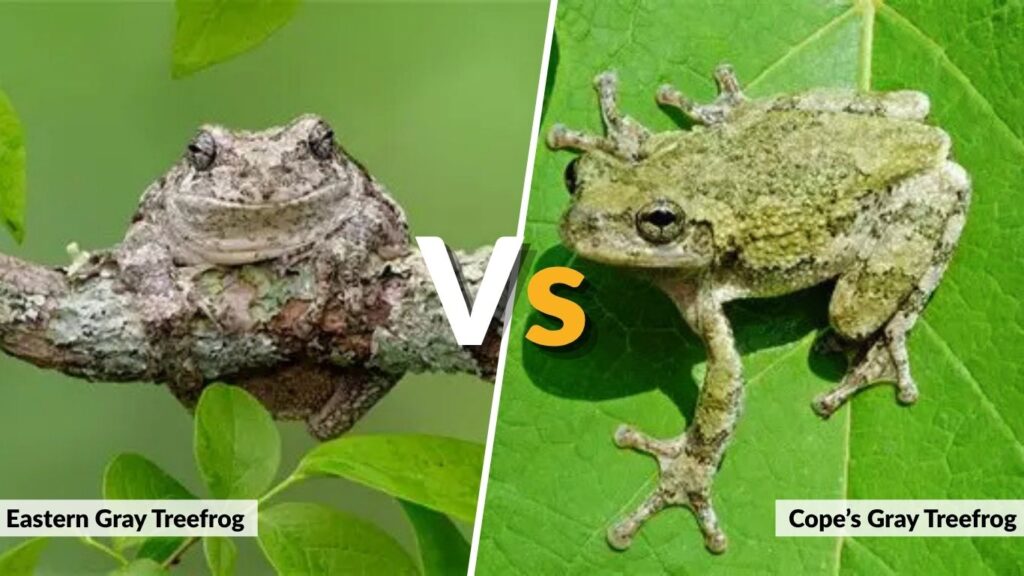
Eastern and Cope’s gray treefrogs are nearly impossible to separate by appearance. They share the same variable coloration, yellow inner thighs, rough skin and large toe pads.
| Feature | Eastern gray treefrog | Cope’s gray treefrog |
| Scientific name | Dryophytes versicolor | Dryophytes chrysoscelis |
| Call | Slower and more musical | Faster, harsher and more mechanical |
| Chromosomes | Tetraploid | Diploid |
| Appearance | Mottled gray, green or brown | Almost identical |
| Identification method | Call is most reliable | Call is most reliable |
Under similar temperatures, the eastern gray treefrog produces a slower, more melodic trill. Cope’s gray treefrog has a faster, harsher call with more pulses each second.
Where Do Eastern Gray Treefrogs Live?
Eastern gray treefrogs occur across much of the eastern United States and parts of southern Canada. Their distribution extends west into portions of the central United States, but they are generally absent from southern Florida and the far northeastern parts of Maine.
They are found in states including:
- Michigan
- Wisconsin
- Pennsylvania
- Indiana
- Illinois
- Iowa
- New York
- Ohio
- Minnesota
- Kentucky
Their exact distribution can be difficult to map where they overlap with Cope’s gray treefrogs because the two species look almost identical.
Eastern Gray Treefrog Habitat
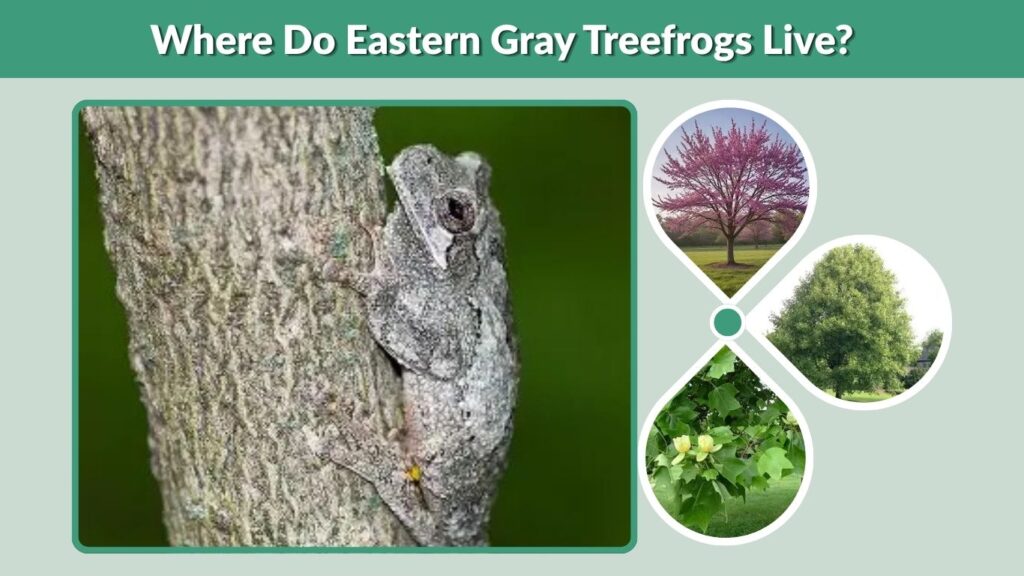
The species is strongly associated with forests, large woodlots and wooded suburban areas near water. Adults spend most of their nonbreeding lives above the ground in trees and shrubs.
Common Habitats
Eastern gray treefrogs use:
- Deciduous and mixed forests
- Swamp forests
- Woodland edges
- Farm woodlots
- Tree-filled suburban neighborhoods
- Areas around ponds and marshes
- Hollow trees and rotting logs
- Shrubs near seasonal pools
They need shallow permanent or temporary water for reproduction. Suitable breeding locations include ponds, marshes, flooded fields, roadside ditches and temporary woodland pools.
What Do Eastern Gray Treefrogs Eat?
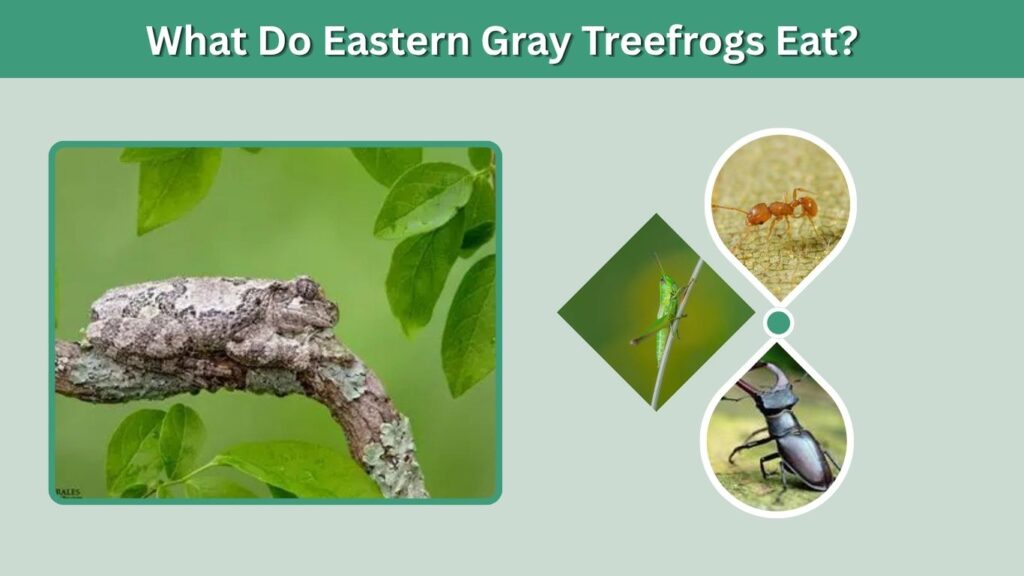
Adult eastern gray treefrogs are opportunistic predators that primarily eat insects and other small invertebrates.
Common Foods
Their diet may include:
- Moths
- Flies
- Beetles
- Ants
- Crickets
- Caterpillars
- Spiders
- Mites
- Harvestmen
- Small snails
They hunt on tree trunks, shrubs, leaves and occasionally on the ground. Treefrogs may gather near outdoor lights because moths and other flying insects are concentrated there. Large adults may occasionally consume smaller frogs.
Tadpoles have a different diet. They mainly graze on algae and consume decaying organic material in their aquatic habitat.
Breeding, Eggs and Tadpoles
Breeding usually begins during spring and may continue into July or August, depending on local climate. Males gather near shallow wetlands and call after sunset to attract females.
Eggs
Females deposit small clusters containing roughly 20–40 eggs near the water’s surface. A female may lay up to approximately 2,000 eggs during a breeding period.
The eggs generally hatch within two to seven days, depending on temperature and environmental conditions.
Tadpole Development
Tadpoles feed and grow in the pond before developing legs, absorbing their tails and becoming small terrestrial frogs. Metamorphosis usually takes around two months, although timing varies with temperature, food and water conditions.
Young frogs may reach reproductive maturity within one or two years.
Hibernation and Winter Survival
Eastern gray treefrogs survive winter beneath leaves, logs, roots and other forest debris. They can tolerate partial freezing by producing compounds such as glycerol that help protect their cells.
During hibernation, much of the frog’s body water may freeze, while breathing and heartbeat become extremely difficult to detect. The animal becomes active again after temperatures rise.
Are Eastern Gray Treefrogs Poisonous?
Eastern gray treefrogs are not dangerously poisonous to people and do not bite or sting. However, frogs produce protective skin secretions that may irritate the eyes, nose, mouth or sensitive skin.
Avoid touching your face after handling one, and wash your hands with soap and water. Handling should be kept brief because chemicals, soap, lotion and natural oils on human hands can also harm a frog’s absorbent skin.
Eastern Gray Treefrog Lifespan
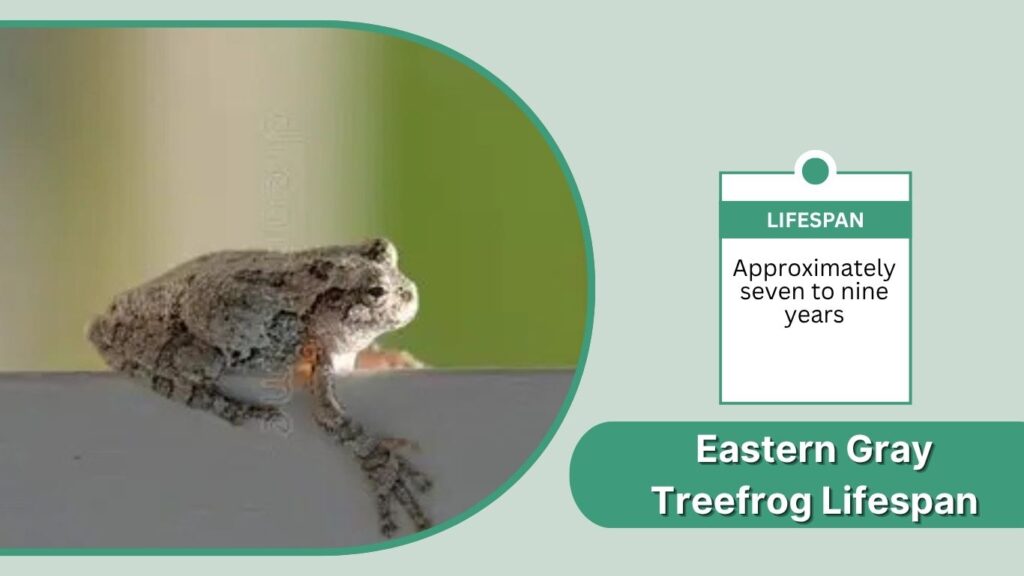
Eastern gray treefrogs are often reported to live approximately seven to nine years, although measuring the natural lifespan of small wild frogs is difficult. Predators, drought, disease, habitat changes and severe weather probably cause many deaths before old age.
FAQs
Can an eastern gray treefrog jump?
Yes. It has strong hind legs for jumping and enlarged toe pads for climbing. It can leap between branches and cling to bark, leaves, windows and other vertical surfaces.
Are eastern gray treefrogs good pets?
They can survive in properly maintained captive environments, but they require live insects, controlled humidity, clean water and a tall climbing enclosure. Wild frogs are best observed and left in their natural habitat.
Why is my gray treefrog green?
Green is a normal color for this species. Eastern gray treefrogs change between green, gray and brown depending on temperature, surroundings, moisture and activity.
Do eastern gray treefrogs eat mealworms?
They may eat appropriately sized mealworms, but a single food should not make up their entire diet. In the wild, they consume a varied selection of insects, spiders and other small invertebrates.
How can I identify an eastern gray treefrog?
Look for rough mottled skin, large toe pads, a pale spot beneath each eye and yellow-orange inner thighs. Because Cope’s gray treefrogs look nearly identical, the eastern species’ slower musical trill is the most reliable field clue.
