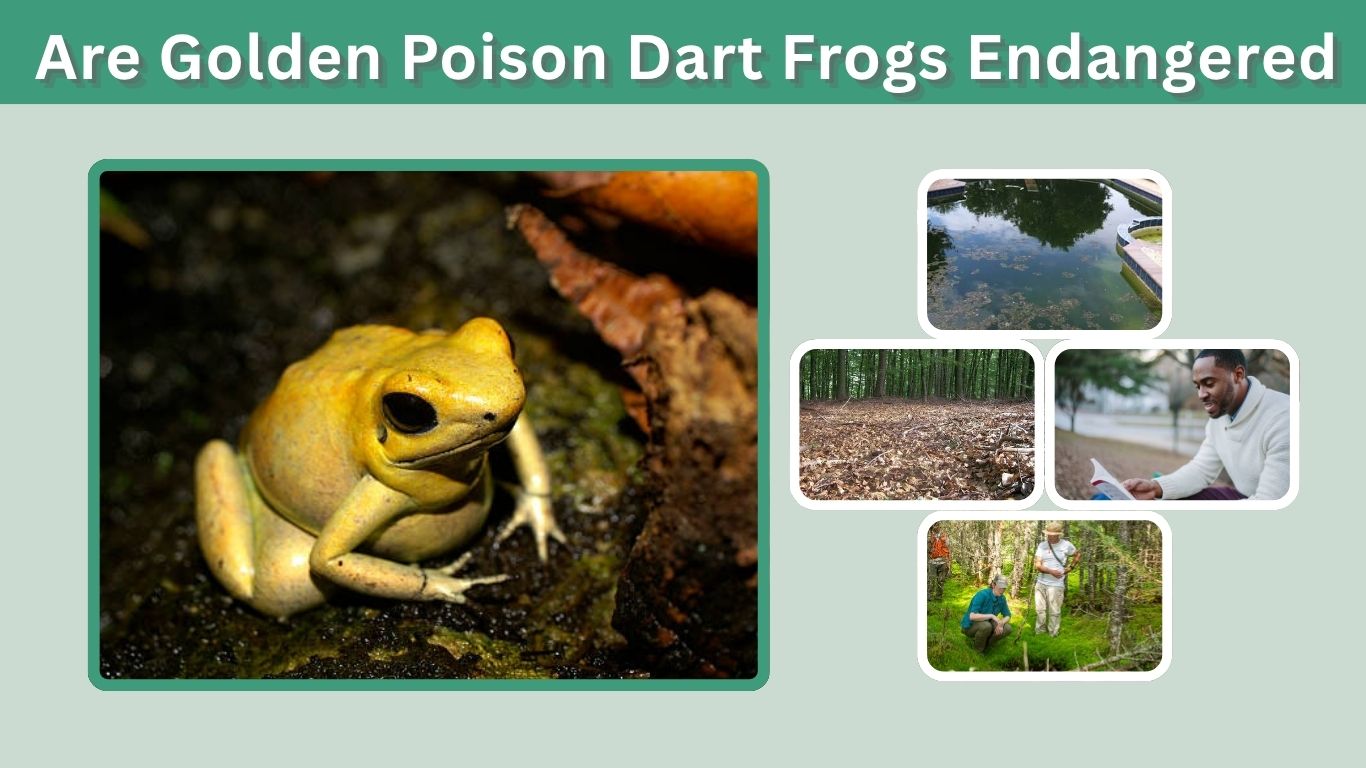
Yes, the golden poison dart frog is an endangered species. It is not currently classified as Critically Endangered, but it faces a very high risk of extinction in the wild. Its population is decreasing, and the species survives only within a small area of humid rainforest in western Colombia.
Despite having one of the strongest chemical defenses in the animal kingdom, the frog cannot protect itself from deforestation, mining, pollution, illegal collection, and other human-caused changes to its habitat.
Golden Poison Frog Conservation Status
The golden poison frog, scientifically known as Phyllobates terribilis, is listed as Endangered, commonly abbreviated as EN, on the IUCN Red List.
| Conservation detail | Information |
| Scientific name | Phyllobates terribilis |
| IUCN status | Endangered |
| Population trend | Decreasing |
| Natural range | Western Colombia |
| Main threat | Habitat loss and degradation |
| CITES listing | Appendix II |
An Endangered classification means the species is considered to face a very high risk of extinction in its natural environment. It is one level below Critically Endangered and two levels below Extinct in the Wild.
Why Is the Golden Poison Dart Frog Endangered?
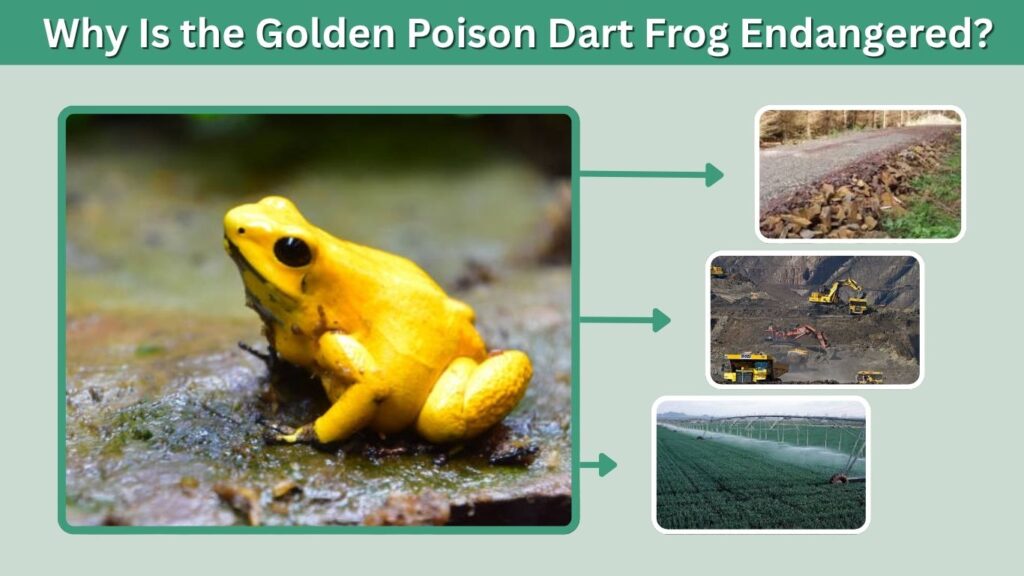
The golden poison frog became endangered mainly because humans have damaged and reduced its rainforest habitat. Its restricted geographic range makes these threats especially serious.
Habitat Loss and Deforestation
Habitat destruction is the greatest danger to the golden poison dart frog. Forests within its range may be cleared for agriculture, settlements, roads, logging, or other development.
These frogs need a consistently warm, wet environment with dense vegetation, leaf litter, suitable insects, and clean breeding sites. When rainforest is removed, the frogs lose shelter, food, moisture, and places where their tadpoles can develop.
Unlike animals with large ranges, the golden poison frog cannot simply move across an entire continent to find another suitable forest. It is endemic to Colombia and naturally occupies only a limited region.
Gold Mining
Gold mining can destroy rainforest directly by clearing vegetation and disturbing the forest floor. It may also damage streams and surrounding soil.
Mining roads can open previously remote forests to further settlement, logging, and hunting. Because golden poison frogs depend on moist ground-level habitats and nearby water, even relatively localized damage can affect breeding and survival.
World Land Trust identifies gold mining as one of the major causes of habitat loss within the frog’s range.
Agricultural Expansion
Forests are sometimes removed to create farmland or plantations. This replaces a complex rainforest ecosystem with a much simpler landscape that cannot support the same diversity of insects, plants, and amphibians.
Agricultural development can also separate surviving frog populations into small forest fragments. A road, field, or cleared area may become a major barrier for a small ground-dwelling frog.
Fragmented populations may have fewer breeding partners and become more vulnerable to fires, drought, disease, and additional habitat destruction.
Pesticides and Pollution
Chemicals used on nearby crops may enter soil, streams, or forest pools. Amphibians are particularly vulnerable to environmental pollution because their skin is thin and highly permeable.
Golden poison frogs can absorb water and dissolved substances through their skin. Polluted water may therefore affect adult frogs, eggs, and developing tadpoles.
Crop spraying and pollution associated with agricultural activity are identified as threats within the species’ limited habitat.
Illegal Wildlife Collection
The golden poison frog’s brilliant yellow, orange, or green appearance makes it attractive within the exotic-pet trade. Collecting frogs from the wild can reduce already isolated populations.
Legal captive-bred golden poison frogs are available in some countries, which may reduce demand for wild-caught individuals. However, illegal capture and wildlife trafficking remain potential concerns, particularly when animals are taken directly from small natural populations.
ProAves identifies capture and illegal wildlife trafficking among the human pressures affecting this species.
Why Is Its Small Range a Serious Problem?
The golden poison frog is found naturally only in western Colombia. Its distribution is concentrated in the humid forests of the Cauca region on Colombia’s Pacific side.
A restricted range creates several conservation problems:
- One major development project can affect a substantial portion of its habitat.
- Individual populations may become separated from one another.
- Frogs have fewer alternative habitats when forests are destroyed.
- A local disaster could affect a large percentage of the species.
- Protecting only captive frogs does not preserve the wild ecosystem.
A species can be locally common yet still be endangered when nearly its entire global population occupies a very small region.
Does Pollution Endanger Golden Poison Dart Frogs?
Yes, pollution can contribute to the species’ decline, although habitat loss remains the primary threat.
Pesticides, mining waste, sediment, and other contaminants may enter the water and soil. This is especially concerning because golden poison frogs reproduce in damp environments and their tadpoles develop in water.
Pollution can also reduce the number of ants, beetles, mites, and other small invertebrates that the frogs eat. Therefore, chemical contamination may affect both the frogs directly and the food web supporting them.
How Does Deforestation Affect Their Life Cycle?
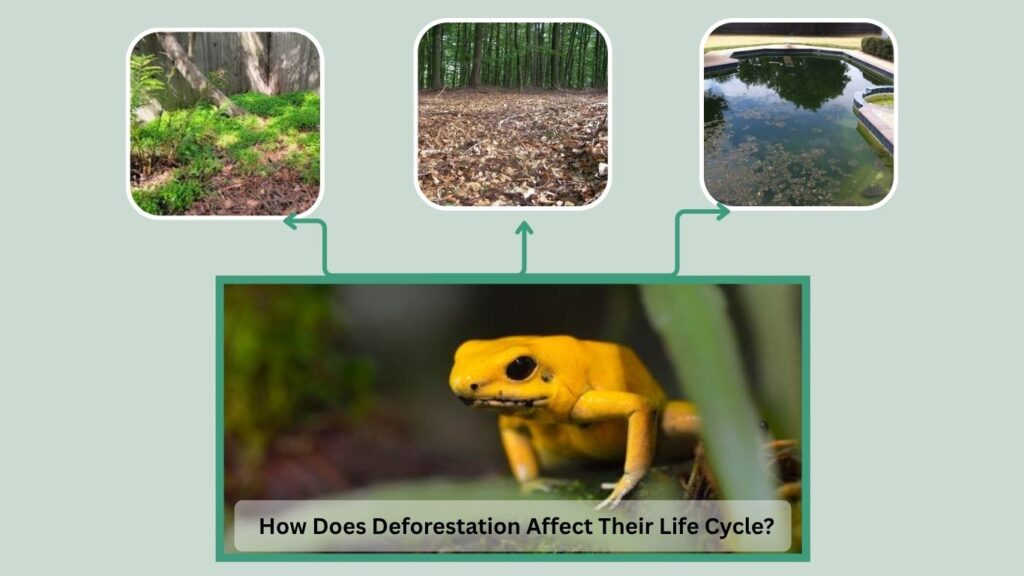
Golden poison frogs lay their eggs in moist, protected places on the forest floor. After the eggs hatch, an adult—often the male—carries the tadpoles to suitable water.
Deforestation disrupts this process by:
- Drying the forest floor
- Removing protective leaf litter
- Reducing safe egg-laying locations
- Polluting or eliminating breeding pools
- Changing temperature and humidity
- Reducing available insect prey
Even when adult frogs survive initial forest clearing, they may be unable to reproduce successfully in the altered environment.
Are Golden Poison Frogs Critically Endangered?
No. The golden poison frog is currently classified as Endangered, not Critically Endangered.
Both categories describe species in serious danger, but Critically Endangered represents an even higher risk of extinction. Conservation categories can change when new population surveys or threat assessments become available.
The Endangered classification should not be interpreted as meaning the species is safe. Its declining population and restricted range require continued habitat protection.
How Are Golden Poison Frogs Being Protected?
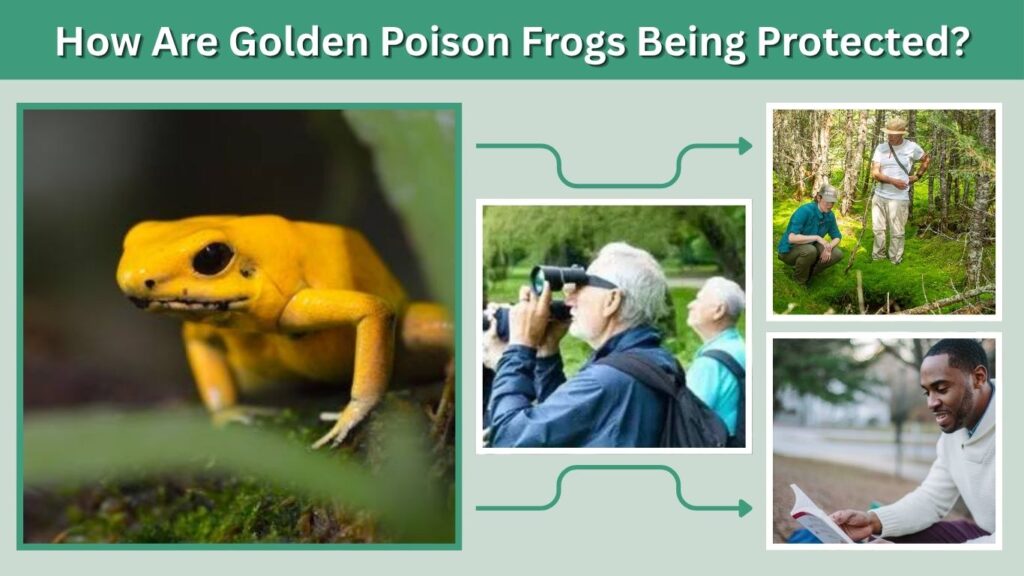
Conservation efforts focus mainly on preserving rainforest within the species’ natural range.
Protected Nature Reserves
The Ranita Terribilis ProAves Reserve was established to protect the golden poison frog and its habitat. Conservation workers patrol and monitor the reserve, study frog populations, and work to prevent illegal logging and hunting.
Population Monitoring
Regular surveys help researchers determine whether frog numbers are increasing, stable, or declining. Monitoring can also identify changes in breeding activity, habitat quality, and the distribution of different color forms.
Captive Breeding
Responsible captive-breeding programs can provide legally bred frogs for zoos and private collections, reducing demand for wild-caught animals. Captive populations may also preserve genetic diversity.
However, captive breeding cannot replace rainforest conservation. A species is not fully protected when it survives only inside terrariums.
Working With Local Communities
Long-term protection is more effective when local communities benefit from healthy forests. Conservation programs may support environmental education, sustainable livelihoods, research, and employment for reserve guards.
What Would Happen If Golden Poison Frogs Disappeared?
The disappearance of the golden poison frog would remove a unique predator of small rainforest invertebrates. It would also represent the loss of an animal found nowhere outside Colombia.
Poison frogs can serve as indicators of environmental health because they are sensitive to changes in moisture, water quality, and forest conditions. A declining population may signal broader damage affecting many other plants and animals.
The species also has cultural, educational, and scientific importance. Its powerful batrachotoxin has helped researchers study how electrical signals move through nerves and muscles.
FAQs
Are golden poison dart frogs endangered?
Yes. The golden poison dart frog is classified as Endangered. Its population is decreasing because of habitat destruction, deforestation, mining, agricultural development, pollution, and collection from the wild.
Why is the golden poison frog not Critically Endangered?
Available assessments place it in the Endangered category rather than Critically Endangered. This means it faces a very high risk of extinction, but the available evidence has not placed it within the next, more severe category.
How did the golden poison frog become endangered?
The frog became endangered as rainforest within its small Colombian range was cleared or degraded. Because the species cannot naturally be found anywhere else, the loss of even a relatively small area can affect an important part of its global population.
Does pollution harm golden poison frogs?
Yes. Pesticides, mining contamination, and other pollutants can enter the soil and water. Frogs may absorb these substances through their permeable skin, while eggs and aquatic tadpoles may be exposed in contaminated breeding sites.
Can captive breeding save the golden poison frog?
Captive breeding can reduce illegal collection and maintain backup populations, but it cannot save the species alone. Protecting rainforest, breeding sites, insect prey, and connections between wild populations remains essential.
