

A wild golden poison frog could potentially cause fatal poisoning rapidly if enough of its skin toxin entered a person’s body. However, there is no scientifically established number of minutes showing exactly how fast it would kill a human. The outcome would depend on the toxin dose, the exposure route, the person’s health and how quickly emergency treatment began.
Touching one also does not guarantee instant death. Nevertheless, wild golden poison frogs should never be handled because their batrachotoxin can disrupt the nervous system, muscles and heart.
Can a Golden Poison Frog Kill You?
Yes, a wild golden poison frog, scientifically known as Phyllobates terribilis, carries an extraordinarily powerful toxin called batrachotoxin in glands beneath its skin. It is considered the most toxic poison frog species.
The frog does not bite, sting or inject venom. Instead, its toxin is released through its skin as a chemical defense against predators. For poisoning to occur, a sufficient amount must enter the body through a cut, puncture, the mouth, eyes or another vulnerable route.
The often-repeated claim that one frog carries enough toxin to kill several adults is an estimate based largely on laboratory toxicity measurements—not records of multiple people dying after touching frogs. Controlled experiments determining a precise fatal time in humans would be impossible and unethical.
How Fast Can a Golden Poison Frog Kill a Human?
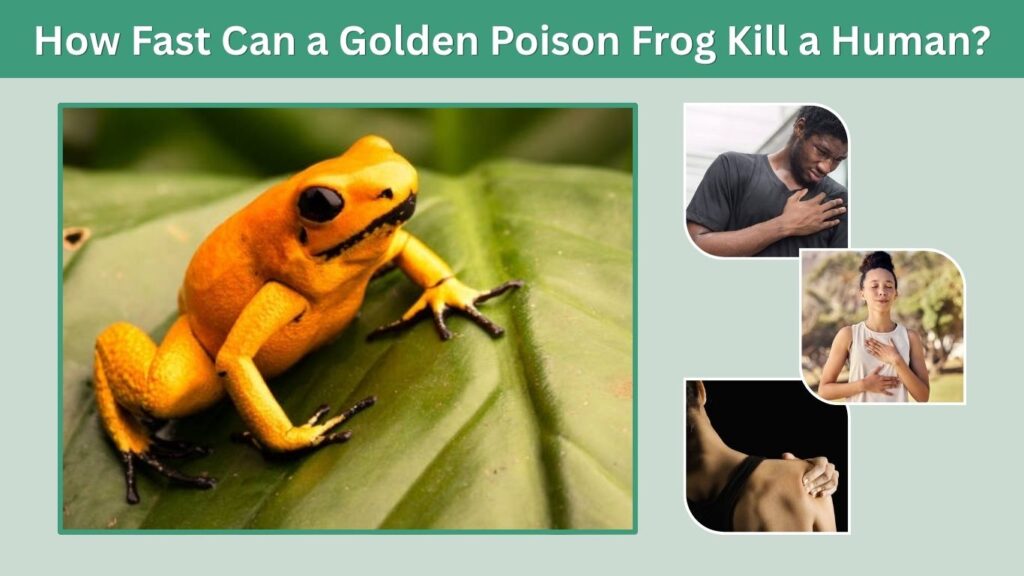
A precise answer is unavailable. Claims that a golden poison frog will kill someone “instantly” or within an exact number of minutes are not supported by reliable human clinical studies.
Batrachotoxin acts directly on voltage-gated sodium channels. It forces these channels to remain open, preventing nerve and muscle cells from maintaining their normal electrical activity. This can affect skeletal muscles, breathing and heart rhythm.
A severe dose entering the bloodstream could therefore begin causing dangerous effects quickly. However, the progression could vary greatly.
| Factor | How it affects poisoning |
| Amount of toxin | A larger dose creates a greater risk of rapid, severe effects |
| Exposure route | A puncture, open wound or ingestion is more dangerous than brief contact with intact skin |
| Location of exposure | Contact with the eyes, mouth or broken skin may increase absorption |
| Person’s health | Heart or respiratory problems could increase the danger |
| Treatment speed | Immediate medical support may improve the chance of survival |
The safest answer is that serious poisoning may develop rapidly, but no responsible source can promise a specific timeline.
Can Touching a Golden Poison Dart Frog Kill You?
Simply brushing intact skin against a frog is not the same as injecting its entire toxin supply into the bloodstream. However, touching a highly toxic wild frog remains dangerous.
The risk becomes more serious when a person has:
- Cuts, scratches or cracked skin
- A recent puncture wound
- Toxin on their fingers followed by touching the mouth or eyes
- Toxin transferred onto food
- Prolonged or extensive skin contact
An early scientific description of the species reported that its secretions could irritate vulnerable skin and were poisonous when ingested.
Human skin may also contain tiny cuts that are difficult to see. Therefore, nobody should test whether a wild golden poison frog is safe to touch.
Handling is harmful to the frog as well. Amphibians have highly absorbent skin, and oils, lotions, soap, insect repellent and salt from human hands can damage them.
Can It Kill You Instantly?
“Instantly” is an exaggeration. Batrachotoxin does not work like a fictional poison that causes someone to collapse the moment a frog is touched.
A life-threatening exposure would still require the toxin to enter the body, reach sensitive tissues and disrupt electrical signaling. A sufficiently large dose could potentially act quickly, but the exact onset cannot be predicted.
Because there are limited documented human cases involving golden poison frog secretions, most knowledge comes from laboratory studies of the toxin, observations of poisoned animals and the traditional use of frog secretions on hunting darts.
What Does Batrachotoxin Do to the Body?
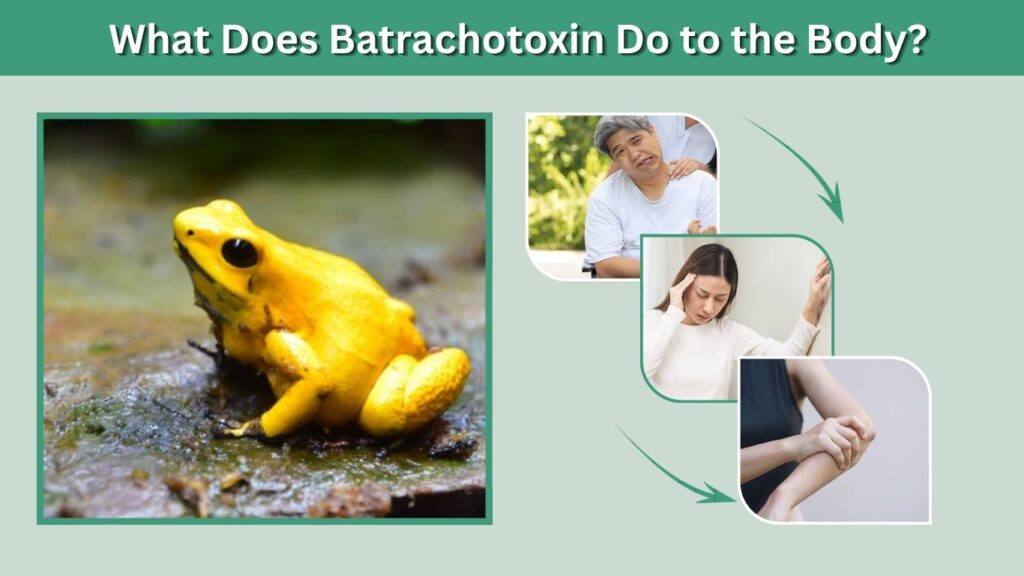
Normal nerves and muscles rely on sodium channels opening and closing at carefully controlled times. Batrachotoxin prevents these channels from closing properly.
This creates persistent electrical disturbance and may prevent nerve and muscle cells from sending normal signals.
A serious exposure could theoretically cause:
- Numbness or abnormal sensations
- Muscle weakness
- Loss of coordination
- Paralysis
- Difficulty breathing
- Dangerous heart rhythm disturbances
- Cardiac or respiratory failure
Because human exposure data are scarce, symptoms and their timing cannot be predicted with certainty. Any possible exposure should be treated as an emergency rather than waiting for symptoms to appear.
Can You Survive Golden Poison Frog Exposure?
Survival may be possible, especially when the absorbed dose is small and emergency medical treatment begins quickly. However, batrachotoxin poisoning is extremely serious, and there is no established, specific antidote. A scientific review notes that no antidote currently exists, although researchers have studied substances that oppose some of the toxin’s effects in laboratory conditions.
Hospital treatment would focus on supporting essential functions, which may include:
- Monitoring the heart
- Managing abnormal heart rhythms
- Supporting blood pressure
- Providing oxygen
- Assisting breathing when necessary
- Treating seizures or other complications
Home remedies should not be attempted. A person who believes that wild frog toxin entered a cut, eye or mouth should seek emergency help immediately.
Are Captive Golden Poison Frogs Dangerous?
Captive-bred golden poison frogs are generally not dangerously toxic. Scientists believe wild frogs obtain batrachotoxin-related compounds from particular insects in their natural diet. Frogs kept in human care are usually fed fruit flies, crickets and other prey that do not contain these compounds.
However, that does not mean people should regularly handle captive frogs. Handling can stress the animal and damage its sensitive skin. A newly imported or wild-caught frog should never be assumed harmless.
How Does the Frog Release Its Poison?
The golden poison frog does not deliberately spray or shoot poison. Batrachotoxin is stored in glands in or beneath its skin and forms part of its skin secretions.
When a predator bites or mouths the frog, the toxin contacts sensitive tissue and discourages the attack. Humans may be exposed by touching the secretions and then transferring them into a cut, the eyes or the mouth.
This makes the frog poisonous, not venomous. Venomous animals actively inject toxins using structures such as fangs or stingers.
Where Is the Golden Poison Frog Found?
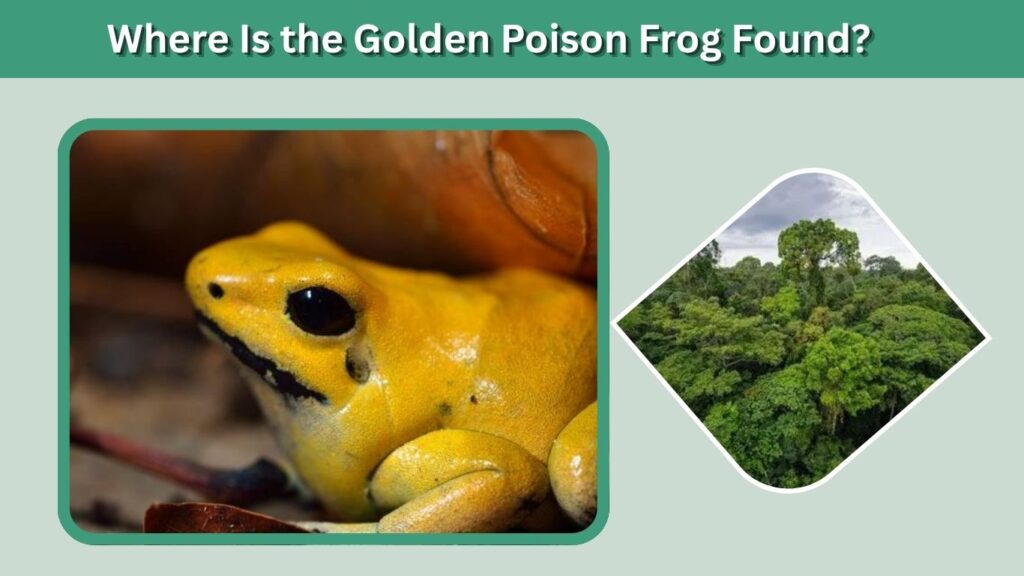
Golden poison frogs are native to a limited region of humid tropical forest on Colombia’s Pacific side. They live mainly on or near the rainforest floor in extremely wet environments.
Someone living outside this Colombian range is extremely unlikely to encounter a toxic wild individual accidentally. Most golden poison frogs seen in zoos or responsible captive collections have been raised on non-toxic diets.
How Far Can a Golden Poison Frog Jump?
There is no widely accepted scientific measurement for the maximum jumping distance of a golden poison frog. It can hop quickly through leaves, roots and low vegetation, but it is not known for extraordinary long-distance jumping.
More importantly, it cannot leap at a person to inject poison. The frog is a small, defensive animal that normally attempts to avoid danger. Its toxicity protects it from predators rather than helping it attack humans.
What Should You Do After Possible Contact?
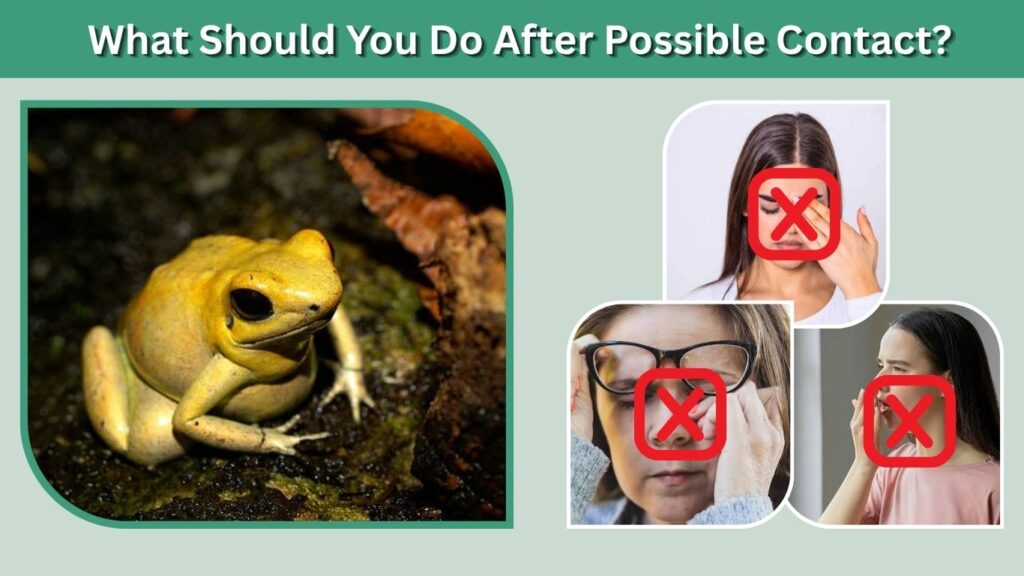
After suspected contact with a toxic wild frog:
- Move away from the animal without touching it again.
- Do not rub your face, eyes or mouth.
- Rinse exposed skin thoroughly with plenty of clean water.
- Flush an exposed eye continuously with water.
- Remove contaminated clothing or gloves carefully.
- Contact local emergency medical services or a poison-information service immediately.
- Tell medical staff that batrachotoxin exposure may have occurred.
Do not capture or carry the frog to a hospital. A clear photograph taken from a safe distance and the location of the encounter may help identify it.
FAQs
Can one golden poison frog kill a human?
A wild frog may carry a potentially fatal quantity of batrachotoxin, but the amount varies. A person would need to absorb a sufficient dose through a vulnerable exposure route. Merely standing near the frog presents no poisoning risk.
Does a golden poison frog attack people?
No. It is not aggressive toward humans and cannot sting or inject its poison. The toxin serves as protection against predators. Dangerous exposure would most likely result from deliberately handling a wild frog or getting its secretions into a wound, eye or mouth.
Is it safe to hold a captive golden poison frog?
Captive-bred frogs are typically non-toxic because they lack the wild diet needed to obtain batrachotoxin. Even so, unnecessary handling should be avoided because chemicals and oils on human hands can injure the frog’s delicate skin.
Can washing your hands remove the toxin?
Immediate, thorough rinsing may reduce material remaining on the skin, but washing should not replace medical evaluation after a meaningful exposure. Anyone who may have transferred toxin into a cut, eye or mouth should seek urgent professional help.
Can you own a golden poison frog?
Captive-bred individuals are kept legally in some places, but wildlife, animal-welfare and import regulations vary by location. Prospective owners should verify local laws and obtain only responsibly bred frogs, never animals taken illegally from Colombian rainforests.
