
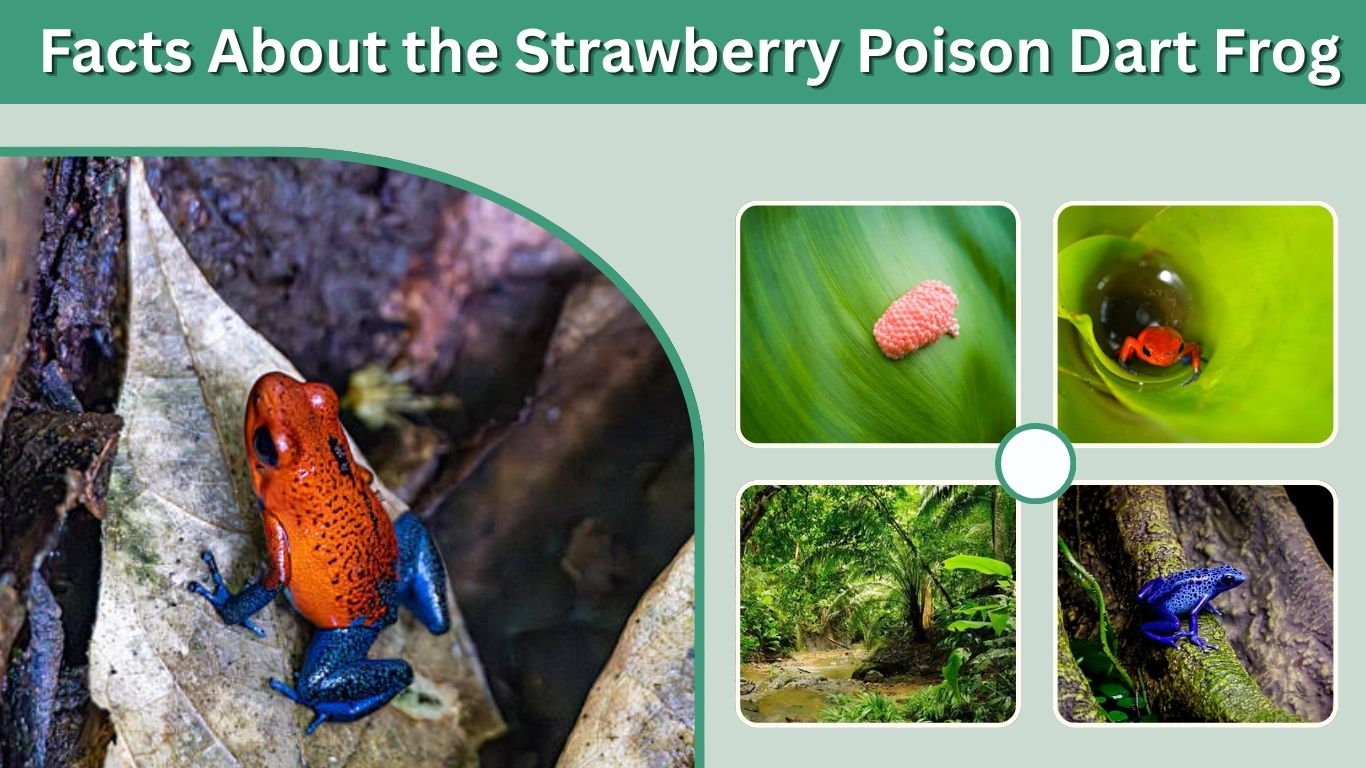
The strawberry poison dart frog is a tiny but remarkable amphibian known for its brilliant colors, toxic skin, and extraordinary parenting behavior. Scientifically named Oophaga pumilio, this tropical frog lives in the humid forests of Central America. Although many individuals have the familiar red body and blue legs, the species occurs in an impressive variety of colors.
Quick Facts About the Strawberry Poison Dart Frog
| Feature | Details |
|---|---|
| Scientific name | Oophaga pumilio |
| Other names | Strawberry poison frog, blue jeans frog |
| Size | Approximately 0.7–0.9 inches |
| Native range | Nicaragua, Costa Rica, and Panama |
| Habitat | Humid tropical forests and plantations |
| Diet | Ants, mites, and other tiny arthropods |
| Activity | Diurnal |
| Main defense | Toxic skin and warning coloration |
| Conservation status | Least Concern |
1. It Is One of the Smallest Poison Dart Frogs
Adult strawberry poison dart frogs are generally less than one inch long. Females are often slightly larger than males, although both sexes are extremely small compared with most familiar frogs.
Their compact bodies help them move through leaf litter, plant roots, bromeliads, and other small spaces on the rainforest floor. Despite their size, their vivid coloration makes them surprisingly noticeable.
2. Not Every Strawberry Poison Dart Frog Is Red
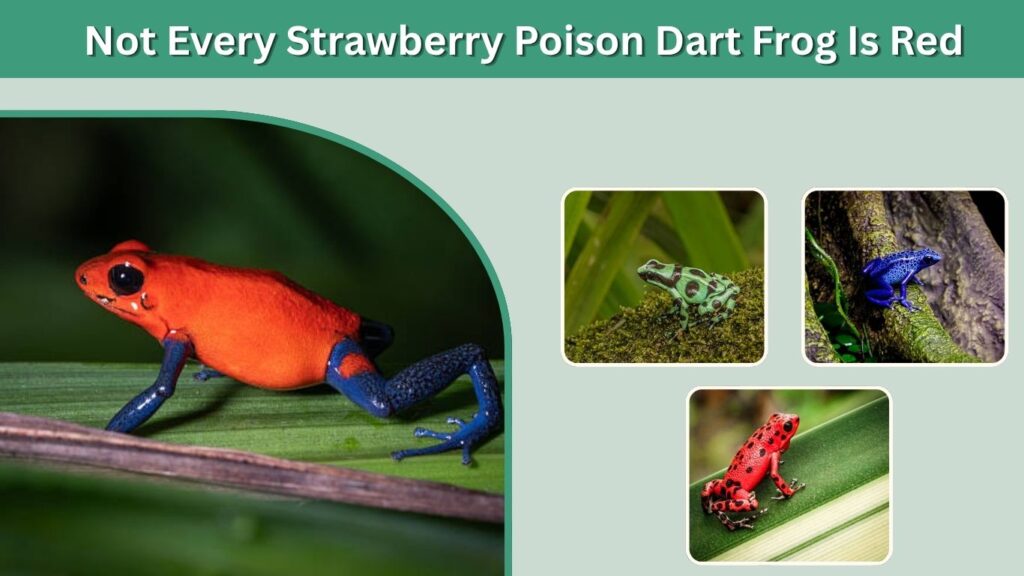
The classic form has a bright red or orange body with dark blue or black legs, giving it the popular name “blue jeans frog.” However, the species has many geographically distinct color forms.
Depending on the population, individuals may be red, orange, yellow, green, blue, white, or nearly black. Some have spots, while others have mostly solid coloration. Populations from Panama’s Bocas del Toro region are especially famous for their diversity.
3. Its Bright Colors Warn Predators
The frog’s bold coloration is an example of aposematism, or warning coloration. Instead of helping the animal hide, its colors communicate that it may be toxic or unpleasant to eat.
Potential predators can learn to associate bright color patterns with danger. This reduces the likelihood that the frog will be attacked repeatedly.
4. Its Poison Comes From Its Diet
Strawberry poison dart frogs do not manufacture all their defensive chemicals entirely by themselves. In the wild, they obtain toxic alkaloids from tiny prey such as ants and mites.
The frogs collect and store these compounds in glands within their skin. Their specialized diet therefore plays an important role in making wild individuals toxic.
5. Captive Frogs Usually Lose Their Toxicity
Frogs raised in captivity are normally fed fruit flies, springtails, and other commercially cultured foods that do not contain the same alkaloids found in wild prey.
As a result, captive-bred strawberry poison dart frogs generally lack the powerful skin toxins of their wild counterparts. However, they should still be handled as little as possible because their delicate skin can absorb oils, chemicals, and contaminants from human hands.
6. It Lives in Central America

The natural range of the strawberry poison dart frog extends along the Caribbean side of Central America. Populations occur from Nicaragua through Costa Rica and into northwestern Panama.
They can live from sea level to elevations of approximately 960 meters. Their distribution includes lowland rainforest, premontane forest, plantations, gardens, and some moderately disturbed environments.
7. It Is Active During the Day
Unlike many frogs that become active after dark, strawberry poison dart frogs are diurnal. They search for food, defend territories, communicate, and reproduce during daylight hours.
Daytime activity also makes their warning colors more visible to predators. They are commonly seen moving through moist leaf litter or sitting on low vegetation.
8. Males Use Calls to Attract Females
Male strawberry poison dart frogs produce repeated buzzing or chirping calls. These calls help attract females and announce the male’s presence to rivals.
A male generally calls from a defended territory containing suitable shelter and breeding locations. Neighboring males may respond with their own calls, displays, or territorial confrontations.
9. Males Defend Small Territories
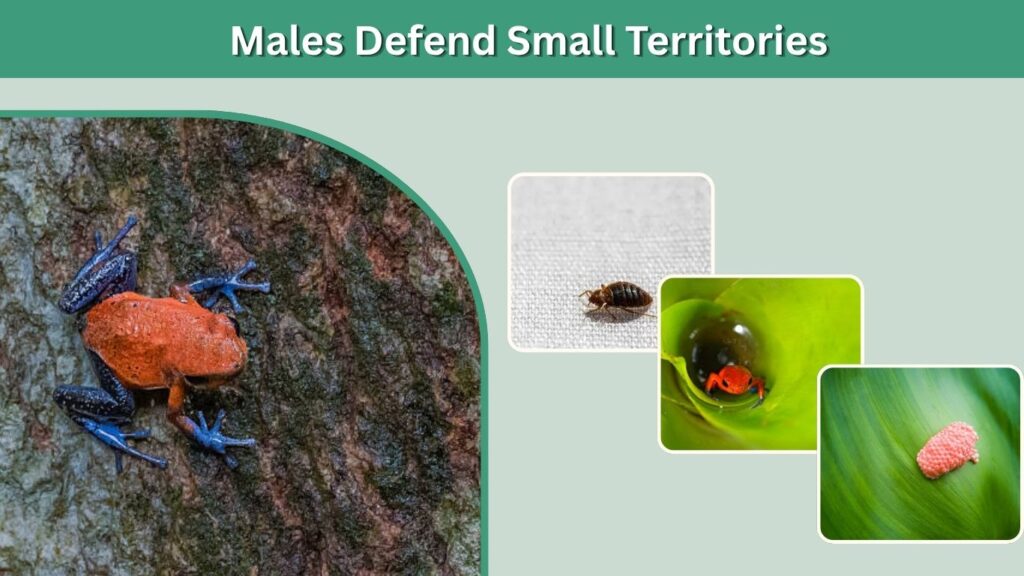
Despite being tiny, males can be highly territorial. They defend calling locations and may wrestle with other males that enter their space.
A valuable territory usually contains moist nesting sites, food, cover, and access to water-filled plants. Maintaining control of a good location can improve a male’s opportunity to reproduce.
10. Both Parents Help Care for the Young
Parental care is uncommon among many frogs, but strawberry poison dart frogs provide an impressive amount of attention to their offspring.
After the female lays a small clutch of eggs in a damp location, the male guards them and helps prevent them from drying out. Once the eggs hatch, the female takes responsibility for transporting and feeding the tadpoles.
11. The Mother Carries Tadpoles on Her Back
When the tadpoles are ready, the female allows them to climb onto her back. She then carries them individually to tiny pools of water.
These nurseries may be located inside bromeliads, tree holes, curled leaves, or other small water-holding structures. Placing tadpoles separately can reduce competition and the risk of one tadpole eating another.
12. Mothers Feed Their Babies Unfertilized Eggs
One of the most interesting strawberry poison dart frog facts is that the mother regularly returns to each nursery and lays unfertilized eggs for the tadpole to eat.
These nutritious eggs are known as trophic eggs. The tadpoles depend heavily on this food until they complete metamorphosis. Studies show that maternal egg provisioning improves tadpole growth and survival.
13. Mothers Can Pass Defensive Chemicals to Their Young
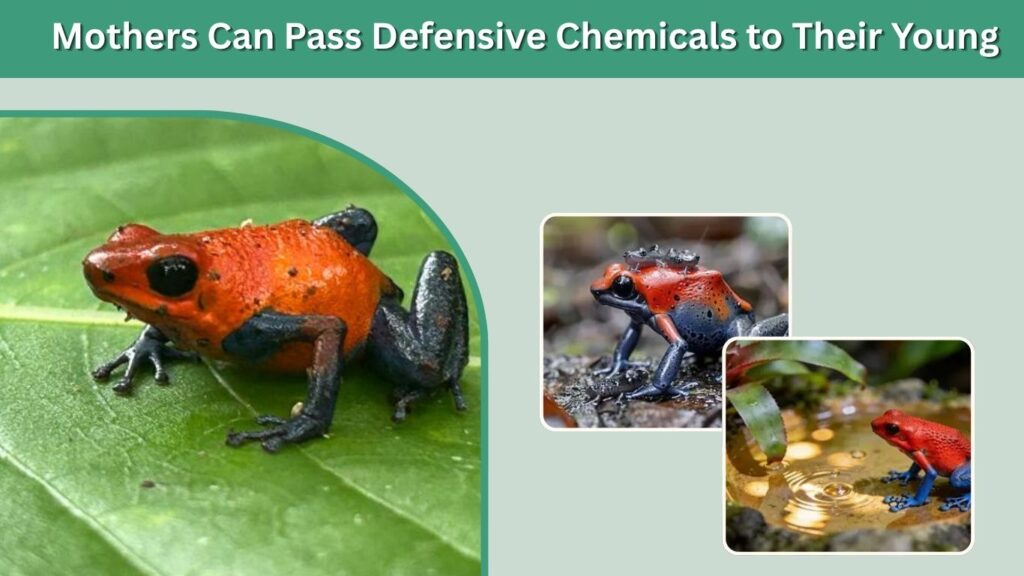
The trophic eggs do more than provide nutrition. Research indicates that mothers can transfer defensive alkaloids to their tadpoles through these eggs.
This means young frogs may begin receiving chemical protection before they leave their aquatic nursery. It is an unusual combination of feeding, parental care, and chemical defense.
14. Its Genus Name Refers to Egg Eating
The scientific genus name Oophaga comes from words relating to eggs and eating. It refers to the unusual behavior of tadpoles feeding on eggs supplied by their mothers.
The species was formerly classified as Dendrobates pumilio, so that older scientific name may still appear in books and older articles.
15. The Species Is Not Currently Considered Endangered
The strawberry poison dart frog is currently classified as Least Concern because it remains relatively widespread and can tolerate some modified habitats.
However, individual populations may still be affected by forest loss, habitat alteration, pollution, disease, and illegal wildlife collection. Distinctive local color forms can be especially vulnerable because some occur within very limited areas.
FAQs
Are strawberry poison dart frogs deadly?
Wild strawberry poison dart frogs carry toxic compounds in their skin, but they are not considered the most dangerous poison frog species. Poisoning usually requires direct contact with skin secretions or transferring those secretions into the mouth, eyes, or an open wound.
Why are they called strawberry poison dart frogs?
The name “strawberry” describes the bright red coloration of the best-known form. “Poison dart frog” is the common name used for frogs in the poison frog family, although this particular species was not the primary frog traditionally used to poison hunting darts.
What do strawberry poison dart frogs eat?
Adults eat tiny invertebrates, especially ants, mites, springtails, beetles, and other small arthropods. Wild prey supplies some of the alkaloids stored in their skin. Tadpoles primarily eat unfertilized eggs delivered by their mother.
How do strawberry poison dart frogs carry their babies?
After the eggs hatch, the female positions herself near the tadpoles and allows them to climb onto her back. She carries each tadpole to a small water-filled plant or cavity, where it continues developing.
Can strawberry poison dart frogs swim?
They can move through water when necessary, but they are not powerful aquatic swimmers. Adults spend most of their time on the forest floor or low vegetation. Their tadpoles develop in extremely small pools rather than large ponds or rivers.
