
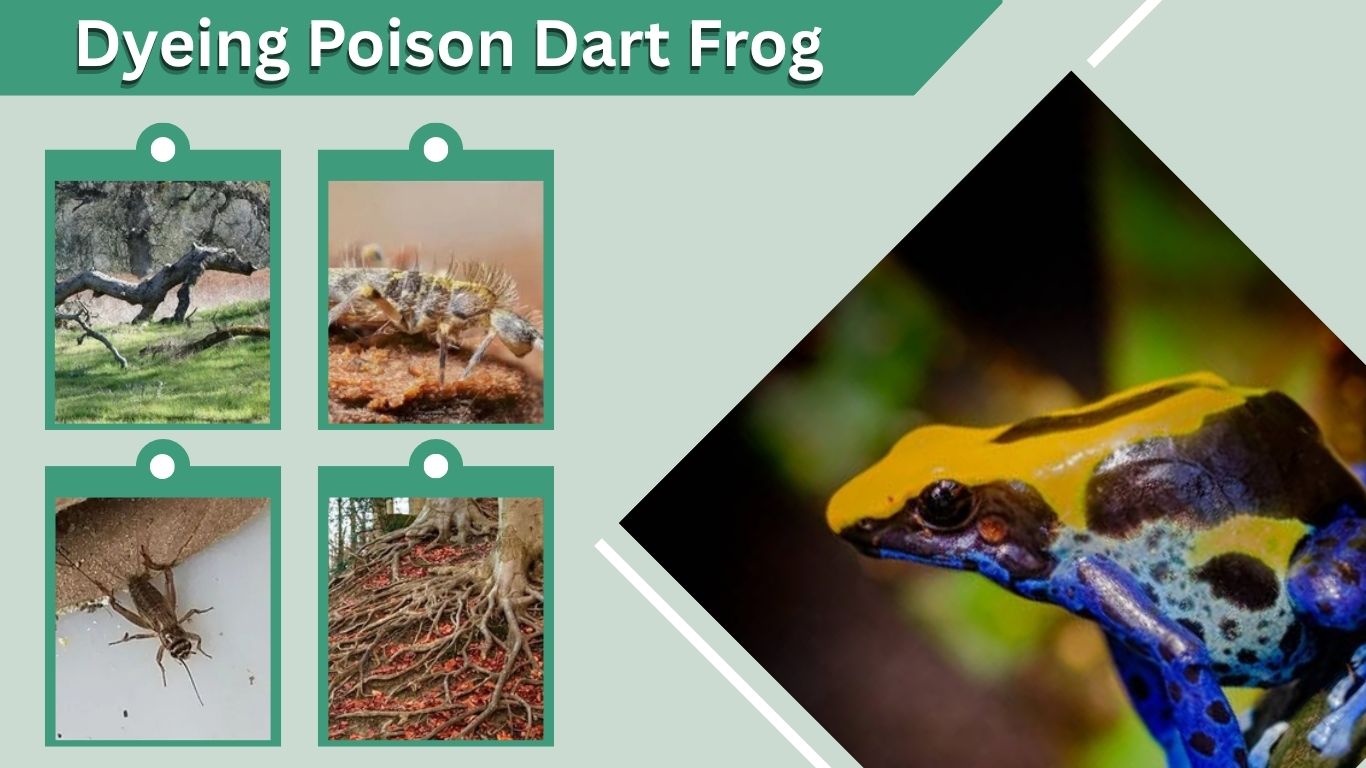
The dyeing poison dart frog is a brilliantly colored rainforest amphibian known for its bold patterns and toxic skin. Its scientific name is Dendrobates tinctorius. Depending on its geographic population, it may display combinations of black, yellow, white, turquoise, or deep blue. Although wild frogs use chemical defenses against predators, captive-bred individuals normally lose their toxicity because they eat a different diet.
Dyeing Poison Dart Frog Overview
| Feature | Details |
| Scientific name | Dendrobates tinctorius |
| Family | Dendrobatidae |
| Class | Amphibia |
| Order | Anura |
| Size | Usually up to 2 inches |
| Native range | Guyana, Suriname, French Guiana, and northern Brazil |
| Habitat | Humid lowland rainforest |
| Diet | Ants, mites, termites, and other tiny arthropods |
| Activity | Diurnal |
| Conservation status | Least Concern |
| Trade protection | CITES Appendix II |
| Captive lifespan | Often 7–15 years or longer |
The accepted classification places this species in the genus Dendrobates. The blue poison frog once called Dendrobates azureus is now generally classified as part of Dendrobates tinctorius, although its exact taxonomic treatment has occasionally been debated.
Dyeing Poison Dart Frog Identification and Description
Dyeing poison dart frogs have compact bodies, powerful hind legs, rounded snouts, and enlarged toe pads. Their smooth skin often looks glossy, making their bright markings especially noticeable against wet leaves and dark forest debris.
Key Identification Features
- Adult length of approximately 1.5–2 inches
- Black, dark blue, or navy base coloration
- Yellow, white, cream, or turquoise markings
- Blue legs with irregular black spots
- Large adhesive pads on the toes
- Dark eyes that blend into the facial pattern
- Little or no webbing between the toes
Their coloration is aposematic, meaning it warns potential predators that the frog may be toxic or unpleasant to eat. A predator that has a bad experience with a brightly marked frog may learn to avoid animals with similar colors.
Dyeing Poison Dart Frog Morphs
This species is extremely variable. Individual populations separated by rivers, forest gaps, or other barriers have developed distinctive colors and patterns.
Well-known forms include Azureus, Cobalt, Citronella, Patricia, Powder Blue, Yellowback, Oyapock, and Brazilian Yellow Head. These names generally identify geographic populations or captive-trade morphs rather than separate species.
The Azureus form is almost entirely blue with dark spots, while Cobalt frogs commonly have yellow backs, black central markings, and blue legs. Other populations may be mostly yellow, white, black, or pale blue. These morphs should not be mixed casually because responsible keepers usually preserve their geographic lines.
Dyeing Poison Dart Frog Habitat and Natural Range
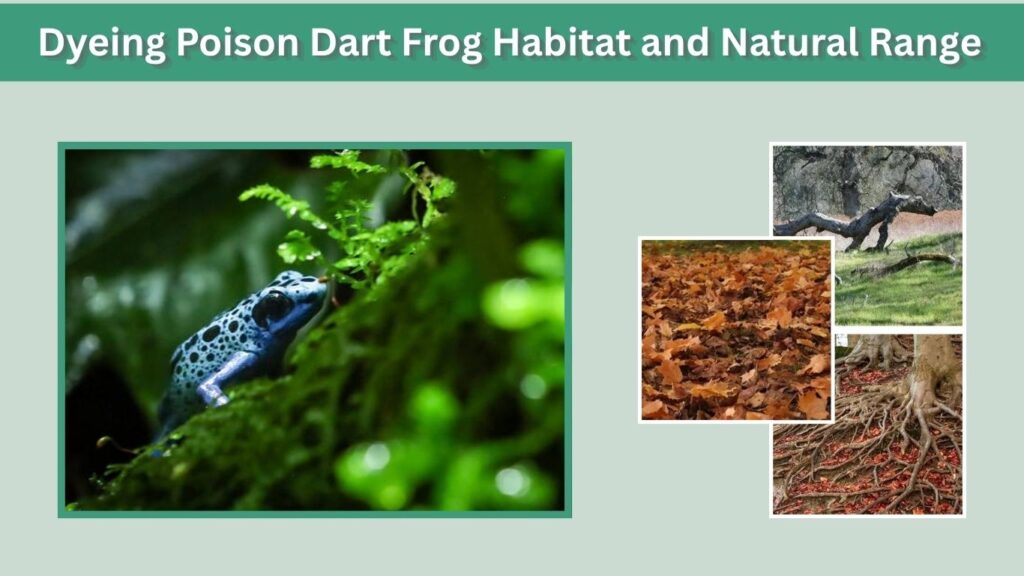
The dyeing poison dart frog occurs in the Guiana Shield region of South America, including Guyana, Suriname, French Guiana, and adjacent northern Brazil. It mainly inhabits humid lowland forests and isolated patches of rainforest.
Where It Lives
Despite its name and climbing ability, this frog is primarily terrestrial. It spends much of its time among:
- Moist leaf litter
- Fallen branches and logs
- Tree roots
- Rocks and forest debris
- Low-growing plants
- Areas near small streams
Its toe pads help it climb over roots, wet rocks, leaves, and low vegetation. However, it lacks extensive toe webbing and is not a strong swimmer.
What Do Dyeing Poison Dart Frogs Eat?
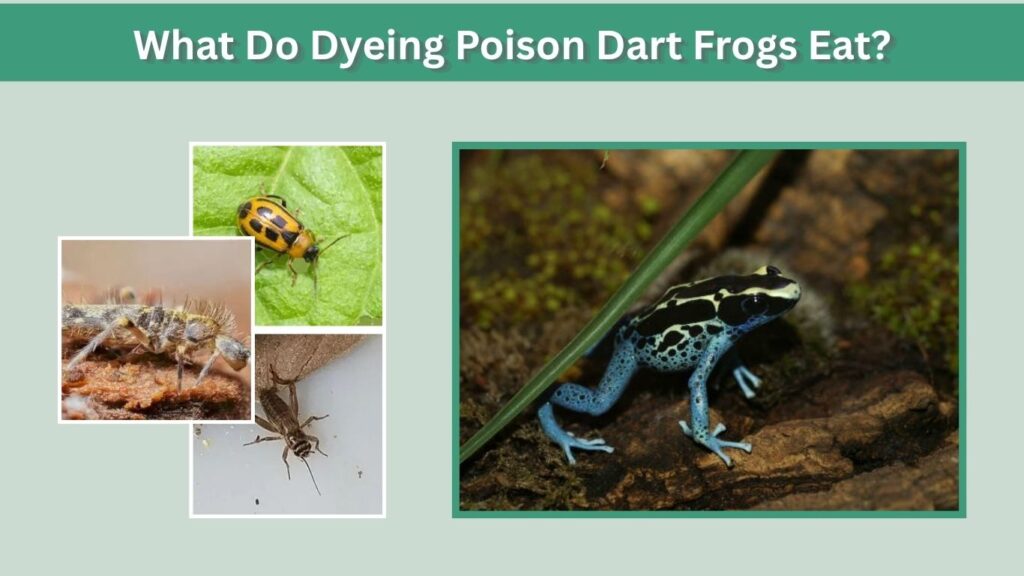
Dyeing poison dart frogs are insectivores that hunt extremely small arthropods. Their natural diet includes ants, mites, termites, tiny beetles, spiders, and other invertebrates found on the forest floor.
They locate moving prey with their eyesight and capture it using a quick, sticky tongue. Because each food item is small, a frog may spend much of its active period searching through leaf litter.
Captive Diet
Captive-bred frogs are usually fed:
- Flightless fruit flies
- Springtails
- Small bean beetles
- Pinhead crickets
- Other appropriately sized feeder insects
Feeders normally require regular calcium and vitamin supplementation. A varied supply of tiny live food is essential because these frogs will generally not recognize pellets or dead insects as prey.
How Poisonous Is the Dyeing Poison Dart Frog?
Wild dyeing poison dart frogs store defensive alkaloids in glands within their skin. These chemicals are obtained from their natural prey, particularly alkaloid-bearing ants and mites. Their bright coloration advertises this chemical defense to potential predators.
The frog is poisonous, not venomous. It does not inject toxins using fangs or a stinger. Instead, a predator is exposed when it bites or consumes the frog.
This species is not considered as dangerous as the golden poison frog and other highly toxic members of the genus Phyllobates. Only three Phyllobates species have been documented in association with poisoned hunting darts; Dendrobates tinctorius is not one of them.
Are Captive Frogs Poisonous?
Captive-bred frogs normally lack meaningful toxicity because fruit flies, springtails, and captive-raised crickets do not contain the same alkaloids as wild prey. They should still not be handled routinely. Frog skin is delicate and can absorb soap, lotion, oils, salt, and other substances from human hands.
Predators and Defensive Adaptations
The frog’s primary defenses are toxic skin and conspicuous coloration. Instead of relying entirely on camouflage, it openly displays colors that predators can learn to associate with an unpleasant taste.
These defenses discourage many snakes, birds, and mammals, but they do not guarantee complete protection. Juveniles, eggs, and tadpoles are generally more vulnerable because they have not developed the same defensive capabilities as adults.
Other useful adaptations include adhesive toe pads, sharp daytime vision, a fast tongue, powerful jumping legs, and behavior that keeps the frog close to shelter in humid forest-floor environments.
Breeding and Life Cycle
Males use a quiet buzzing call to attract females and communicate with nearby frogs. Courtship usually occurs in a moist location on the forest floor.
Eggs and Tadpoles
The female lays a small clutch of eggs on a damp leaf or another protected surface. After fertilization, the male guards and moistens the developing eggs.
Once the eggs hatch, the tadpoles climb onto the male’s back. He transports them to small water-filled cavities, pools, or tree holes where they continue developing. Poison frogs are notable for this form of parental care, which protects young tadpoles from drying out on the forest floor.
The tadpoles gradually develop legs, absorb their tails, and transform into froglets. Young frogs initially have less intense patterns, with their adult coloration becoming clearer as they grow.
Male vs. Female Dyeing Poison Dart Frogs
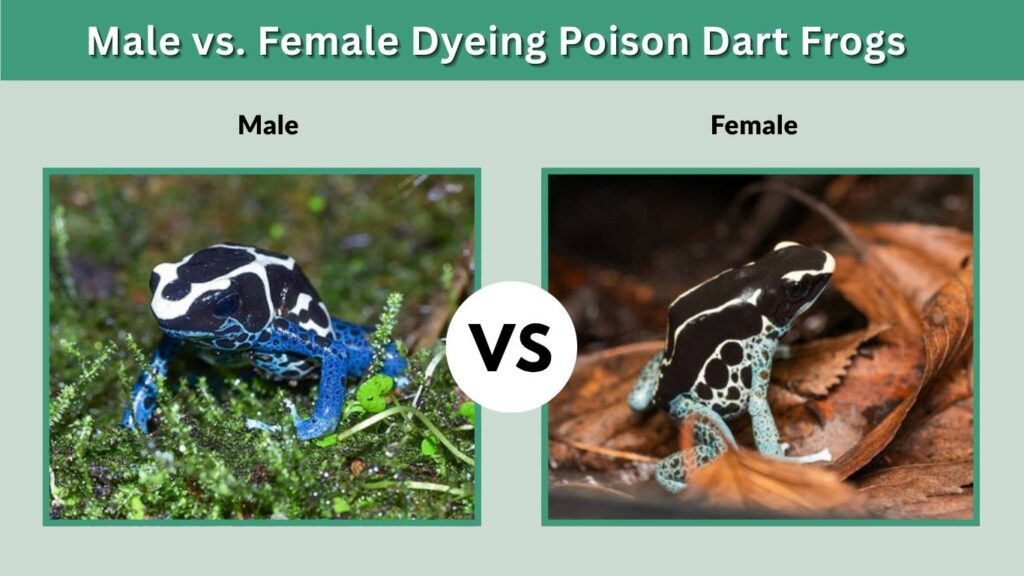
Females are usually larger, heavier, and more rounded than males. Mature males may have wider toe pads and are the sex that produces courtship calls.
Sexing juveniles is difficult because these differences become noticeable only as the frogs mature. Body shape alone is not always reliable, particularly when comparing frogs of different ages.
Adult females can be territorial and may fight over males or breeding sites. For this reason, keepers often maintain established pairs rather than housing several mature females together.
Dyeing Poison Dart Frog Care
This species can be kept successfully in captivity, but it requires a carefully maintained tropical vivarium. A suitable enclosure should provide high humidity, adequate ventilation, drainage, living plants, leaf litter, climbing surfaces, and numerous hiding areas.
Temperatures around normal warm room conditions are generally suitable, but extreme heat must be avoided. A shallow water area may be provided, although the frogs are poor swimmers and should never have access to deep, steep-sided water.
Before Buying One
Purchase only legally obtained, captive-bred frogs from a responsible breeder. Ask for the frog’s morph or locality information, feeding history, age, and health records. Wild-caught frogs may carry parasites, experience severe transport stress, and contribute to pressure on natural populations.
The species can live for more than a decade with suitable care, so ownership requires a long-term supply of live food and consistent enclosure maintenance.
Conservation Status
The dyeing poison dart frog is currently categorized as Least Concern, but it is listed under CITES Appendix II, which regulates international trade. Habitat loss, rainforest fires, disease, pollution, and illegal collection can still harm local populations.
Fun Facts About Dyeing Poison Dart Frogs
- Each geographic population can have a dramatically different color pattern.
- The famous blue poison frog is generally classified as a form of Dendrobates tinctorius.
- Captive-bred individuals normally lose their toxicity because of dietary differences.
- Females are typically larger than males.
- Fathers carry newly hatched tadpoles on their backs.
- They are active during the day rather than primarily at night.
- Their calls are much quieter than those of many other frogs.
FAQs
What is the scientific name of the dyeing poison dart frog?
Its scientific name is Dendrobates tinctorius. It belongs to the family Dendrobatidae, class Amphibia, and order Anura. The species includes numerous geographically distinctive color forms found across the Guiana Shield region.
How big does a dyeing poison dart frog get?
Adults usually reach approximately 1.5–2 inches long. Females are generally larger and more robust than males. Size varies somewhat among populations, with some morphs appearing noticeably heavier or more compact than others.
What does a dyeing poison dart frog eat?
Wild frogs eat ants, mites, termites, tiny beetles, spiders, and other small arthropods. Captive frogs are commonly fed flightless fruit flies, springtails, bean beetles, and very small crickets supplemented with calcium and vitamins.
Can a dyeing poison dart frog kill a human?
It is not considered one of the most lethal poison frogs. Wild individuals carry defensive skin alkaloids that should not contact the eyes, mouth, or open wounds. Captive-bred frogs generally lack these toxins because they do not consume alkaloid-rich wild prey.
How long do dyeing poison dart frogs live?
They commonly live around 7–15 years in captivity, and some may survive longer with excellent husbandry. Their lifespan depends on diet, temperature, humidity, enclosure cleanliness, genetics, and access to suitable veterinary care.
