
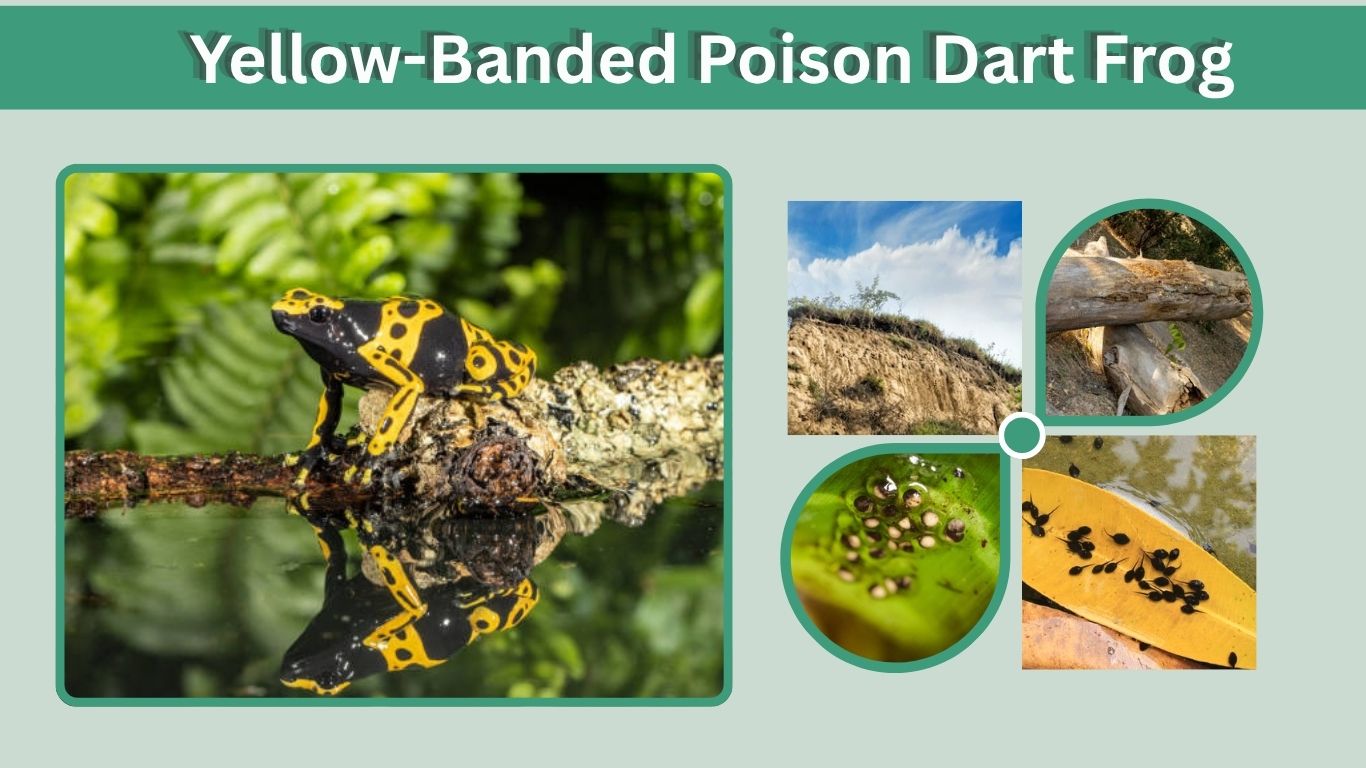
The yellow-banded poison dart frog is a small tropical amphibian recognized by its glossy black body and vivid yellow markings. Its scientific name is Dendrobates leucomelas, and it is also called the bumblebee poison frog or yellow-banded poison frog. Despite its tiny size, this species has powerful defenses, complex breeding behavior, and a surprisingly loud call.
Yellow-Banded Poison Dart Frog Overview
| Feature | Details |
| Scientific name | Dendrobates leucomelas |
| Family | Dendrobatidae |
| Class | Amphibia |
| Order | Anura |
| Other name | Bumblebee poison dart frog |
| Size | Approximately 1.2–2 inches |
| Native range | Venezuela, Guyana, northern Brazil, and Colombia |
| Diet | Ants, termites, beetles, spiders, and other arthropods |
| Activity | Diurnal |
| Conservation status | Least Concern |
The species belongs to the poison frog family Dendrobatidae and is one of several brightly colored frogs in the genus Dendrobates.
Yellow-Banded Poison Dart Frog Identification
The frog has a compact body, rounded snout, strong rear legs, and small adhesive toe pads. Its skin is usually black with two or three broad yellow or orange bands across the head, back, and legs.
Key Identification Features
- Glossy black background color
- Bright yellow or orange bands
- Small black spots inside some yellow markings
- Rounded body with long hind legs
- Dark eyes that blend into the black facial pattern
- Expanded toe pads for gripping wet surfaces
Young frogs often have clearer, more complete bands. As some individuals mature, portions of these bands may break into irregular spots. Adults usually measure 3.1–5 centimeters, although most are below the upper end of that range.
Where Do Yellow-Banded Poison Dart Frogs Live?
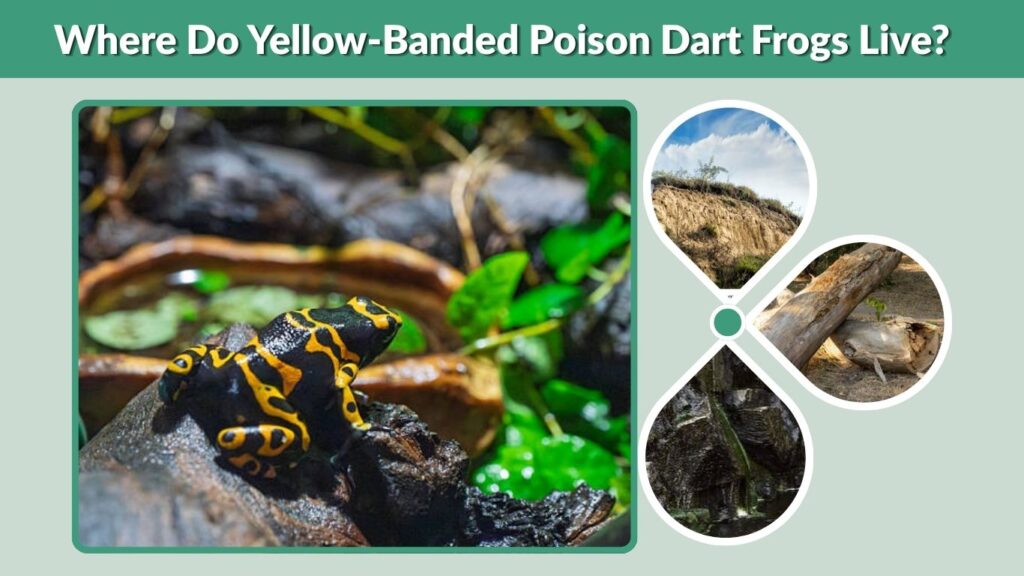
Yellow-banded poison dart frogs are native to northern South America. Their range includes Venezuela, Guyana, extreme northern Brazil, and parts of Colombia. They are particularly associated with the Orinoco River region and nearby tropical forests.
Natural Habitat
They inhabit humid tropical rainforests, evergreen forests, seasonal forest islands, and areas close to streams or other sources of moisture. Adults spend much of their time among:
- Damp leaf litter
- Exposed tree roots
- Moist rocks
- Fallen logs
- Low vegetation
- Bromeliads
Although these frogs can climb, they are commonly seen near the forest floor. During drier weather, they seek protected, humid places beneath rocks, logs, roots, or dense vegetation.
What Do Yellow-Banded Poison Dart Frogs Eat?
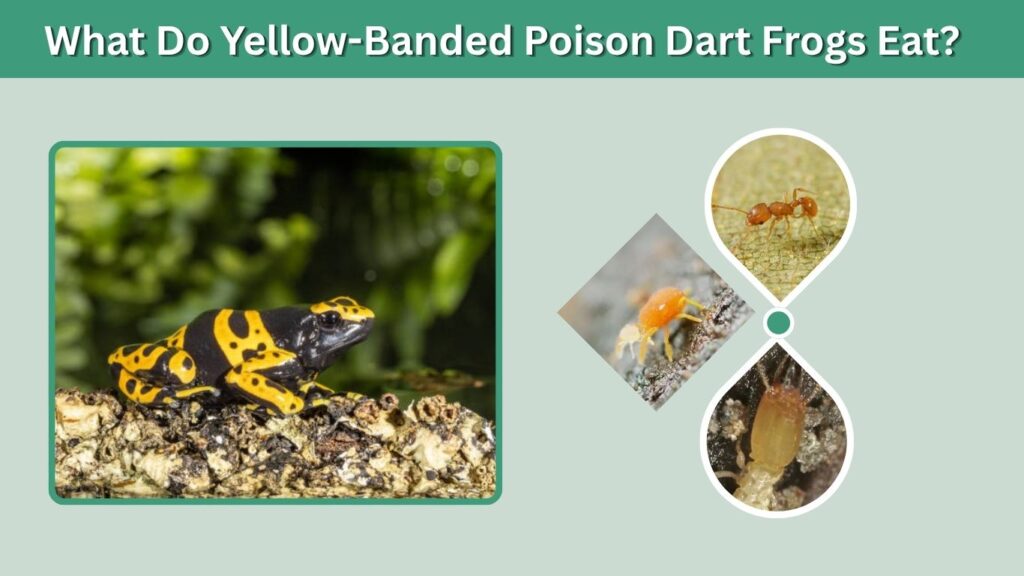
The yellow-banded poison dart frog is an insectivore. It spends much of the day searching for tiny prey that can fit inside its mouth.
Its wild diet includes ants, termites, mites, small beetles, tiny crickets, spiders, and other small arthropods. The frog captures prey quickly with its sticky tongue.
Ants are particularly important because certain prey animals provide the alkaloid chemicals the frog stores in its skin. Therefore, its diet supports both its nutritional needs and its chemical defense.
Captive frogs are generally fed small fruit flies, springtails, bean beetles, and appropriately sized crickets. Their feeder insects must be properly supplemented because captive diets are less varied than wild diets.
Is the Yellow-Banded Poison Dart Frog Poisonous?
Wild yellow-banded poison dart frogs carry defensive alkaloids in their skin. These chemicals make the frog unpleasant or potentially harmful to predators that bite or swallow it.
The frog is poisonous rather than venomous. It does not have fangs, stingers, or another structure for injecting toxins. Instead, harmful chemicals are released through glands in its skin.
However, it is not among the extremely dangerous Phyllobates species historically associated with poison-covered hunting darts. The name “poison dart frog” is applied broadly to the family, even though only a small number of species were documented as being used on darts.
Why Captive Frogs Are Usually Not Toxic
Captive-bred frogs normally lose their potent skin toxicity because they do not eat the same alkaloid-containing ants and arthropods found in the wild. Frogs maintained on fruit flies and similar captive foods are consequently considered non-toxic or far less toxic.
Handling should still be avoided. Amphibians have delicate, permeable skin that can absorb soap, lotion, salt, oil, and other substances from human hands.
Aposematic Coloration and Other Adaptations
The frog’s bright black-and-yellow pattern is an example of aposematic coloration. This means its appearance acts as a warning to potential predators.
A predator that attacks a toxic or bad-tasting frog may learn to associate its noticeable pattern with an unpleasant experience. The vivid coloration therefore reduces the frog’s need to remain completely hidden.
Other important adaptations include:
Adhesive Toe Pads
Expanded toe tips help the frog grip wet plants, tree roots, bark, and rocks. This allows it to move through both terrestrial and low climbing environments.
Daytime Activity
Yellow-banded poison dart frogs are diurnal. Being active during daylight makes their warning colors easier for predators and other frogs to see.
Skin Toxins
Diet-derived toxins discourage many animals from eating the frog. Its visible warning pattern and chemical defenses work together.
Sharp Vision and Hearing
The frog relies on vision to locate moving prey and identify other frogs. Hearing is especially important during breeding because males communicate through repeated calls.
Yellow-Banded Poison Dart Frog Sound
Male yellow-banded poison dart frogs produce a relatively loud, musical trill. The call may continue for several seconds and can sound surprisingly powerful for such a small animal.
Males call to attract females and announce their presence to competing males. Research involving this species also suggests that calling performance can provide females with information about a male’s potential quality as a parent.
Reproduction and Life Cycle
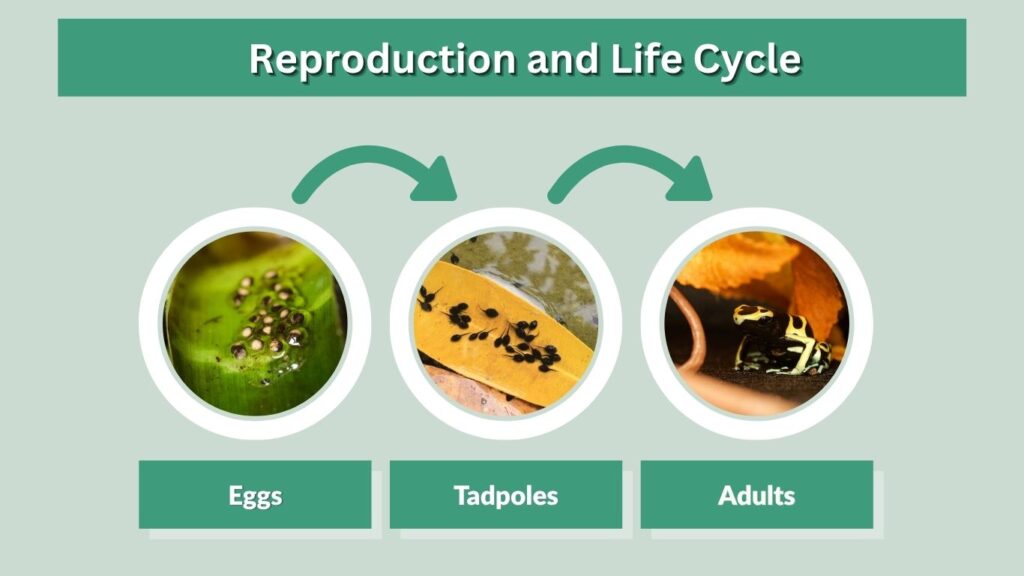
Breeding activity is closely connected to rainfall and humid conditions. A male calls from a suitable breeding area and leads an interested female toward a protected egg-laying location.
Eggs
The female deposits a small group of eggs in a moist, sheltered place, such as beneath leaves, bark, roots, or other forest debris. The eggs must remain humid without being completely submerged.
Parental Care
The male guards and periodically attends the eggs. Once the tadpoles hatch, he carries them on his back to small pools of water, tree holes, or water-filled plants where they continue developing.
Unlike strawberry poison dart frog tadpoles, yellow-banded poison dart frog tadpoles are not normally dependent on unfertilized eggs supplied by their mother. They consume algae, organic matter, insect material, and other available foods in their aquatic nursery.
Metamorphosis
The tadpoles gradually develop hind legs, front legs, lungs, and the recognizable yellow-and-black coloration. Their tails are absorbed as they transform into froglets and leave the water.
Yellow-Banded Poison Dart Frog Predators
Skin toxins and warning coloration protect adults from many general predators. However, these defenses do not make the frogs completely invulnerable.
Possible predators include certain snakes, large spiders, birds, and other animals capable of tolerating or avoiding the skin secretions. Eggs and tadpoles are more vulnerable and may be eaten by insects, other tadpoles, aquatic predators, or small reptiles.
Habitat destruction and collection for the wildlife trade may create greater long-term risks than natural predation.
Are Yellow-Banded Poison Dart Frogs Endangered?
The yellow-banded poison dart frog is classified as Least Concern. It has a relatively broad distribution and remains present across several areas of northern South America.
However, local populations may be affected by deforestation, agricultural expansion, logging, pollution, disease, and illegal collection. Buying only legally produced, captive-bred frogs helps reduce pressure on wild populations.
Yellow-Banded Poison Dart Frogs as Pets
The species is popular among experienced amphibian keepers because it is colorful, active during the day, and often more visible than secretive frog species.
A suitable setup requires a secure tropical vivarium with living plants, leaf litter, climbing surfaces, hiding areas, clean water, high humidity, and good ventilation. The enclosure must remain moist without becoming permanently waterlogged.
Keepers must also maintain cultures of tiny live feeder insects and provide appropriate calcium and vitamin supplementation. Because poison frogs can live for more than ten years in human care, keeping one is a long-term responsibility.
Wild-caught frogs should be avoided. Captive-bred animals are generally healthier, less likely to carry parasites, and do not contribute directly to the removal of frogs from natural habitats.
Interesting Yellow-Banded Poison Dart Frog Facts
- Its scientific name, Dendrobates leucomelas, refers to its contrasting light and dark coloration.
- The species is also called the bumblebee poison frog because its black-and-yellow pattern resembles a bumblebee.
- It is one of the larger members of the genus Dendrobates, but it rarely exceeds two inches.
- Captive-bred individuals normally lack the strong toxins carried by wild frogs.
- The father performs much of the parental care, including guarding the eggs and carrying tadpoles.
- Its call is a long, musical trill rather than the familiar croak produced by many larger frogs.
- Every frog has a slightly different arrangement of yellow bands and black spots.
FAQs
What is the scientific name of the yellow-banded poison dart frog?
Its scientific name is Dendrobates leucomelas. It belongs to the family Dendrobatidae and the order Anura. Other common names include the bumblebee poison dart frog, yellow-banded poison frog, and yellow-headed poison frog.
How big does a yellow-banded poison dart frog get?
Most adults grow to approximately 1.2–1.6 inches long, although exceptionally large individuals may approach two inches. Females are often slightly larger and more rounded than males, but calling is usually a more reliable way to identify a mature male.
What does a yellow-banded poison dart frog eat?
It eats ants, termites, mites, tiny beetles, spiders, and other small arthropods. Captive frogs are commonly offered fruit flies, springtails, small bean beetles, and pinhead crickets dusted with appropriate nutritional supplements.
Is the bumblebee dart frog a different species?
No. Bumblebee poison dart frog is another common name for the yellow-banded poison dart frog. Both names generally refer to Dendrobates leucomelas and describe its distinctive black-and-yellow markings.
Can you touch a yellow-banded poison dart frog?
Handling is not recommended, even when a captive frog lacks wild toxins. Its delicate skin can absorb oils, chemicals, soap, and salt from human hands. Handling can also cause stress and potentially injure the frog.
