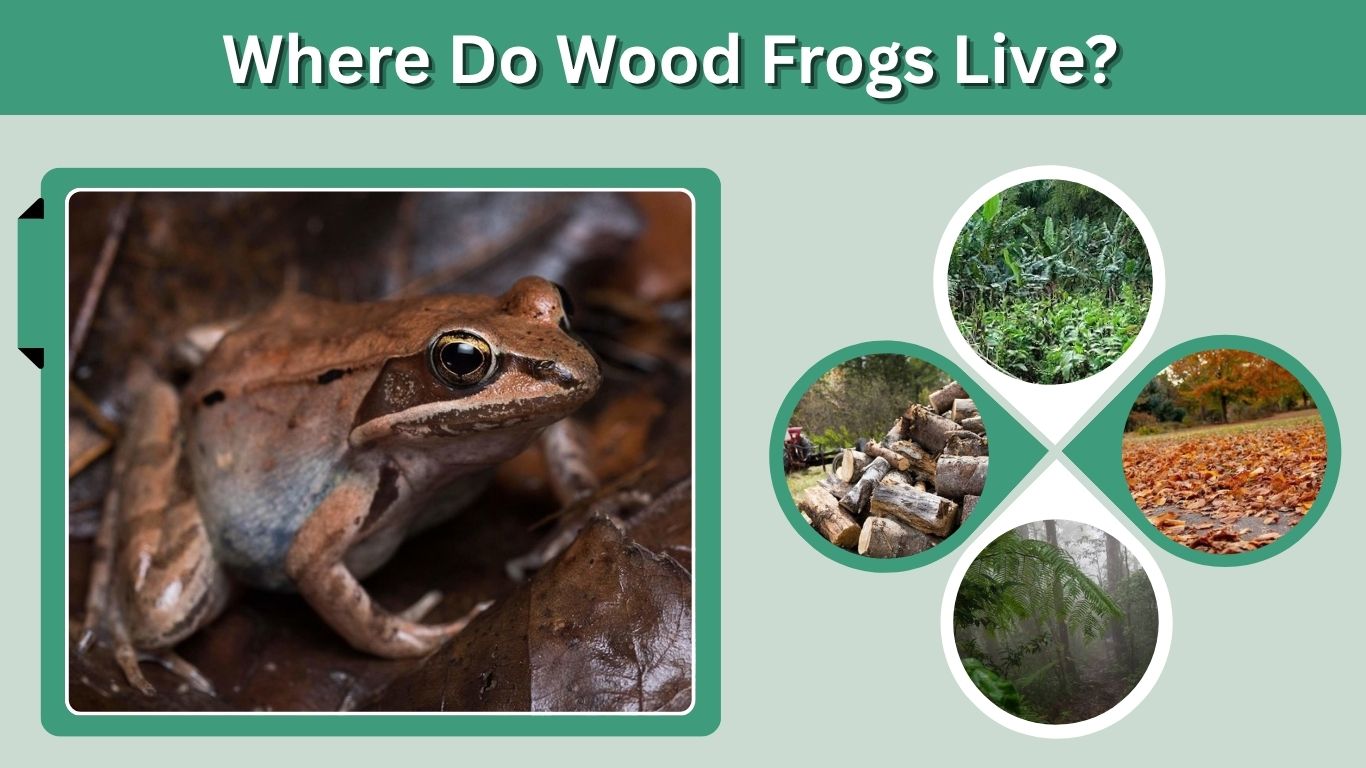
Wood frogs (Lithobates sylvaticus) live in forests, wetlands, grasslands, and cold northern environments throughout much of North America. Unlike many aquatic frogs, they spend most of their adult lives on land, returning to shallow ponds during spring to reproduce. Their remarkable ability to survive freezing temperatures allows them to inhabit regions as cold as Alaska and northern Canada. These adaptable amphibians rely on moist woodland shelters, seasonal breeding pools, and suitable food sources. Understanding where wood frogs live reveals how they survive changing seasons and extreme climates.
Where Do Wood Frogs Live in North America?
Wood frogs have one of the widest geographical distributions of any North American amphibian. Their range extends from the southeastern United States through Canada and into Arctic Alaska. They inhabit both temperate forests and colder northern environments, depending on suitable moisture and breeding opportunities. Their extraordinary cold tolerance allows them to survive where many other frog species cannot.
North American Wood Frog Distribution
Wood frogs occur in several regions across North America.
- United States: Northeastern states, northern Midwestern regions, Appalachian Mountains, and isolated southern populations.
- Canada: Much of the country, including extensive boreal forest regions.
- Alaska: Interior forests, wetlands, and areas extending north to the Brooks Range.
- Appalachian Mountains: Forested environments extending south into Georgia and Alabama.
- Northern habitats: Subarctic woodlands, wetlands, and tundra environments.
Where Do Alaskan Wood Frogs Live?
Alaskan wood frogs inhabit boreal forests, wet meadows, muskeg, and seasonal freshwater wetlands.
They are found across much of mainland Alaska, including areas near the Arctic Circle.
These frogs survive extremely cold winters by freezing partially and thawing when temperatures rise.
Their remarkable physiological adaptations make them among the northernmost amphibians in North America.
Where Do Siberian Wood Frogs Live?
The Siberian wood frog (Rana amurensis) is a separate species from the North American wood frog.
It inhabits regions of Russia, northeastern China, Mongolia, and northern Korea.
These frogs occupy forests, grasslands, and wetlands, particularly in suitable lowland environments.
What Types of Habitats Do Wood Frogs Prefer?
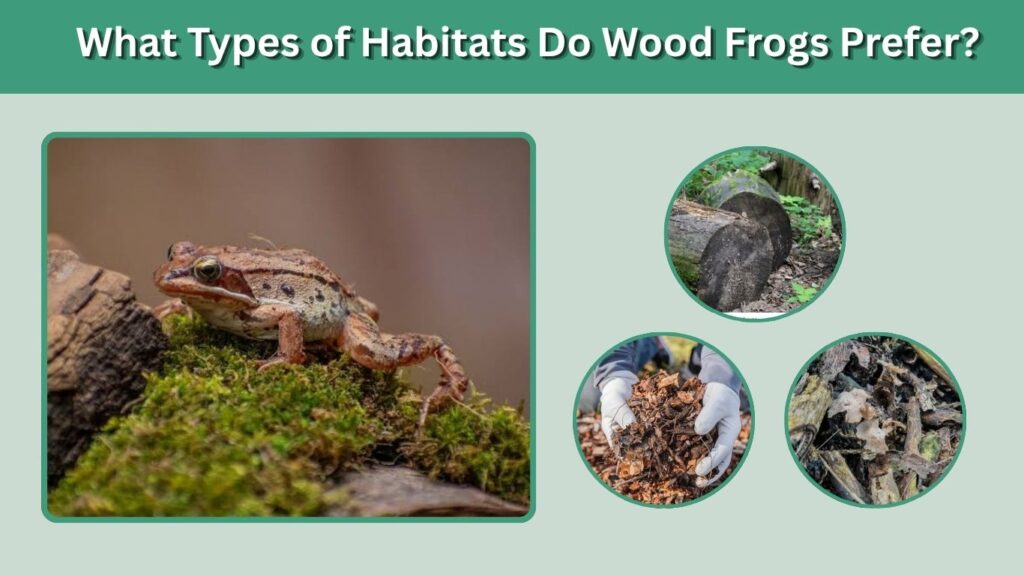
Wood frogs primarily inhabit moist terrestrial environments near suitable freshwater breeding areas. Although their name suggests they live exclusively in forests, they also occupy meadows, bogs, thickets, and tundra habitats. Their survival depends on moisture, shade, available insects, and shelter from predators. Access to temporary freshwater pools is especially important during their annual reproductive season.
Forests and Woodland Floors
Wood frogs commonly live in deciduous, mixed, and coniferous forests.
They spend much of their time beneath fallen leaves, logs, rocks, and low-growing vegetation.
These sheltered locations provide moisture and protection from predators.
Their brown or reddish coloration helps them blend into woodland surroundings, making them difficult to notice among dead leaves.
Essential Wood Frog Habitat Conditions
Suitable wood frog habitats usually contain:
- Moist soil: Helps prevent dehydration.
- Leaf litter: Provides protection and overwintering shelter.
- Fallen logs: Offer hiding places.
- Dense vegetation: Maintains shade and humidity.
- Nearby ponds: Support reproduction and tadpole development.
- Abundant insects: Provide food for adults.
Do Wood Frogs Live in Water or on Land?
Wood frogs are primarily terrestrial amphibians, meaning adults spend most of their lives on land. However, they depend on freshwater environments for reproduction. During early spring, adults migrate from woodland shelters to temporary ponds where they mate and lay eggs. Their tadpoles develop entirely in water before transforming into young frogs capable of living on land.
Why Wood Frogs Need Water
Wood frogs commonly breed in shallow, fish-free seasonal wetlands called vernal pools.
These temporary ponds collect rainwater and melted snow during spring.
Because many dry out during summer, they usually contain fewer fish predators.
Females lay gelatinous egg masses in the water, where developing embryos hatch into tadpoles.
Do Wood Frogs Live Their Entire Lives in Water?
No. Wood frogs do not remain aquatic throughout their lives.
Eggs and tadpoles require freshwater, but young frogs leave the ponds after completing metamorphosis.
Adults spend most of the year searching for insects and shelter in surrounding terrestrial habitats.
They generally return to water during the next breeding season.
Where Do Wood Frogs Live During Winter?
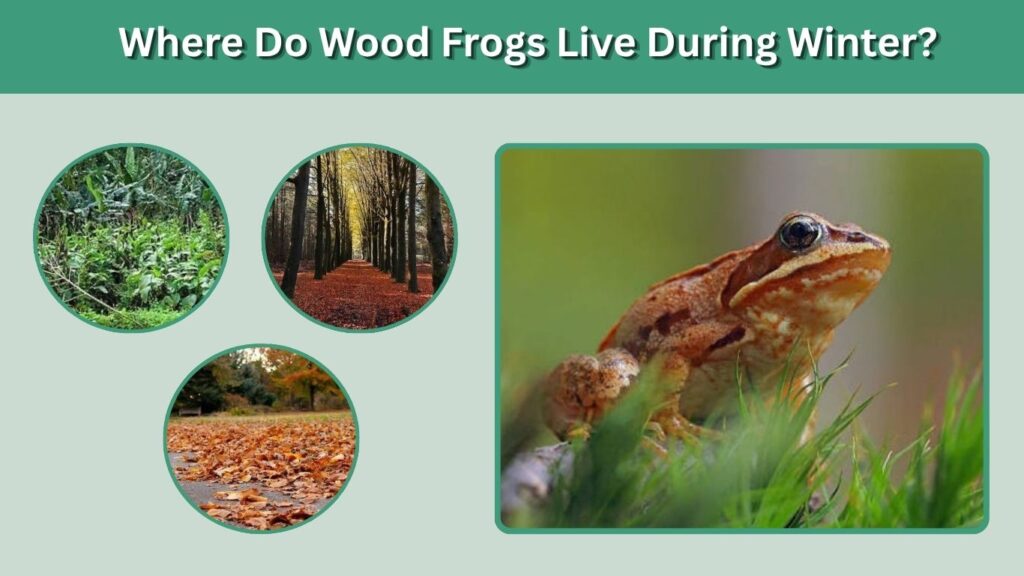
Wood frogs survive winter in protected locations on the forest floor rather than overwintering underwater like many other frogs. They shelter beneath fallen leaves, vegetation, and natural debris that provide some insulation against extreme cold. Their extraordinary ability to tolerate freezing allows them to survive even when their body temperature drops below freezing during harsh northern winters.
Winter Shelter and Hibernation
During autumn, wood frogs move into protected forest-floor locations.
They often settle beneath leaf litter and other natural ground cover.
Snow and vegetation provide insulation, although these shelters do not prevent freezing entirely.
Wood frogs may remain frozen for extended periods before thawing and becoming active again in spring.
How Does a Wood Frog’s Liver Help It Survive?
Wood frogs produce natural substances that protect their cells during freezing.
When freezing begins, their liver converts stored glycogen into glucose, which circulates through the bloodstream.
This glucose helps prevent damaging ice formation inside cells and reduces dehydration.
Their breathing and heartbeat may temporarily stop during freezing, then resume as the frog thaws.
How Do Wood Frogs Live Throughout the Year?
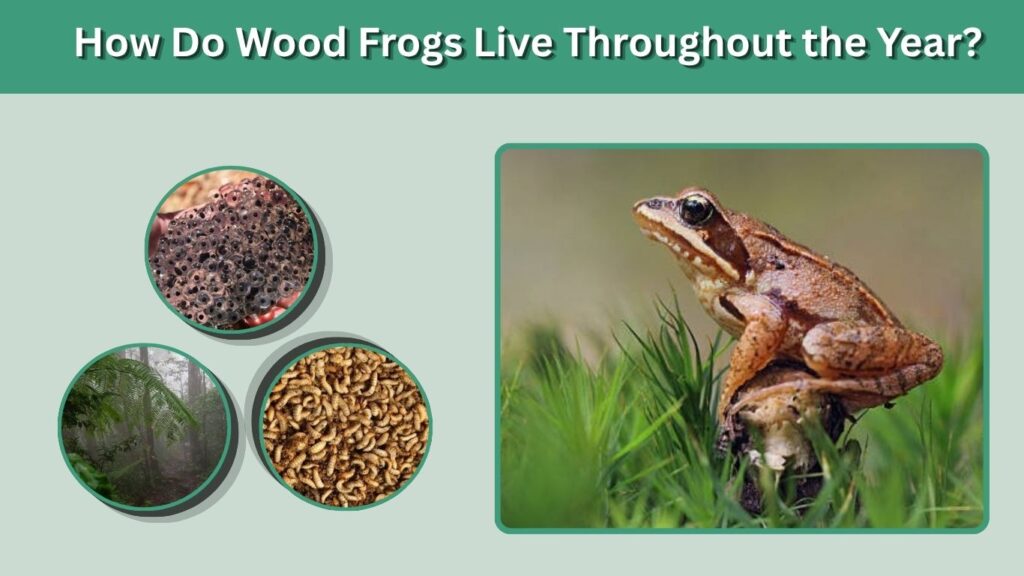
Wood frogs change their activities and living locations according to seasonal conditions. Spring is primarily devoted to breeding, while summer provides opportunities for feeding and growth. During autumn, the frogs prepare for colder temperatures, eventually entering winter dormancy. These seasonal movements connect their forest habitats with nearby freshwater wetlands and are essential to their reproductive success.
Seasonal Wood Frog Activity
- Spring: Adults migrate to breeding ponds, mate, and lay eggs.
- Summer: Frogs occupy moist terrestrial habitats and feed on insects.
- Autumn: They seek sheltered locations and prepare for freezing conditions.
- Winter: Adults remain dormant beneath forest-floor vegetation.
What Do Wood Frogs Eat?
Adult wood frogs consume insects, spiders, worms, slugs, and other small invertebrates.
They capture prey using their sticky tongues while foraging along woodland floors.
Tadpoles have a different diet, feeding primarily on algae and decaying organic material.
Available food sources influence their activity and distribution during warmer months.
How Long Do Wood Frogs Live, and Do They Live in Groups?
Wood frogs have relatively short lifespans compared with some other amphibians. Their survival depends on predators, environmental conditions, and reproductive success. Although they gather in large numbers during breeding, adults generally live independently throughout the rest of the year. Their seasonal behavior helps explain why wood frogs may appear abundant around ponds but remain difficult to find in surrounding forests.
How Long Does a Wood Frog Live?
Wood frogs commonly live approximately three to five years in the wild, although lifespan varies among populations.
Research suggests females sometimes survive longer than males.
Young frogs face significant threats from predators, drought, and changing environmental conditions.
Adults that survive these challenges may reproduce over several breeding seasons.
Do Wood Frogs Live in Groups?
Wood frogs are generally solitary outside their breeding season.
During early spring, large groups may gather in shallow ponds to reproduce.
Male wood frogs produce distinctive duck-like calls that attract females.
After breeding, adults disperse into nearby forests and resume largely independent lives.
What Threatens the Places Where Wood Frogs Live?
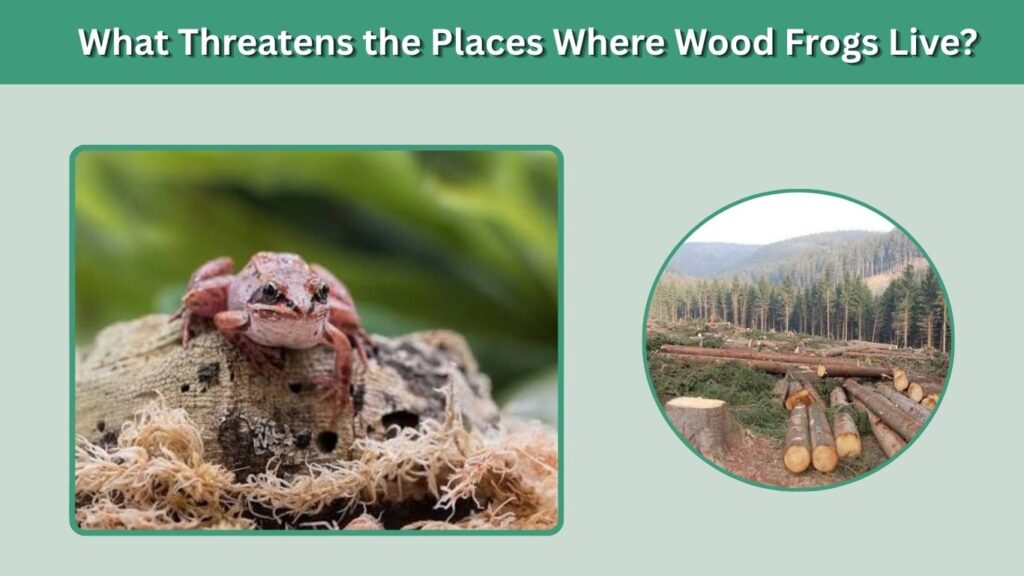
Although wood frogs remain widespread across northern North America, some local populations face environmental threats. Their survival depends on maintaining connected forests and seasonal breeding wetlands. Human development, wetland drainage, pollution, and climate change can disrupt these habitats. Changes in seasonal rainfall may be especially harmful when breeding ponds dry before tadpoles complete their development.
Habitat Destruction and Climate Change
Forest clearing reduces shelter, moisture, and available feeding areas.
Road construction can separate breeding ponds from surrounding woodland habitats.
Climate change may alter snowfall, temperature patterns, and seasonal pond conditions.
When temporary ponds dry too early, eggs and tadpoles may not survive.
How to Protect Wood Frog Habitats
Protecting woodland vegetation and temporary wetlands helps maintain suitable conditions.
Preserving fallen leaves and logs provides shelter for adults during dry weather and winter.
Reducing unnecessary pesticide use also supports their insect food sources.
Maintaining connections between breeding ponds and surrounding forests allows wood frogs to complete their seasonal migrations.
FAQs
Wood frogs are unusual amphibians because they live mostly on land while depending on water for reproduction. Their ability to tolerate freezing temperatures also raises questions about winter survival and geographical distribution. Many people wonder whether wood frogs live in Alaska, remain in groups, or spend their entire lives underwater. These answers explain their essential living habits.
1. Where Do Wood Frogs Usually Live?
Wood frogs usually inhabit moist forests, woodland floors, grasslands, and wetlands throughout much of North America. Adults spend most of their time on land near suitable breeding habitats.
2. Do Wood Frogs Live in Water?
Wood frogs require water for breeding and tadpole development. However, adults spend most of their lives on land rather than living permanently underwater.
3. Where Do Wood Frogs Live in Winter?
Wood frogs overwinter beneath leaf litter and natural debris on forest floors. They survive freezing temperatures through specialized physiological adaptations.
4. Do Wood Frogs Live in Alaska?
Yes. Wood frogs inhabit boreal forests, wetlands, and other suitable environments across much of mainland Alaska, extending north toward the Brooks Range.
5. How Long Do Wood Frogs Live?
Wood frogs typically live approximately three to five years in the wild, although actual longevity depends on environmental conditions, predators, and geographical location.
