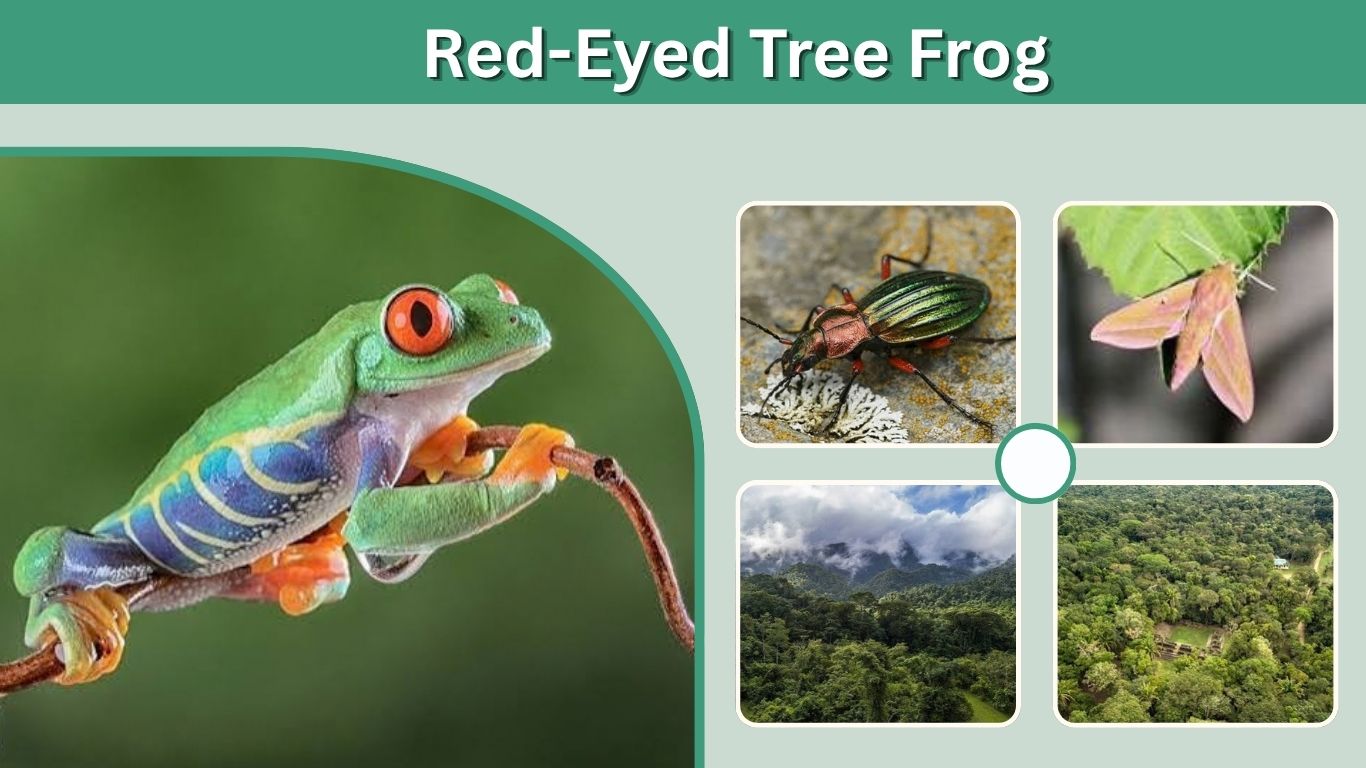
The Red-Eyed Tree Frog (Agalychnis callidryas) is one of the most recognizable amphibians in tropical rainforests. Famous for its striking red eyes, bright green body, and orange toes, this small frog is native to Central America. Despite its colorful appearance, it relies on camouflage and quick movements to survive among predators. Red-eyed tree frogs spend most of their lives in trees, becoming active after sunset. Understanding their habitat, diet, behavior, lifespan, and unique adaptations reveals how these fascinating amphibians survive in the wild.
Red-Eyed Tree Frog Appearance and Identification
Red-eyed tree frogs are famous for their remarkable combination of bright colors and delicate body features. Their green skin blends naturally with rainforest leaves, while their colorful eyes, feet, and sides create a striking contrast. Although their appearance seems unusual, each physical characteristic helps these amphibians climb, hide, hunt, or escape danger in their natural environment.
Physical Identification
- Scientific Name: Agalychnis callidryas
- Family: Phyllomedusidae
- Size: Approximately 1.5–2.75 inches long.
- Body Color: Bright green, occasionally appearing yellowish-green.
- Eye Color: Vivid red with narrow, vertical pupils.
- Legs: Long and slender, with blue or purple markings.
- Feet: Bright orange with rounded adhesive toe pads.
- Underside: Cream-colored or pale white.
- Body Shape: Slim, lightweight, and adapted for climbing.
Why Do Red-Eyed Tree Frogs Have Red Eyes?
The red eyes are believed to help protect these frogs from predators through a defensive strategy known as startle coloration.
When threatened, a resting frog suddenly opens its bright red eyes and reveals its colorful legs. This unexpected display may briefly confuse or surprise a predator, providing enough time for the frog to escape.
During daytime, the frog often closes its eyes and tucks its legs beneath its body to remain camouflaged.
Red-Eyed Tree Frog Habitat and Distribution
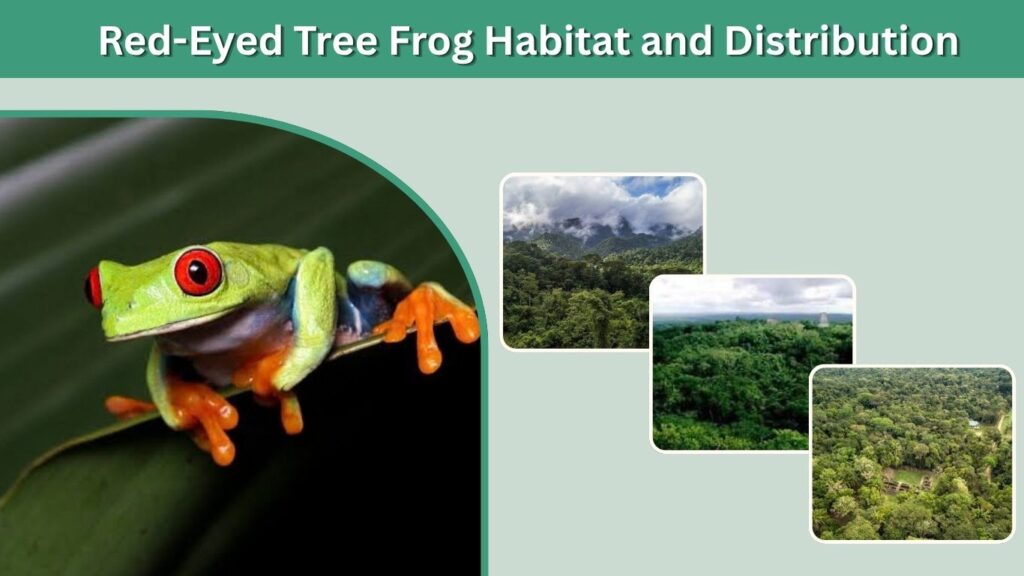
Red-eyed tree frogs inhabit tropical environments where warm temperatures, abundant vegetation, and moisture support their survival. These amphibians spend much of their lives above the forest floor, resting on leaves and climbing branches. Their habitats must also contain freshwater sources because water is essential for egg development, tadpole growth, and successful reproduction.
Where Do Red-Eyed Tree Frogs Live?
Red-eyed tree frogs naturally occur from southern Mexico through Central America, including Belize, Guatemala, Honduras, Nicaragua, Costa Rica, and Panama. Some populations also occur in northwestern Colombia.
They primarily inhabit tropical lowland rainforests, particularly areas with dense vegetation near ponds, swamps, and slow-moving freshwater.
Costa Rica is especially well known for these colorful frogs, which are frequently observed in protected tropical forests.
Preferred Rainforest Environment
Red-eyed tree frogs prefer humid environments with broad leaves, branches, and sheltered resting places. During daylight hours, they often sleep beneath leaves to avoid excessive sunlight and reduce moisture loss.
Their adhesive toe pads allow them to climb smooth vegetation efficiently.
Although adults spend considerable time in trees, freshwater habitats remain essential for reproduction. Forest destruction and the loss of breeding ponds can negatively affect local populations.
Red-Eyed Tree Frog Diet and Feeding Behavior
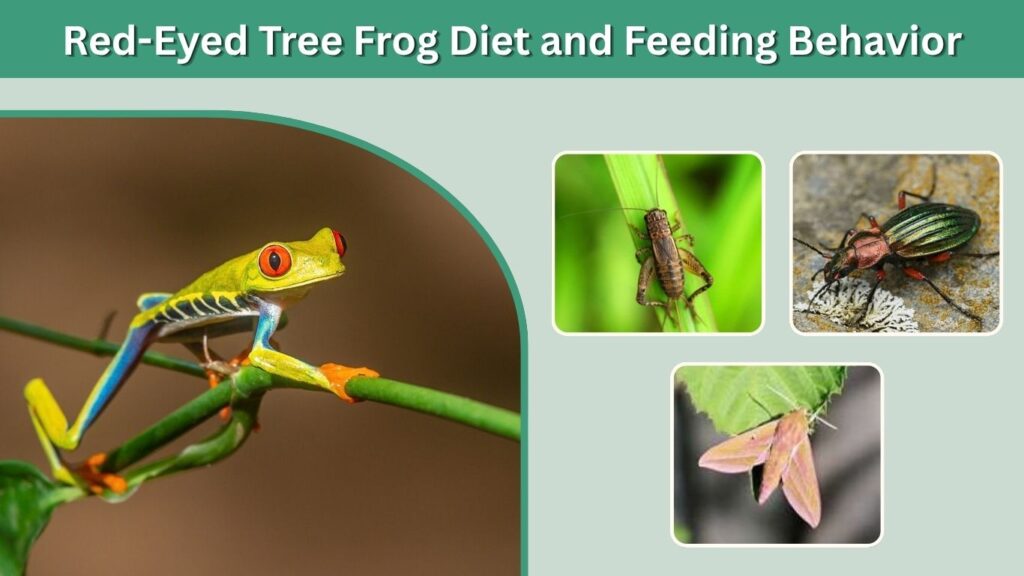
Red-eyed tree frogs are carnivorous amphibians that mainly consume insects and other small invertebrates. Their diet provides the energy needed for climbing, jumping, reproduction, and everyday activity. As nocturnal hunters, these frogs usually search for food after sunset, relying on their excellent vision and fast movements to capture prey among rainforest vegetation.
What Do Red-Eyed Tree Frogs Eat?
Their natural diet includes various small invertebrates, such as:
- Crickets: A commonly consumed insect prey.
- Moths: Flying insects hunted during nighttime activity.
- Flies: Small insects captured around vegetation.
- Grasshoppers: Occasionally eaten when suitably sized.
- Beetles: Another source of protein and nutrients.
- Other Small Invertebrates: Various soft-bodied arthropods found among leaves.
Their exact food choices depend on prey availability, body size, and local habitat conditions.
How Do They Hunt?
Red-eyed tree frogs primarily use a sit-and-wait hunting strategy. They remain relatively motionless on vegetation until suitable prey approaches.
When an insect comes within striking distance, the frog rapidly extends its sticky tongue to capture it.
Their large eyes help detect movement under low-light conditions. Because they hunt at night, they play a useful ecological role as insect predators within tropical forest food webs.
Red-Eyed Tree Frog Adaptations and Predators
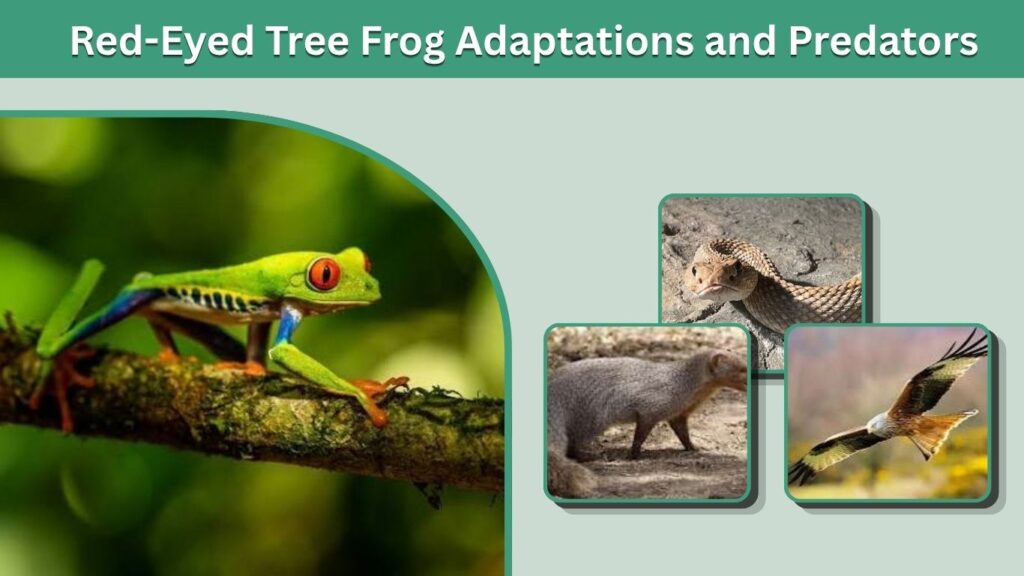
Surviving in tropical rainforests requires specialized defenses against predators and changing environmental conditions. Red-eyed tree frogs possess several adaptations that improve their chances of survival, including camouflage, powerful jumping legs, adhesive toe pads, and startling coloration. These characteristics help them remain hidden during daylight and escape quickly when threatened by other rainforest animals.
How Do Red-Eyed Tree Frogs Protect Themselves?
Their primary defense is camouflage. When resting on green leaves, they conceal their orange feet, blue markings, and red eyes beneath their bodies.
If disturbed, they may suddenly expose their vivid colors and jump away.
This combination of camouflage and startling coloration can temporarily interrupt a predator’s attack.
Their flexible limbs and adhesive toe pads also allow them to navigate branches quickly.
Predators and Natural Threats
Red-eyed tree frogs face threats from snakes, birds, and various other predators. Their eggs and tadpoles are particularly vulnerable to aquatic and terrestrial animals.
Egg-eating snakes and wasps may attack developing embryos before hatching.
Interestingly, red-eyed tree frog embryos can detect vibrations associated with predator attacks and hatch earlier than usual to escape into the water below.
Are Red-Eyed Tree Frogs Poisonous?
Red-eyed tree frogs are not considered poisonous or venomous to humans. Unlike poison dart frogs, they do not rely on powerful toxins to discourage predators.
However, their sensitive skin can be damaged by chemicals, oils, and excessive handling. They should generally be observed rather than touched, and hands should be washed after contact with amphibians or their enclosures.
Red-Eyed Tree Frog Life Cycle and Lifespan
The life cycle of a red-eyed tree frog involves several fascinating developmental stages, beginning with eggs attached to leaves above water. Like other amphibians, these frogs undergo metamorphosis as aquatic tadpoles gradually transform into terrestrial adults. Seasonal rainfall, environmental conditions, and predator activity significantly influence breeding success and the survival of developing frogs.
Mating and Egg Laying
Breeding generally occurs during the rainy season when freshwater breeding habitats are available.
Male frogs produce distinctive calls to attract females. Following mating, females deposit gelatinous egg clusters on leaves positioned above ponds or other freshwater sources.
A clutch commonly contains several dozen eggs. The elevated position provides access to water when the eggs hatch, although the eggs remain vulnerable to predators and drying conditions.
Tadpole Development and Metamorphosis
Under favorable conditions, eggs generally hatch within approximately four to seven days.
Newly hatched tadpoles drop into the water below, where they feed and continue developing.
Over several weeks or months, their bodies gradually change. Hind legs appear, front legs develop, and their tails are eventually absorbed.
Young frogs then leave the water and begin climbing vegetation.
How Long Do Red-Eyed Tree Frogs Live?
Red-eyed tree frogs commonly live around five years in the wild, although individual lifespans vary.
In captivity, some individuals survive eight years or longer with appropriate environmental conditions, nutrition, and veterinary care.
Predators, disease, habitat quality, and environmental stress influence their longevity.
Red-Eyed Tree Frog Care as a Pet
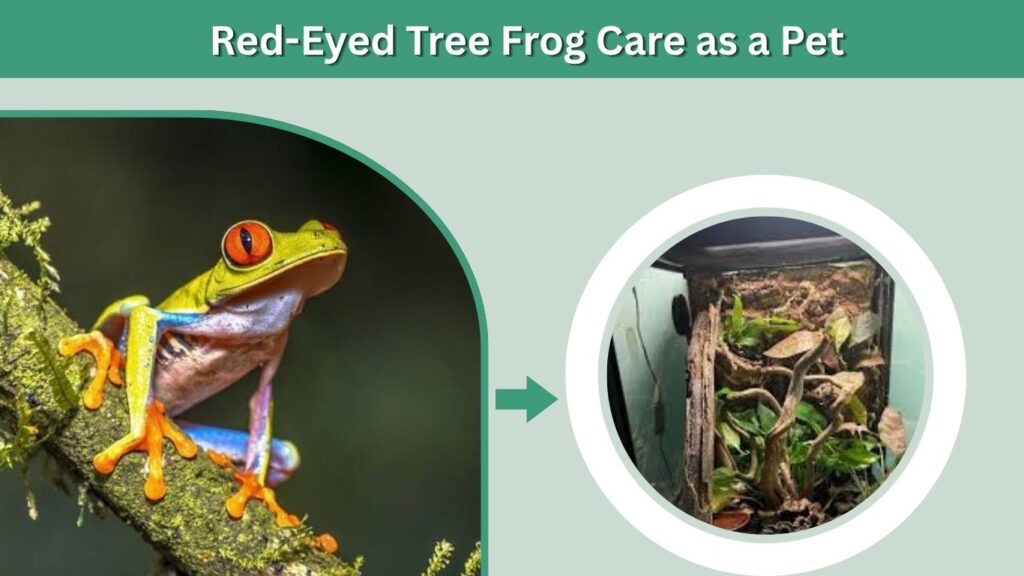
Red-eyed tree frogs are popular among amphibian enthusiasts because of their remarkable colors and interesting nocturnal behavior. However, they require specialized care and stable environmental conditions. Their sensitive skin, climbing habits, and dependence on humidity make them better suited to experienced keepers who can provide appropriately maintained terrariums and consistent feeding routines.
Essential Terrarium Requirements
A suitable red-eyed tree frog enclosure should include:
- Vertical Space: A tall terrarium with adequate room for climbing.
- Temperature: Generally warm conditions around the mid-70s°F, with a suitable cooler nighttime period.
- Humidity: Typically around 70–90%, balanced with good ventilation.
- Vegetation: Broad leaves, branches, climbing vines, and sheltered resting places.
- Water: A shallow container of clean, dechlorinated water.
- Lighting: A consistent day-and-night cycle with appropriate low-level UVB lighting.
- Substrate: Moisture-retaining materials with proper drainage.
Exact environmental requirements should be checked against species-specific veterinary guidance.
Feeding and Handling
Captive red-eyed tree frogs eat appropriately sized live insects, including crickets, roaches, and flies.
Feeder insects should receive adequate nutrition, and calcium and vitamin supplementation should follow veterinary recommendations.
These frogs primarily display animals rather than handling pets. Excessive handling can cause stress and damage their delicate skin.
Captive-bred frogs from reputable sources are preferable to wild-caught specimens.
FAQs
Red-eyed tree frogs attract interest because of their colorful appearance, unusual eyes, and fascinating rainforest behavior. Many questions focus on whether they are dangerous, how large they become, and what conditions they need to survive. These answers summarize several important facts about this distinctive amphibian species.
1. Why are red-eyed tree frogs so colorful?
Their bright colors support camouflage and defensive displays. Their green backs blend into foliage, while their red eyes, orange toes, and blue markings may startle predators when suddenly exposed.
2. Are red-eyed tree frogs dangerous to humans?
No. Red-eyed tree frogs are not considered dangerous to humans. They are not venomous, and their skin does not contain the powerful defensive toxins associated with poison dart frogs.
3. How big do red-eyed tree frogs get?
Adult red-eyed tree frogs usually measure approximately 1.5–2.75 inches long. Females generally grow larger than males, although size varies among individuals.
4. Do red-eyed tree frogs sleep during the day?
Yes. They are nocturnal amphibians that usually rest during daylight hours, often underneath broad rainforest leaves. They become more active after sunset.
5. Are red-eyed tree frogs endangered?
Red-eyed tree frogs are classified as Least Concern, although habitat destruction and other environmental threats affect their populations. Protecting tropical forests and freshwater breeding habitats remains important for their long-term survival.
