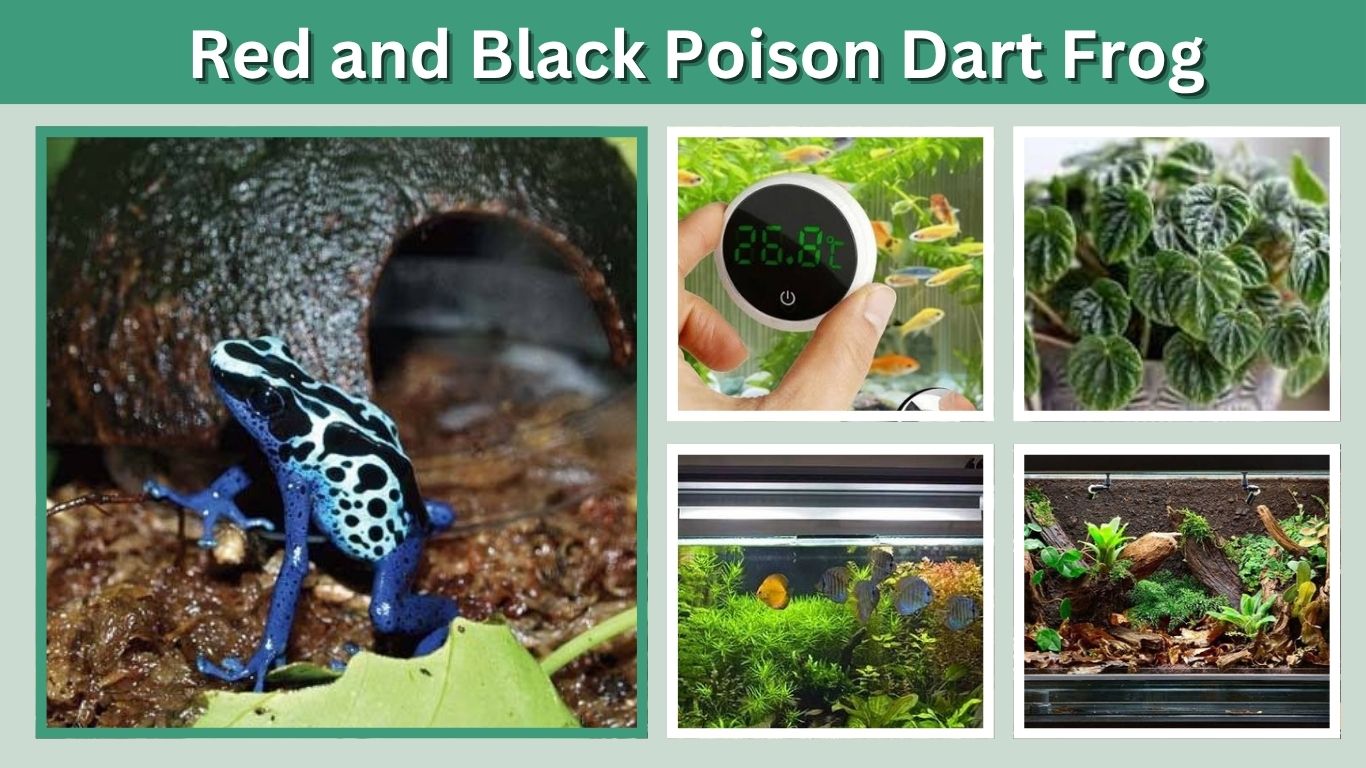
Creating a poison dart frog terrarium is an exciting way to bring a miniature tropical rainforest into your home. However, these colorful amphibians need more than attractive plants and decorations to thrive. Proper humidity, temperature, drainage, and enclosure size are essential for their health. Whether you’re building your first poison dart frog bioactive terrarium or upgrading an existing habitat, this guide explains everything you need to create a safe, natural environment.
What Is a Poison Dart Frog Terrarium?
A poison dart frog terrarium is a specialized enclosure designed to recreate the warm, humid rainforest environments where these amphibians naturally live. Unlike ordinary reptile tanks, dart frog terrariums emphasize moisture control, ventilation, tropical plants, and natural hiding areas.
Most setups use glass enclosures because glass retains humidity and allows excellent visibility. A well-designed terrarium also provides space for climbing, exploring, and hunting small insects.
Why Poison Dart Frogs Need a Special Terrarium
Poison dart frogs have delicate, moisture-sensitive skin. They rely on humid surroundings to prevent dehydration and support normal biological functions.
Their habitats should provide shaded hiding places, moist leaf litter, and vegetation. Because different species have different territorial and climbing behaviors, the enclosure must also match the frogs’ specific needs.
Best Poison Dart Frog Terrarium Size
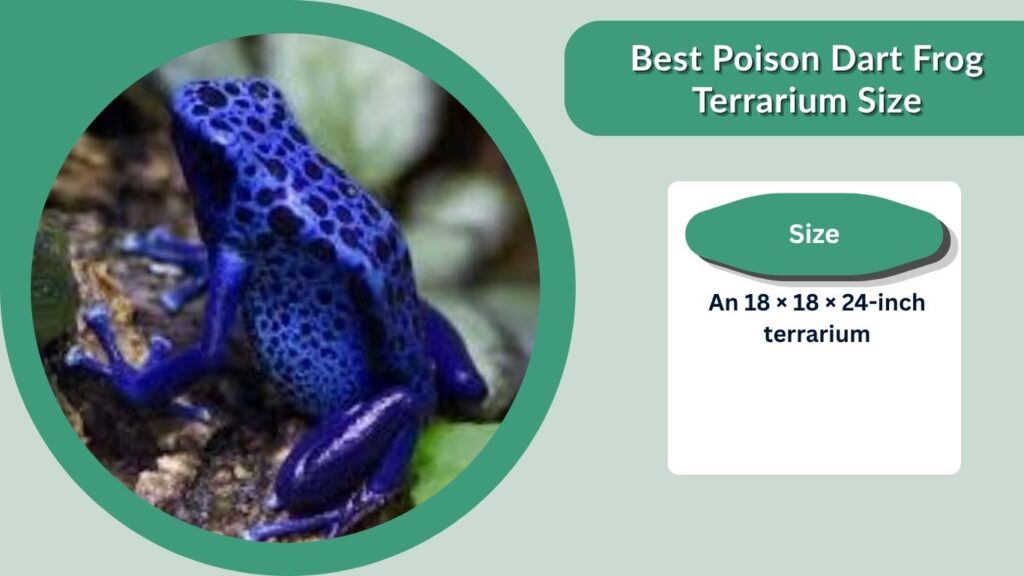
Choosing the correct terrarium size is essential for keeping poison dart frogs comfortable and active. While these amphibians are relatively small, they need enough room to explore, establish territories, and access different hiding places. The ideal enclosure depends on the species, number of frogs, and their natural behavior.
Recommended Terrarium Dimensions
An 18 × 18 × 24-inch terrarium is a practical starting point for many commonly kept dart frog species. Larger enclosures provide greater flexibility.
| Terrarium Size | Suitable Use |
| 12 × 12 × 18 inches | Temporary housing or selected small species |
| 18 × 18 × 18 inches | Species-specific compact setups |
| 18 × 18 × 24 inches | Common starting size for adults |
| 24 × 18 × 24 inches | More room for plants and exploration |
| 36 × 18 × 18 inches | Spacious terrestrial setups |
These are general guidelines, not universal stocking recommendations. Larger, ground-dwelling species benefit from additional floor space, while climbing species need usable vertical areas.
Glass vs. Plastic Terrariums
Glass terrariums are popular because they provide visibility, resist moisture damage, and support tropical environments. Front-opening glass enclosures are particularly convenient for feeding and maintenance.
Plastic enclosures can work when appropriately ventilated and escape-proof, but purpose-built glass vivariums are often easier for beginners.
Essential Poison Dart Frog Terrarium Supplies
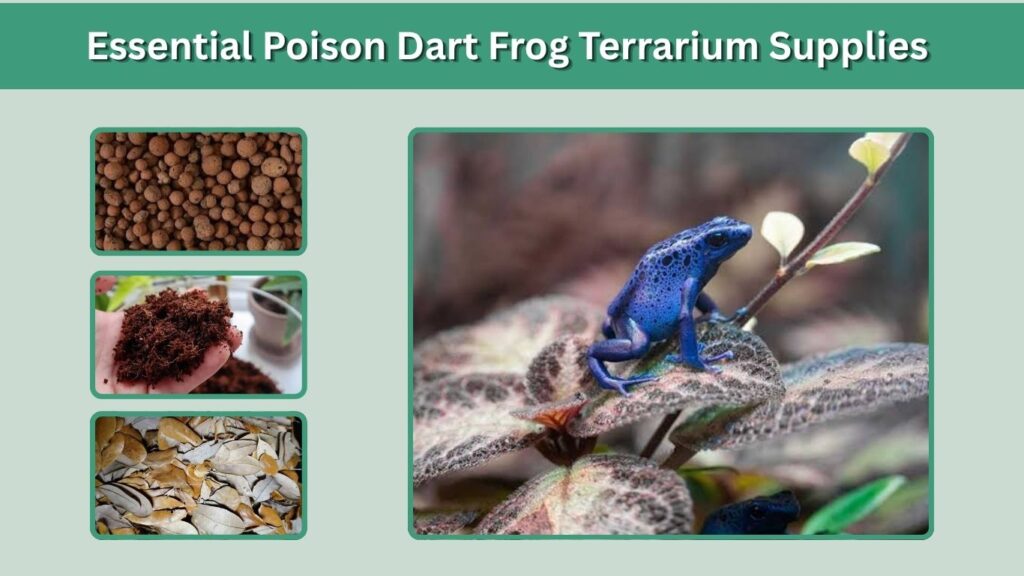
Before setting up a terrarium for poison dart frogs, gather the necessary equipment. Having everything ready helps you establish stable environmental conditions before introducing the animals. Choose amphibian-safe materials and avoid untreated outdoor decorations, chemical additives, or equipment that generates excessive heat.
Basic Terrarium Equipment Checklist
- Glass terrarium: A secure enclosure with appropriate ventilation.
- Drainage material: Expanded clay balls or a raised false bottom.
- Substrate: Tropical, fertilizer-free bioactive soil.
- Leaf litter: Clean oak or magnolia leaves.
- Live plants: Humidity-loving tropical species.
- Misting system: Manual sprayer or automatic mister.
- Thermometer and hygrometer: Instruments for monitoring conditions.
- LED lighting: Plant-friendly lighting with a timer.
- Cork bark and driftwood: Natural hiding and climbing structures.
- Springtails and isopods: Small organisms that help decompose organic waste.
Are Poison Dart Frog Terrarium Kits Worth It?
Poison dart frog terrarium kits can simplify the initial setup by combining several essential supplies. However, not every kit includes suitable drainage, quality substrate, monitoring equipment, or proper ventilation.
Before choosing a kit, confirm that its components match the intended frog species. Additional equipment may still be necessary.
How to Set Up a Poison Dart Frog Terrarium
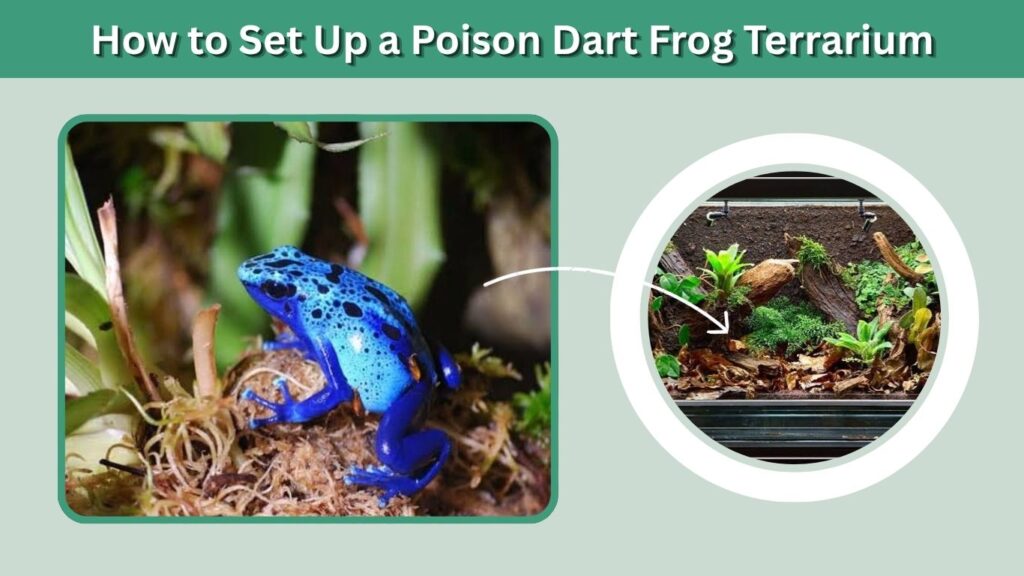
Setting up a poison dart frog terrarium requires careful layering, planting, and environmental adjustments. A bioactive design is especially beneficial because it supports live vegetation and beneficial microorganisms. Following a systematic process helps prevent common problems such as waterlogged soil, poor airflow, and unstable humidity.
Step 1: Prepare the Enclosure
Clean the empty terrarium using amphibian-safe methods and rinse thoroughly. Inspect the doors, ventilation openings, and cable access points for gaps.
Position the enclosure away from direct sunlight, heaters, and air-conditioning vents. Install any permanent background or structural decorations before adding loose substrate.
Step 2: Install Drainage and Substrate
Place approximately 1–2 inches of expanded clay drainage material or an appropriate false-bottom system at the base. Add a mesh barrier to prevent soil from entering the drainage reservoir.
Spread approximately 2–3 inches of well-draining tropical substrate above it. Include a safe method for removing accumulated drainage water.
Step 3: Add Plants and Decorations
Arrange cork bark, branches, and tropical plants to create several levels of shelter. Include shaded areas and accessible pathways throughout the enclosure.
Cover exposed soil with clean, pesticide-free leaf litter. Avoid sharp decorations, unstable rocks, and deep water features that could endanger the frogs.
Step 4: Introduce the Cleanup Crew
Add springtails and suitable small tropical isopods to establish a bioactive system.
Springtails consume fungal growth and decomposing organic material, while isopods help break down leaf litter. These organisms support substrate health, but they do not eliminate the need for regular maintenance.
Step 5: Stabilize the Terrarium
Install lighting, misting equipment, and monitoring devices. Allow the planted terrarium to establish for approximately four weeks or longer before introducing frogs.
During this period, verify that temperatures remain appropriate, plants establish roots, and moisture drains properly.
Best Plants for a Poison Dart Frog Terrarium
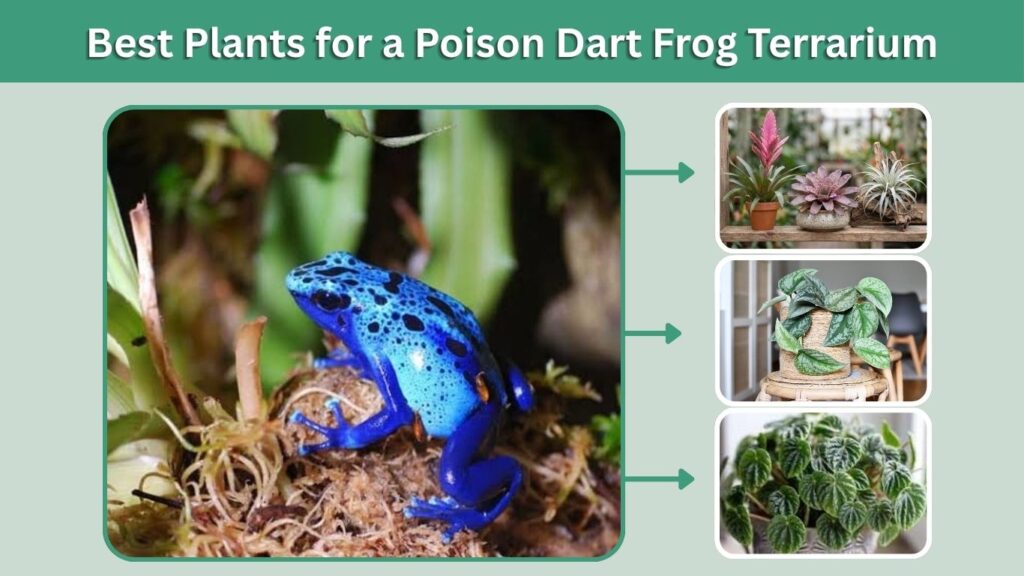
Live plants improve the appearance and functionality of a poison dart frog rainforest terrarium. They provide shelter, climbing surfaces, and natural humidity regulation. Choose plants that tolerate tropical conditions without requiring strong sunlight or frequent chemical treatments.
Recommended Terrarium Plants
- Bromeliads: Provide elevated hiding places and water-holding leaf structures.
- Pothos: A hardy climbing plant that provides dense foliage.
- Peperomia: Compact plants suitable for smaller enclosures.
- Creeping fig: Creates attractive coverage along backgrounds.
- Tropical ferns: Provide shaded shelter and natural greenery.
- Tropical mosses: Add texture to appropriately moist surfaces.
Preparing Plants Before Installation
Select plants free from pesticides and chemical fertilizers. Remove potentially contaminated potting soil, rinse the plants carefully, and quarantine them when appropriate.
Avoid overcrowding the enclosure. Frogs need open pathways as well as vegetation.
Ideal Temperature, Humidity, and Lighting
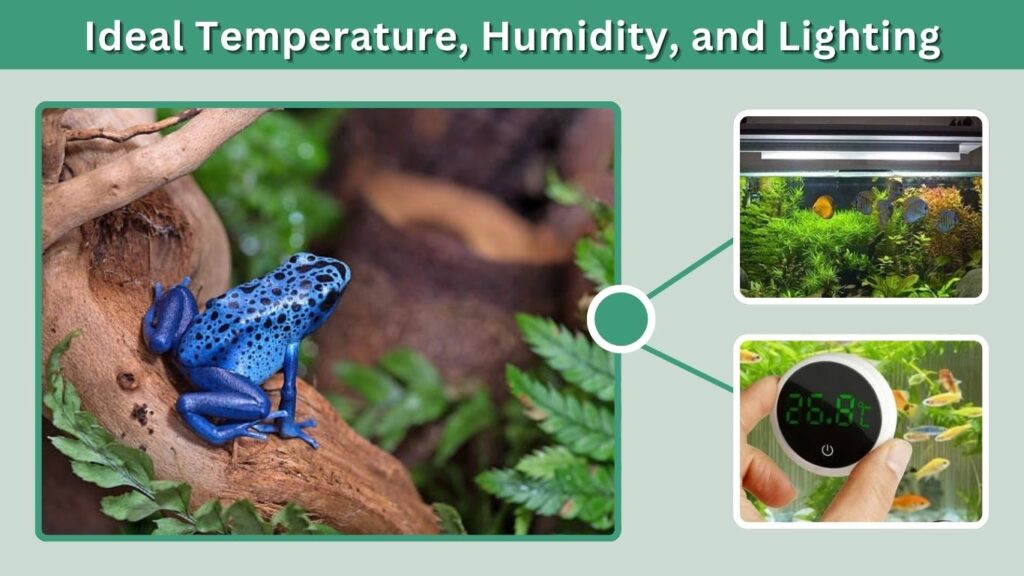
Maintaining suitable environmental conditions is one of the most important parts of poison dart frog care. Tropical terrariums require consistent monitoring because excessive heat, insufficient humidity, and stagnant conditions can harm amphibians. Requirements vary by species, so use the following ranges as general starting guidelines.
Temperature Requirements
Many commonly kept poison dart frogs do well around 68–78°F (20–26°C). Temperatures above 80°F (27°C) can become dangerous for sensitive species.
Avoid heat lamps and direct sunlight. If necessary, regulate the surrounding room temperature instead of creating concentrated heat inside the enclosure.
How Humid Should a Poison Dart Frog Terrarium Be?
A general target is approximately 75–95% relative humidity, depending on the species.
Mist using appropriately treated, chlorine-free water. Allow normal moisture fluctuations and maintain gentle ventilation rather than keeping every surface constantly saturated.
Use a reliable digital hygrometer and inspect the substrate regularly.
Lighting Requirements
A plant-friendly LED light with a consistent 10–12-hour daytime cycle is appropriate for many setups.
Avoid excessively powerful lighting that increases enclosure temperature. UVB requirements and supplementation should be considered according to the specific species and veterinary guidance.
Poison Dart Frog Terrarium Maintenance
Even a mature bioactive terrarium needs regular attention. Daily observation helps identify environmental problems before they affect the frogs. A consistent maintenance routine also keeps plants healthy, supports beneficial microorganisms, and prevents excessive water accumulation.
Regular Maintenance Checklist
- Check temperature and humidity daily.
- Inspect frogs for normal behavior and appetite.
- Mist according to environmental readings.
- Remove spoiled food and significant waste.
- Inspect the drainage reservoir for excess water.
- Trim overgrown plants when necessary.
- Replace deteriorated leaf litter periodically.
- Clean glass and inspect equipment regularly.
Common Setup Mistakes to Avoid
Avoid using an enclosure that is too small, neglecting drainage, or maintaining constantly saturated soil.
Deep waterfalls and ponds are usually unnecessary for beginners and can introduce drowning and water-quality risks. Never mix incompatible species simply to create a colorful display.
FAQs
1. What is the best terrarium for poison dart frogs?
A front-opening glass vivarium with secure ventilation, drainage, and sufficient planting space is an excellent option. An 18 × 18 × 24-inch enclosure is a practical starting point for many species.
2. Can poison dart frogs live in a bioactive terrarium?
Yes. Bioactive terrariums are widely used for poison dart frogs. Live plants, springtails, isopods, and suitable substrate help create a natural environment, although regular care remains necessary.
3. Do poison dart frogs need a waterfall?
No. Most commonly kept poison dart frogs do not require waterfalls. A properly misted enclosure provides suitable moisture without the added complications of maintaining a water feature.
4. How often should I mist a poison dart frog terrarium?
Misting frequency depends on ventilation, room humidity, and enclosure design. Some setups need misting once or twice daily, while others require different schedules. Monitor humidity and substrate conditions rather than following a fixed routine blindly.
5. Can I keep multiple poison dart frogs in one terrarium?
Yes, depending on the species, available space, and social compatibility. Some frogs tolerate groups, while others can become territorial. Research the particular species before deciding how many to house together.
