
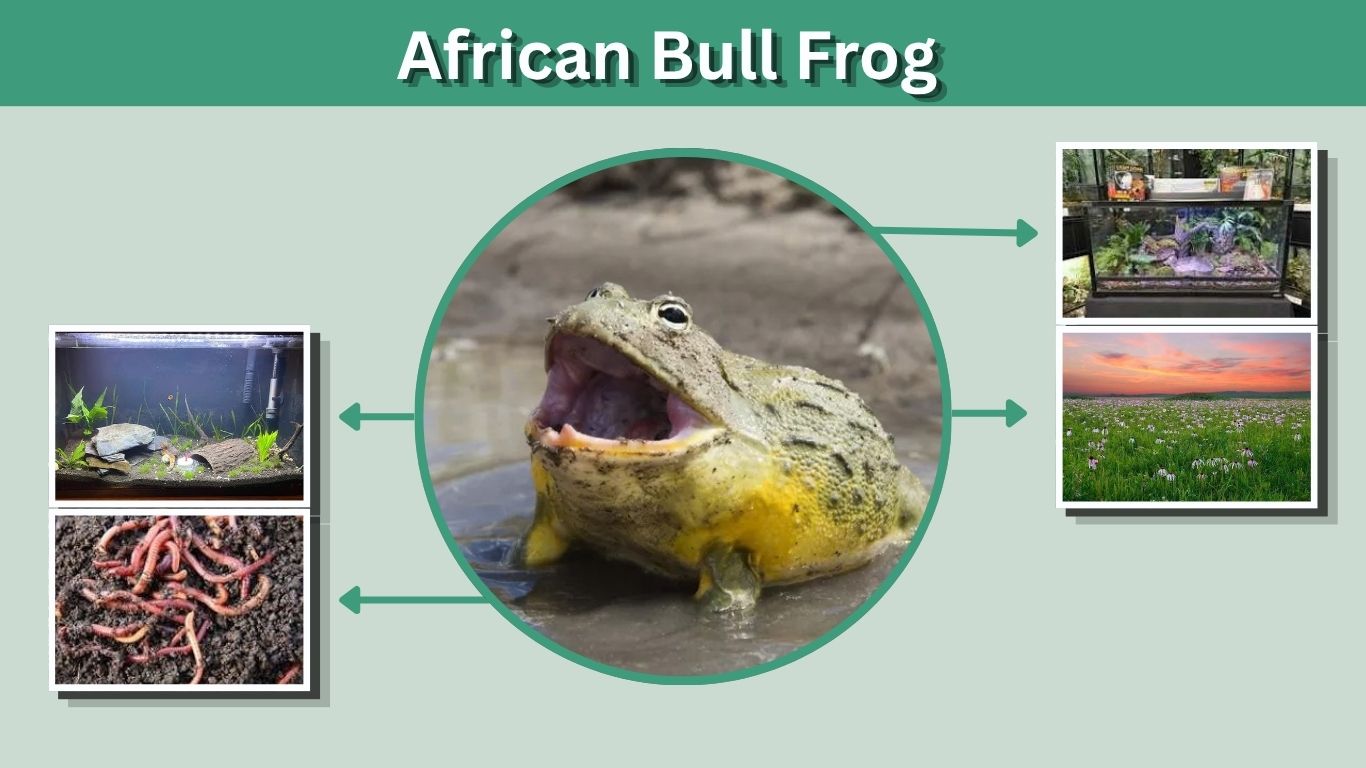
The African bull frog is one of the largest and most powerful frogs in Africa, famous for its broad body, huge mouth, strong appetite, and surprisingly bold behavior. Also called the African bullfrog or pixie frog, Pyxicephalus adspersus lives across parts of sub-Saharan Africa where it survives dramatic wet and dry seasons. Males can grow much larger than females and may aggressively defend territory. Understanding its size, habitat, diet, lifespan, behavior, and care requirements reveals why this unusual amphibian has become such a fascinating species.
What Is an African Bull Frog?
The African bull frog, scientifically known as Pyxicephalus adspersus, is a large terrestrial frog native to southern and parts of central Africa. Despite the nickname “pixie frog,” there is nothing tiny about an adult male. Its massive head, muscular body, strong jaws, and voracious feeding behavior make it one of Africa’s most recognizable amphibians.
African Bull Frog Identification
Common characteristics include:
- Large, rounded body
- Broad head and mouth
- Olive-green to dark green coloration
- Pale or yellowish underside
- Strong hind legs
- Horizontal pupils
- Thick, folded skin
- Powerful jaws
Young frogs may display brighter green coloration and a noticeable stripe running along the back.
Giant African Bull Frog
The term giant African bull frog generally refers to the same species, particularly large adult males.
Males become considerably larger than females and develop massive heads as they mature. Their imposing appearance is useful during territorial encounters and breeding competition.
Although they look heavy and slow, African bullfrogs can move quickly when capturing prey or defending themselves.
African Bull Frog Size and Appearance
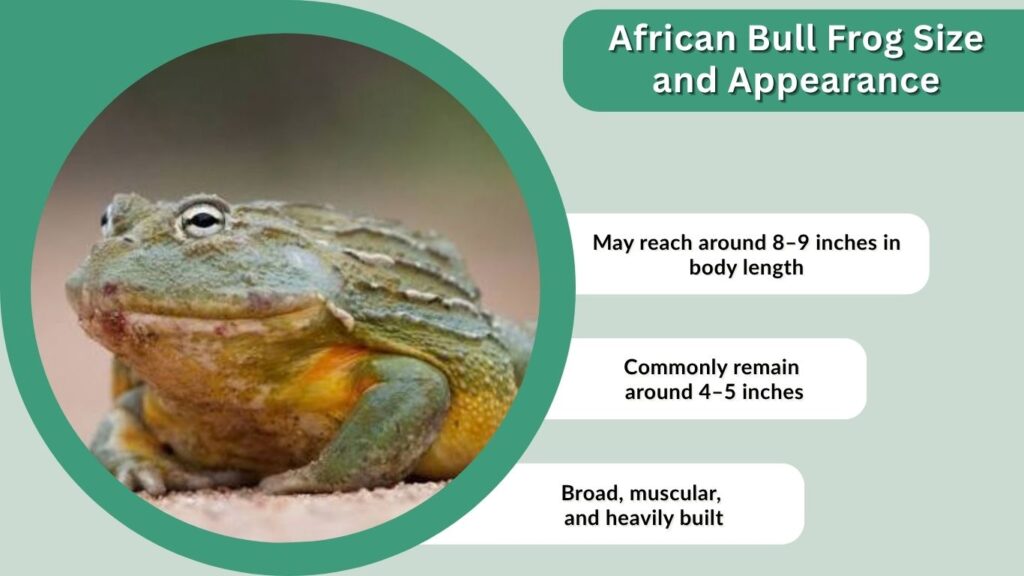
African bullfrogs show one of the most dramatic male-to-female size differences among commonly kept frogs. Adult males can become exceptionally heavy and broad, whereas females are noticeably smaller. Size depends on sex, genetics, food availability, age, and overall health.
Full-Grown African Bull Frog Size
Adult size generally differs as follows:
- Males: may reach around 8–9 inches in body length
- Females: commonly remain around 4–5 inches
- Weight: large males can exceed 2 pounds
- Body shape: broad, muscular, and heavily built
- Head: proportionally large, particularly in males
These figures can vary among individual frogs.
Male vs Female Appearance
Adult males are typically larger and may develop a yellowish throat. Females usually remain smaller and may show lighter cream coloration underneath.
Juveniles are more difficult to sex because the dramatic size difference develops as they mature.
A healthy adult has a thick body and strong limbs without appearing excessively bloated.
African Bull Frog Habitat
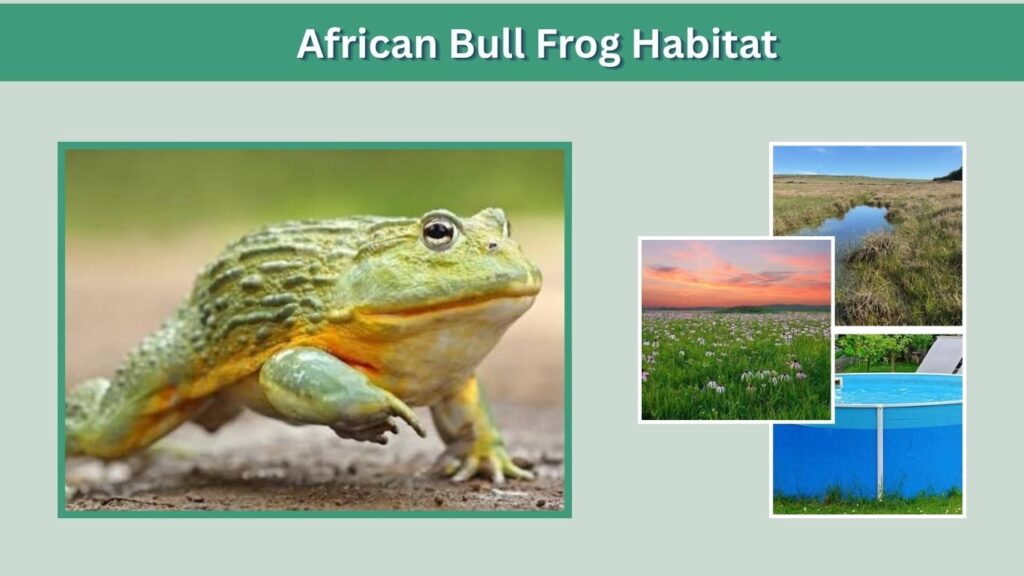
In the wild, African bullfrogs inhabit grasslands, savannas, shrublands, and seasonally dry environments. Their survival depends heavily on seasonal rainfall. During wet periods, temporary pools provide breeding sites. During prolonged dry conditions, the frogs can remain underground until favorable weather returns.
Natural Habitat
Typical habitat includes:
- Savannas
- Grasslands
- Seasonal wetlands
- Temporary pools
- Floodplains
- Dry scrub areas
- Soft soil suitable for burrowing
These frogs spend a surprising amount of time underground.
Surviving the Dry Season
African bullfrogs can enter a period of dormancy known as aestivation when environmental conditions become extremely dry.
The frog burrows into the soil and may form a protective mucus cocoon around its body. This helps reduce moisture loss until rainfall returns.
Once seasonal rains soften the soil, the frog emerges and resumes feeding and breeding activity.
African Bull Frog Diet
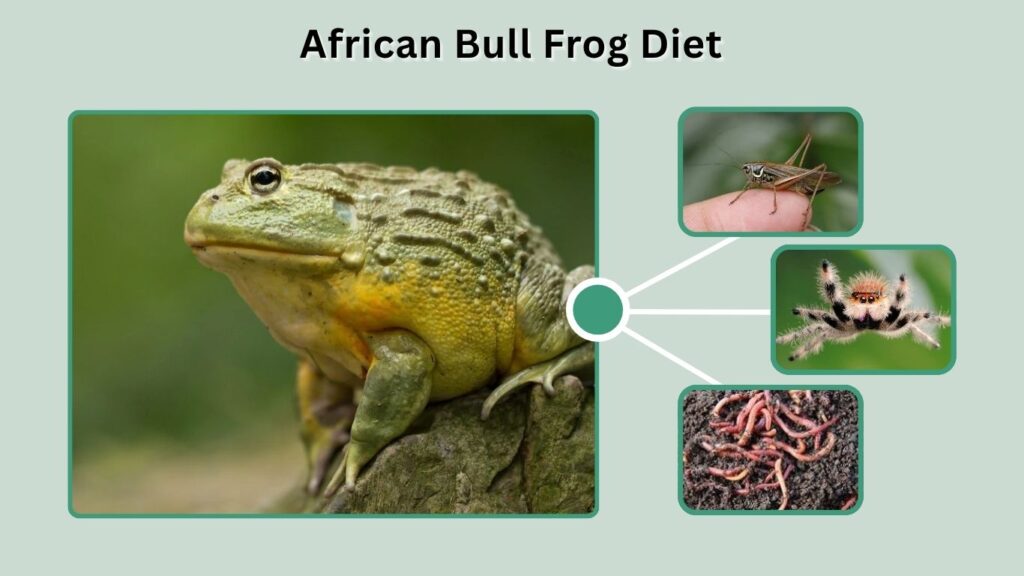
African bullfrogs are opportunistic predators with extremely large appetites. They primarily consume animal prey and are willing to attack many creatures small enough to fit into their mouths. Their powerful jaws allow them to capture surprisingly substantial prey.
What Do African Bull Frogs Eat?
Wild foods may include:
- Insects
- Beetles
- Crickets
- Worms
- Spiders
- Other frogs
- Small reptiles
- Small rodents
- Small birds when available
- Various invertebrates
Cannibalism can also occur, especially when different-sized frogs are kept together or food becomes limited.
Feeding a Pet African Bull Frog
Captive frogs need an appropriately varied diet. Suitable foods may include properly sized crickets, roaches, earthworms, and other nutritious feeder invertebrates.
Large individuals may occasionally receive suitable vertebrate prey under experienced husbandry, but overfeeding high-fat foods can contribute to obesity.
Young frogs generally eat more frequently than mature adults.
African Bull Frog Lifespan
African bullfrogs can live surprisingly long lives when conditions are favorable. Their hardy nature, ability to survive difficult seasonal conditions, and relatively slow adult lifestyle contribute to their longevity.
How Long Do African Bull Frogs Live?
In captivity, African bullfrogs may live approximately 15–25 years, and some individuals are reported to live even longer with excellent care.
Wild lifespan is harder to determine because frogs face:
predators, drought, habitat changes, disease, competition, and other environmental pressures.
Anyone considering one as a pet should therefore be prepared for a potentially long commitment.
Factors Affecting Lifespan
Longevity depends on:
- Proper nutrition
- Clean water
- Suitable temperature
- Correct humidity
- Safe substrate
- Good hygiene
- Avoidance of obesity
- Veterinary care when necessary
Long-term husbandry is more important than simply keeping the enclosure warm and feeding frequently.
African Bull Frog Care
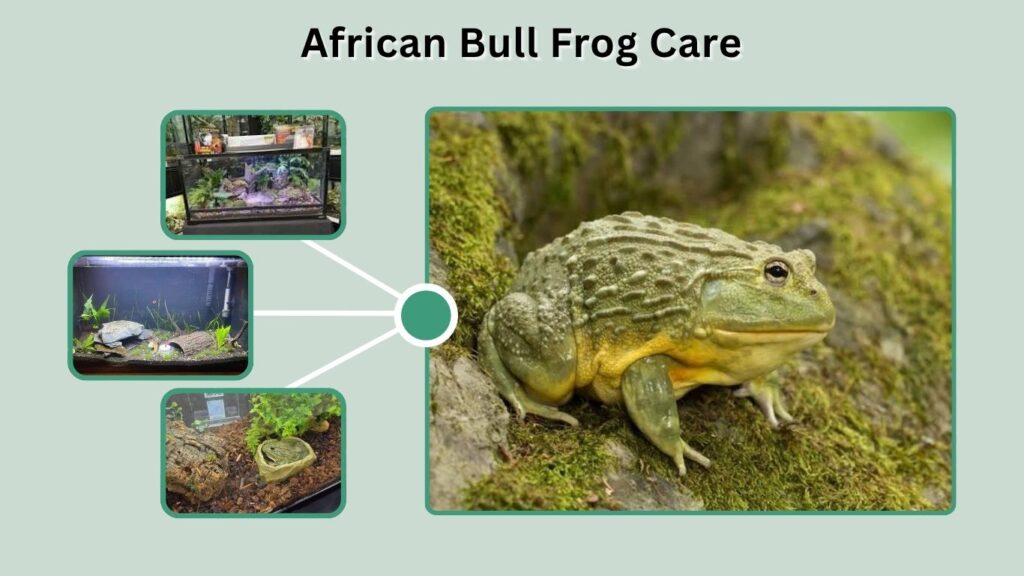
African bullfrogs can adapt well to captivity, but their large size and feeding behavior require more preparation than many smaller frog species. They need enough floor space to move and burrow, appropriate temperatures, clean water, and substrate that remains moist without becoming waterlogged.
Basic Care Requirements
A suitable setup should provide:
- Spacious floor area
- Deep, moisture-holding substrate
- Large water dish
- Clean dechlorinated water
- Warm daytime temperatures
- Moderate to high humidity
- Secure enclosure lid
- Hiding areas
- Regular spot cleaning
- Appropriate feeder insects
The enclosure should emphasize floor space rather than height because these frogs are primarily terrestrial.
African Bull Frog Enclosure
A young frog may temporarily live in a smaller enclosure, but an adult requires considerably more space.
A five-gallon tank is generally unsuitable as a permanent enclosure for a full-grown African bullfrog because it offers too little usable floor area.
Substrate should be deep enough for natural burrowing behavior. Avoid materials that can cause injury or create an impaction risk if accidentally swallowed.
Water and Humidity
Provide a large, shallow water container that the frog can easily enter and leave. Replace dirty water frequently because frogs may defecate while soaking.
The substrate should remain moist but not continuously flooded. Constantly dirty, waterlogged conditions can encourage bacterial growth and skin problems.
African Bull Frog Behavior and Temperament
African bullfrogs are often described as bold rather than active. Adults may remain partially buried for long periods and then react quickly when food appears. They are generally best observed rather than frequently handled.
Are African Bull Frogs Aggressive?
They can be defensive and territorial.
An irritated African bullfrog may:
- Inflate its body
- Open its mouth
- Lunge
- Produce defensive sounds
- Attempt to bite
- Hold its ground rather than flee
Adult males can also fight with other males during breeding competition.
African Bull Frog Bite
An African bullfrog has powerful jaws and tooth-like structures capable of producing a painful bite.
These frogs should therefore be handled only when necessary. Keep fingers away from the mouth, particularly during feeding, because food responses can be rapid.
When handling is unavoidable, clean wet hands or suitable amphibian-safe gloves help protect the frog’s sensitive skin.
African Bull Frog Reproduction and Parental Care
Breeding generally occurs following heavy seasonal rains when temporary pools form. Males gather around suitable breeding water and call to attract females. Competition can become intense because large males defend productive territories.
Breeding Behavior
During breeding periods:
- Males establish territories.
- Calling increases after heavy rain.
- Females deposit large numbers of eggs.
- Tadpoles develop in temporary pools.
- Males may aggressively defend breeding areas.
Rapid tadpole development is important because temporary pools can disappear as conditions dry.
African Bull Frog Dad Behavior
One remarkable feature is paternal care.
Male African bullfrogs have been observed guarding groups of tadpoles from predators. A male may remain near the developing young and defend them aggressively.
In some situations, males may even create channels between shrinking pools and larger bodies of water, helping tadpoles reach safer conditions.
African Bull Frog Sounds
African bullfrogs are capable of producing loud vocalizations, particularly during breeding periods. Their calls may sound deep, booming, grunting, or bellowing compared with those of smaller frogs.
Why Do African Bull Frogs Make Sounds?
Vocalizations can be associated with:
territorial behavior, attracting mates, defensive encounters, or general disturbance.
Males are especially vocal during the rainy breeding season. A captive frog may occasionally produce sounds when threatened or handled, although individuals vary considerably.
Is an African Bull Frog a Good Pet?
African bullfrogs can be fascinating pets for experienced amphibian keepers. They require relatively straightforward daily husbandry compared with some delicate tropical frogs, but their size, strength, long lifespan, feeding response, and waste production should not be underestimated.
Before Keeping One
Consider:
- Adult enclosure size
- Long lifespan
- Feeding expenses
- Veterinary availability
- Regular cleaning needs
- Strong bite potential
- Limited handling tolerance
- Local ownership regulations
They are generally better suited to someone who enjoys observing amphibian behavior rather than handling a pet frequently.
FAQs
1. How big does an African bull frog get?
Large males may reach around 8–9 inches in body length and can weigh more than 2 pounds. Females are considerably smaller, often around 4–5 inches.
2. How long does an African bull frog live?
Captive African bullfrogs commonly live 15–25 years when provided with appropriate housing, nutrition, water quality, and veterinary care.
3. Are African bull frogs aggressive?
They can be territorial and defensive, particularly adult males. A threatened frog may inflate its body, lunge, vocalize, or bite.
4. What does an African bull frog eat?
African bullfrogs consume insects, worms, spiders, other frogs, small reptiles, and occasionally small vertebrates. Captive diets should emphasize nutritious, appropriately sized feeder animals.
5. Can an African bull frog live in a 5-gallon tank?
A five-gallon tank is too small for a full-grown African bullfrog. Adults need substantially more floor space, deep substrate for burrowing, a water area, and enough room to move comfortably.
