
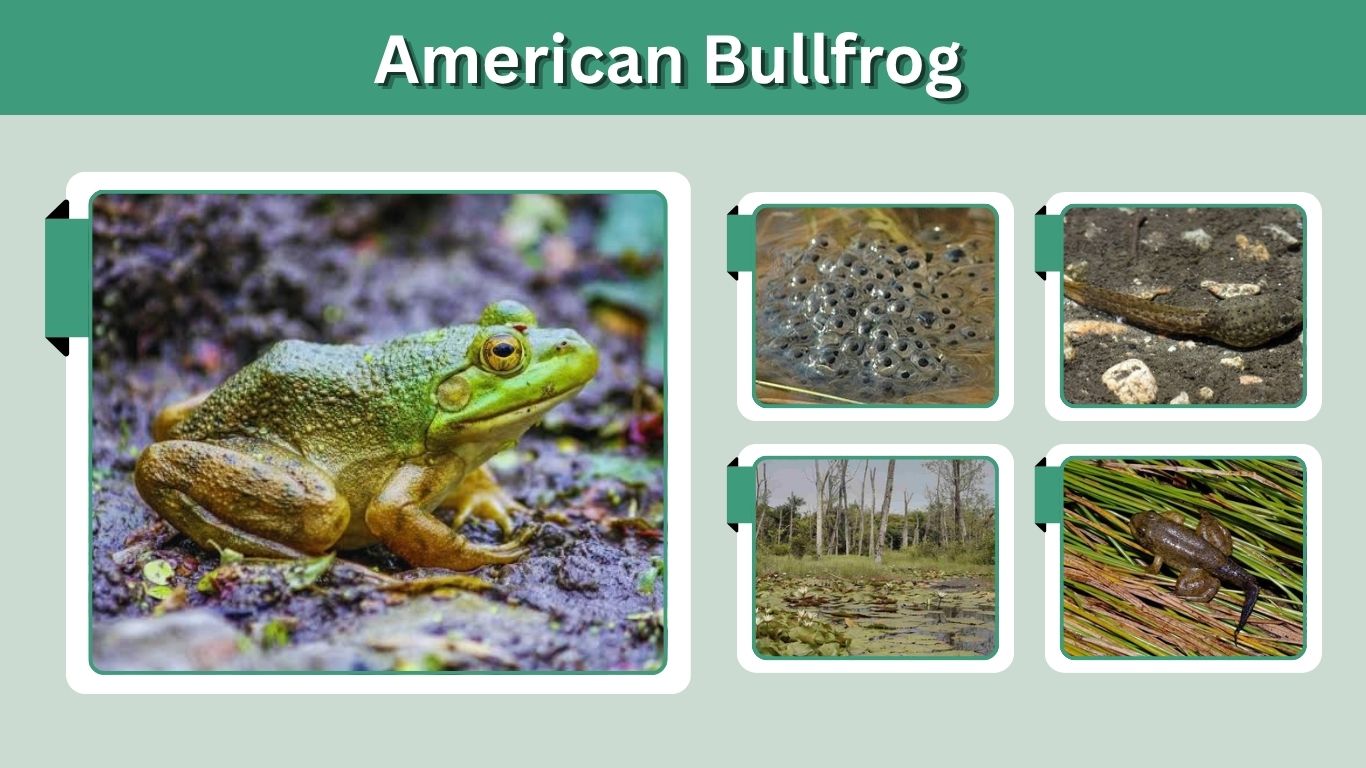
The American bullfrog is the largest native true frog in North America and is famous for its deep call, powerful hind legs, large appetite, and close association with permanent water. Scientifically known as Lithobates catesbeianus, it naturally occurs across much of eastern North America but has also been introduced to many areas outside its original range. American bullfrogs eat an unusually wide variety of prey and spend much of their lives near ponds, lakes, marshes, and slow-moving waterways.
What Is an American Bullfrog?
The American bullfrog is a large aquatic frog in the family Ranidae, commonly called the true frogs. Adults have powerful hind legs, fully webbed feet, broad heads, and prominent circular eardrums behind the eyes. Their coloration varies from green to brown, often with darker patches that provide camouflage around muddy or vegetated freshwater habitats.
American Bullfrog Identification
Typical characteristics include:
- Green, olive, or brown body
- Dark spots or irregular blotches
- Large circular tympanum behind each eye
- Strong hind legs
- Fully webbed hind feet
- Pale belly
- Broad head and mouth
- No long dorsolateral ridges running down the back
Males often develop yellow coloration on the throat during the breeding season.
Male vs Female American Bullfrog
One useful identification feature is the tympanum, or external eardrum.
In adult males, the tympanum is normally larger than the eye. In adult females, it is generally about the same size as or smaller than the eye. Males also commonly have yellow throats during breeding season, while females usually have lighter-colored throats.
American Bullfrog Size
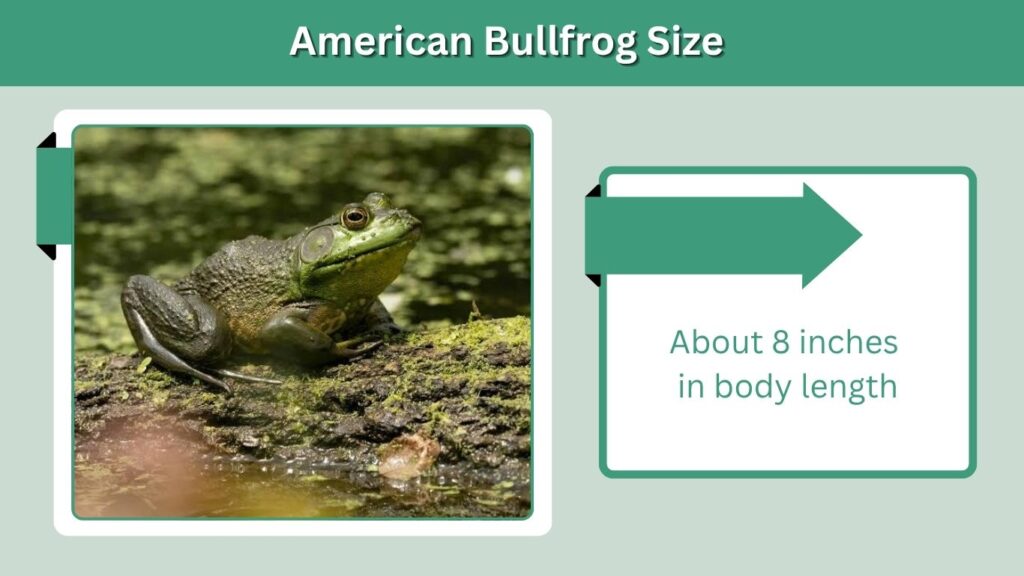
American bullfrogs are impressively large compared with most other North American frogs. Adult size varies according to age, sex, nutrition, and environmental conditions. Their broad bodies and powerful legs can make mature individuals appear even larger than their measured body length, particularly when sitting at the edge of a pond.
Full-Grown American Bullfrog
Important size facts include:
- Typical adults are several inches long.
- Large specimens may reach about 8 inches in body length.
- Large adults can approach 1 pound in weight.
- Males can become particularly robust.
- Hind legs make the frog’s total stretched length much greater.
Animal Diversity Web reports that large individuals can reach about 203 mm, or roughly 8 inches, in body length and weigh up to about 0.5 kg.
Is It the Largest American Frog?
The American bullfrog is generally regarded as the largest true frog native to North America.
Its substantial size allows adults to capture prey that smaller frog species cannot handle, including other frogs and small vertebrates.
American Bullfrog Habitat
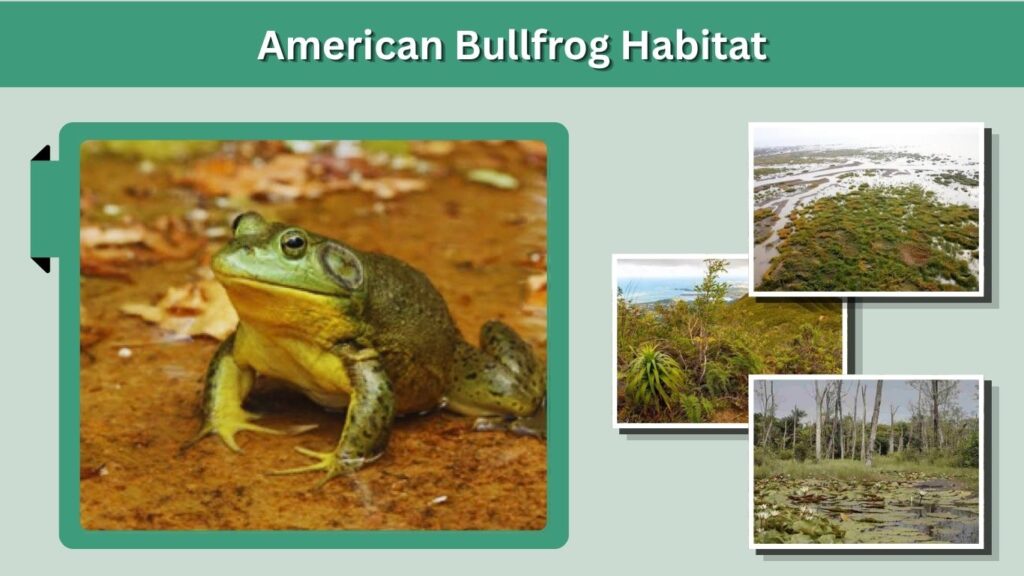
American bullfrogs depend heavily on aquatic environments, especially permanent water that remains available long enough for tadpoles to complete development. They occupy both natural wetlands and human-created waters. Their ability to tolerate modified habitats has also contributed to their success in regions where people have introduced them.
Where Do American Bullfrogs Live?
Common habitats include:
- Ponds
- Lakes
- Reservoirs
- Marshes
- Swamps
- Bogs
- Slow-moving rivers
- Backwaters
- Irrigation canals
- Ditches
- Farm ponds
USGS describes American bullfrogs as habitat generalists that commonly occupy permanent aquatic environments.
Where Is the American Bullfrog From?
The species is native primarily to eastern and central portions of North America.
Humans have introduced American bullfrogs far beyond their original range, including western North America and regions on other continents. In introduced areas, they can become invasive predators and compete with or prey upon native wildlife.
What Do American Bullfrogs Eat?
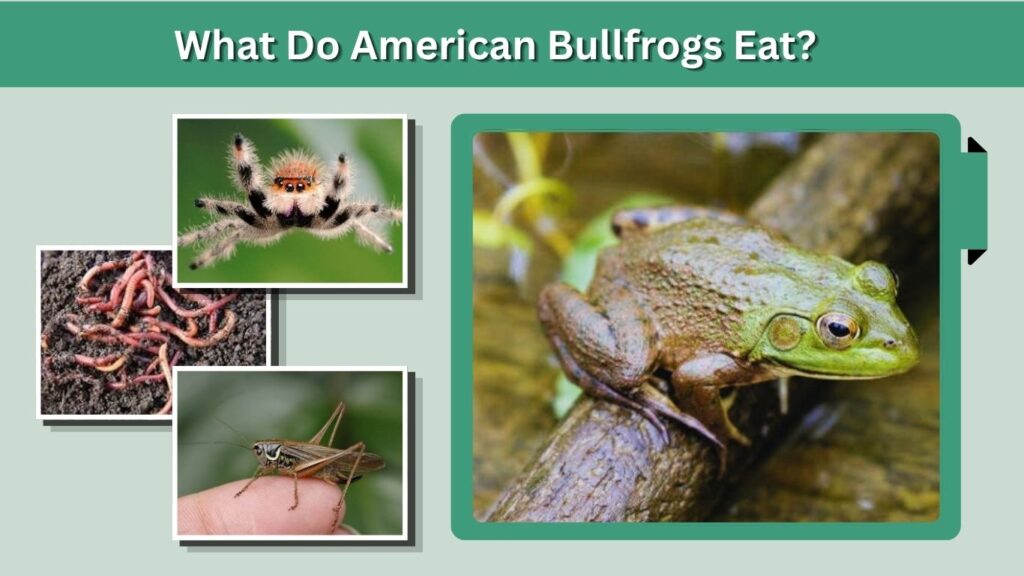
American bullfrogs are opportunistic predators. Rather than specializing in one food source, adults frequently attack animals that are available and small enough to overpower and swallow. They often remain motionless near water until potential prey approaches, then rapidly capture it using their mouth and tongue.
American Bullfrog Diet
Their diet can include:
- Insects
- Spiders and other arthropods
- Crayfish and other crustaceans
- Earthworms
- Fish
- Tadpoles
- Other frogs
- Small snakes
- Small turtles
- Rodents
- Small birds
- Other bullfrogs
USGS records show that bullfrogs consume an exceptionally broad range of vertebrate and invertebrate prey and may also practice cannibalism.
What Do Tadpoles Eat?
American bullfrog tadpoles have a very different diet from adults.
They primarily feed on algae, plant material, microorganisms, and organic matter in aquatic environments. Their feeding helps them obtain enough energy to support the long transformation from tadpole to juvenile frog.
American Bullfrog Tadpole and Life Cycle
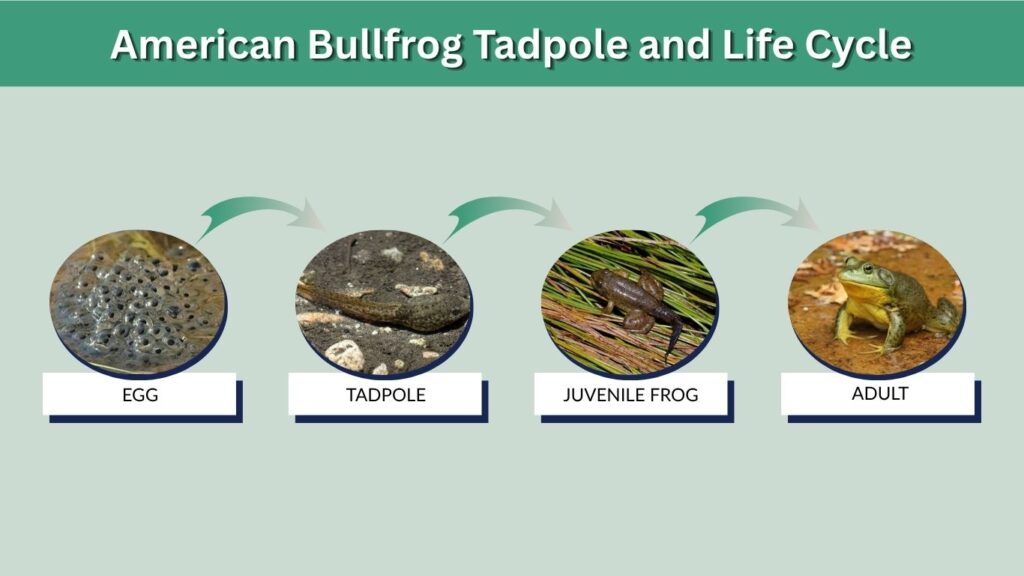
The American bullfrog life cycle begins in water. Breeding usually occurs during warm weather, when males establish territories and call to females. After mating, females release large floating masses of eggs. Tadpoles hatch and remain completely aquatic until metamorphosis transforms them into young frogs.
American Bullfrog Life Cycle
The main stages are:
- Egg: Females deposit large masses of eggs in water.
- Tadpole: Eggs hatch into aquatic larvae.
- Growing tadpole: Tadpoles develop legs while their bodies change.
- Metamorph: The tail shrinks and lungs become increasingly important.
- Juvenile frog: Young frogs begin living around the water’s edge.
- Adult: Mature bullfrogs reproduce and continue the cycle.
A female can produce thousands of eggs, and USGS reports clutches ranging roughly from 6,000 to 20,000.
How Long Are They Tadpoles?
American bullfrog tadpoles can remain in the larval stage much longer than those of many smaller frogs.
Depending on climate and environmental conditions, metamorphosis may occur within several months or take as long as approximately two years. This is one reason permanent ponds and other long-lasting water bodies are especially important to the species.
American Bullfrog Sound and Call
The unmistakable call of an adult male is one of the easiest ways to detect American bullfrogs. Males call primarily during breeding periods, often from the edge of a pond. Their calls advertise territory and attract females, and several males calling together can create a surprisingly loud nighttime chorus.
What Does an American Bullfrog Sound Like?
The call is deep and resonant and is often represented as “jug-o-rum.”
It consists of low bass notes that can travel considerable distances over water. USGS similarly describes the bullfrog’s call as a series of deep bass notes.
Why Do Bullfrogs Call at Night?
Male bullfrogs call mainly to attract females and advertise their territories to competing males.
Warm evenings during the breeding season often produce the greatest calling activity. Their large vocal sacs help amplify the sound.
American Bullfrog Behavior and Predators
American bullfrogs often sit quietly near shorelines with only their head exposed above water. They are ambush predators and can remain motionless until prey enters striking distance. Although they can be active during both day and night, warm, humid conditions encourage activity.
Natural Predators
American bullfrogs may be eaten by:
- Herons
- Egrets
- Water snakes
- Turtles
- Raccoons
- Kingfishers
- Larger predatory animals
- Other bullfrogs
Their green and brown coloration provides camouflage around vegetation and muddy shorelines.
Do American Bullfrogs Have Teeth?
Bullfrogs do not have human-like teeth. Like many frogs, they possess small structures in the upper jaw and mouth that help grip prey rather than chew it.
Food is usually captured and swallowed whole rather than broken into pieces through chewing.
How American Bullfrogs Survive Winter
American bullfrogs living in cold climates greatly reduce their activity during winter. Because they rely on environmental temperatures to regulate body functions, they cannot remain normally active when ponds and surrounding habitats become cold.
Winter Survival
American bullfrogs typically overwinter underwater, often associated with bottom mud or protected aquatic areas.
They do not simply freeze solid beneath the ice. Access to adequately oxygenated water is important during this inactive period. USGS also notes that some individuals can overwinter in terrestrial burrows before emerging in spring.
American Bullfrog Care
American bullfrogs are sometimes maintained in captivity, but their large adult size, appetite, aquatic habits, and waste production mean they require considerable space and maintenance. Local wildlife laws should also be checked because collecting, possessing, transporting, or releasing bullfrogs may be regulated, particularly where the species is invasive.
Basic Care Needs
Captive requirements generally include:
- Large aquatic and terrestrial areas
- Clean, dechlorinated water
- Powerful filtration
- Easy access between land and water
- Secure enclosure cover
- Appropriate temperature
- Hiding areas
- Varied animal-based foods
- Regular water changes
- Minimal unnecessary handling
An adult bullfrog needs considerably more space than a small aquarium can provide.
Should American Bullfrogs Be Released?
A captive bullfrog should never be released into an area where it does not naturally belong.
Introduced American bullfrogs can prey on native amphibians, reptiles, fish, and other wildlife and have become invasive in many regions outside their original range.
FAQs
1. How big does an American bullfrog get?
Large American bullfrogs can approach about 8 inches in body length, with exceptional adults weighing around 1 pound.
2. What does an American bullfrog eat?
Adults eat insects, crustaceans, fish, frogs, small reptiles, rodents, and other appropriately sized animals. They may even eat smaller bullfrogs.
3. What does an American bullfrog sound like?
The male produces a deep, booming call commonly represented as “jug-o-rum.” Calling is especially noticeable during the breeding season.
4. How long does an American bullfrog stay a tadpole?
Development varies with climate and habitat. Tadpoles may metamorphose within several months, while others can remain tadpoles for up to approximately two years.
5. Where do American bullfrogs live?
They commonly inhabit ponds, lakes, marshes, swamps, reservoirs, slow waterways, and other freshwater environments. They are native to parts of eastern and central North America but have been introduced widely elsewhere.
