
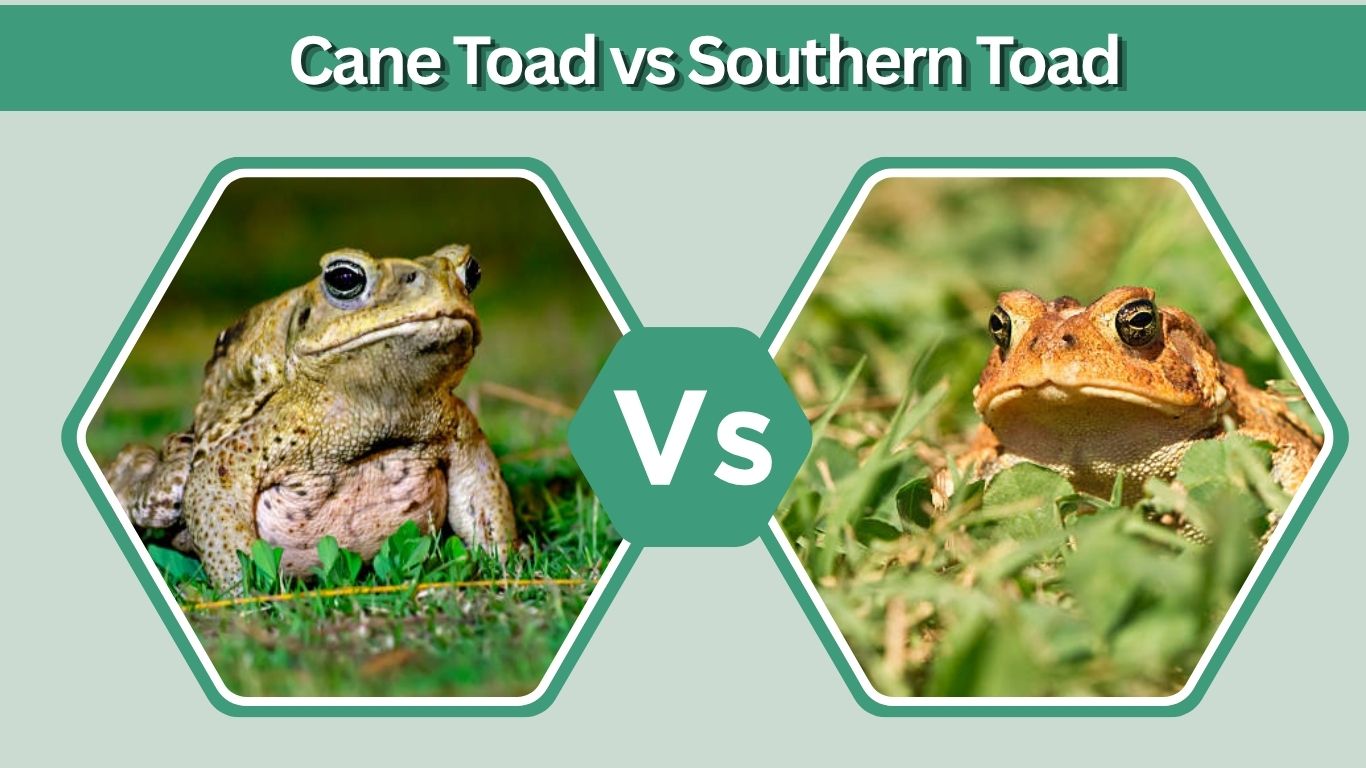
Cane toads and southern toads can look very similar, especially when they appear in Florida yards after rain. However, knowing the difference is important because cane toads are invasive and highly toxic to pets, while southern toads are native and usually less dangerous. The best way to compare them is by checking their size, head ridges, poison glands, and where they are found. This guide explains the key signs so you can identify them more confidently.
Cane Toad vs Southern Toad: Quick Difference
At first glance, both toads may look brown, warty, and heavy-bodied. That is why many Florida homeowners struggle to tell them apart. The biggest differences are found around the head and shoulders. Cane toads usually have large poison glands and no obvious head ridges, while southern toads have raised cranial crests and smaller glands.
Main Signs to Check First
When comparing a cane toad vs southern toad, look closely at these features:
- Cane toads are usually much larger as adults.
- Southern toads usually have raised ridges on the head.
- Cane toads have large, triangular poison glands behind the eyes.
- Southern toads have smaller, oval-shaped glands.
- Cane toads are invasive in Florida.
- Southern toads are native to Florida.
These quick clues can help you decide whether the toad in your yard is a harmless native visitor or a more serious concern for pets.
Why Identification Matters
Correct identification matters because cane toads produce a strong toxin that can be dangerous or even deadly to dogs and cats. Southern toads also have defensive secretions, but they are not usually considered as dangerous as cane toads. If you are unsure which toad you found, keep pets away and avoid handling it with bare hands.
Cane Toad vs Southern Toad Size Comparison
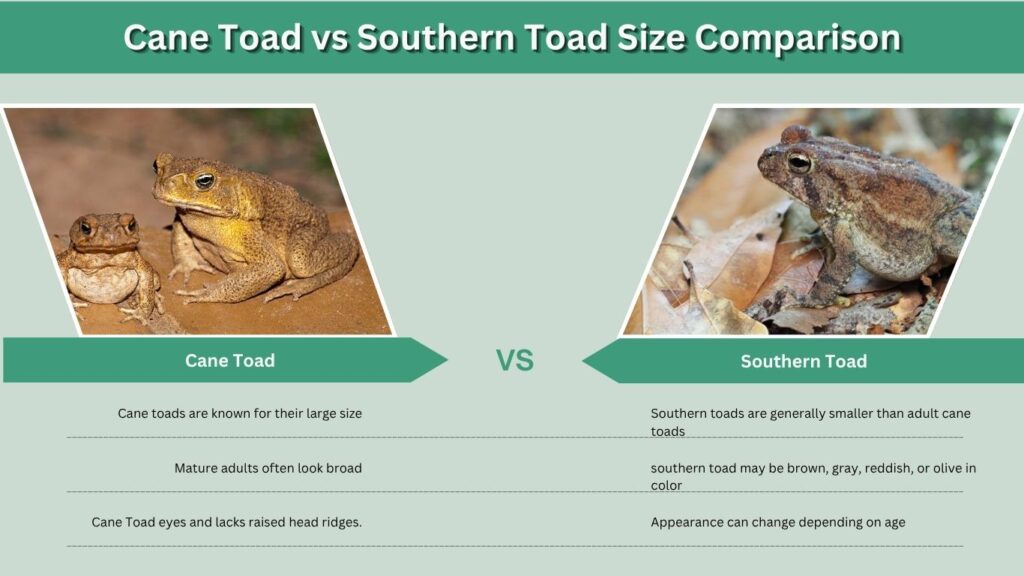
Size is one of the easiest differences to notice, but it should not be the only feature you use. Adult cane toads are usually larger and bulkier than southern toads, but young cane toads can be small. For the most accurate identification, compare size along with head ridges, gland shape, and body structure.
How Big Are Cane Toads?
Cane toads are known for their large size. Mature adults often look broad, heavy, and bulky. In Florida, a very large toad found near a patio, pet bowl, pond, canal, or driveway may be a cane toad, especially if it has large glands behind the eyes and lacks raised head ridges.
Their body shape is usually more massive than a southern toad’s body. The head can appear wide, and the skin may look dry and bumpy. However, cane toads can vary in color, so size and color alone should not be the final deciding factors.
How Big Are Southern Toads?
Southern toads are generally smaller than adult cane toads. They can still look plump, warty, and strong-bodied, which is why they are often confused with cane toads. A southern toad may be brown, gray, reddish, or olive in color, and its appearance can change depending on age, lighting, and habitat.
The most useful sign is not just the body size but the presence of cranial crests. These raised ridges on the head help separate southern toads from cane toads.
Why Size Can Be Misleading
Size can help, but it is not always enough. A baby cane toad may be close in size to a southern toad. A young southern toad may also appear different from an adult. Because of this overlap, homeowners should use several clues together instead of relying only on body length.
Cane Toad vs Southern Toad Identification Table
Both species have warty skin and may appear in similar outdoor areas, especially after rain. A table is helpful because it places the most important differences side by side. The best identification method is to compare several features at once, especially native status, size, cranial crests, gland shape, and pet safety risk.
| Feature | Cane Toad | Southern Toad |
| Florida status | Invasive and non-native | Native |
| Adult size | Usually larger and bulkier | Usually smaller |
| Head ridges | Usually absent or not obvious | Raised cranial crests present |
| Poison glands | Large and triangular | Smaller and oval |
| Pet danger | High risk to dogs and cats | Lower risk, but still avoid contact |
| Common location | Yards, patios, ponds, canals, pet bowls | Lawns, gardens, woods, sandy areas |
| Best ID clue | Big glands with no clear head ridges | Head ridges with smaller glands |
How to Use the Table
Do not depend on one feature alone. For example, a large southern toad may still look impressive, and a young cane toad may not be very large yet. Instead, combine the signs. If the toad is large, has huge glands behind the eyes, and lacks raised head crests, it is more likely to be a cane toad.
Head Ridges and Poison Glands
The head is the most important area to inspect when comparing southern toad vs cane toad. Color can change, size can overlap, and both species can look warty. However, the shape of the poison glands and the presence or absence of cranial crests are usually stronger identification clues than body color alone.
Cranial Crests on Southern Toads
Southern toads usually have raised ridges on top of the head. These are called cranial crests. They may look like bony lines or raised edges near and between the eyes. These ridges are one of the most helpful ways to identify a southern toad.
If you can see clear ridges on the head and the glands behind the eyes are not extremely large, the toad may be a southern toad. This is especially true if the animal is smaller and found in a natural garden, lawn, or woodland edge.
Large Glands on Cane Toads
Cane toads usually have large parotoid glands behind the eyes. These glands often look swollen and triangular, extending backward toward the shoulders. They are one of the clearest signs of a cane toad.
These glands contain toxin, which is why cane toads are such a serious concern for pets. Dogs may become poisoned after biting, licking, or mouthing a cane toad. Any suspected exposure should be treated as urgent.
Why Color Is Not Reliable
Many people try to identify toads by color, but this often leads to mistakes. Cane toads and southern toads can both appear brown, tan, gray, olive, or reddish. Lighting, moisture, age, and surroundings can also affect how the toad looks. Focus on body structure instead of color.
Florida Southern Toad vs Cane Toad Habitat
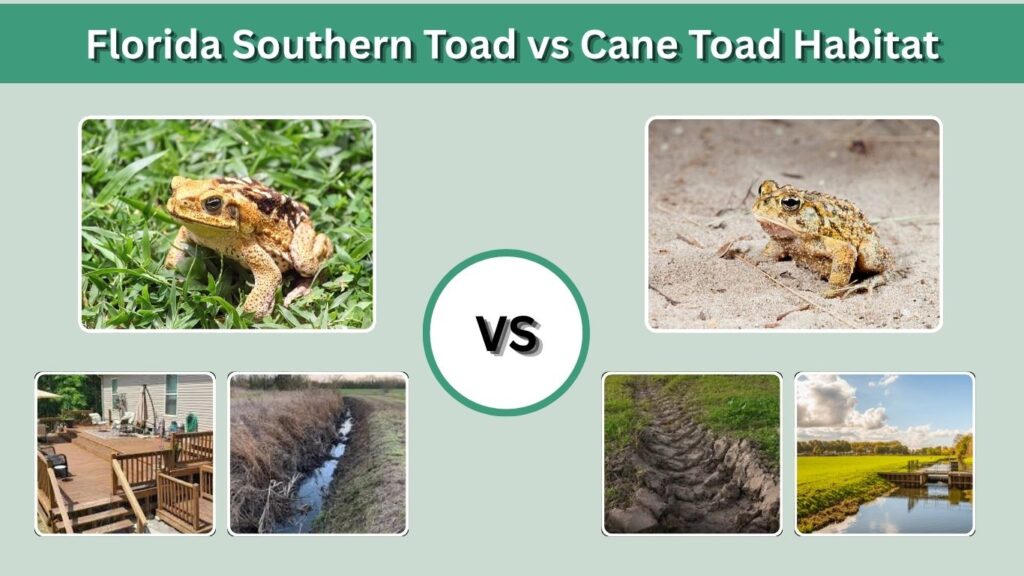
Florida is one of the main places where homeowners search for this comparison because both native and invasive toads may appear around homes. Habitat can give useful clues, but it should not replace physical identification. Cane toads are often associated with human areas, while southern toads are common in natural and suburban spaces.
Where Cane Toads Are Often Found
Cane toads are frequently seen in warm, moist areas where food and water are available. They may show up around homes, especially after rain or at night.
Common cane toad locations include:
- Patios and porches
- Pet food and water bowls
- Ponds and canals
- Drainage ditches
- Lawns with many insects
- Areas near outdoor lights
- Garages, sheds, and walls
If you repeatedly see large toads in these areas, especially in South or Central Florida, cane toads may be present.
Where Southern Toads Are Often Found
Southern toads are native and can appear in many Florida environments. They are often found in sandy areas, gardens, lawns, wooded edges, and places with loose soil. After rain, they may become more active and easier to spot.
A southern toad in your yard is not usually a problem. It may help control insects and should generally be left alone if you are confident it is native.
Why Toads Appear After Rain
Toads are more active when conditions are damp. Rain brings out insects, softens soil, and creates temporary water sources. This is why both cane toads and southern toads may suddenly appear in yards, driveways, or patios after wet weather.
Native Southern Toad vs Cane Toad
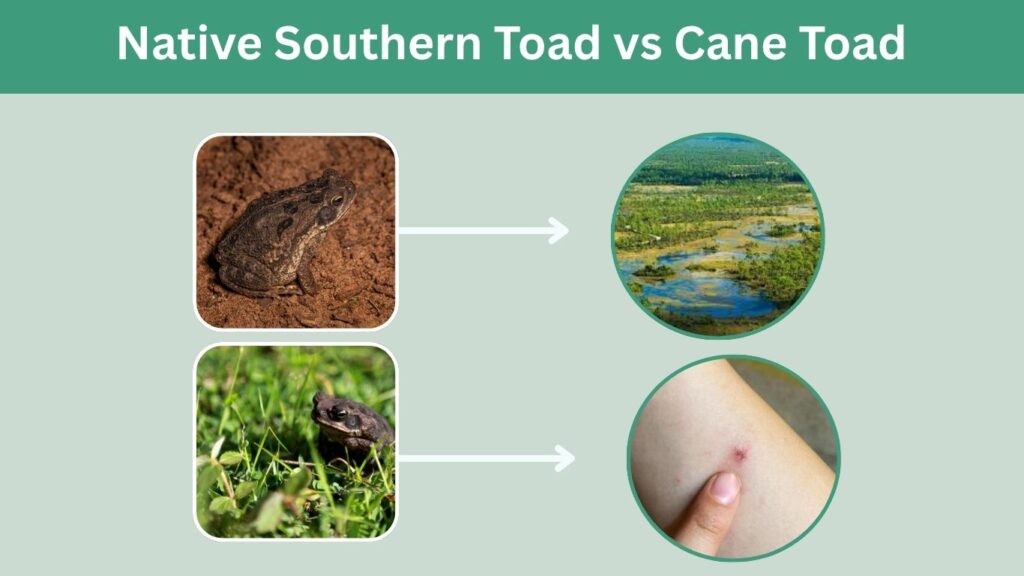
The native status of these two animals is one of the biggest reasons the comparison matters. A southern toad is part of Florida’s natural wildlife, while a cane toad is an invasive species. Knowing which one you found helps you respond correctly and avoid harming native animals by mistake.
Southern Toads Are Native
Southern toads belong in Florida’s environment. They play a role in the ecosystem by feeding on insects and other small invertebrates. They may look rough or unattractive to some people, but they are useful animals that help maintain natural balance.
If a toad is clearly a southern toad, it is usually best to leave it alone. Moving or harming native wildlife is unnecessary unless there is an immediate safety issue.
Cane Toads Are Invasive
Cane toads are not native to Florida. They were introduced and have become established in some areas. Because they are invasive, they can compete with native wildlife and create problems for homeowners, especially those with pets.
The main concern is their toxin. Cane toads can poison animals that bite or lick them. This is why many Florida residents search for cane toad vs southern toad identification after seeing a large toad near their home.
Why Native Identification Matters
Misidentification can lead to two problems. First, a dangerous cane toad may be ignored near pets. Second, a harmless native southern toad may be killed by mistake. The best approach is careful identification, safe distance, and expert help when the answer is unclear.
Cane Toad vs Southern Toad Babies
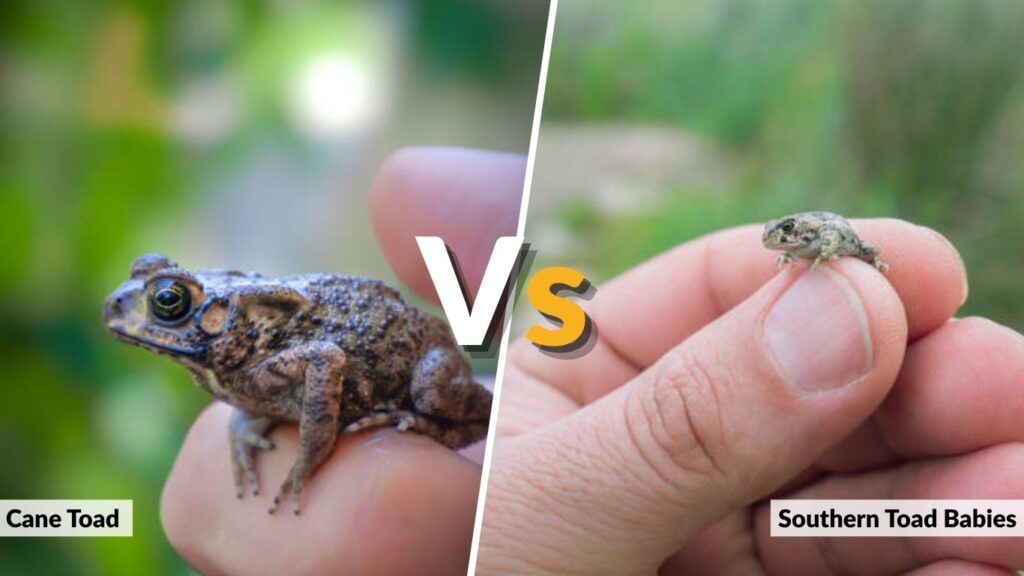
Baby toads are much harder to identify than adults. Many people expect cane toads to always be huge, but juvenile cane toads can be small. This creates confusion when comparing cane toad vs southern toad babies. In young toads, size is less useful, so small physical details matter more.
Why Baby Cane Toads Are Confusing
Baby cane toads may not show the dramatic size difference seen in adults. Their glands may be less obvious, and their body shape may not look as bulky yet. Because of this, a young cane toad can be mistaken for a native southern toad or another harmless species.
This is why homeowners should be careful with any unknown baby toad in areas where cane toads are common.
Baby Southern Toad vs Baby Cane Toad Clues
When checking baby toads, look for developing head ridges, gland shape, body width, and behavior. Baby southern toads may begin to show the head features that become more obvious in adults. Young cane toads may still have a broader, more cane-toad-like structure, but the difference can be subtle.
Because baby toads are difficult to identify, a photo can help. Take a clear picture from above and behind the head without touching the animal.
What to Do If You Are Unsure
If you cannot confidently identify a baby toad, use a safe approach:
- Keep dogs and cats away immediately.
- Do not pick up the toad with bare hands.
- Take a clear photo from a safe distance.
- Check for head ridges and gland shape.
- Ask a local extension office, wildlife expert, or pest professional for help.
This is especially important if you have pets or if you are seeing many small toads around your home.
Is a Bufo Toad the Same as a Cane Toad?
Many people use the term “bufo toad” when talking about cane toads in Florida. This can cause confusion because “Bufo” has been used in different ways over time. In everyday Florida pest and pet safety conversations, however, “bufo toad” usually refers to the invasive cane toad.
What People Mean by Bufo Toad
When a homeowner says “bufo toad,” they are often talking about a cane toad. Cane toads are also called giant toads or marine toads. These names usually point to the same invasive toad that is dangerous to pets.
So, if someone asks about bufo vs southern cane toad, they are probably trying to compare a cane toad with a native southern toad.
Why the Name Causes Problems
The name can be confusing because not everyone uses scientific names correctly. Some people may call any large warty toad a bufo toad. That is why visual identification is more reliable than common names.
Instead of depending only on the word “bufo,” check the glands, head ridges, size, and location.
What to Do If You Find One in Your Yard
Finding a toad in your yard does not always mean there is a problem. A native southern toad can be beneficial, while a cane toad can be a serious risk for pets. The safest response is to keep animals away, identify the toad carefully, and make your yard less attractive to invasive toads.
If It Looks Like a Southern Toad
If the toad has clear cranial crests, smaller oval glands, and does not look unusually large, it may be a southern toad. In that case, leave it alone. It is native and may help reduce insects in your yard.
You should still avoid touching it unnecessarily. Like many toads, it can produce defensive secretions that may irritate skin, eyes, or a pet’s mouth.
If It Looks Like a Cane Toad
If the toad is large, has huge triangular glands, and lacks visible head ridges, treat it as a possible cane toad. Keep pets indoors or away from the area. Do not allow dogs to sniff, lick, bite, or carry the toad.
If cane toads are common around your property, consider asking a local wildlife removal or pest control professional for guidance.
How to Make Your Yard Less Attractive
You can reduce cane toad activity by removing food, water, and shelter sources around your home.
Helpful steps include:
- Bring pet food indoors.
- Empty outdoor water bowls at night.
- Reduce standing water.
- Keep grass trimmed.
- Seal gaps near sheds and patios.
- Reduce insects around bright outdoor lights.
- Remove clutter where toads can hide.
These steps may not remove every toad, but they can make your yard less inviting.
Common Identification Mistakes
Many people misidentify toads because they focus on only one feature. Cane toads and southern toads can both be brown, warty, and active at night. A correct identification should consider several details together, including size, head ridges, gland shape, location, and whether the animal is a juvenile or adult.
Mistake 1: Judging by Color Only
Color is one of the least reliable ways to identify a toad. Both cane toads and southern toads can appear in shades of brown, gray, tan, reddish-brown, or olive. Moisture and lighting can also change how the skin looks.
Mistake 2: Assuming Every Big Toad Is a Cane Toad
Cane toads are usually larger, but size alone is not proof. Some native toads can look large, and some cane toads may be young or not fully grown. Always check head ridges and gland shape.
Mistake 3: Ignoring the Head
The head gives some of the best clues. Southern toads usually have cranial crests, while cane toads usually do not. The glands behind the eyes are also very different in size and shape.
Mistake 4: Letting Pets Investigate
Pets should never be allowed to play with unknown toads. Even if the toad turns out to be native, it may still cause drooling, irritation, or stomach upset. If it is a cane toad, the risk is much more serious.
FAQs
What is the main difference between a cane toad and a southern toad?
The main difference is the head area. Southern toads usually have raised cranial crests and smaller oval glands behind the eyes. Cane toads usually lack clear cranial crests and have very large triangular glands that extend toward the shoulders.
Are southern toads poisonous to dogs?
Southern toads can produce defensive secretions, so dogs should not lick, bite, or carry them. However, cane toads are much more dangerous to pets. If your dog mouths any unknown toad, rinse the mouth carefully and contact a veterinarian for advice.
How can I identify cane toad vs southern toad babies?
Baby toads are harder to identify because young cane toads may not be large yet. Look for developing head ridges, gland shape, body structure, and location. If you are unsure, keep pets away and ask a local wildlife expert for help.
Is a bufo toad the same as a cane toad?
In Florida, “bufo toad” usually means cane toad. Many homeowners use the names interchangeably. However, common names can be confusing, so it is better to identify the toad by its large glands, lack of head ridges, size, and location.
Should I remove southern toads from my yard?
Usually, you should not remove southern toads. They are native to Florida and help control insects. If you are confident the animal is a southern toad, leave it alone. If you suspect it is a cane toad, keep pets away and seek local guidance.
