
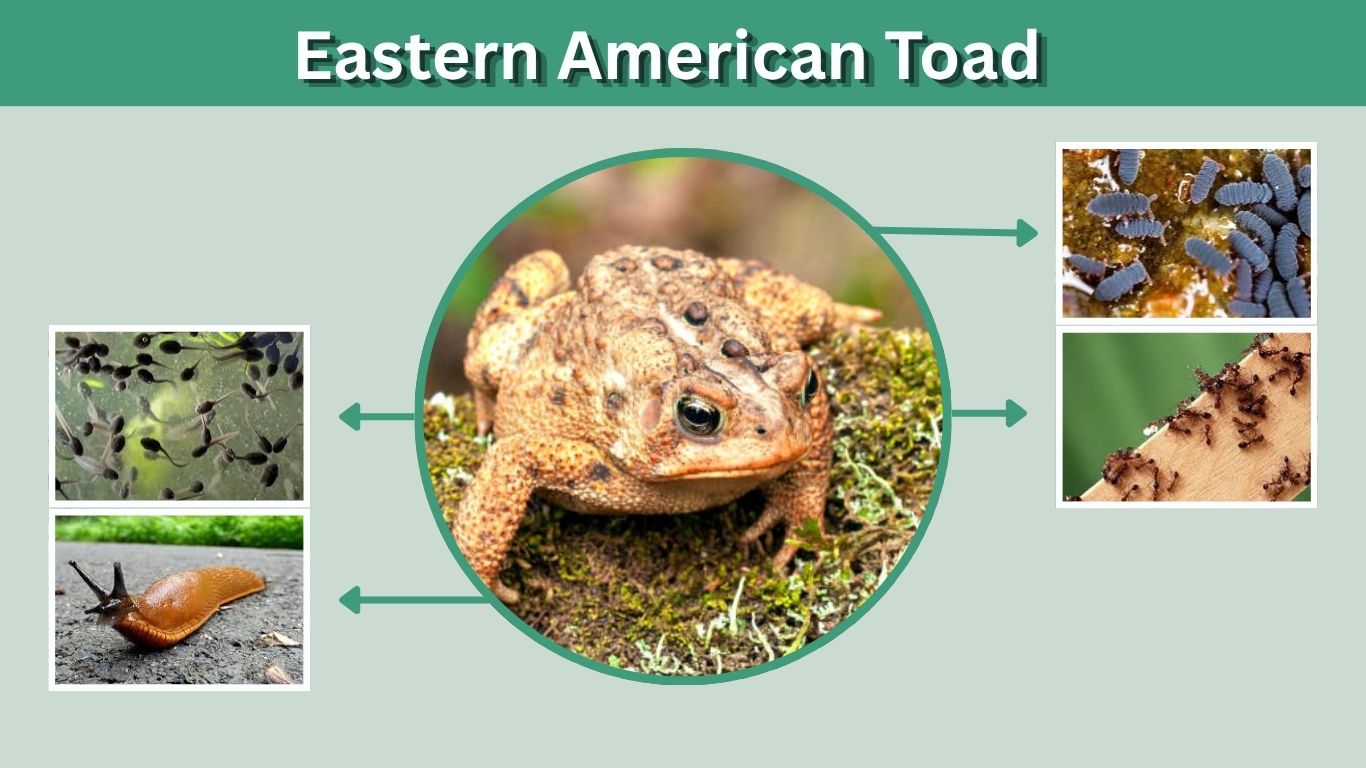
Eastern American toads are common amphibians found across much of eastern North America. Often spotted in yards, gardens, forests, or near ponds, these native toads play an important role in controlling insect populations. They have warty skin, distinct calls, and a unique life cycle that includes eggs, tadpoles, and juvenile toads. This guide covers key facts, diet, habitat, life cycle, poison/toxicity, pet safety, and how to differentiate them from Fowler’s toads, helping readers identify, appreciate, and safely interact with these fascinating amphibians.
What Is an Eastern American Toad?
Eastern American toads (Anaxyrus americanus americanus) are a subspecies of the American toad, native to eastern North America. They are terrestrial but require freshwater for breeding, and they often appear in both natural and suburban habitats. Their warty skin, ability to burrow, and night activity help them survive in a variety of environments. People often confuse them with Fowler’s toads, but careful observation of call, markings, and physical traits can clarify identification.
Scientific Name and Classification
- Kingdom: Animalia
- Class: Amphibia
- Order: Anura
- Family: Bufonidae
- Genus: Anaxyrus
- Species: Anaxyrus americanus
- Subspecies: Anaxyrus americanus americanus
Older sources may use Bufo americanus, which can create confusion among casual observers.
Key Facts About Eastern American Toads
- Native to eastern North America
- Warty, variable-colored skin
- Primarily nocturnal and insectivorous
- Males call with a long musical trill
- Breeding involves laying eggs in long gelatinous strings
- Secretions contain mild toxins for predator defense
Eastern American Toad Size and Appearance
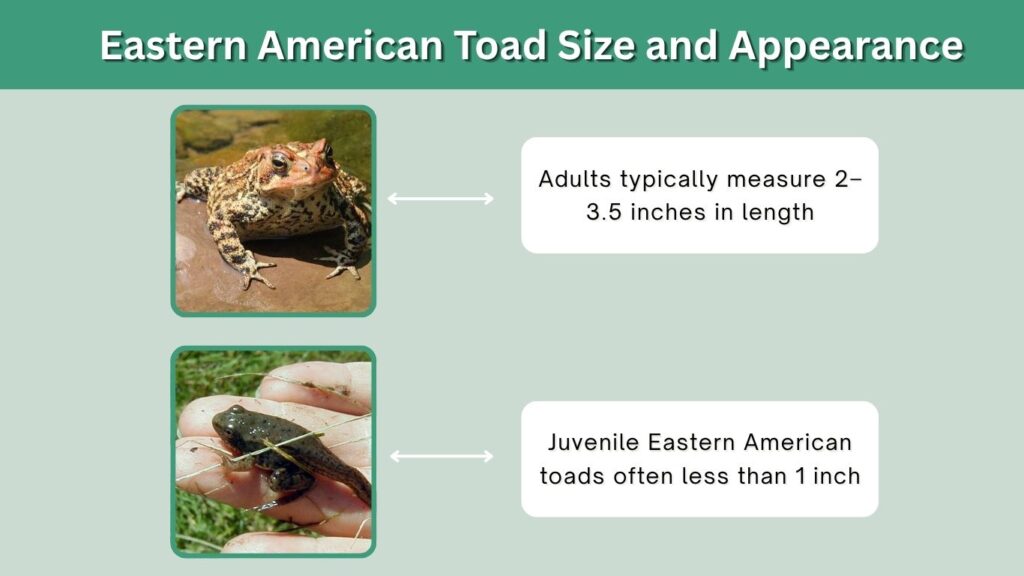
Eastern American toads range from small to medium size, with variable coloration including brown, tan, gray, olive, or reddish tones. Color alone is unreliable for identification, so size, warts, head shape, and parotoid glands are better indicators. Females are usually larger than males, and juvenile toads may look like miniature adults.
Adult Size
Adults typically measure 2–3.5 inches in length, with females larger than males. Body is plump and warty. Parotoid glands behind the eyes are oval and pronounced. Adult males often develop dark throats during breeding season.
Juvenile and Baby Toads
Juvenile Eastern American toads are small, often less than 1 inch, and may be harder to identify. They resemble adults but have less developed glands and smoother skin. Observation of head shape and early warts can aid identification.
Male vs Female Differences
Use list items:
- Size: Females larger than males
- Throat Color: Males often darken during breeding
- Call: Only males produce a musical trill
- Body Shape: Females are rounder and bulkier
Eastern American Toad Diet
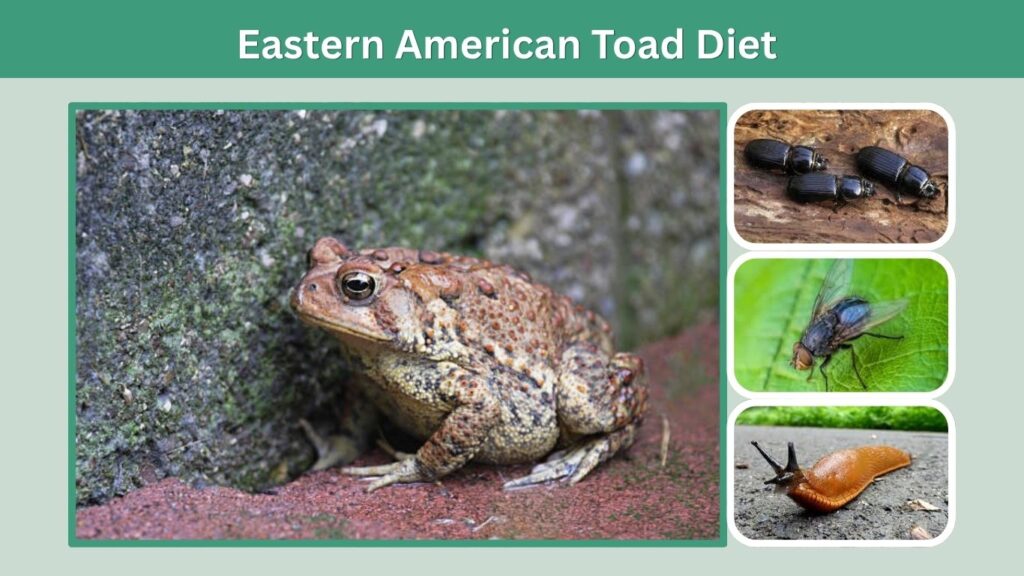
A 60-word overview: Eastern American toads are carnivorous, feeding on a wide variety of insects and small invertebrates. Tadpoles feed on algae in water, while juveniles and adults hunt moving prey on land. Diet varies seasonally and by availability but plays a critical role in controlling insects in gardens and natural habitats.
Wild Diet
Use list items:
- Ants
- Beetles
- Flies
- Moths
- Crickets
- Worms
- Spiders
- Slugs
Captive Diet
Use list items:
- Crickets
- Small roaches
- Earthworms
- Safe feeder insects
Foods to Avoid
Use list items:
- Wild insects exposed to pesticides
- Fireflies
- Large prey that may injure the toad
- Processed human food
Are Eastern American Toads Poisonous?
Eastern American toads secrete defensive toxins through their skin and parotoid glands. These secretions can irritate human skin or eyes and may be dangerous to pets if bitten or swallowed. Toads are not aggressive, but their chemical defense is effective against predators and should be respected.
Poison Secretions
Use list items:
- Milky substance released when stressed
- Located mainly behind the eyes (parotoid glands)
- Protects the toad from predators
Safety for Dogs
Use list items:
- Dogs should not bite or lick toads
- Symptoms: drooling, pawing at mouth, vomiting
- Immediate rinsing and veterinary contact recommended if exposure occurs
Can Eastern American Toads Kill a Dog?
Rarely, but any ingestion or prolonged exposure can be harmful, especially to small dogs. Owners should treat contact as a potential emergency.
Eastern American Toad Life Cycle
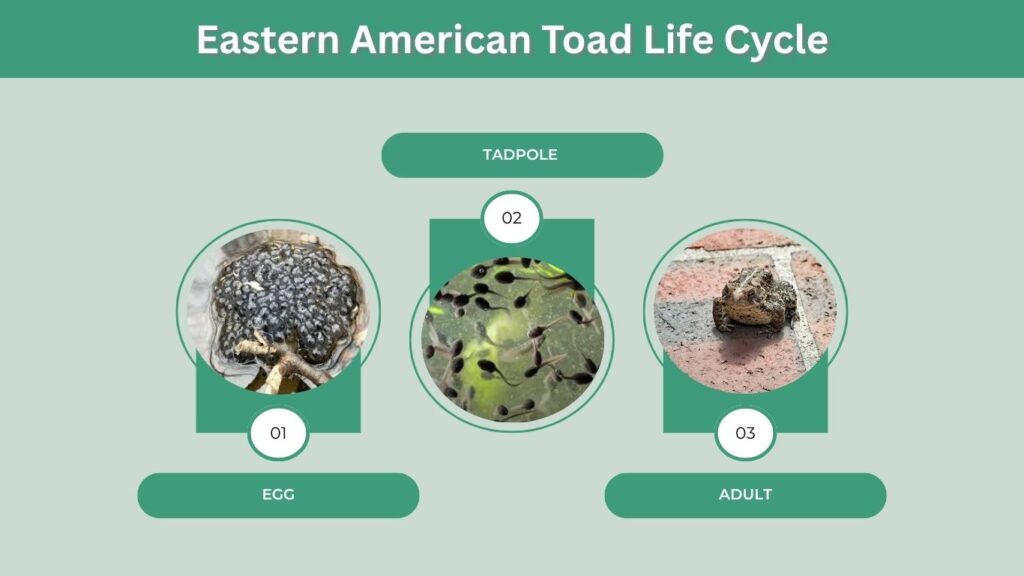
Eastern American toads have a fascinating life cycle beginning in shallow freshwater. Breeding typically occurs in spring when males call to attract females. After mating, females lay long gelatinous strings of eggs. Tadpoles hatch from these eggs, grow, and undergo metamorphosis into tiny juvenile toads before becoming adults. This section covers eggs, tadpoles, juvenile toads, and breeding behavior.
Breeding Season
Breeding occurs from early spring to late spring, depending on temperature and rainfall. Males gather near ponds, ditches, and temporary pools to call females with their long, musical trills. The calls are essential for mating and help distinguish Eastern American toads from Fowler’s toads.
Eggs
Females lay eggs in long gelatinous strings attached to vegetation in shallow water. Each female can produce thousands of eggs per season. Eggs are vulnerable to predators, desiccation, and temperature changes, making habitat choice critical.
Tadpoles
Tadpoles emerge in water and feed primarily on algae and plant material. They swim in groups for protection and gradually develop hind legs, then forelegs, and finally transform into tiny terrestrial toads. This stage usually lasts several weeks depending on temperature and food availability.
Juvenile Toads
Juveniles, or “toadlets,” leave the water once metamorphosis is complete. They resemble miniature adults but have smaller parotoid glands and less pronounced cranial crests. Juveniles may disperse widely to find suitable terrestrial habitats.
Eastern American Toad Call and Sound
The male Eastern American toad is known for a long, high-pitched musical trill. Calls are used to attract mates during breeding season and are an important identification feature. The call can last several seconds and is often heard on warm, damp nights near water bodies.
Call Characteristics
Use list items:
- Long, continuous trill rather than short chirps
- High-pitched and musical tone
- Repeated for several seconds during mating season
- Helps females locate males
Calling Behavior
- Occurs primarily in spring evenings
- Often near shallow ponds, ditches, and wetlands
- Males remain hidden while calling
Eastern American Toad vs Fowler’s Toad
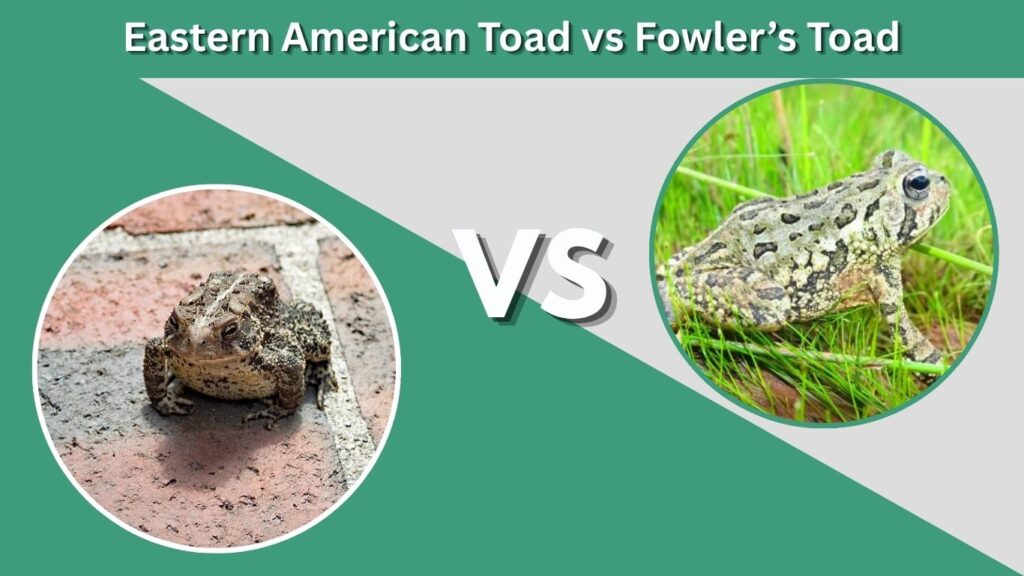
Eastern American toads are frequently confused with Fowler’s toads. Identification requires observing call, belly patterns, warts per dark spot, and cranial crest shape. Hybridization occurs in overlapping ranges, adding to the challenge.
Key Differences Table
| Feature | Eastern American Toad | Fowler’s Toad |
| Call | Long musical trill | Short, nasal bleating call |
| Belly | Often heavily spotted | Usually lighter, fewer spots |
| Warts in dark spots | 1–2 | Often 3 or more |
| Habitat | Forests, yards, wetlands | Sandy or open areas |
| Breeding season | Early-mid spring | Mid-late spring |
| Identification difficulty | Can hybridize with Fowler’s | Can hybridize with American toads |
How to Identify
Observation tips:
- Listen to the call during breeding season
- Check belly spotting and warts per dark spot
- Note habitat type and location
- Consider juvenile size and appearance
Eastern American Toad Pet Care
Some people keep Eastern American toads as pets, but ethical and legal considerations are crucial. Wild toads should not be collected unless allowed by local regulations. Proper enclosure, substrate, diet, and humidity are required for captive care.
Cage Setup
Use list items:
- Secure, ventilated enclosure
- Moist substrate for burrowing
- Shallow water dish
- Hiding places for security
- Temperature control (no overheating)
- Low-intensity lighting
- Clean environment
Feeding in Captivity
Use list items:
- Crickets, small roaches, and earthworms
- Live prey for enrichment
- Avoid pesticides and toxic insects
- Feed juveniles smaller prey than adults
Lighting and Temperature
- Day-night cycle important
- Optional low-level UVB for enclosure
- Keep temperature moderate, avoid drying out substrate
Eastern American Toad Lifespan and Winter Survival
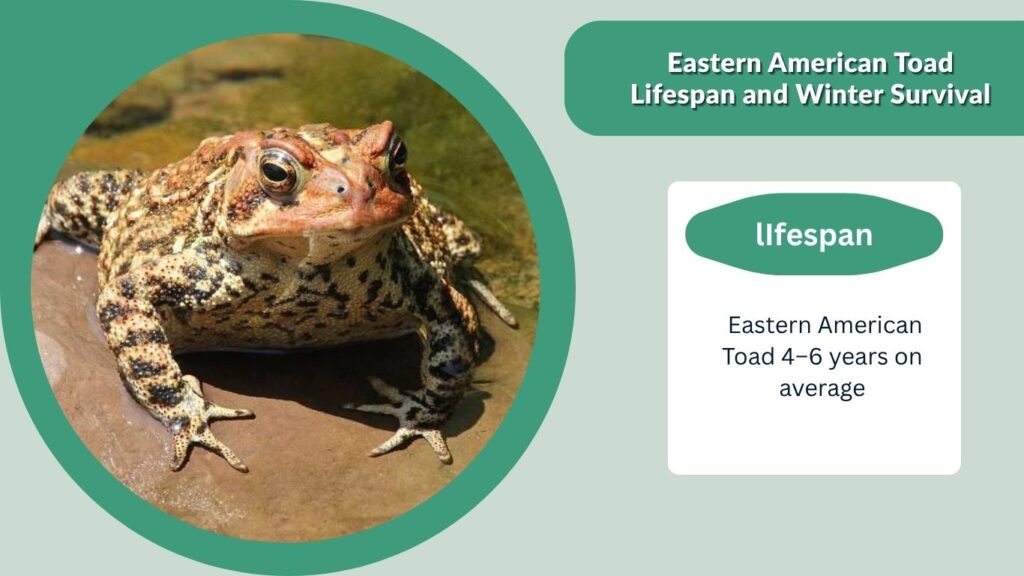
Eastern American toads can live several years in the wild, though many die young due to predation or environmental hazards. In winter, they hibernate by burrowing into soil or leaf litter below the frost line, reducing metabolism and conserving energy.
Lifespan
- Wild: 4–6 years on average, longer if predators are avoided
- Captivity: up to 10 years under proper care
Winter Survival
- Burrow underground to avoid freezing
- Enter brumation, a dormancy similar to hibernation
- Emerge in spring to resume feeding and breeding
Eastern American Toad Adaptations and Fun Facts
Eastern American toads have several adaptations that ensure survival: warty, camouflaged skin protects against predators; nocturnal activity conserves moisture and avoids daytime predators; and secretions deter potential threats. They also play an essential ecological role controlling insect populations.
Adaptations
Use list items:
- Camouflaged, warty skin for protection
- Parotid glands secrete mild toxins
- Burrowing to escape heat or cold
- Nocturnal hunting and activity
Fun Facts
Use list items:
- Females lay thousands of eggs per season
- Males call with a long trill to attract mates
- Juveniles may appear in large numbers after metamorphosis
- They help reduce garden pests naturally
FAQs
What do Eastern American toads eat?
They feed on insects and small invertebrates, including ants, beetles, flies, crickets, worms, spiders, and slugs. Tadpoles feed on algae and plant material in water.
Are Eastern American toads poisonous?
Yes, they secrete mild toxins from their skin and glands for defense. These can irritate humans and pets if handled improperly.
Are Eastern American toads poisonous to dogs?
They can be harmful if mouthed or ingested. Symptoms include drooling, pawing at the mouth, vomiting, and distress. Rinse the dog’s mouth and contact a vet immediately.
What does an Eastern American toad call sound like?
The male makes a long, high-pitched musical trill during breeding season. Calls can last several seconds and are most often heard on warm, damp evenings.
How can I tell an Eastern American toad from a Fowler’s toad?
Listen to the call: Eastern American toads have a long trill, Fowler’s toads have a shorter, nasal call. Check belly spotting, number of warts per dark spot, cranial crests, and habitat.
