Couch’s spadefoot toad is a desert-adapted amphibian known for its sudden appearance after heavy rain. Most of the year, it stays hidden underground, waiting for warm storms that create temporary breeding pools. Many people search for this species because they want to know if it is poisonous, what it eats, what its call sounds like, and whether it can be kept as a pet. This guide explains its habitat, diet, behavior, life cycle, and safety concerns in simple terms.
What Is a Couch’s Spadefoot Toad?
Couch’s spadefoot toad, scientifically known as Scaphiopus couchii, is a small amphibian found mainly in dry regions of the southwestern United States and Mexico. Although it is often called a toad, it belongs to the spadefoot group, famous for digging, hiding, and breeding quickly after rain. Its survival depends on timing, moisture, and underground shelter.
Quick Identification
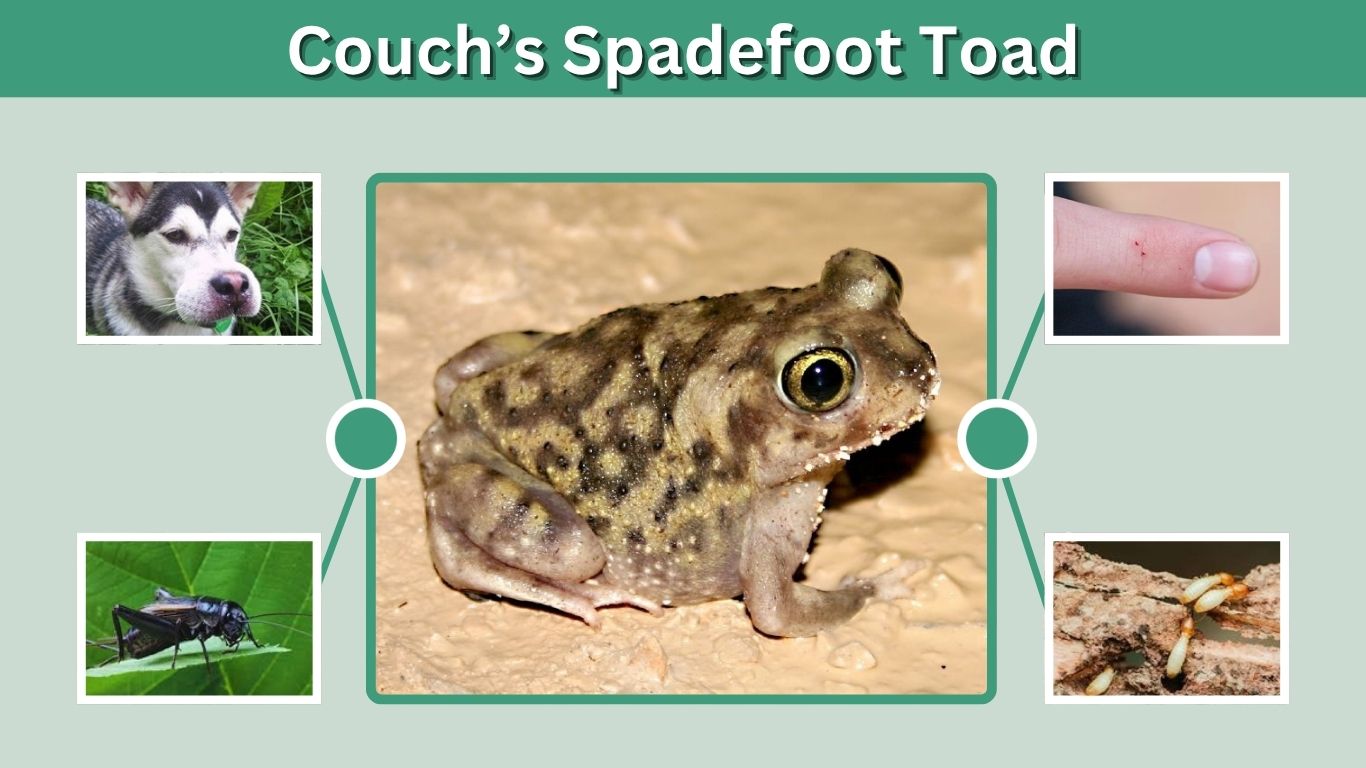
Adult Couch’s spadefoots are usually short, round-bodied amphibians with smooth skin and a greenish, yellowish, olive, or brownish color. Many have darker blotches or markings, while the belly is usually pale. Their eyes often look striking because of their vertical pupils.
Key identification features include:
- A small, stocky body
- Smooth skin compared with many true toads
- Vertical, cat-like pupils
- Greenish, yellowish, or olive coloring
- A hard black “spade” on each hind foot
Why It Is Called a Spadefoot
The name “spadefoot” comes from the hard, dark digging structure on the back feet. This spade-like projection helps the animal dig backward into loose soil. In dry weather, this adaptation is extremely important because the animal must escape heat, sunlight, and dehydration by staying underground.
Couch’s Spadefoot Toad Habitat and Range
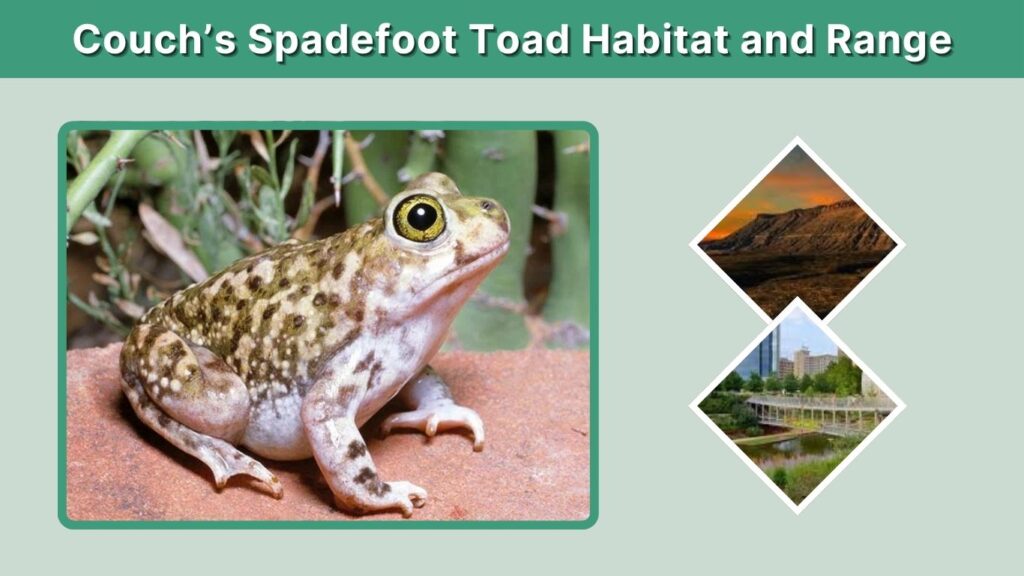
Couch’s spadefoot toads live in places where many amphibians would struggle. Their habitat includes deserts, grasslands, short-grass prairies, mesquite savannas, sandy flats, and other dry or semi-dry areas. They are strongly connected to seasonal rainfall because they need temporary pools for breeding, even though they spend much of life underground.
Where It Lives
This species is found across parts of the southwestern United States and Mexico. Its range includes areas such as Texas, Oklahoma, New Mexico, Arizona, southeastern California, Baja California, and several regions of Mexico. It prefers places with soft or sandy soil because digging is easier there.
| Feature | Couch’s Spadefoot Toad Details |
| Scientific name | Scaphiopus couchii |
| Common habitat | Deserts, prairies, savannas, sandy flats |
| Main activity time | Night, especially after rain |
| Main food | Insects and small invertebrates |
| Key adaptation | Hind-foot spades for burrowing |
| Pet safety concern | Skin secretions may irritate people and pets |
Why Rain Matters
Rain is one of the most important parts of this species’ life. During long dry periods, adults remain underground. After heavy summer rains, they may emerge quickly, feed, call, mate, and lay eggs in temporary pools. This sudden activity helps them use short-lived water sources before those pools dry out.
Couch’s Spadefoot Toad Diet, Predators, and Daily Behavior
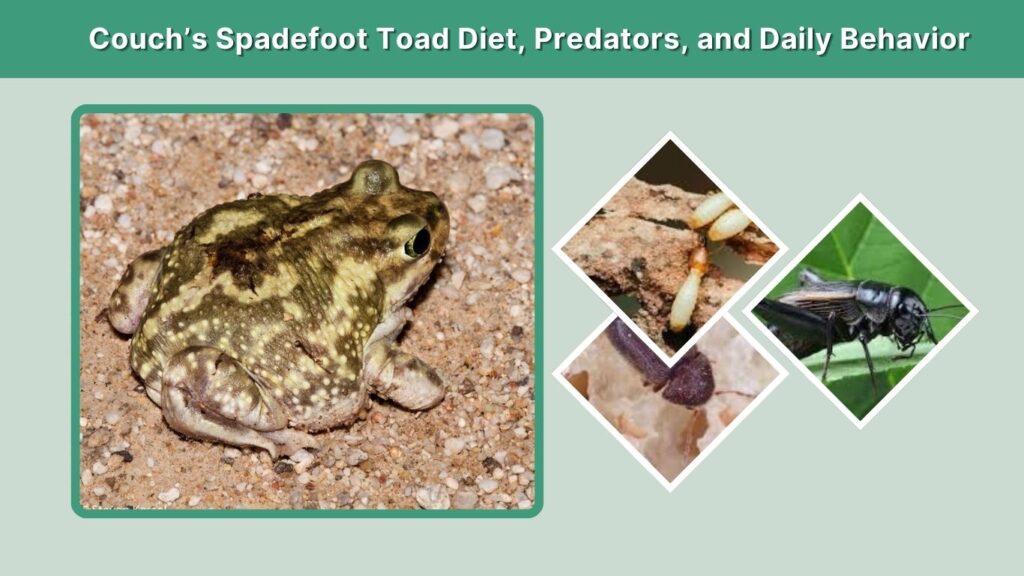
The Couch’s spadefoot toad is mostly nocturnal, meaning it is active at night. It avoids dry daytime heat by remaining buried in the soil. When conditions are wet enough, it comes out to feed and breed. Its diet helps control insects, while its own body becomes food for several desert predators.
What Couch’s Spadefoot Toads Eat
Couch’s spadefoot toads are carnivorous. They mainly eat small animals they can catch and swallow. Their diet changes depending on what is available after rain or at night.
Common food items include:
- Ants
- Beetles
- Termites
- Crickets
- Small insects
- Spiders
- Other small invertebrates
This diet makes them useful in the ecosystem because they help reduce insect populations. They are opportunistic hunters, so they do not usually specialize in only one prey type.
Common Predators
Even with toxic skin secretions and burrowing ability, Couch’s spadefoot toads still face predators. Snakes, birds, mammals, and larger amphibian-eating animals may prey on them. Tadpoles and eggs are also vulnerable because temporary pools can attract aquatic insects, birds, and other animals.
Their main defenses are hiding underground, emerging mostly at night, breeding quickly, and producing irritating skin secretions when threatened.
Couch’s Spadefoot Toad Call, Eggs, Tadpoles, and Life Cycle
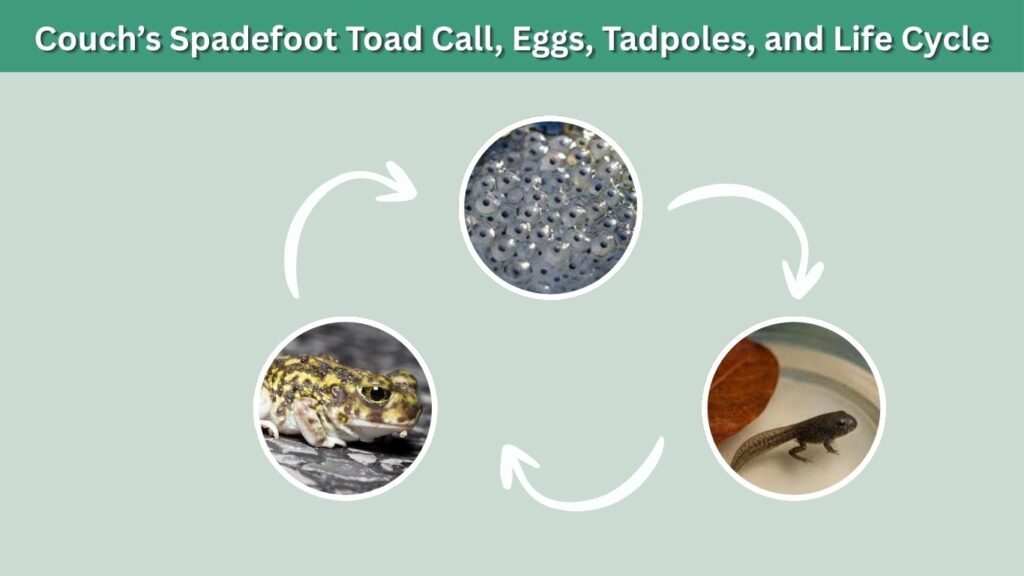
The Couch’s spadefoot toad has a dramatic life cycle shaped by desert rain. For much of the year, it may seem absent because it is hidden underground. Then, after a storm, males gather near temporary pools and call loudly. Breeding, egg-laying, tadpole growth, and transformation can happen very quickly.
What the Call Sounds Like
The Couch’s spadefoot toad call is usually described as loud, harsh, and sheep-like. Males call from rain-filled pools to attract females. Because many individuals may call at once after a storm, the sound can become a noisy chorus across desert flats or grassland pools.
People often search for “Couch’s spadefoot toad sound” or “Couch’s spadefoot toad call” because the call is one of the easiest ways to notice the species after rain. It is more likely to be heard at night than seen during the day.
Eggs and Fast-Growing Tadpoles
Females lay eggs in temporary rain pools. These pools may dry quickly, so the eggs and tadpoles must develop fast. Tadpoles feed, grow, and transform into juvenile spadefoots before the water disappears. This fast development is one of the species’ most important desert survival strategies.
Juvenile Couch’s spadefoot toads look like tiny versions of adults. Once they leave the water, they must find food, avoid predators, and begin using moist soil or shelter to survive dry conditions.
Are Couch’s Spadefoot Toads Poisonous?
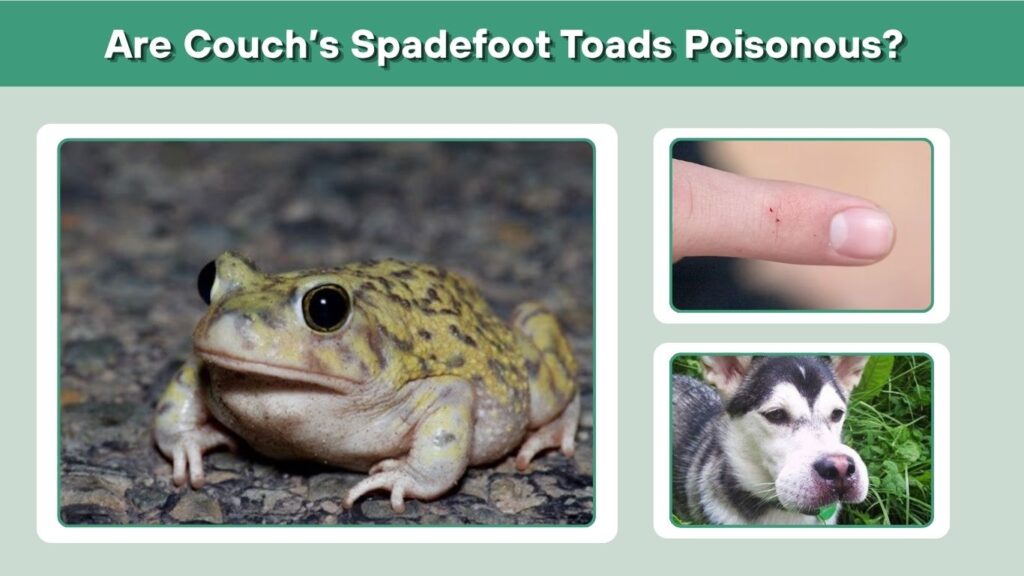
Many people ask whether Couch’s spadefoot toads are poisonous to humans, dogs, or other pets. The answer is yes, but usually in a defensive and irritating way rather than as an aggressive danger. Like many amphibians, they can release skin secretions that discourage predators and may cause discomfort if touched, licked, or swallowed.
Poisonous to Humans
Couch’s spadefoot toads should not be handled unless necessary. Their skin secretions may irritate the eyes, nose, mouth, or sensitive skin. A person who touches one should avoid rubbing the face and should wash their hands well afterward.
Basic safety tips include:
- Do not pick them up with bare hands unless needed
- Never touch your eyes or mouth after handling one
- Wash hands with soap and water
- Keep children from handling wild amphibians
- Move the animal only if it is in danger
Poisonous to Dogs and Pets
Couch’s spadefoot toads can be risky for dogs if a dog bites, licks, or tries to eat one. The secretions may cause drooling, pawing at the mouth, vomiting, irritation, or other symptoms. Any pet that mouths a wild toad should be watched carefully, and a veterinarian should be contacted if symptoms appear.
Pet safety steps include:
- Keep dogs away from toads after rain
- Use a leash at night in desert or rural areas
- Teach “leave it” commands
- Do not let pets drink from small temporary pools
- Call a veterinarian if your pet mouths a toad
Couch’s Spadefoot Toad Care and Pet Questions
Some people search for Couch’s spadefoot toad care or Couch’s spadefoot toad for sale because the species looks unusual and interesting. However, wild spadefoots are not simple pets. They have specialized moisture, soil, temperature, feeding, and seasonal needs. In many places, collecting native amphibians may also be restricted.
Why Wild Spadefoots Are Not Ideal Pets
A Couch’s spadefoot is adapted to a very specific lifestyle: burrowing for long periods, emerging after rain, feeding at night, and breeding in temporary pools. Captivity often fails to match these natural cycles. Stress, poor humidity, wrong substrate, and improper diet can harm the animal.
For most people, this species is better appreciated as wildlife rather than kept as a pet. Anyone considering amphibian ownership should choose captive-bred species from responsible sources and learn proper care before buying.
Better Ways to Observe Them
The best way to enjoy Couch’s spadefoot toads is to observe them responsibly in nature. After heavy warm rain, listen near temporary pools at night. Watch from a distance, avoid stepping near breeding areas, and do not remove adults, eggs, or tadpoles.
Responsible observation protects both the animal and its habitat. It also gives you a better chance to see natural behaviors such as calling, feeding, and moving across wet ground after storms.
FAQs
Are Couch’s spadefoot toads poisonous?
Yes, Couch’s spadefoot toads can produce irritating skin secretions. These secretions help protect them from predators and may bother humans or pets. They are not aggressive, but they should not be handled casually. Always wash your hands after touching any wild amphibian.
Are Couch’s spadefoot toads poisonous to dogs?
Yes, they may cause problems if a dog licks, bites, or eats one. Affected dogs may drool, paw at the mouth, vomit, or show irritation. Keep dogs away from toads after rain, especially at night, and contact a veterinarian if symptoms appear.
What do Couch’s spadefoot toads eat?
Couch’s spadefoot toads eat insects and other small invertebrates. Their diet may include ants, beetles, termites, crickets, spiders, and similar prey. They usually feed at night, especially after rain, when insects and other small animals are easier to find.
How deep do Couch’s spadefoot toads burrow?
They can dig into soft soil to escape heat and dryness, though exact depth depends on soil type, moisture, and weather. Their hind-foot spades help them move backward into the ground. During dry periods, they may remain buried for long stretches of time.
Can you keep a Couch’s spadefoot toad as a pet?
It is usually not recommended to keep a wild Couch’s spadefoot toad as a pet. This species has specialized needs, including proper soil, humidity, temperature, diet, and seasonal cycles. It is better to observe them in the wild and choose captive-bred amphibians if you want a pet.
