
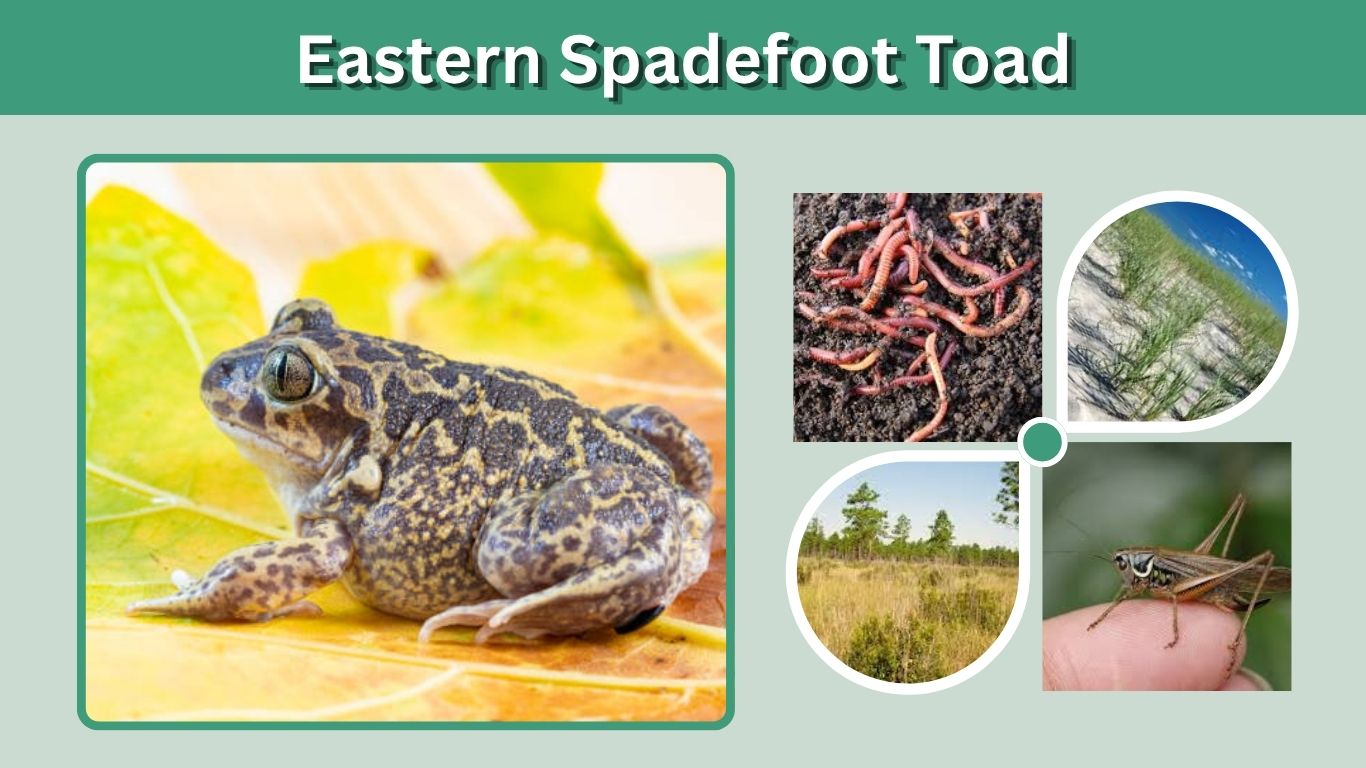
The Eastern Spadefoot Toad is a secretive burrowing amphibian found in the eastern United States. It is best known for its vertical pupils, smooth skin, and hard spade-like structures on its hind feet. These “spades” help it dig backward into loose soil. Many people only notice this species after heavy rain, when adults emerge to breed in temporary pools. This guide explains its identification, call, habitat, range, diet, and basic safety facts.
What Is an Eastern Spadefoot Toad?
The Eastern Spadefoot Toad is a small burrowing amphibian that spends much of its life underground. Although people call it a toad, it is not a true toad like members of the Bufonidae family. It is adapted for digging, sudden breeding after storms, and surviving in sandy habitats where temporary water appears after heavy rainfall.
Scientific Name and Family
The scientific name of the Eastern Spadefoot Toad is Scaphiopus holbrookii. It belongs to the family Scaphiopodidae, which includes North American spadefoots. This family is different from true toads, even though spadefoots may look round, short-legged, and toad-like at first glance.
The name “spadefoot” comes from the hard, dark digging structure on each hind foot. This small spade works like a shovel and allows the animal to quickly bury itself in loose soil.
Quick Facts
- Common name: Eastern Spadefoot Toad
- Scientific name: Scaphiopus holbrookii
- Family: Scaphiopodidae
- Animal type: Burrowing amphibian
- Main feature: Hard spade on each hind foot
- Eye shape: Vertical pupils
- Skin: Smoother than many true toads
- Diet: Insects and small invertebrates
- Habitat: Sandy soil and temporary wetlands
- Activity: Mostly active after heavy rain
Eastern Spadefoot Toad Identification
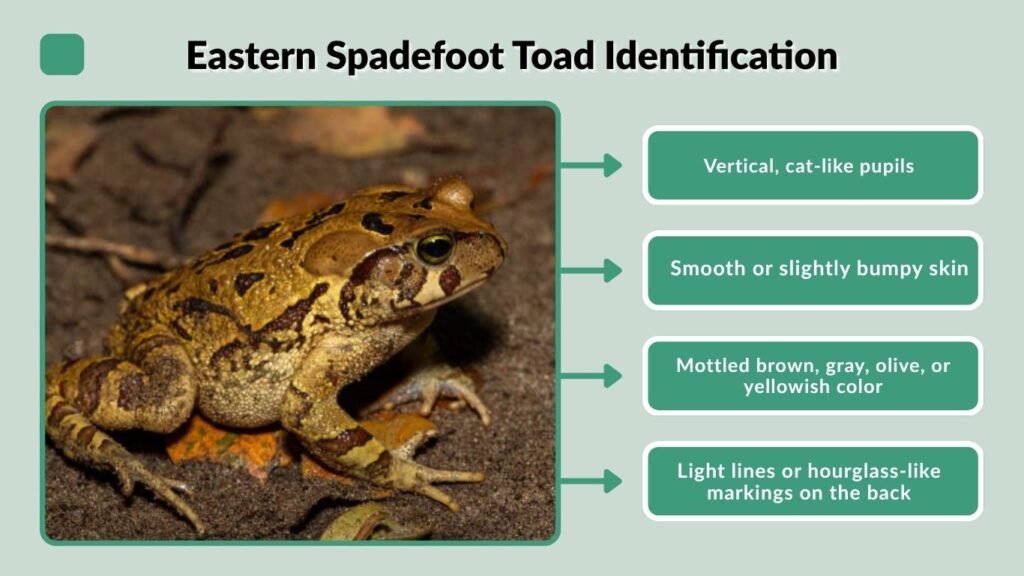
Identifying an Eastern Spadefoot Toad becomes easier when you look for its eyes, skin, body shape, and hind feet. It may look like a small toad, but it has smoother skin and vertical pupils. The most important feature is the dark spade on the back foot, which helps it dig underground.
Key Identification Features
- Vertical, cat-like pupils
- Smooth or slightly bumpy skin
- Stocky, rounded body
- Short legs
- Mottled brown, gray, olive, or yellowish color
- Light lines or hourglass-like markings on the back
- Dark, hard spade on each hind foot
- Often found in sandy soil after rain
Eastern Spadefoot Toad Legs and Spade
The hind legs are built for digging rather than long jumping. Each back foot has a hard, dark projection called a spade. When the animal wants to hide, it uses these spades to dig backward into soft soil. This behavior helps it avoid heat, dryness, and predators.
Eastern Spadefoot Toad Full Size
Adult Eastern Spadefoot Toads are usually small to medium in size. They often look squat and rounded when sitting still. Their compact body helps them stay close to the ground and move into burrows quickly. Because they spend so much time underground, many people never see them unless heavy rain brings them out.
Eastern Spadefoot Toad Call and Sound
The call of the Eastern Spadefoot Toad is one of the best ways to detect it. These amphibians often breed suddenly after heavy rainfall, and males may call loudly from temporary pools at night. Their sound is unusual and can help separate them from common frogs and true toads in the same area.
What Does an Eastern Spadefoot Toad Call Sound Like?
The Eastern Spadefoot Toad call is often described as a short, harsh, nasal “waah” sound. Some people compare it to a sheep-like bleat. When many males call together, the sound can seem loud and strange around rain-filled pools, ditches, or flooded sandy areas.
When Do Eastern Spadefoot Toads Call?
Eastern Spadefoot Toads usually call at night after heavy rain. They are explosive breeders, which means many adults may appear, call, mate, and lay eggs in a short time. This quick breeding behavior is important because their temporary pools may dry out fast.
Why Do They Call?
Male Eastern Spadefoot Toads call to attract females to breeding pools. Their call helps females locate them in dark, wet conditions after storms. Because the breeding window can be short, calling activity may be intense for a few nights and then suddenly stop when adults return underground.
Eastern Spadefoot Toad Habitat
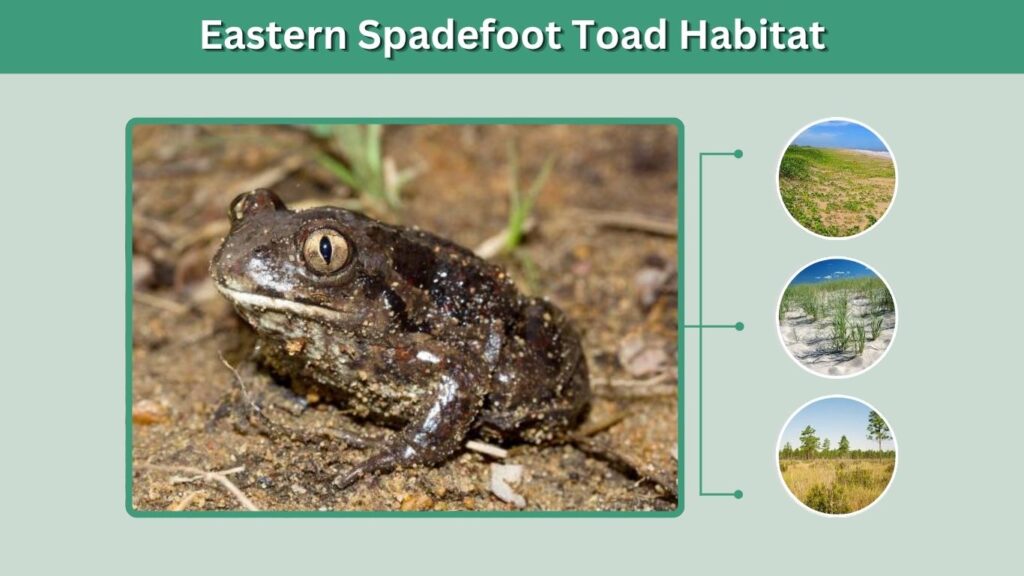
Eastern Spadefoot Toads need two main habitat features: loose soil for burrowing and temporary water for breeding. They are often linked with sandy forests, open fields, coastal plain habitats, and areas where rainwater forms short-lived pools. Their hidden lifestyle makes habitat protection especially important.
Sandy Soil and Burrows
Loose sandy soil is very important for this species. The spadefoot uses its hind-foot spades to dig backward and disappear below the surface. Underground burrows help protect it from dry weather, hot temperatures, and many predators. It may remain buried for long periods until rain creates better surface conditions.
Temporary Pools and Breeding Sites
Breeding often happens in rain-filled pools, roadside ditches, flooded fields, pine flatwoods, and other temporary wetlands. These pools are useful because they often have fewer fish than permanent ponds. Without fish, eggs and tadpoles have a better chance of surviving long enough to become young spadefoots.
Forests, Fields, and Coastal Plain Habitats
Eastern Spadefoot Toads may live in sandy pine woods, mixed forests, open fields, and coastal plain areas. They can also survive in some disturbed places if the soil is loose enough for burrowing and temporary water appears after storms. Good habitat must support both underground shelter and fast breeding.
Eastern Spadefoot Toad Range
The Eastern Spadefoot Toad lives across parts of the eastern United States, but it is not equally common everywhere. It is more widespread in some southeastern areas and much rarer in parts of the Northeast and Midwest. Its range depends on sandy soil, temporary wetlands, and suitable breeding conditions after heavy rain.
General Range in the United States
The Eastern Spadefoot Toad is found from parts of the Northeast south through the Atlantic Coastal Plain and into Florida. Its range also extends westward into some inland and Gulf region states. Because it spends so much time underground, it may be present in an area even when people rarely see it.
Eastern Spadefoot Toad in Florida
Florida is part of the natural range of the Eastern Spadefoot Toad. In Florida, it may be found in sandy areas, pine flatwoods, open fields, and places where temporary pools form after storms. Heavy rain is often the best time to hear or see this species.
Eastern Spadefoot Toad in Connecticut and Massachusetts
In Connecticut and Massachusetts, the Eastern Spadefoot Toad is much rarer than in many southern states. It is linked with sandy soils and temporary breeding pools. Because northern populations can be small and scattered, local conservation rules may protect the species or its habitat.
Eastern Spadefoot Toad Diet and Food
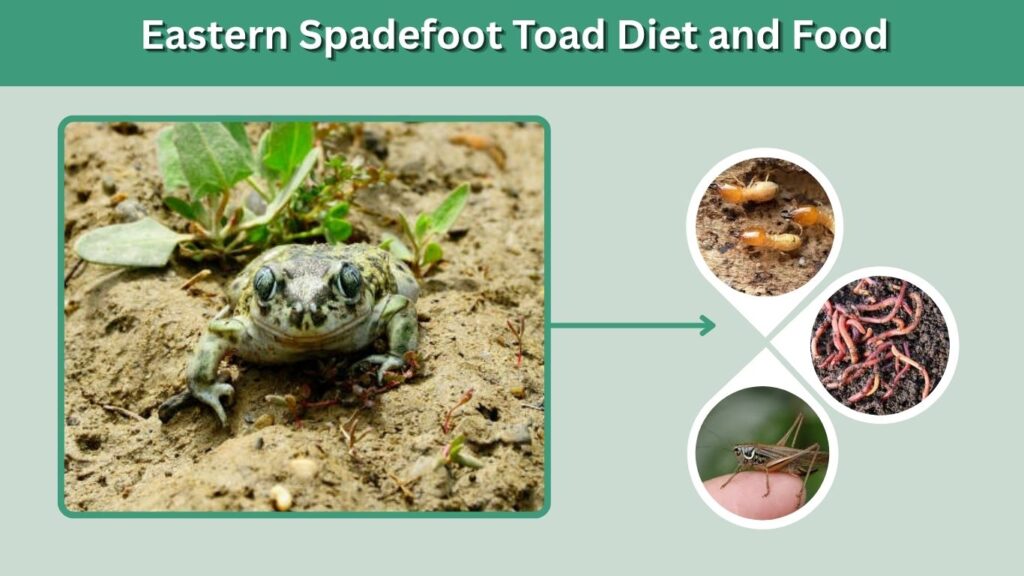
The Eastern Spadefoot Toad is an insect-eating amphibian. Adults mostly feed when they come above ground during wet weather. Their diet helps control small invertebrates, while tadpoles feed in temporary pools and must grow quickly before the water dries.
What Do Eastern Spadefoot Toads Eat?
Adult Eastern Spadefoot Toads eat small animals they can catch and swallow. Common food items may include:
- Ants
- Beetles
- Flies
- Termites
- Worms
- Crickets
- Spiders
- Grasshoppers
- Other small invertebrates
Eastern Spadefoot Toad Tadpole Diet
Tadpoles live in temporary pools and feed on small food sources in the water. They may eat algae, tiny organic particles, plant matter, and other natural materials. In some conditions, spadefoot tadpoles can develop quickly because their pools may dry before they complete metamorphosis.
Eastern Spadefoot Toad Eggs, Tadpoles, and Life Cycle
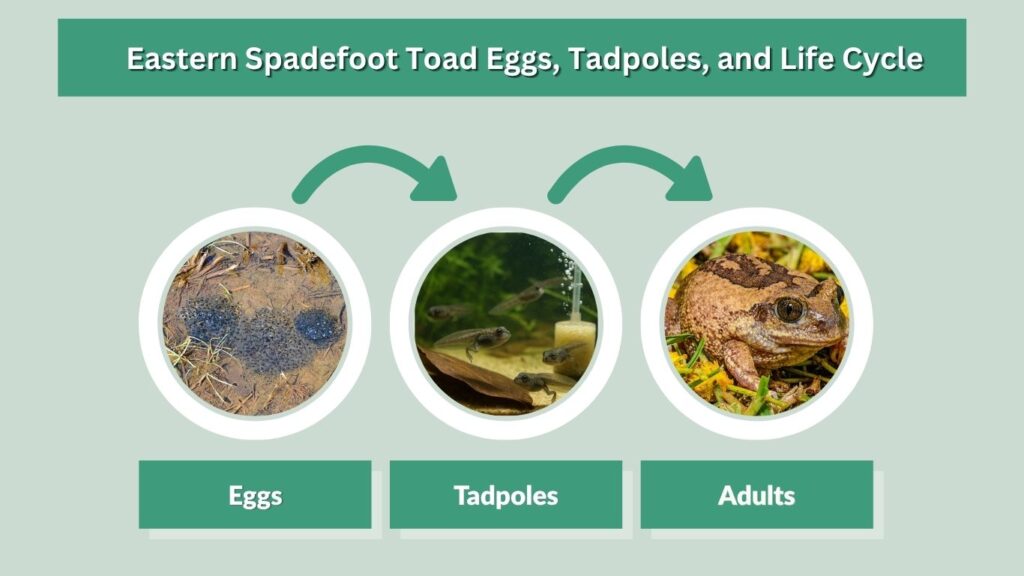
The life cycle of the Eastern Spadefoot Toad is closely tied to heavy rain and temporary water. Adults emerge from underground, breed quickly, and lay eggs in shallow pools. Tadpoles must grow fast because their water source may disappear within days or weeks.
Breeding After Heavy Rain
Eastern Spadefoot Toads are often called explosive breeders. This means many adults may come out after strong rain, gather at temporary pools, and breed within a short period. Once breeding ends, adults may return underground and remain hidden again.
Eggs and Tadpoles
Females lay eggs in shallow temporary water. These eggs hatch into tadpoles that grow and feed in the pool. Because temporary pools may dry quickly, tadpoles need to develop faster than many pond-breeding amphibians. If conditions are good, they can transform into young spadefoots and leave the water.
Baby Eastern Spadefoot Toad
A baby Eastern Spadefoot Toad is a tiny version of the adult after metamorphosis. Young spadefoots leave the water and begin living on land. As they grow, they learn to burrow into loose soil using the spades on their hind feet. This helps them survive dry weather and avoid predators.
Are Eastern Spadefoot Toads Poisonous?
Many people ask if Eastern Spadefoot Toads are poisonous because they look like toads and may release skin secretions. They are not considered dangerously poisonous to humans, but they should still be handled carefully. Like all amphibians, their skin is sensitive and can absorb chemicals from human hands.
Are They Dangerous to Humans?
Eastern Spadefoot Toads are not usually dangerous to people. However, their skin secretions may irritate some individuals, especially if someone touches their eyes or mouth after handling one. The safest choice is to observe them without touching and let them stay in their natural habitat.
Safe Handling Advice
Avoid handling Eastern Spadefoot Toads unless it is necessary to move one away from danger. If you must touch one, use clean, wet hands and keep contact brief. Do not handle amphibians with sunscreen, soap, insect repellent, lotion, or chemicals on your skin. Wash your hands afterward.
Eastern Spadefoot Toad Care
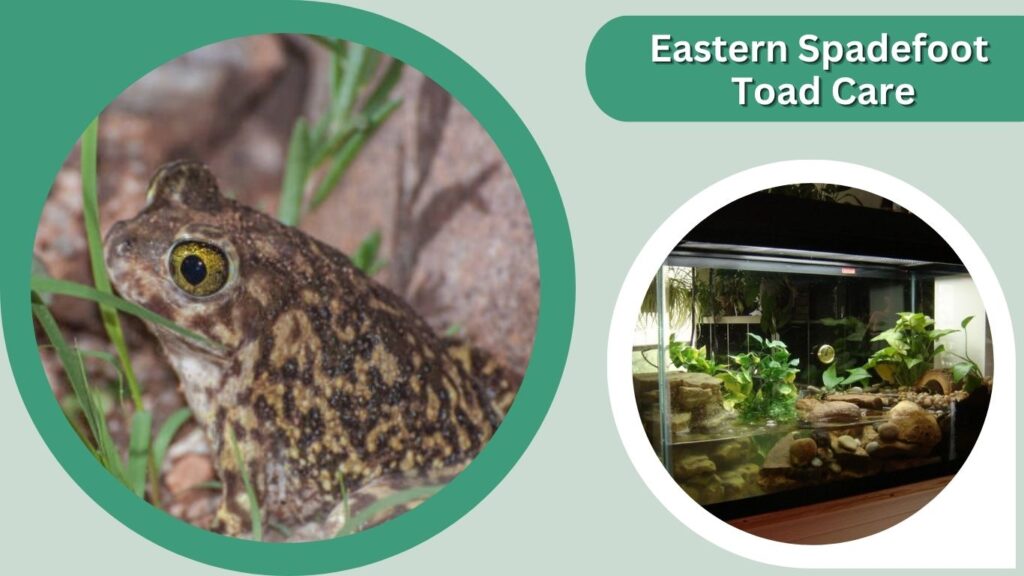
Eastern Spadefoot Toads are not ideal pets because they spend much of their life buried underground and have specific environmental needs. Many are native wildlife, and collecting them may be restricted or illegal in some states. For most people, ethical observation is better than keeping one in captivity.
Can You Keep an Eastern Spadefoot Toad as a Pet?
It is not recommended to collect wild Eastern Spadefoot Toads. Wild-caught animals may be stressed, may not eat well, and may need very specific soil, moisture, temperature, and breeding conditions. In areas where the species is rare or protected, collection can also harm local populations.
Eastern Spadefoot Toad Setup
A proper setup would need loose burrowing soil, controlled humidity, clean water, hiding areas, and suitable live insects. Because this species spends so much time underground, it may not be active or visible like common pet frogs. Anyone interested in amphibians should choose legal, captive-bred species instead.
Eastern Spadefoot Toad for Sale
People should avoid buying wild-caught Eastern Spadefoot Toads. A wild-caught sale may be harmful, unethical, or illegal depending on the state. If someone wants a pet amphibian, a legal captive-bred frog or toad from a responsible breeder is a better option.
Conservation Status
The Eastern Spadefoot Toad is not equally secure across its range. In some southeastern areas, it may be more widespread, while in northern states it can be rare, threatened, or protected. Habitat loss, road mortality, and destruction of temporary wetlands are major concerns for local populations.
Are Eastern Spadefoot Toads Endangered?
The Eastern Spadefoot Toad is not federally endangered across the United States. However, it may be listed as endangered, threatened, rare, or special concern in certain states. Its status depends on local population size, habitat availability, and state wildlife rules.
Why Are They Declining in Some Areas?
Eastern Spadefoot Toads decline when temporary wetlands are filled, drained, polluted, or separated from sandy upland habitat. Roads can also kill adults when they move during rainy nights. Pesticides, development, and climate-related changes in rainfall can make breeding less successful.
How People Can Help
People can help Eastern Spadefoot Toads by protecting temporary pools and sandy habitats. Avoid using pesticides near wetlands, drive carefully on rainy nights, and never collect wild spadefoots. In states where they are rare, sightings may be useful to local wildlife agencies or conservation groups.
FAQs
Are Eastern Spadefoot Toads poisonous?
Eastern Spadefoot Toads are not considered dangerously poisonous to humans. However, they may release skin secretions that can irritate some people. It is best to avoid handling them. If you touch one, wash your hands afterward and avoid touching your eyes or mouth.
What do Eastern Spadefoot Toads eat?
Adult Eastern Spadefoot Toads eat insects and other small invertebrates. Their diet may include ants, beetles, flies, termites, worms, crickets, spiders, and grasshoppers. Tadpoles live in temporary pools and may eat algae, organic matter, plant material, and other small food sources.
Where do Eastern Spadefoot Toads live?
Eastern Spadefoot Toads live in parts of the eastern United States. They prefer sandy soil, loose ground, pine woods, open fields, and temporary wetlands. They spend much of their life underground and usually come out after heavy rain to feed or breed.
What does an Eastern Spadefoot Toad sound like?
The Eastern Spadefoot Toad call is often described as a short, harsh, nasal “waah” sound. Some people compare it to a sheep-like bleat. Males usually call at night after heavy rain from temporary pools, flooded fields, or roadside ditches.
Are Eastern Spadefoot Toads endangered?
Eastern Spadefoot Toads are not federally endangered across the United States, but they are rare, threatened, or protected in some states. Habitat loss, road mortality, wetland drainage, pollution, and destruction of temporary breeding pools are major threats to local populations.
