
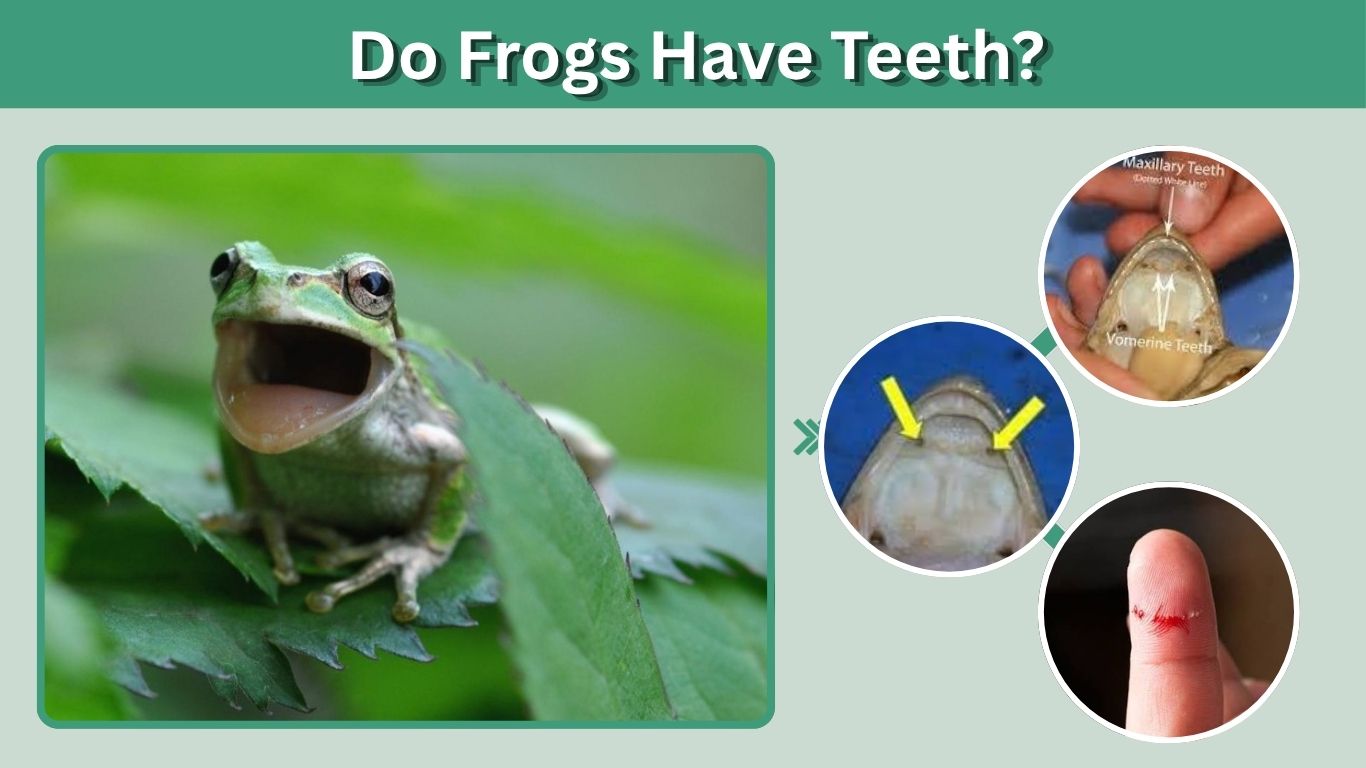
Do frogs have teeth? Many frog species do, although frog teeth are very different from human teeth and some frogs are completely toothless. When present, teeth usually occur along the upper jaw, while some species also have tiny vomerine teeth on the roof of the mouth. Frogs generally use these teeth to grip slippery prey rather than chew it. Tooth structure also varies widely among species, with Pacman frogs having unusually strong teeth and fang-like structures compared with many smaller frogs.
Do Frogs Really Have Teeth?
Yes, many frogs possess true teeth, but not all frogs have teeth. Frog dentition has changed repeatedly during millions of years of evolution. A major study examining hundreds of amphibian genera found that complete tooth loss evolved independently more than 20 times among frogs, making their dental evolution exceptionally diverse compared with most other vertebrates.
Where Are Frog’s Teeth?
In most toothed frogs, teeth can occur in two main areas:
- Premaxillary teeth: Along the front portion of the upper jaw
- Maxillary teeth: Along the sides of the upper jaw
- Vomerine teeth: Small teeth located on bones in the roof of the mouth
- Lower-jaw teeth: Extremely unusual among living frogs
A broad CT-scan study found upper-jaw teeth in many frog species, while vomerine teeth were considerably more variable. Nearly all living frogs lack true lower-jaw teeth.
Are Frog Teeth Easy to See?
Usually not. Frog teeth are often extremely small. Florida Museum researchers note that they are commonly less than 1 millimeter long, meaning you may not notice them even when looking directly into a frog’s mouth.
Larger predatory frogs can have much more obvious tooth-like structures, but typical frog teeth look nothing like large mammalian incisors or canine teeth.
What Types of Teeth Do Frogs Have?
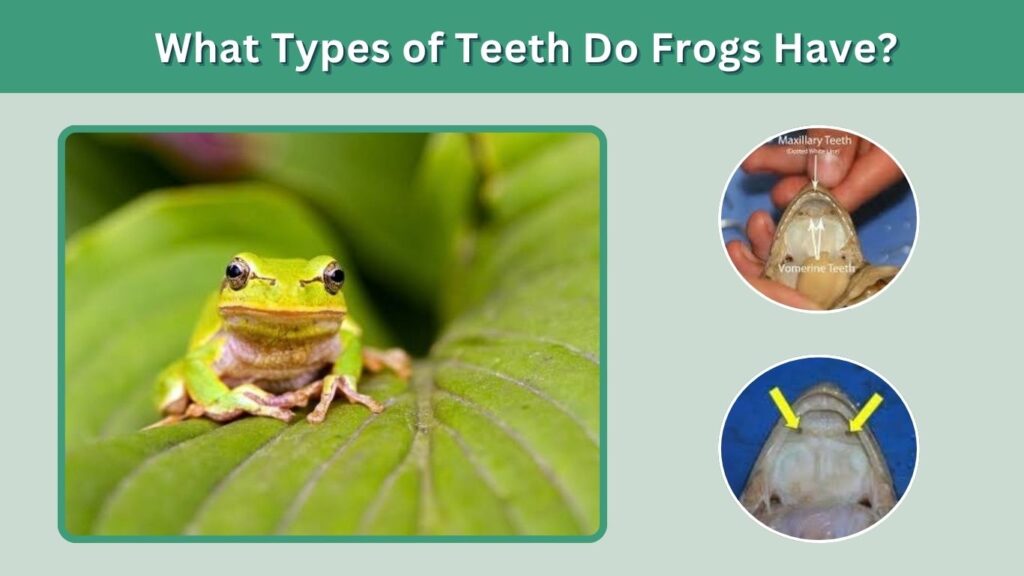
People often hear that frogs possess two “sets” of teeth: maxillary teeth and vomerine teeth. This is a useful simplified description, although frog anatomy is somewhat more complex. Teeth may also occur on the premaxilla at the front of the upper jaw. Their precise location and presence vary significantly among different frog families and species.
Maxillary Teeth
Maxillary teeth form tiny rows along the sides of the upper jaw. Together with teeth on the premaxilla, they help a frog maintain its grip on prey after capturing it.
Typical amphibian teeth are often small, relatively uniform, and continuously replaced during the animal’s life. Researchers describe many amphibian teeth as pedicellate, meaning the crown and base are separated by a specialized zone.
Vomerine Teeth
Vomerine teeth occur on the roof of the mouth rather than along the outer jaw.
They can help secure prey once it enters the mouth. However, not every toothed frog has vomerine teeth. In a large evolutionary study, vomerine teeth were found to be particularly variable and had apparently been lost many times during frog evolution.
Why Do Frogs Have Teeth?
Frogs generally swallow their prey whole, so they do not use teeth for chewing food into small pieces. Instead, teeth primarily help capture and restrain struggling prey while the frog positions it for swallowing. This is particularly useful when eating slippery insects, worms, small vertebrates, or other animals that might otherwise escape.
What Frog Teeth Are Used For
Frog teeth can help with:
- Holding slippery prey
- Preventing insects from escaping
- Securing larger prey
- Moving captured food toward the throat
- Supporting powerful predatory bites in some species
Most frogs rely heavily on their specialized tongue for catching prey, which helps explain why teeth are less essential for some species.
Why Do Frogs Have Teeth If They Don’t Chew?
Teeth do not need to be used for chewing to be useful.
Once a frog’s tongue brings an insect or other animal into its mouth, tiny teeth can help prevent the prey from escaping. The frog then uses movements of its mouth, throat, and body to move the prey backward before swallowing it largely whole.
Do All Frogs Have Teeth?
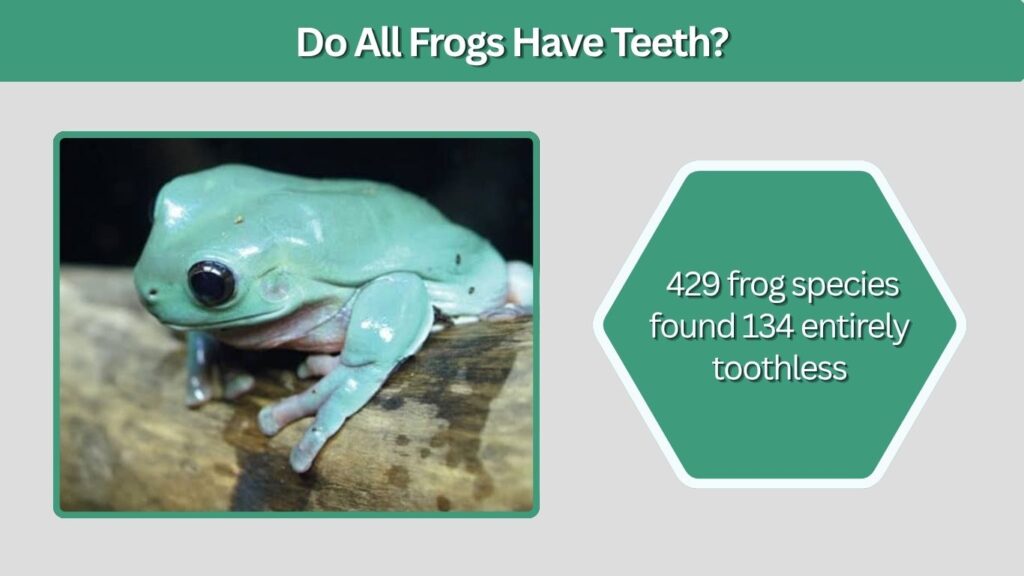
No. Some frogs possess upper-jaw and vomerine teeth, some retain only certain types, and others have lost teeth completely. Researchers examining 429 frog species found 134 entirely toothless species in their sample, demonstrating just how common dental loss has become during frog evolution.
Why Are Some Frogs Toothless?
Scientists have found a strong association between toothlessness and diets dominated by very small prey such as:
- Ants
- Termites
- Mites
- Other tiny invertebrates
A frog capable of collecting tiny insects with a highly specialized tongue may receive relatively little benefit from maintaining teeth. Tooth loss appears to have evolved independently in multiple frog lineages.
Do Toads Have Teeth?
Many familiar true toads in the family Bufonidae are toothless. This contributes to the common statement that “frogs have teeth but toads do not,” although the distinction is oversimplified because frog dentition varies enormously across the entire order Anura.
Toads compensate with effective tongue-based prey capture and generally swallow small prey whole.
Do Pacman Frogs Have Teeth?
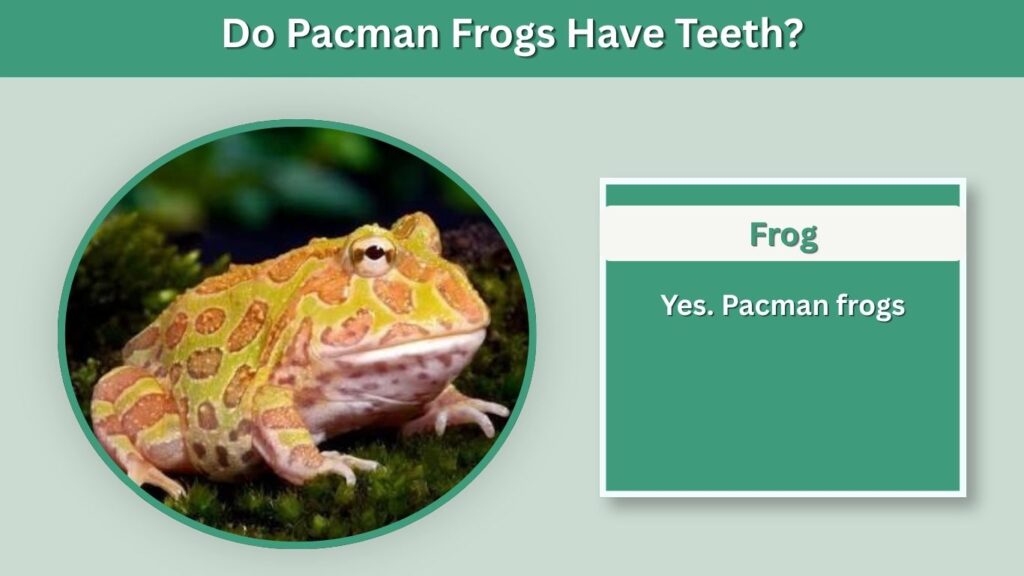
Yes. Pacman frogs, or South American horned frogs in the genus Ceratophrys, have some of the most impressive dental adaptations among living frogs. Their predatory lifestyle involves capturing relatively large prey and holding it with powerful jaws, so their mouth anatomy is much more formidable than that of many insect-eating frog species.
Pacman Frog Teeth and Fangs
Pacman frogs possess:
- Sharp upper-jaw teeth
- Strongly attached teeth
- Recurved tooth tips
- Robust tooth bases
- Two prominent lower-jaw odontoids
- Exceptionally strong jaws for a frog
The lower structures are odontoids, or tooth-like bony projections, rather than ordinary true teeth. Research on Ceratophrys cranwelli shows that its actual teeth occur on the upper jaw.
Can a Pacman Frog Bite Hurt?
Yes. Pacman frogs are unusually willing and able to bite compared with many frogs.
Researchers measured bite forces ranging from 2.7 to 32.9 newtons among growing Cranwell’s horned frogs in one study, with larger animals producing stronger bites. Their sharp teeth and robust jaws are specialized for holding relatively large, struggling prey.
Do Tree Frogs Have Teeth?
Many tree frogs possess tiny teeth in the upper jaw, although dentition varies among species and evolutionary lineages. Their teeth are normally far smaller and less noticeable than the impressive structures found in Pacman frogs. Tree frogs primarily capture insects using their rapidly projecting, adhesive tongues rather than relying heavily on powerful jaws.
Green, Red-Eyed and White’s Tree Frogs
Commonly kept tree frogs may possess tiny upper-jaw teeth, but you generally will not see obvious teeth when looking at the animal.
Even when a tree frog bites defensively, its tiny teeth are primarily designed for restraining prey rather than attacking large animals. Exact dental anatomy should therefore be considered on a species-by-species basis rather than assuming every tree frog is identical.
Do Tree Frogs Bite People?
A frightened or restrained tree frog may attempt to bite, particularly larger species, but most are not aggressive toward humans.
Unnecessary handling is best avoided anyway because amphibian skin is delicate and readily exchanges moisture and chemicals with its surroundings.
Do Poison Dart Frogs Have Teeth?
Dentition among poison frogs is more complicated than a simple yes-or-no answer. Tooth loss has evolved in some poison frog lineages, particularly among species specializing in very small prey such as ants and mites. These tiny prey can be captured efficiently with a specialized tongue without requiring teeth for restraint.
Diet Influenced Frog Tooth Evolution
Scientists found that completely toothless frogs were strongly associated with microphagy, meaning diets dominated by tiny invertebrates.
Poison frogs provide a useful example because many obtain defensive alkaloid chemicals from ants and mites in their natural diet. Specialized feeding on such small prey likely reduced the evolutionary pressure to retain teeth.
Are All Poison Frogs Toothless?
No. Dental characteristics vary among poison frog lineages, so it would be inaccurate to say every poison dart frog lacks teeth.
This variation is part of a broader pattern across frogs: closely related species can sometimes differ substantially in whether they retain particular types of teeth.
How Many Teeth Do Frogs Have?
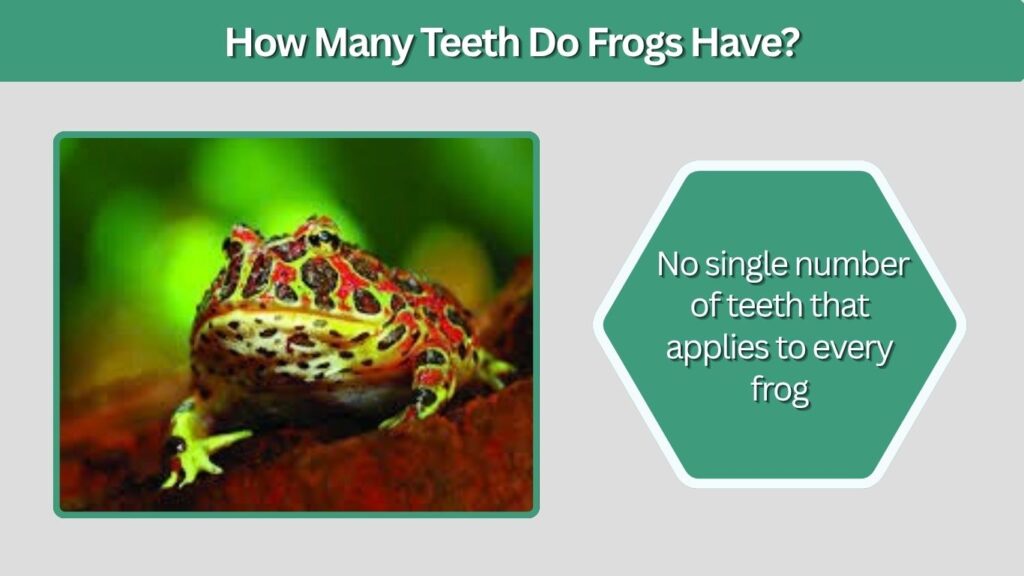
There is no single number of teeth that applies to every frog. Tooth number varies with species, body size, age, anatomy, and tooth replacement. Some frogs have numerous tiny upper-jaw teeth, others possess fewer teeth, and many species have none whatsoever.
Why There Is No Standard Tooth Count
The number varies because:
- Different species have different jaw sizes.
- Some frogs lack vomerine teeth.
- Some frogs are entirely toothless.
- Teeth are replaced throughout life.
- Tooth number can vary even among related species.
- Unusual species have highly specialized dental structures.
For this reason, claims that every frog has a particular fixed number of maxillary or vomerine teeth should be treated cautiously.
Which Frog Has Lower-Jaw Teeth?
One living species is particularly unusual: Guenther’s marsupial frog (Gastrotheca guentheri).
Research has confirmed that it is the only known living frog with true teeth on both its upper and lower jaws. Almost every other toothed frog lacks true dentary teeth on the lower jaw.
Do Frogs Bite Humans?
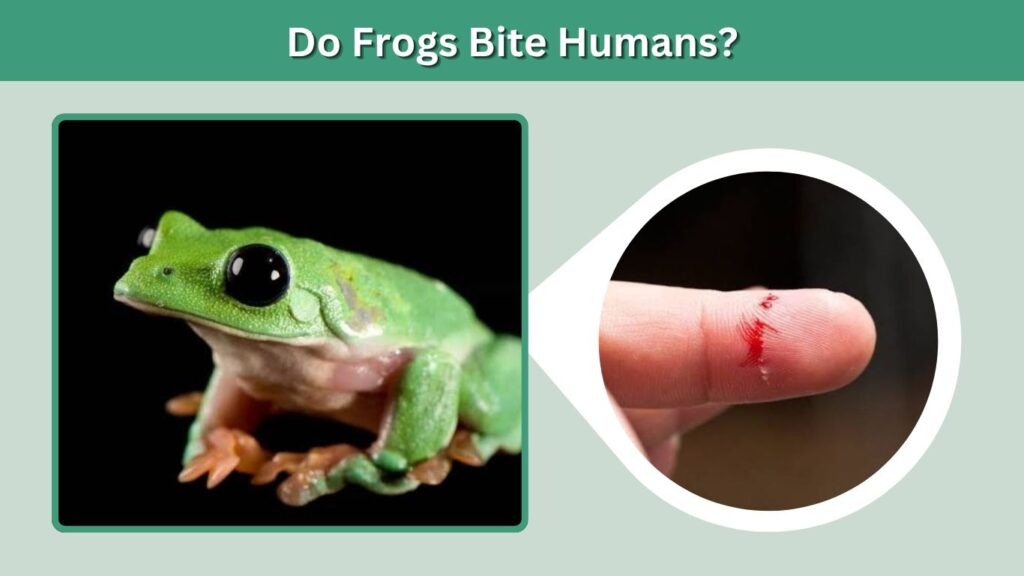
Frogs can bite, although most species would rather escape than fight a person. Defensive biting becomes more likely when a frog is grabbed, restrained, frightened, or mistakes a moving finger for food. Larger predatory frogs have enough jaw strength for their bites to be noticeably painful.
Frogs More Likely to Deliver a Strong Bite
Larger predatory species may include:
- Pacman or horned frogs
- Large bullfrog-type species
- African bullfrogs or pixie frogs
- Other large frogs that consume vertebrate prey
Pacman frogs are particularly notable because their strong jaws, sharp upper teeth, and lower-jaw odontoids are adapted for restraining powerful prey.
Are Frog Teeth Dangerous?
For most species, the tiny teeth pose little threat to people. A large predatory frog can still produce a painful bite and potentially break the skin.
Avoid intentionally placing fingers in a frog’s mouth. If a bite breaks the skin, wash the area thoroughly with soap and water and monitor it for signs of infection.
FAQs
1. Do frogs have teeth in their upper jaw?
Many frogs do. Toothed species commonly possess premaxillary and maxillary teeth along the upper jaw, and some also have vomerine teeth on the roof of the mouth. However, frog dentition varies greatly, and many species have completely lost their teeth during evolution.
2. Do frogs have sharp teeth?
Most frog teeth are extremely small and are designed mainly for gripping prey rather than chewing. Some predatory species are different. Pacman frogs have sharp, recurved upper-jaw teeth and large lower-jaw odontoids that help them penetrate and hold struggling prey securely.
3. How many teeth does a frog have?
There is no universal number. Tooth counts differ between species and can vary according to jaw structure and the presence or absence of vomerine teeth. Some frogs possess numerous tiny teeth, while others are completely toothless, so a single tooth count cannot accurately describe all frogs.
4. Do frogs have teeth and bite?
Yes, many frogs have teeth and are capable of biting. Most small species rarely bite humans and primarily use their teeth to restrain prey. Large predatory species such as Pacman frogs have stronger jaws and can deliver noticeably more powerful bites when feeding or defending themselves.
5. Why do frogs have teeth if they swallow food whole?
Frogs use their teeth mainly to hold prey rather than chew it. Tiny teeth can prevent insects and other animals from escaping after capture while the frog moves the prey toward its throat. Species specializing in extremely small prey have frequently lost teeth because gripping them is less necessary.
