
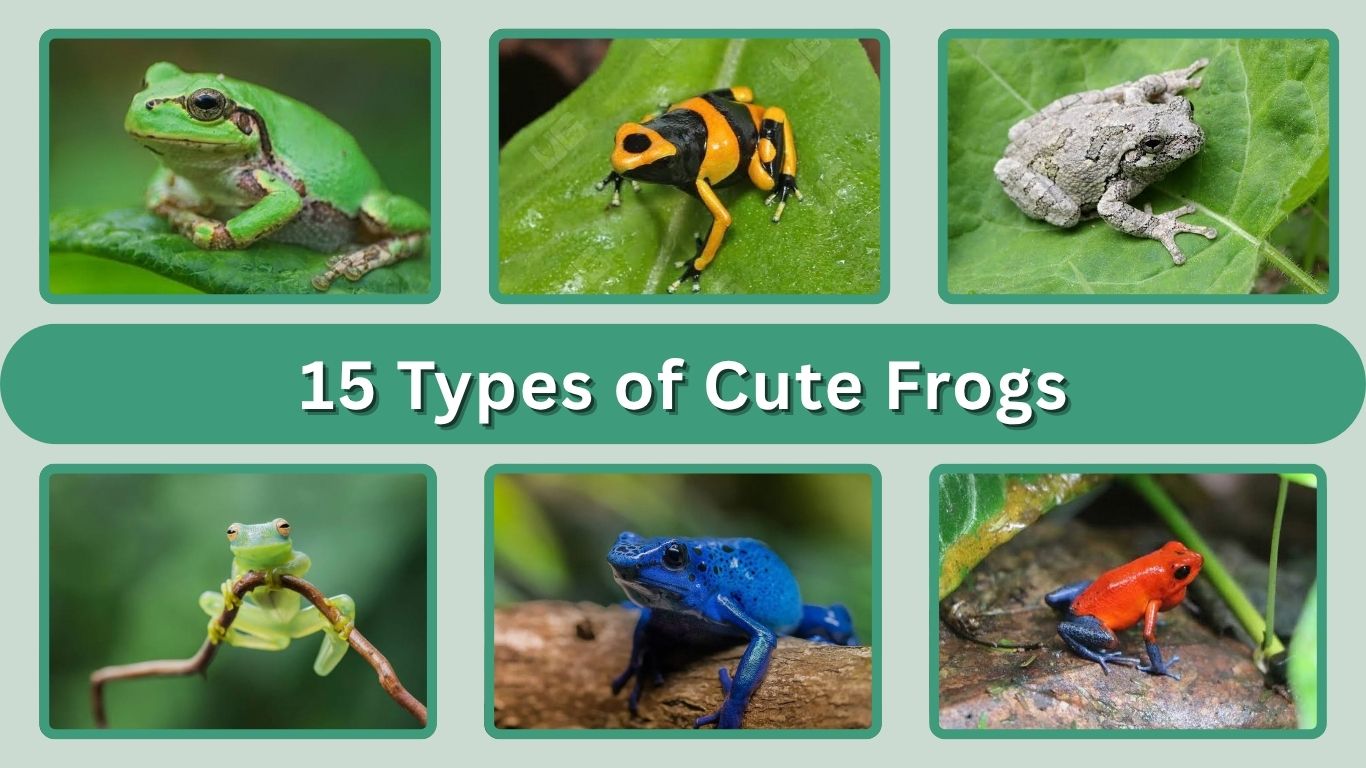
Frogs come in an amazing variety of shapes, colors, sizes, and personalities, and some species look especially adorable. From the round Desert Rain Frog and wide-mouthed Pacman Frog to colorful poison dart frogs and big-eyed tree frogs, each species has unique features that make it stand out. Some are cute because of their tiny size, while others have unusual faces, bright colors, or charming behaviors. Here are 15 types of cute frogs, along with their identification, habitat, behavior, diet, and life cycle.
1. Desert Rain Frog
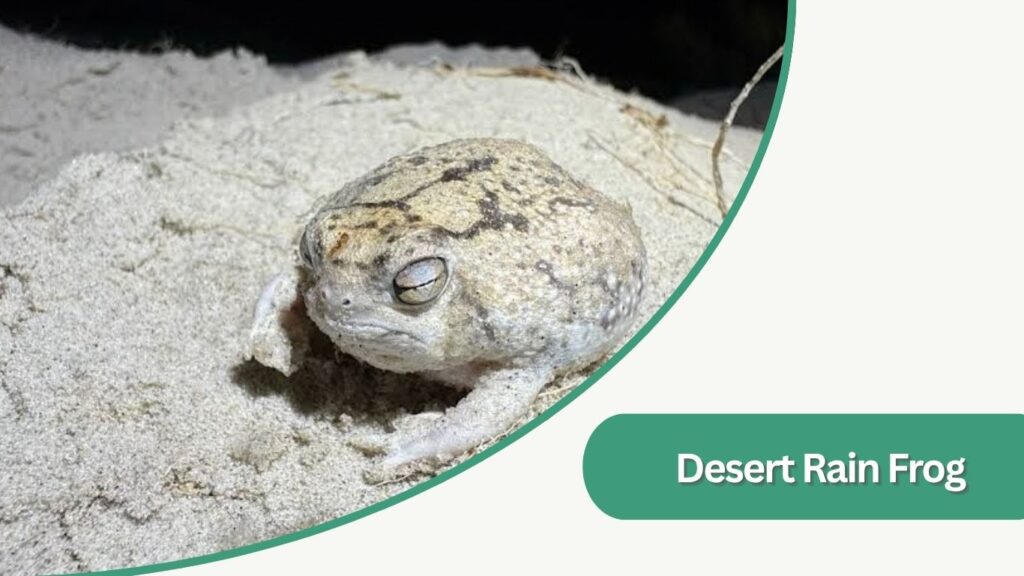
The Desert Rain Frog is one of the cutest and most unusual frogs in the world. Its round body, short legs, tiny face, and grumpy-looking expression have made it especially popular among frog lovers. Native to sandy coastal areas of southern Africa, this small frog spends much of its life hidden beneath the sand. When threatened, it can inflate its body and produce a surprisingly high-pitched squeak.
Identification
- Small, round body shape
- Usually about 1.5–2 inches long
- Short legs compared with many other frogs
- Sandy yellow, brown, or tan coloration
- Large, dark eyes
- Short snout and tiny mouth
- Slightly wrinkled or granular skin
- Plump appearance with a flattened underside
Habitat and Distribution
The Desert Rain Frog lives mainly along the sandy coastal regions of Namibia and South Africa. It prefers areas with loose sand, low vegetation, and enough moisture beneath the surface to keep its skin from drying out.
Unlike many frogs, it does not depend heavily on ponds or permanent bodies of water. During dry or hot periods, it burrows into the sand and remains hidden underground where conditions are cooler and more humid.
Behavior and Sounds
This frog is mostly active at night. After rain or during humid conditions, it may emerge from its burrow to search for food.
One of its most famous behaviors is its defensive squeak. When frightened, the Desert Rain Frog can puff up its body and produce a sharp, high-pitched sound. Its small size and unusually serious facial expression make this behavior look especially adorable to people.
Diet and Life Cycle
Desert Rain Frogs feed mainly on small insects and other tiny invertebrates found in sandy habitats. Their diet may include beetles, ants, and other small arthropods.
Reproduction is adapted to their dry environment. Rather than depending on open water like many frog species, they lay eggs in moist underground areas. The young develop in protected conditions, helping them survive in a habitat where permanent freshwater is limited.
2. Red-Eyed Tree Frog
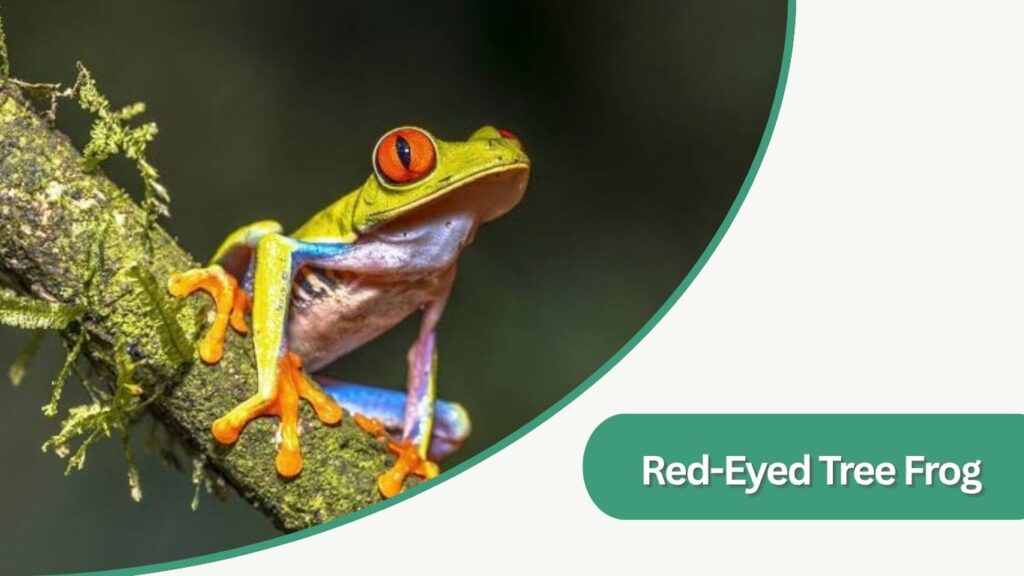
The Red-Eyed Tree Frog is one of the most recognizable cute frogs because of its bright colors and oversized red eyes. Native to the tropical forests of Central America, this small tree-dwelling frog spends much of its time resting on leaves above ponds and streams. Its vivid appearance helps make it popular in wildlife photography, while its nighttime activity and graceful climbing behavior make it especially interesting to observe.
Identification
- Bright green body
- Large red eyes
- Blue and yellow coloring along the sides
- Orange or reddish feet
- Long, slender legs
- Rounded adhesive toe pads
- Smooth skin
- Usually about 2–3 inches long
Habitat and Distribution
Red-Eyed Tree Frogs live in humid tropical rainforests from southern Mexico through parts of Central America. They are usually found in vegetation near ponds, streams, and other freshwater breeding sites.
During the day, they often rest on the undersides of leaves with their legs tucked close to the body. Their green coloring helps them blend into foliage while sleeping.
Behavior and Personality
These frogs are mainly nocturnal. At night, they become active and move between leaves and branches while hunting for food.
Their large eyes may also help startle predators when the frog suddenly opens them. Despite their dramatic appearance, they are generally quiet, cautious animals that rely heavily on camouflage and quick movement for protection.
Diet and Life Cycle
Red-Eyed Tree Frogs eat insects such as crickets, moths, flies, and other small invertebrates.
Females lay clusters of eggs on leaves hanging over water. When the tadpoles hatch, they drop directly into the pond or water below, where they continue developing before transforming into young frogs.
3. Amazon Milk Frog
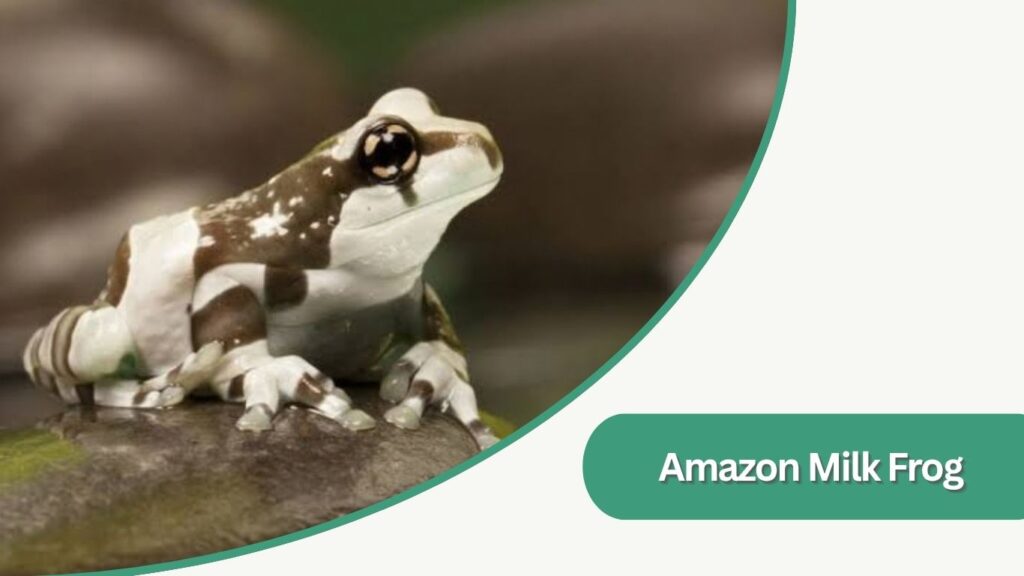
The Amazon Milk Frog is a chunky, attractive tree frog known for its large golden eyes and contrasting gray, brown, and cream markings. Its round body and prominent toe pads give it a particularly cute appearance. The species gets its name from the milky defensive secretion it can produce when severely threatened.
Identification
- Gray, brown, or bluish-gray body
- Cream or dark irregular bands
- Large golden eyes
- Black cross-like pattern in the eyes
- Large adhesive toe pads
- Thick, rounded body
- Slightly bumpy skin
- Often reaches about 2.5–4 inches
Habitat and Distribution
Amazon Milk Frogs inhabit tropical rainforest regions of northern South America. They are strongly arboreal and spend much of their time in trees near slow-moving water or water-filled tree cavities.
Their climbing ability allows them to move easily across branches and broad leaves, while humid rainforest conditions help keep their skin moist.
Behavior and Activity
These frogs are mainly active at night. They often remain hidden or motionless during the day and emerge after dark to hunt.
Their large toe pads provide excellent grip on bark and leaves. When threatened, the skin can produce a sticky whitish secretion that helps discourage predators.
Diet and Life Cycle
Amazon Milk Frogs eat crickets, moths, beetles, cockroaches, and other insects.
Breeding often occurs in water-filled tree holes or similar cavities. Females lay eggs above or in the water, and the tadpoles develop in these small aquatic environments before completing metamorphosis.
4. White’s Tree Frog
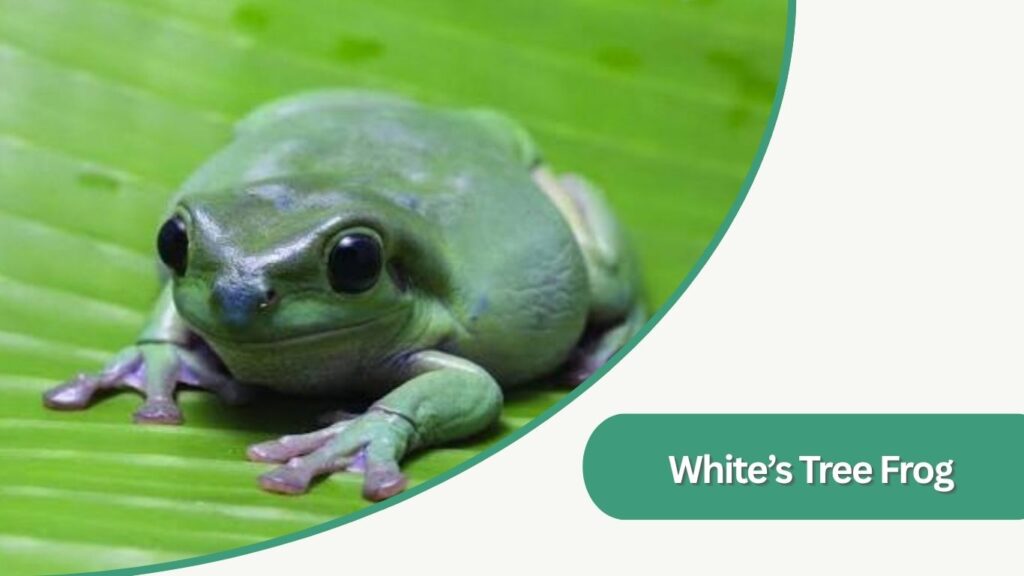
The White’s Tree Frog, also called the Australian Green Tree Frog, is famous for its relaxed expression, round body, and friendly-looking face. Its calm appearance has made it one of the most popular frogs among amphibian enthusiasts. Native to Australia and nearby regions, it is a sturdy tree frog that can survive in a variety of warm, humid environments.
Identification
- Green, blue-green, or turquoise body
- Plump and rounded shape
- Large golden or dark eyes
- Wide mouth
- Large adhesive toe pads
- Smooth to slightly waxy skin
- Pale underside
- Usually about 3–4.5 inches long
Habitat and Distribution
White’s Tree Frogs occur in northern and eastern Australia and parts of New Guinea. They live in forests, woodlands, wetlands, and areas close to human buildings.
They are especially good climbers and frequently shelter in tree hollows, roof spaces, pipes, and other protected locations where humidity remains relatively high.
Behavior and Temperament
This frog is mostly nocturnal and spends much of the daytime resting. It is often described as calm because it tends to move slowly unless hunting or escaping danger.
Its skin produces natural secretions that help reduce water loss, allowing it to tolerate somewhat drier conditions than many other tree frogs.
Diet and Life Cycle
White’s Tree Frogs feed on insects, spiders, and other small animals. Larger individuals may occasionally eat small vertebrates if they can capture them.
Females lay large groups of eggs in water. Tadpoles hatch and grow in ponds or temporary pools before transforming into young frogs and moving onto land and vegetation.
5. Vietnamese Mossy Frog
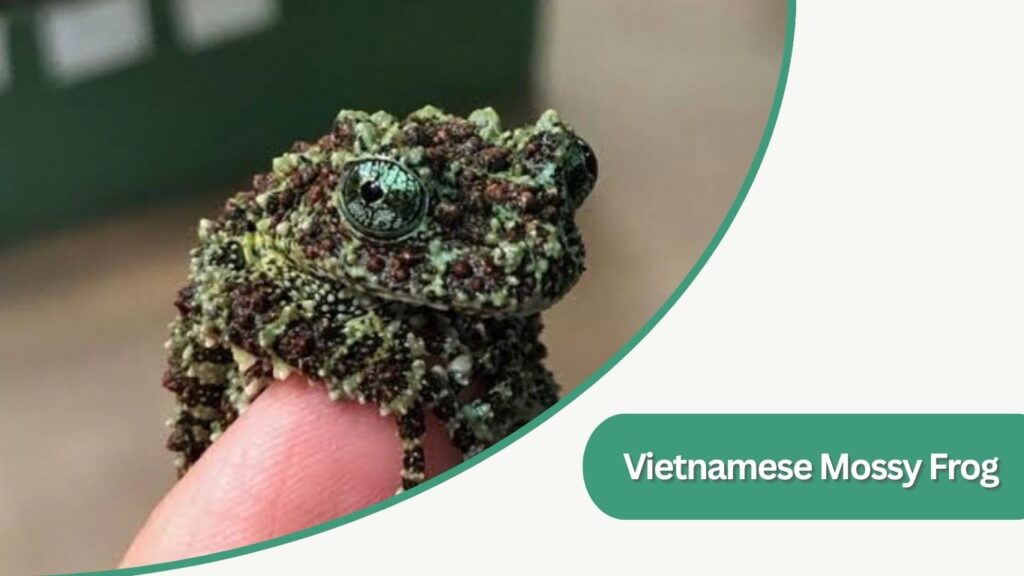
The Vietnamese Mossy Frog has one of the most unusual appearances of any cute frog. Its green, black, and brown skin is covered with bumps and folds that make it look remarkably similar to a patch of moss. This natural camouflage helps the frog disappear almost completely against wet rocks, tree bark, and vegetation.
Identification
- Moss-green body
- Dark brown or black markings
- Heavily textured, bumpy skin
- Large rounded eyes
- Broad head
- Strong adhesive toe pads
- Compact body
- Usually about 2.5–3.5 inches long
Habitat and Distribution
Vietnamese Mossy Frogs are native to parts of northern Vietnam and nearby regions. They prefer cool, humid forests containing rocky streams, caves, pools, and abundant moss.
They often remain close to water and use their extraordinary camouflage to blend into wet surfaces. Their appearance can make them extremely difficult to spot when they remain motionless.
Behavior and Camouflage
These frogs are mainly nocturnal. During the day, they typically hide among moss, rocks, and vegetation.
When threatened, a Vietnamese Mossy Frog may remain completely still rather than immediately jumping away. Its irregular skin texture and mottled green coloration break up its body outline, helping it resemble the surrounding environment.
Diet and Life Cycle
Vietnamese Mossy Frogs feed mainly on insects and other small invertebrates.
Females lay eggs in protected locations above or near water. After hatching, the tadpoles enter the water below and continue developing there until metamorphosis. Moist, shaded environments are essential throughout their life cycle.
6. Tomato Frog
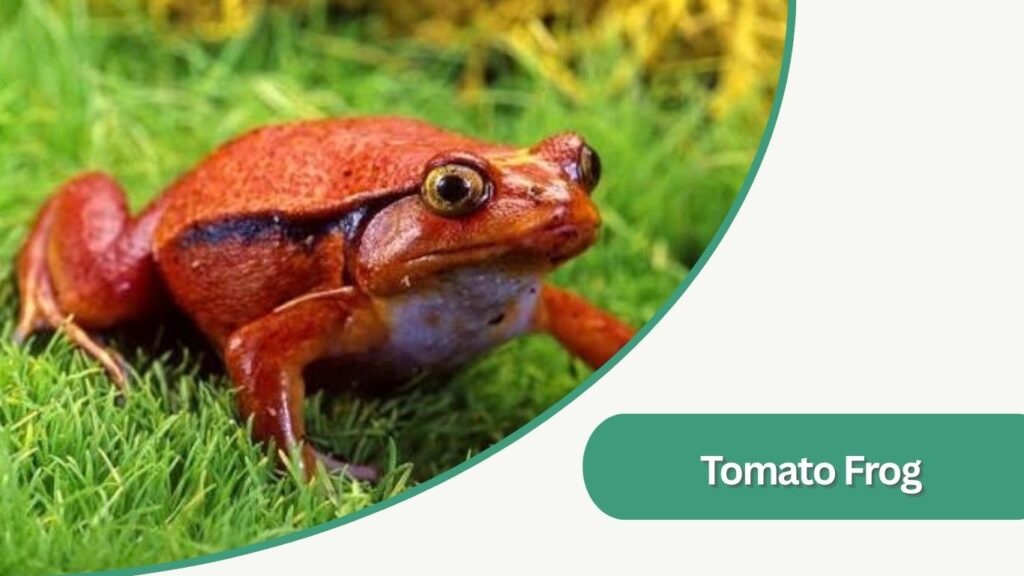
The Tomato Frog is a round, brightly colored frog native to Madagascar. Its plump body and vivid red or orange coloration give it a cartoon-like appearance, making it one of the cutest and easiest frogs to recognize. When threatened, it can inflate its body to appear larger and may release a sticky defensive substance from its skin.
Identification
- Bright red, orange, or reddish-brown body
- Round and stocky shape
- Short legs
- Wide mouth
- Pale underside
- Smooth to slightly textured skin
- Females are larger and brighter than males
- Usually about 2.5–4 inches long
Habitat and Distribution
Tomato Frogs occur in eastern and northeastern Madagascar, especially around wetlands, ponds, slow-moving water, gardens, and moist lowland habitats.
They spend much of their time on or close to the ground rather than climbing high into trees. Soft soil and leaf litter provide useful hiding places during dry or hot periods.
Behavior and Defense
Tomato Frogs are generally slow-moving and prefer to remain hidden rather than actively flee from danger.
When disturbed, they can inflate their bodies dramatically, making themselves appear larger and harder for a predator to swallow. Their skin can also release a sticky secretion that provides additional protection.
Diet and Life Cycle
Tomato Frogs eat insects, worms, and other small invertebrates. They are ambush predators and often wait until prey moves close enough to capture.
During breeding periods, females lay eggs in shallow water. Tadpoles develop in ponds or temporary pools and eventually transform into small terrestrial frogs that move into surrounding moist habitats.
7. Strawberry Poison Dart Frog
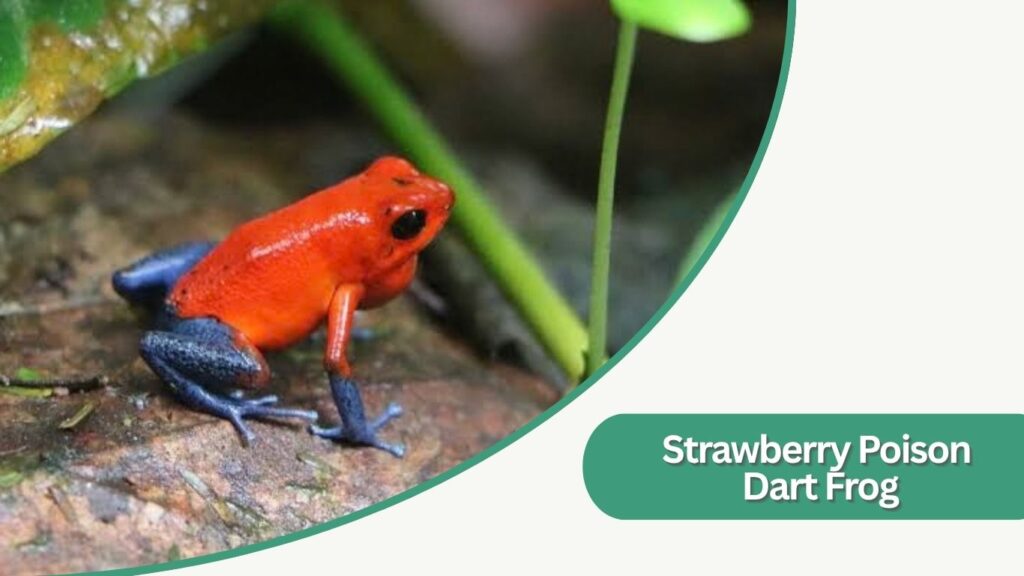
The Strawberry Poison Dart Frog is a tiny, brilliantly colored frog native to Central America. Its bright red body and contrasting blue, black, or dark legs give it a toy-like appearance that makes it especially popular among frog enthusiasts. Despite its small size, this species is famous for its vivid warning colors and fascinating parental behavior.
Identification
- Usually about 0.7–1 inch long
- Bright red, orange, or reddish body
- Legs may be blue, black, or dark-colored
- Smooth skin
- Small rounded head
- Dark eyes
- Slender legs
- Color pattern varies between populations
Habitat and Distribution
Strawberry Poison Dart Frogs live mainly in humid tropical forests of Central America, particularly in countries such as Costa Rica, Nicaragua, and Panama.
They spend much of their time on the forest floor among leaf litter, roots, fallen branches, and low vegetation. Constant moisture is important because their skin must remain damp.
Behavior and Communication
These frogs are active during the daytime, unlike many nocturnal frog species. Males produce soft calls to attract females and defend territories.
Their bright coloration acts as a warning to predators. In the wild, their skin toxins are linked to compounds obtained through their natural diet. Captive individuals generally lose much of this toxicity when fed different foods.
Diet and Life Cycle
Strawberry Poison Dart Frogs consume tiny ants, mites, and other small arthropods.
After eggs hatch, the female carries tadpoles individually to small pools of water, often inside bromeliad plants. She may later return and provide unfertilized eggs as food for the developing tadpoles, making their parental care unusually complex for frogs.
8. Blue Poison Dart Frog
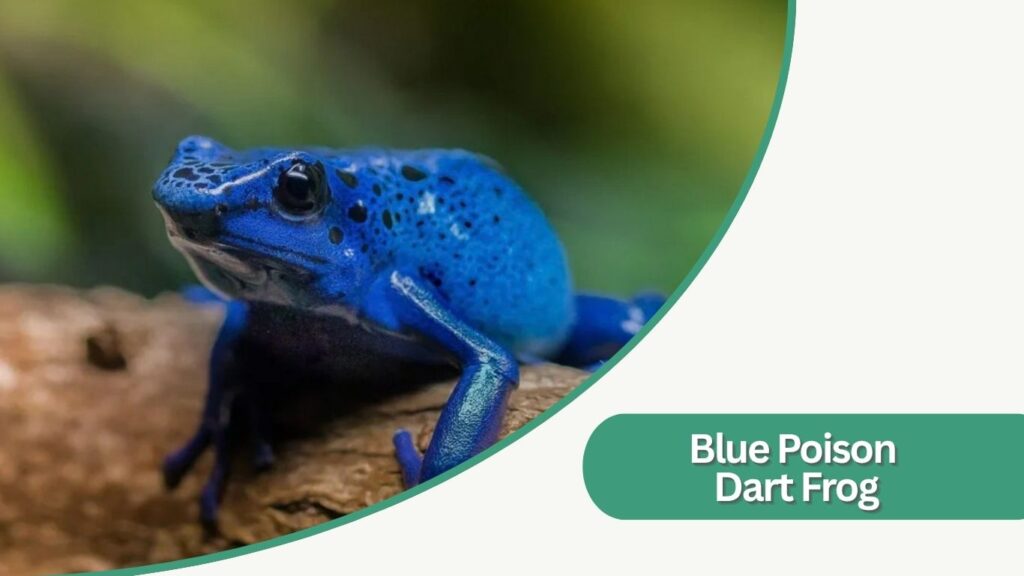
The Blue Poison Dart Frog is instantly recognizable for its brilliant blue coloration covered with irregular dark markings. Its small body, rounded face, and striking pattern give it an especially cute appearance. Native to a restricted part of northern South America, this colorful frog spends much of its life among moist leaf litter on the rainforest floor.
Identification
- Bright cobalt or sky-blue body
- Irregular black spots and markings
- Usually about 1.2–2 inches long
- Dark eyes
- Compact body
- Long toes
- Smooth skin
- Individual spot patterns vary
Habitat and Distribution
Blue Poison Dart Frogs occur in humid forest habitats in parts of Suriname and nearby regions. They prefer areas with consistently high humidity, leaf litter, small streams, and abundant hiding places.
They are mostly terrestrial and remain close to the forest floor, although they can climb low vegetation when needed.
Behavior and Defense
These frogs are active during daylight hours. Their bright blue coloration serves as warning coloration, signaling to predators that they may be chemically defended.
Males can be territorial and use calls to communicate with nearby frogs. They may defend small areas containing good feeding or breeding sites.
Diet and Life Cycle
Blue Poison Dart Frogs feed on ants, termites, mites, beetles, and other tiny invertebrates.
Females lay relatively small clutches of eggs in damp protected places. After hatching, a parent transports the tadpoles to water, where they continue developing until metamorphosis. Young frogs gradually develop the vivid coloration associated with adults.
9. Budgett’s Frog
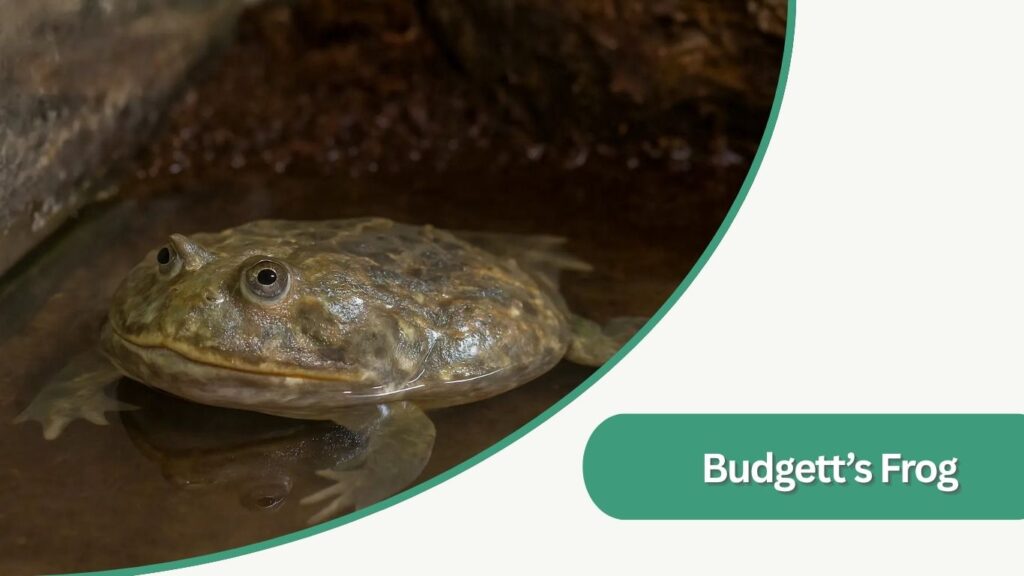
The Budgett’s Frog is one of the strangest and cutest-looking frogs because of its extremely wide mouth, flattened body, tiny eyes, and almost comical expression. Native to South America, it spends much of its life in or near water. When threatened, it can inflate itself, open its enormous mouth, and produce surprisingly loud defensive sounds.
Identification
- Broad, flattened body
- Extremely large mouth
- Small eyes positioned high on the head
- Olive, gray, or brown coloration
- Short limbs
- Smooth skin
- Rounded appearance
- Can reach roughly 4–5 inches long
Habitat and Distribution
Budgett’s Frogs occur in seasonal wetlands of Paraguay, Bolivia, Argentina, and surrounding areas.
They are highly aquatic during the rainy season and often remain submerged with only their eyes and nostrils visible. When seasonal pools begin to dry, they can burrow into mud and enter a dormant state until wetter conditions return.
Behavior and Defense
Budgett’s Frogs are known for dramatic defensive behavior. If threatened, they may puff themselves up, open their mouths widely, and produce loud squealing or screaming sounds.
Their huge mouths are not just for display. They are powerful ambush predators and can capture surprisingly large prey compared with their body size.
Diet and Life Cycle
Budgett’s Frogs eat insects, worms, crustaceans, other frogs, and small aquatic animals.
Breeding occurs during seasonal rains. Females deposit eggs in temporary pools, where tadpoles grow rapidly because the water may disappear within a relatively short period. Young frogs must complete metamorphosis before their aquatic habitat dries.
10. Pacman Frog
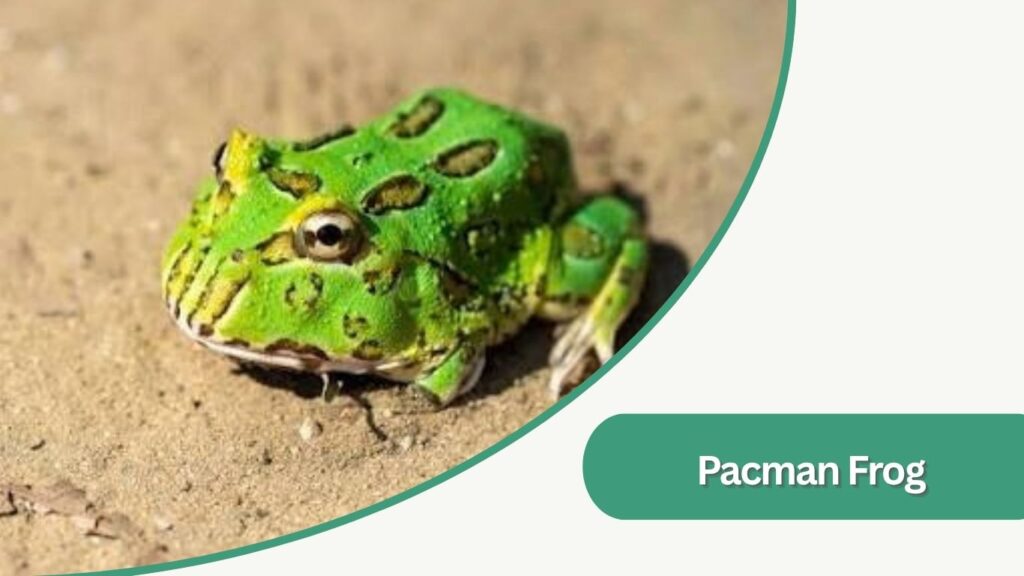
The Pacman Frog is a round, colorful frog named after the classic video-game character because its body seems dominated by an enormous mouth. Several closely related horned frogs are commonly called Pacman frogs. Their chunky shape, tiny legs, expressive eyes, and wide range of colors make them some of the most recognizable cute frogs in the world.
Identification
- Very round, heavy body
- Extremely wide mouth
- Small horn-like projections above the eyes
- Short legs
- Green, brown, yellow, orange, or patterned coloration
- Large head
- Smooth to slightly textured skin
- Adults commonly reach several inches long
Habitat and Distribution
Pacman frogs are native to South America, where different horned frog species inhabit grasslands, forests, wetlands, and seasonally moist areas.
They spend much of their time partly buried in soil or leaf litter. Instead of actively chasing prey, they often wait motionlessly until an animal moves within striking range.
Behavior and Hunting
Pacman frogs are classic ambush predators. Their large mouths allow them to grab prey quickly, while their camouflage helps them remain hidden.
They are generally solitary and may behave aggressively toward smaller frogs. Their inactive, buried lifestyle also helps conserve moisture during periods when conditions become dry.
Diet and Life Cycle
Pacman frogs eat insects, worms, spiders, and other small animals. Large individuals may consume small vertebrates.
During the breeding season, females deposit eggs in temporary or permanent water. Tadpoles grow rapidly and can be quite predatory themselves. After metamorphosis, young frogs adopt the ground-dwelling ambush lifestyle characteristic of adults.
11. Glass Frog
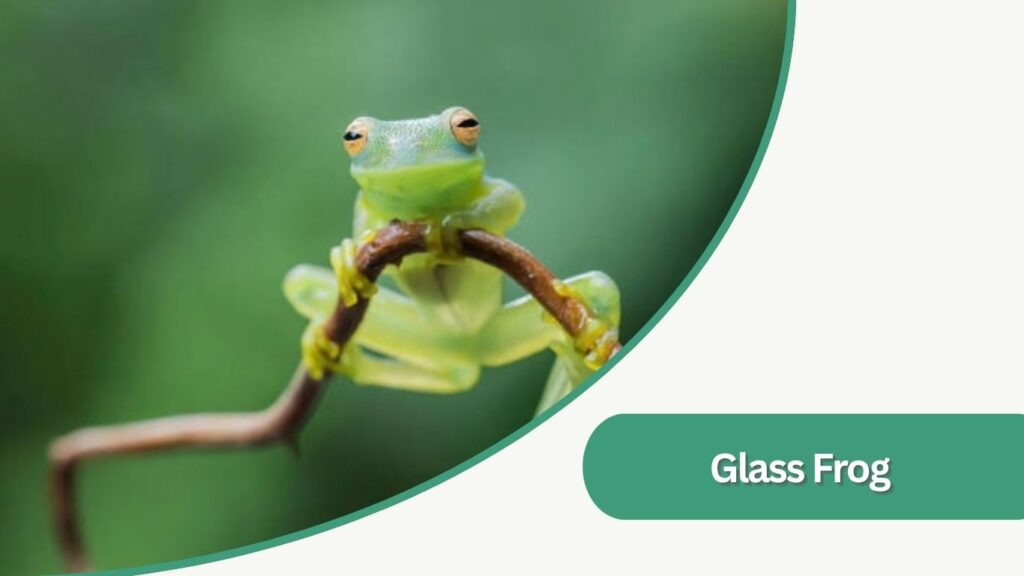
The Glass Frog is one of the most delicate and unusual-looking frogs in the world. Many species have bright green backs and partially transparent undersides, allowing some internal organs to be visible through the skin. Their tiny bodies, large eyes, slender limbs, and almost jewel-like appearance make glass frogs especially appealing to wildlife enthusiasts.
Identification
- Small body, often around 1–3 inches long
- Bright or pale green upper surface
- Partially transparent underside
- Large forward-facing eyes
- Slender legs
- Rounded adhesive toe pads
- Smooth skin
- Some species have tiny spots or markings
Habitat and Distribution
Glass frogs are found throughout parts of Central and South America, particularly in humid forests near streams and rivers.
They usually live in vegetation above flowing water. Their green coloration provides excellent camouflage against leaves, while their transparent underside may further reduce their visibility to predators.
Behavior and Camouflage
Glass frogs are mainly nocturnal. During the day, they often rest motionless on leaves, blending closely with surrounding vegetation.
At night, males call from leaves above streams to attract females. Some species also show remarkable parental care, with males remaining near egg clutches to protect them from predators and drying.
Diet and Life Cycle
Glass frogs feed mainly on small insects, flies, moths, spiders, and other tiny invertebrates.
Females commonly lay eggs on leaves positioned above streams. When the embryos hatch, the tadpoles drop directly into the water below. They continue developing in the stream until metamorphosis, after which young frogs move into nearby vegetation.
12. Bumblebee Poison Dart Frog
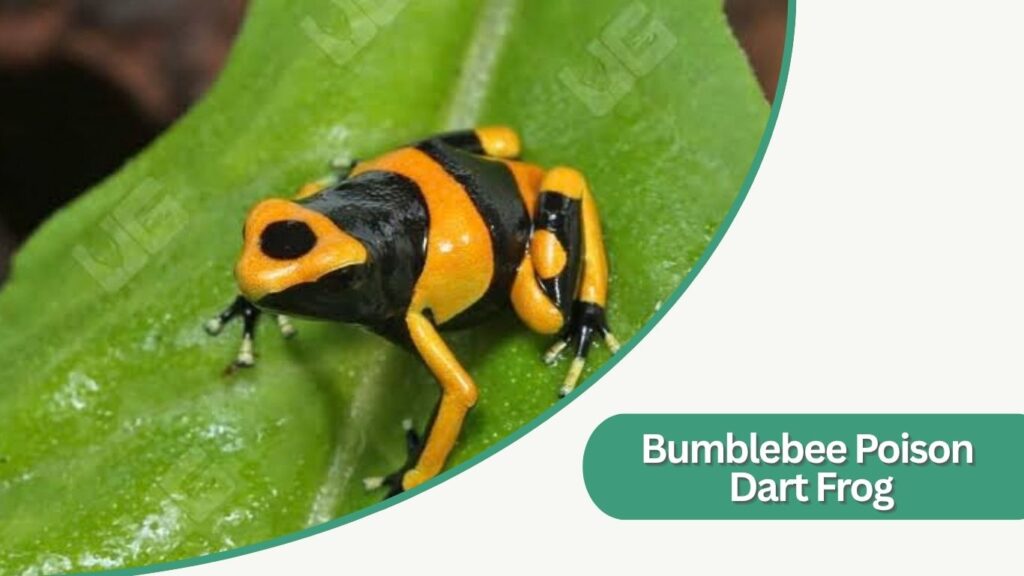
The Bumblebee Poison Dart Frog is a tiny, brightly patterned frog famous for its bold yellow-and-black coloration. Its contrasting markings resemble the colors of a bumblebee, which explains its common name. Native to tropical forests of South America, this species spends much of its time close to the forest floor, where its brilliant colors make it one of the cutest and most eye-catching poison dart frogs.
Identification
- Bright yellow body with black bands or patches
- Usually around 1–2 inches long
- Smooth skin
- Compact body shape
- Dark eyes
- Slender legs
- Small rounded toes
- Pattern varies among individuals and populations
Habitat and Distribution
Bumblebee Poison Dart Frogs are native to humid tropical forests in northern South America, particularly parts of Venezuela, Guyana, Brazil, and neighboring regions.
They usually stay close to damp leaf litter, fallen branches, roots, and low vegetation. Constant humidity is important because, like other amphibians, they depend on moist skin for normal physiological functions.
Behavior and Defense
These frogs are active during the daytime. Their bright yellow-and-black coloration serves as warning coloration, signaling to predators that they may contain toxic skin compounds.
Males can be territorial and communicate with short calls. In the wild, their chemical defenses are associated with substances obtained from their natural diet. Captive frogs fed different foods generally have much lower toxicity.
Diet and Life Cycle
Bumblebee Poison Dart Frogs eat tiny ants, termites, mites, beetles, and other small arthropods.
Females deposit small groups of eggs in moist protected locations. After hatching, a parent may transport tadpoles to small pools of water, where they continue growing until metamorphosis.
13. Gray Treefrog
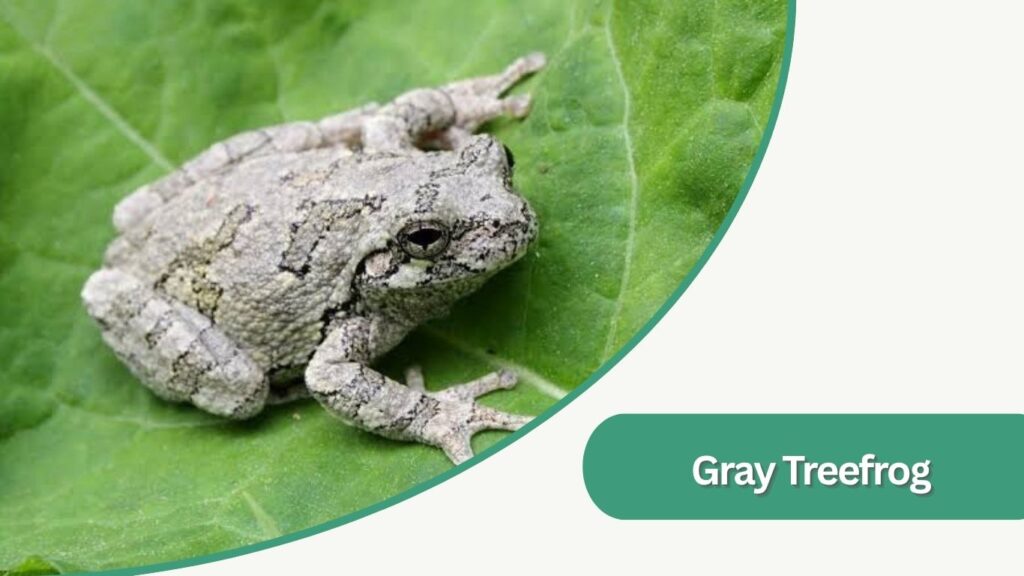
The Gray Treefrog is a small North American frog with a surprisingly expressive appearance. Its large eyes, rounded toe pads, and ability to change between gray and green make it especially appealing. Although its coloration is usually subtle, flashes of bright yellow or orange on the inner legs appear when it jumps, adding to its distinctive look.
Identification
- Usually 1.25–2 inches long
- Gray, green, or brown body
- Irregular dark patches on the back
- Bright yellow or orange inside the hind legs
- Large adhesive toe pads
- Slightly bumpy skin
- Pale underside
- Dark marking through the eye
Habitat and Distribution
Gray Treefrogs live throughout much of eastern and central North America. They inhabit forests, wooded wetlands, swamps, suburban gardens, and areas near ponds or temporary breeding pools.
They spend much of their time in trees and shrubs, where their coloration blends remarkably well with bark, leaves, and lichens.
Behavior and Calls
Gray Treefrogs are primarily nocturnal. During warm evenings, males produce a musical trill from branches near water.
Their large toe pads allow them to climb smooth vegetation and tree trunks. During the daytime, they often remain motionless, relying on camouflage to avoid predators.
Diet and Life Cycle
Gray Treefrogs feed on moths, beetles, ants, spiders, and other small invertebrates.
Females lay groups of eggs in shallow water during the breeding season. Tadpoles develop in ponds or temporary wetlands before transforming into young frogs. Adults survive winter by sheltering beneath bark, logs, or leaf litter.
14. Spring Peeper
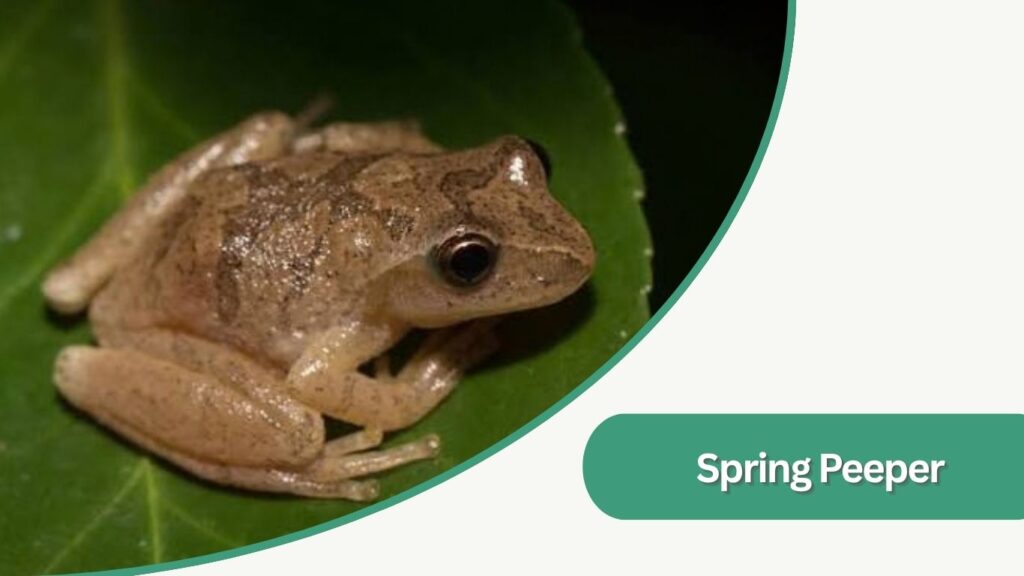
The Spring Peeper is one of North America’s smallest and cutest treefrogs. Its tiny body, large eyes, and distinctive X-shaped marking make it easy to recognize when seen up close. It is much more commonly heard than seen, because males produce extremely loud, high-pitched calls during early spring despite their miniature size.
Identification
- Usually about 0.75–1.5 inches long
- Tan, brown, gray, or olive coloration
- Distinct dark X-shaped marking on the back
- Large eyes
- Small rounded toe pads
- Pale underside
- Smooth to slightly granular skin
- Slender legs
Habitat and Distribution
Spring Peepers are widely distributed throughout eastern and central North America. They prefer damp forests, wooded wetlands, marsh edges, swamps, and areas surrounding temporary woodland pools.
Outside the breeding season, they usually remain hidden among leaves, logs, grasses, and low vegetation where moisture levels remain relatively high.
Behavior and Song
The male Spring Peeper produces a clear, high-pitched “peep” that can be surprisingly loud. Large breeding groups create powerful nighttime choruses that often signal the arrival of spring.
Males call from vegetation near shallow water, especially on mild and rainy evenings. Their small size and excellent camouflage can make them extremely difficult to locate even when calling nearby.
Diet and Life Cycle
Spring Peepers eat ants, flies, beetles, spiders, mites, and other tiny invertebrates.
Females lay eggs in shallow ponds or temporary pools. Tadpoles hatch and develop in the water before transforming into miniature frogs. Adults spend winter beneath leaf litter and other protected material.
15. Japanese Tree Frog
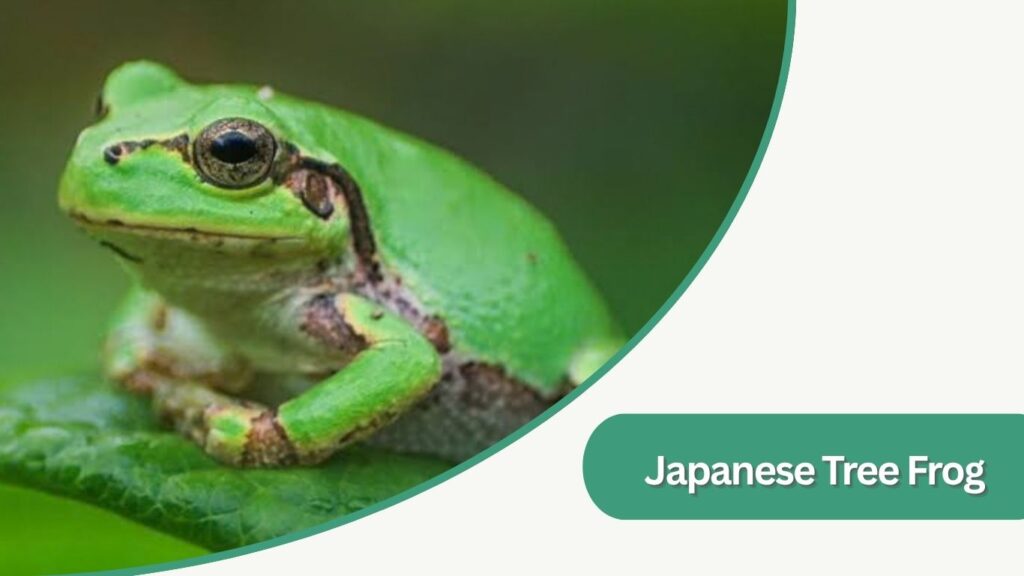
The Japanese Tree Frog is a small, charming frog known for its smooth green body, rounded face, and large adhesive toe pads. Common in Japan and nearby parts of East Asia, it is frequently seen resting on leaves, rice plants, fences, and garden vegetation. Its compact size and bright coloring give it a particularly gentle and cute appearance.
Identification
- Usually around 1–2 inches long
- Green, gray, or brown body
- Dark stripe running from the snout through the eye
- Smooth skin
- Pale white or cream underside
- Large rounded toe pads
- Slender legs
- Body color may change with surroundings
Habitat and Distribution
Japanese Tree Frogs live in Japan and surrounding areas of East Asia. They commonly occupy rice fields, wetlands, ponds, gardens, forests, and agricultural landscapes.
They are particularly associated with areas containing shallow freshwater. Their climbing ability allows them to rest on grasses, shrubs, reeds, and other vegetation during the daytime.
Behavior and Calls
These frogs are mainly active during the evening and nighttime. Males produce repeated calls during the breeding season, especially around rice paddies and ponds.
During the day, they often remain still on leaves or branches. Their ability to shift body color helps them blend into different backgrounds and avoid predators.
Diet and Life Cycle
Japanese Tree Frogs feed on insects, spiders, flies, mosquitoes, and other small invertebrates.
Females lay eggs in shallow freshwater habitats, where tadpoles hatch and develop. After metamorphosis, young frogs leave the water and begin climbing surrounding vegetation. Their close association with rice fields makes them familiar frogs in many rural areas.
FAQs
What is considered the cutest frog in the world?
There is no official cutest frog because appearance is subjective. However, the Desert Rain Frog is frequently considered especially cute because of its round body, tiny legs, serious-looking face, and squeaky defensive call. White’s Tree Frogs, Pacman Frogs, and Red-Eyed Tree Frogs are also popular choices.
Are cute poison dart frogs dangerous?
Wild poison dart frogs can carry toxic skin compounds, with toxicity differing among species. Their toxins are linked largely to chemicals obtained through their natural diets. Captive-bred individuals fed typical captive foods generally lose much of this toxicity, but handling amphibians unnecessarily should still be avoided.
Which cute frog has the biggest eyes?
Red-Eyed Tree Frogs are especially famous for their enormous bright red eyes. Glass frogs and several treefrog species also have unusually large eyes compared with their body size. Large eyes are particularly useful for nocturnal species because they help collect light and detect movement in dark environments.
Which cute frogs are the smallest?
Spring Peepers and Strawberry Poison Dart Frogs are among the smallest species on this list, often measuring around an inch or slightly more. Despite their tiny size, both can be surprisingly noticeable: Spring Peepers produce extremely loud calls, while Strawberry Poison Dart Frogs display brilliant coloration.
Why are some frogs so brightly colored?
Bright colors can serve several purposes. Poison dart frogs often use vivid coloration as a warning to predators, while other frogs use colors for camouflage, species recognition, or communication. In some species, hidden bright patches suddenly become visible when the frog moves, potentially confusing or startling predators.
