
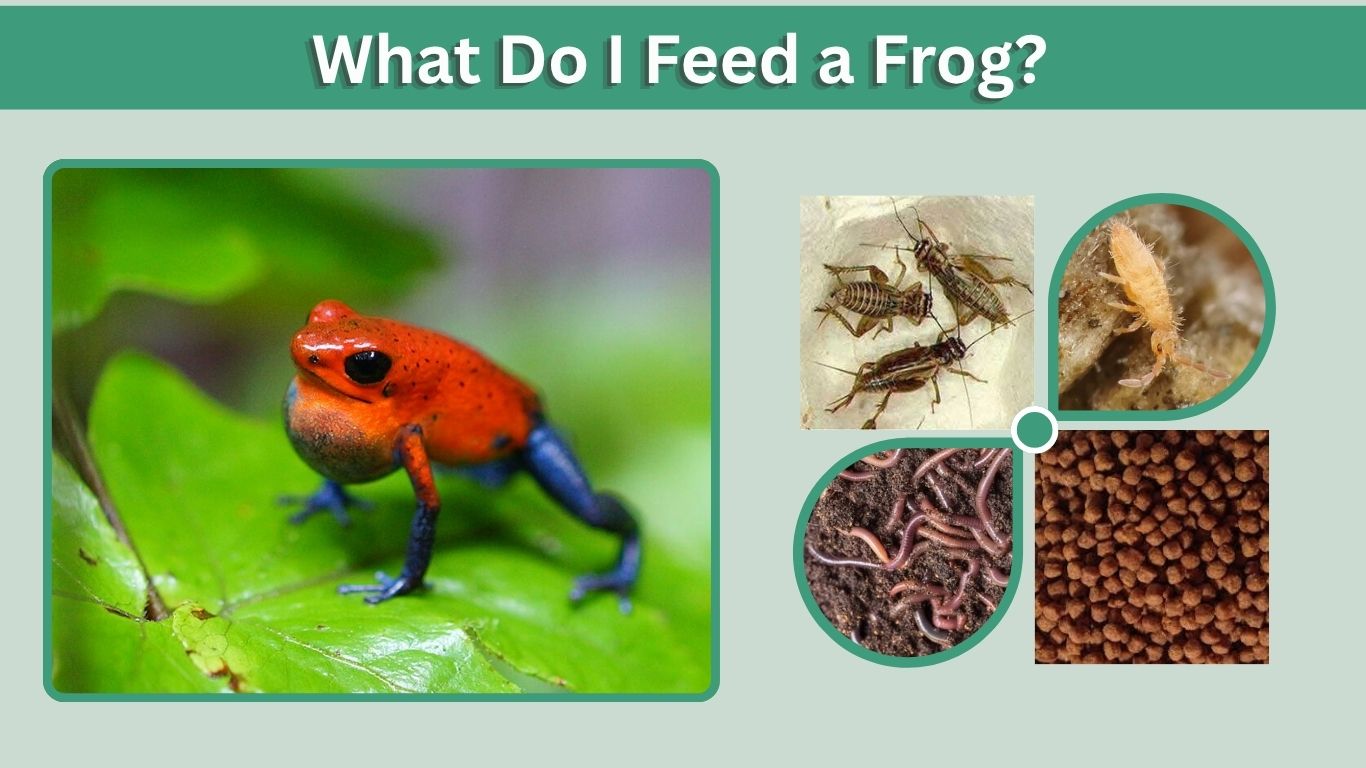
What do I feed a frog? For most adult frogs, the answer is appropriately sized insects and other invertebrates, such as crickets, roaches, earthworms, black soldier fly larvae, and fruit flies. However, the correct diet depends heavily on the frog’s species, age, and whether it lives on land, in trees, or entirely in water. Baby frogs need much smaller prey, while aquatic dwarf frogs can eat specialized pellets and worms. Wild frogs are generally best left to find their own natural food.
What Do Frogs Eat?
Most adult frogs are predators that naturally hunt insects and other small animals. Their feeding response is strongly triggered by movement, which is why many terrestrial pet frogs readily accept live prey. Captive frogs need more than simply “bugs,” however. Variety, appropriate prey size, calcium supplementation, and proper feeding frequency are important for keeping them healthy over time.
Best Foods for Most Pet Frogs
Common feeder foods include:
- Crickets
- Dubia roaches
- Earthworms
- Redworms
- Black soldier fly larvae
- Small hornworms
- Fruit flies
- Appropriately sized mealworms
- Waxworms as occasional treats
- Species-specific commercial frog pellets
Crickets, roaches, worms, and other feeder insects provide useful variety. Mealworms have relatively hard exoskeletons and should not dominate the diet, while fatty waxworms are better reserved as occasional treats.
Match the Food to the Frog
One of the most important feeding rules is choosing prey of an appropriate size. A tiny frog cannot safely handle insects intended for a large Pacman frog.
For tree frogs, a useful guideline is to offer prey no larger than approximately the width of the frog’s head. Very small frogs may need flightless fruit flies, springtails, or pinhead crickets rather than full-size feeder insects.
What Do I Feed a Pet Frog?
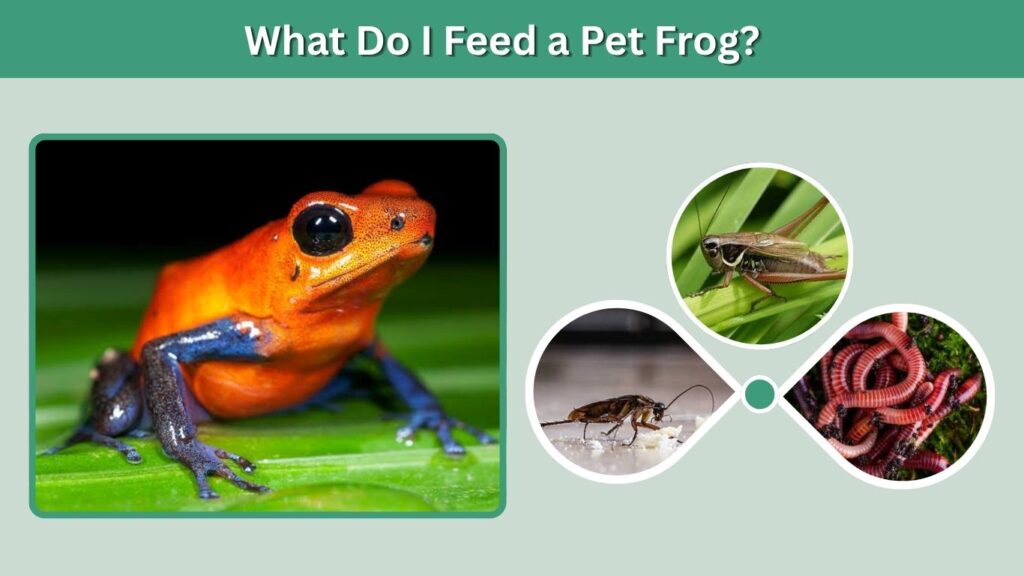
A pet frog needs a diet suited to its exact species rather than a universal feeding plan. Most terrestrial and arboreal frogs thrive on varied insect prey, while some aquatic species can consume nutritionally complete pellets. Before establishing a feeding routine, identify your frog accurately because its adult size, activity level, natural habitat, and nutritional requirements determine which foods are appropriate.
Build a Varied Diet
A practical pet-frog diet can rotate foods such as crickets, roaches, earthworms, black soldier fly larvae, and other appropriate feeders.
Feeding only one type of insect for months can create nutritional imbalances. PetMD recommends variety and notes that feeder insects can be “gut-loaded”—fed nutritious food before being offered to the frog—to increase their nutritional value.
Calcium and Vitamin Supplements Matter
Captive insects do not always provide the same nutritional balance that frogs obtain from varied wild prey. Many pet frogs therefore need feeder insects lightly dusted with an appropriate calcium and vitamin supplement.
The exact schedule depends on species, age, UVB exposure, and diet. An amphibian-experienced veterinarian can help establish the right supplementation schedule rather than relying on one universal dosage.
What Do I Feed a Tree Frog?
Tree frogs are primarily insect hunters. In captivity, commonly kept species can eat crickets, roaches, worms, and other suitably sized invertebrates. Their prey needs to be small enough to swallow safely, and dietary variety is preferable to feeding the same insect every day. Good hydration is also essential because frogs absorb water through their skin.
Good Foods for Tree Frogs
Depending on the species and size, suitable foods may include:
- Small or medium crickets
- Small Dubia roaches
- Black soldier fly larvae
- Small hornworms
- Fruit flies for tiny species
- Calci-worms
- Occasional mealworms
- Occasional waxworms
Green tree frogs, for example, are commonly fed gut-loaded crickets, roaches, calci-worms, mealworms, waxworms, and small hornworms.
Provide Clean Water Too
Food is only part of proper frog care. Tree frogs also need access to clean, appropriately treated water.
Because amphibians absorb water through their skin, water quality matters greatly. PetMD recommends clean, dechlorinated water and notes that suitable water dishes should allow the frog to soak safely.
What Do I Feed a Baby Frog?
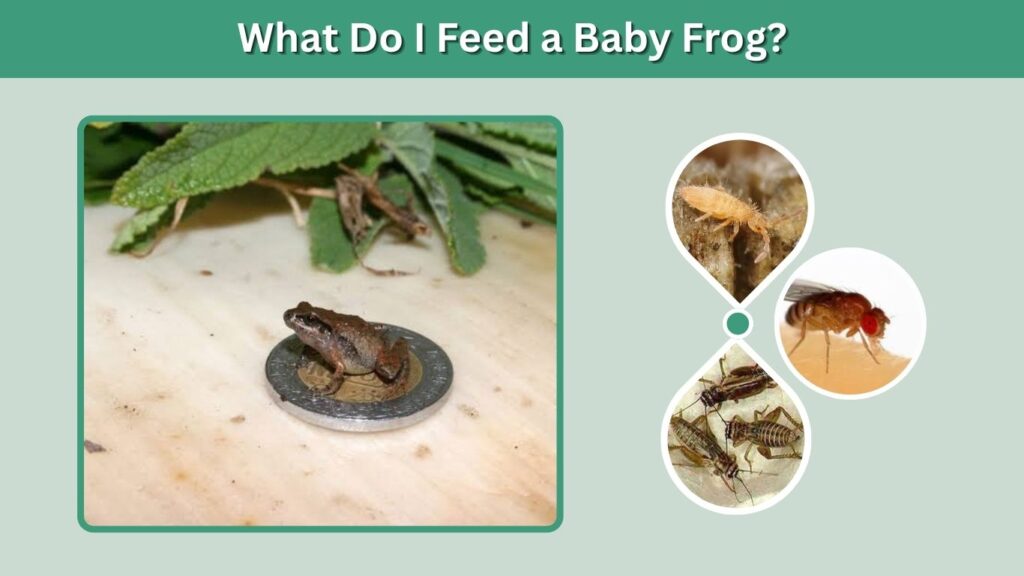
The answer depends on whether you mean a newly metamorphosed froglet or a tadpole. Their diets can be very different. Many tadpoles feed on algae, plant material, detritus, or specialized foods, depending on species. Once metamorphosis is complete, many young frogs switch to tiny moving animal prey that must be considerably smaller than food offered to adults.
Food for Tiny Froglets
Newly metamorphosed frogs may eat:
- Springtails
- Flightless fruit flies
- Pinhead crickets
- Tiny beetles or larvae suitable for the species
- Very small cultured feeder insects
At the Smithsonian, newly metamorphosed Panamanian golden frogs are initially offered springtails, followed by small fruit flies and pinhead crickets as they grow.
Do Not Feed Adult-Sized Prey
Oversized insects may intimidate, injure, or simply be impossible for a baby frog to swallow.
Choose prey considerably smaller than the frog’s head and monitor feeding closely. Juvenile frogs also generally eat more frequently than adults because they are actively growing, although the exact schedule should be based on the species.
What Do I Feed a Dwarf Frog?
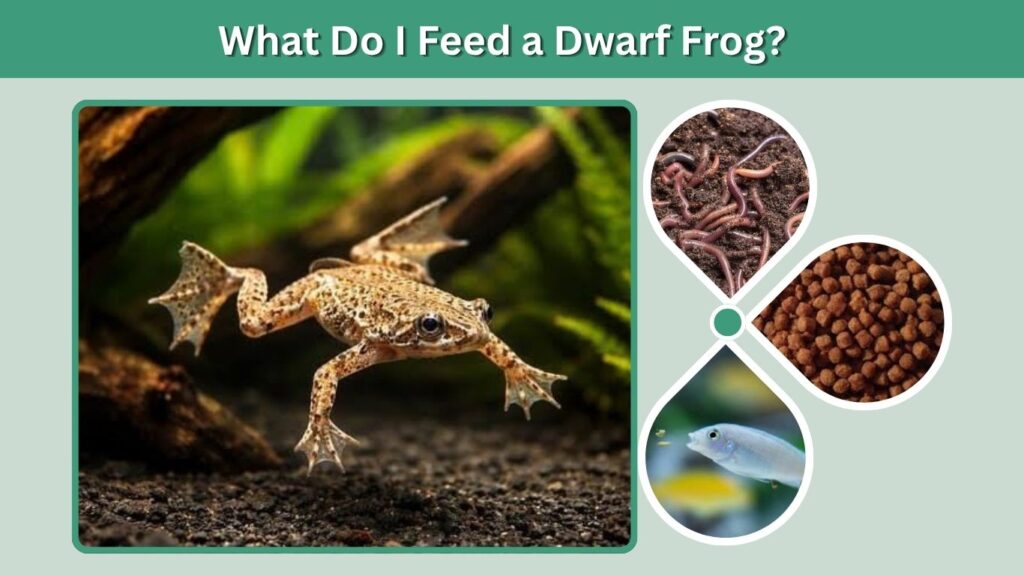
If you mean an African dwarf frog, its feeding requirements differ from those of tree frogs because it lives entirely underwater. African dwarf frogs can consume prepared aquatic frog or tadpole pellets as well as suitable worms and other aquatic foods. This makes feeding somewhat easier for owners who prefer not to maintain large quantities of live insects.
African Dwarf Frog Foods
Appropriate options can include:
- Frog or tadpole pellets
- Suitable fish foods
- Worms
- Species-appropriate frozen or prepared aquatic foods
VCA lists frog/tadpole pellets, fish food, and worms among foods for African dwarf frogs. These small aquatic frogs need food that reaches them underwater rather than floating indefinitely at the surface.
Watch Whether the Frog Actually Eats
African dwarf frogs can be slower feeders than fish sharing the aquarium. Fast fish may consume food before the frog reaches it.
Observe feeding rather than simply dropping food into the tank. Target feeding or placing food near the frog may help ensure it receives an adequate share.
I Caught a Frog—What Do I Feed It?
If you caught or found a healthy wild frog, feeding it usually should not be your first priority. Wild frogs already know how to locate the prey available in their habitat. Keeping a wild amphibian can create unnecessary stress and may also be restricted by local wildlife regulations. If the frog is healthy, returning it near the safe location where it was found is generally preferable to turning it into a pet.
If the Frog Is Temporarily Contained
If you must briefly hold a healthy frog:
- Minimize handling.
- Keep it away from household chemicals.
- Do not feed bread, meat, dairy products, or processed human foods.
- Do not force food into its mouth.
- Keep its environment appropriately moist.
- Avoid prolonged captivity.
- Return it to suitable habitat when appropriate.
Frog skin is delicate and readily absorbs substances from its surroundings, so unnecessary handling should also be avoided.
What About an Injured Frog?
An injured or seriously weak wild frog should ideally be evaluated by an appropriate wildlife rehabilitator or veterinarian rather than experimentally fed at home.
Wildlife rehabilitation guidance commonly recommends avoiding food or water unless a professional specifically advises it, because different wild animals have specialized needs and inappropriate care can make their condition worse.
What Do I Feed a Wild Frog in My Garden?
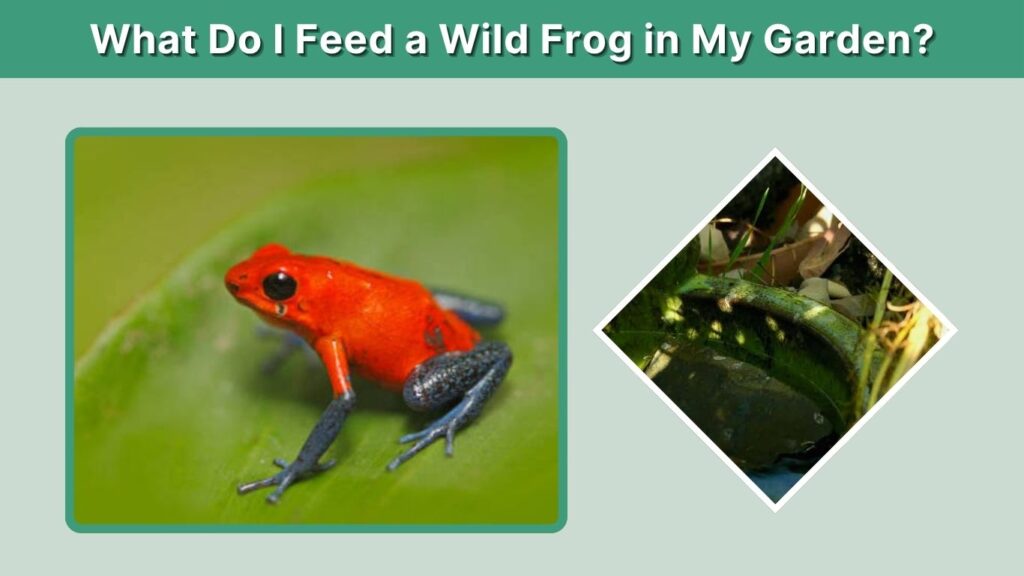
A healthy wild frog outdoors generally does not need supplemental feeding. Gardens and ponds naturally provide mosquitoes, flies, beetles, worms, moths, and other small prey. Creating suitable habitat is usually more beneficial than leaving piles of commercial food outside. Wild frogs are effective predators and can find prey suited to their own body size.
Help Wild Frogs Naturally
Instead of directly feeding them:
- Avoid unnecessary pesticide use.
- Maintain native vegetation.
- Provide shaded hiding areas.
- Keep suitable freshwater habitat where practical.
- Leave some leaf litter and natural cover.
- Avoid capturing frogs repeatedly.
- Keep pets from hunting frogs.
A habitat rich in insects allows wild frogs to hunt naturally and helps support normal behavior.
Foods You Should Not Feed a Frog
Frogs have specialized digestive and nutritional needs, so foods intended for humans are inappropriate. Even foods that seem harmless can provide the wrong balance of nutrients or be difficult for a frog to process. Feeder prey collected outdoors can also expose captive frogs to pesticides, parasites, or other contaminants, so cultured feeder insects are usually safer.
Foods to Avoid
Do not routinely offer:
- Bread
- Cheese or dairy products
- Cooked meat
- Processed human foods
- Candy or sugary foods
- Dog or cat food unless specifically directed for a species
- Large prey the frog cannot swallow safely
- Insects exposed to pesticides
- Wild insects from contaminated areas
PetMD specifically advises against feeding frogs human foods because doing so can contribute to nutritional disease.
How Often Should I Feed My Frog?
Feeding frequency depends on species, size, age, and metabolism. Growing juveniles typically eat more frequently than mature frogs, while large sedentary species can become overweight when fed too often. General frog-care recommendations are useful starting points, but the best schedule should ultimately be adjusted to the particular species and the frog’s body condition.
Juvenile vs Adult Feeding
PetMD’s general frog-care guidance suggests appropriately sized food every two to three days for juveniles and roughly two to three feedings per week for adults, though species-specific requirements differ.
Some species follow different schedules. Juvenile Pacman frogs, for instance, may be fed daily, whereas adults may eat only once or twice weekly.
Avoid assuming that every frog needs the same number of insects each day.
FAQs
1. What is the best thing to feed a frog?
For many terrestrial pet frogs, a varied selection of appropriately sized, gut-loaded insects such as crickets, roaches, earthworms, and black soldier fly larvae works well. The exact diet depends on species. Aquatic frogs may also accept specialized pellets, while tiny frogs require much smaller prey such as fruit flies or springtails.
2. What do I feed a small frog?
Small frogs need very small prey that they can safely capture and swallow. Flightless fruit flies, springtails, pinhead crickets, and appropriately sized feeder larvae are common options. Avoid simply cutting up large insects; selecting naturally small feeder prey usually provides a more appropriate feeding experience.
3. What should I feed a frog I found outside?
A healthy wild frog generally does not need you to feed it. If it was temporarily moved from immediate danger, returning it to suitable habitat close to where it was found is usually preferable to keeping it. Avoid human food and excessive handling, and contact a wildlife professional if the frog appears injured.
4. Can frogs eat regular human food?
Human food such as bread, cheese, cooked meat, sweets, and processed snacks should not be used as a frog’s diet. Frogs have specialized nutritional requirements, and inappropriate foods can contribute to nutritional problems. Most terrestrial pet frogs need properly prepared feeder insects rather than foods from your kitchen.
5. What do I feed a baby frog?
A newly metamorphosed baby frog usually needs tiny live prey such as springtails, flightless fruit flies, or pinhead crickets. Tadpoles are different and may eat algae, detritus, or other foods depending on species. Always identify whether you have a tadpole or fully metamorphosed froglet before choosing its diet.
