
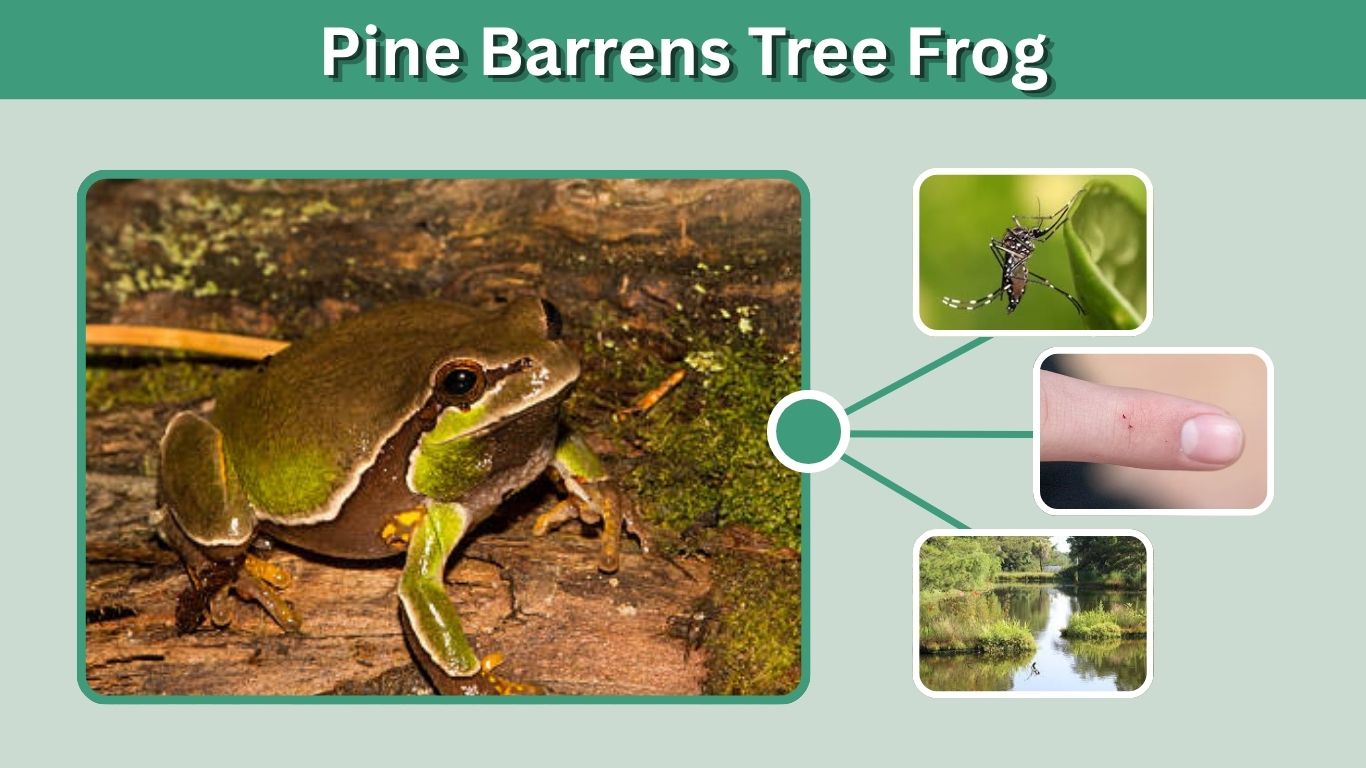
The Pine Barrens Tree Frog is one of the most colorful native treefrogs in the eastern United States. It is known for its bright green body, dark side stripe, and orange markings hidden on the legs. This frog is strongly connected with pine barrens, acidic wetlands, bogs, and special coastal plain habitats. Many people search for its call, range, endangered status, and New Jersey or North Carolina populations. This guide explains its identification, habitat, sound, diet, and conservation story.
What Is a Pine Barrens Tree Frog?
The Pine Barrens Tree Frog is a small treefrog that lives in very specific wetland habitats. Unlike common backyard frogs, it is usually found in acidic bogs, pine barrens, pocosins, and wetland edges. Its bright color makes it easy to recognize in photos, but in the wild it can still be hard to find among plants and shrubs.
Scientific Name and Family
The scientific name of the Pine Barrens Tree Frog is Hyla andersonii. It belongs to the family Hylidae, which includes many treefrogs. Like other treefrogs, it has rounded toe pads that help it climb stems, leaves, branches, and wetland vegetation.
This frog is not the same as the Pine Woods Tree Frog. Their names sound similar, but they are different species. The Pine Barrens Tree Frog is usually brighter green and has stronger orange or yellow markings on the hidden parts of its legs.
Quick Facts
- Common name: Pine Barrens Tree Frog
- Scientific name: Hyla andersonii
- Family: Hylidae
- Animal type: Amphibian
- Average size: Small to medium treefrog
- Main color: Bright green
- Habitat: Acidic wetlands, bogs, pine barrens, and pocosins
- Diet: Small insects and other tiny invertebrates
- Known areas: New Jersey, North Carolina, South Carolina, Alabama, and Florida Panhandle
- Main threats: Habitat loss, wetland damage, pollution, and isolated populations
Pine Barrens Tree Frog Identification
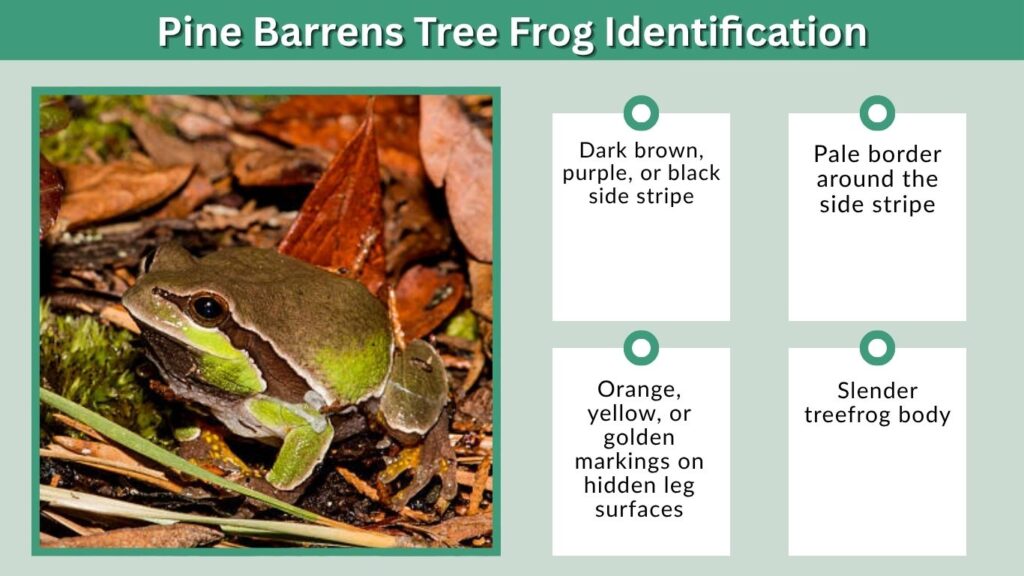
Identifying a Pine Barrens Tree Frog is easier when you know its main markings. This frog has a bright green upper body, a dark stripe along the side, and colorful hidden leg markings. These features separate it from many other green treefrogs found in the eastern United States.
Key Identification Features
- Bright green back and head
- Dark brown, purple, or black side stripe
- Pale border around the side stripe
- Orange, yellow, or golden markings on hidden leg surfaces
- Smooth skin
- Rounded toe pads
- Slender treefrog body
- Large eyes
- Often found near acidic wetland plants
Pine Barrens Tree Frog Size
The Pine Barrens Tree Frog is not a large frog. Adults are small enough to hide among shrubs, reeds, branches, and wetland vegetation. Its slim body helps it move through plants, while its toe pads allow it to climb above the ground. Because of its size and color, it may be easier to hear than see during breeding season.
Baby Pine Barrens Tree Frog
Baby Pine Barrens Tree Frogs begin life as eggs laid in wetland water. After hatching, they live as tadpoles before changing into tiny froglets. Young froglets may look like smaller versions of adults, though their colors and markings may become more noticeable as they grow.
Pine Barrens Tree Frog Call and Sound
The call is one of the best ways to detect a Pine Barrens Tree Frog in the wild. Males call during the breeding season from wetland vegetation near water. Their sound helps females find them and also helps researchers confirm where populations are living.
What Does a Pine Barrens Tree Frog Call Sound Like?
The Pine Barrens Tree Frog call is often described as a repeated nasal or honking sound. It is not the same as the clicking “Morse code” call of the Pine Woods Tree Frog. The Pine Barrens Tree Frog call can be heard around breeding wetlands when males are active.
When Do Pine Barrens Tree Frogs Call?
Pine Barrens Tree Frogs usually call during warm, wet months when breeding conditions are good. Rain, humidity, and standing water can increase calling activity. Males often call at night from shrubs, grasses, or low plants near acidic pools and boggy wetlands.
Why Do They Call?
Male Pine Barrens Tree Frogs call mainly to attract females. The call helps females locate healthy males near suitable breeding water. Calling can also help males hold space around a breeding area. For wildlife watchers, the call is a useful clue because the frog may stay hidden in thick vegetation.
Pine Barrens Tree Frog Habitat
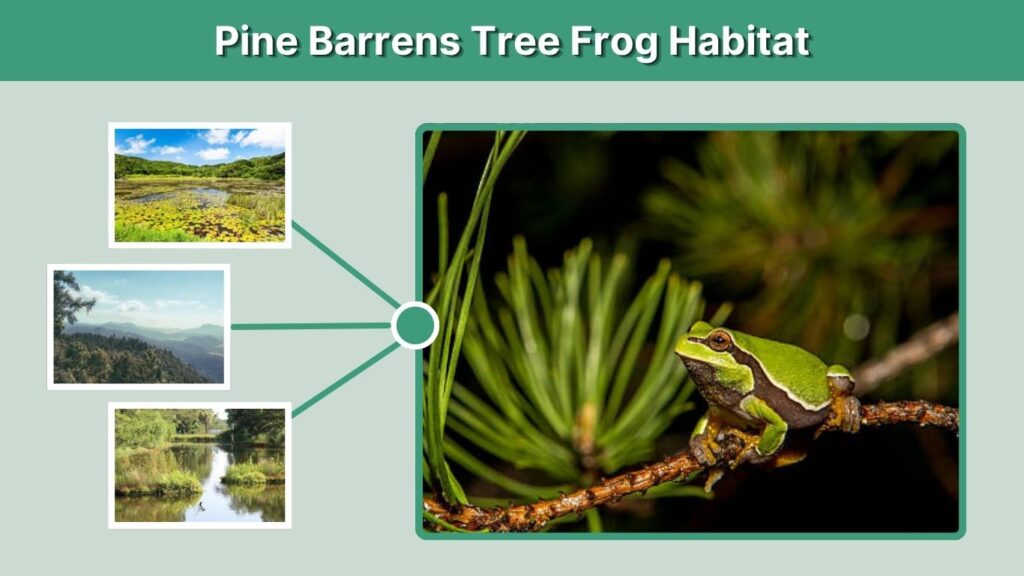
The Pine Barrens Tree Frog depends on special wetland habitats, not just any pine forest. It is strongly linked with acidic water, wetland plants, and pine-dominated landscapes. These habitats provide breeding water, shelter, insects, and protection from some predators that cannot survive well in acidic conditions.
Acidic Wetlands and Pine Barrens
Acidic wetlands are very important for this frog. These areas often have low-pH water, sphagnum moss, wet shrubs, and pine forest nearby. The special water chemistry can reduce some predators and competitors, giving Pine Barrens Tree Frogs a better chance to breed successfully.
Bogs, Pocosins, and Carolina Bays
Pine Barrens Tree Frogs may live near bogs, pocosins, Carolina bays, Atlantic white-cedar swamps, and similar wetland systems. These habitats are usually wet, plant-rich, and naturally acidic. They also provide places for adults to hide and areas where tadpoles can develop.
Trees, Shrubs, and Breeding Pools
Adult frogs often stay close to wetland plants and shallow breeding pools. Males may call from shrubs, grasses, or low branches above or near the water. These plants give the frogs cover from predators and help them stay moist during active periods.
Pine Barrens Tree Frog Range
The Pine Barrens Tree Frog has a separated range instead of one large continuous range. It is best known from the New Jersey Pine Barrens, but it also occurs in parts of the Carolinas, Alabama, and the Florida Panhandle. Its scattered distribution makes habitat protection especially important for long-term survival.
Pine Barrens Tree Frog in New Jersey
New Jersey is one of the most famous places for this frog. The species is closely connected with the New Jersey Pine Barrens, where acidic wetlands, cedar swamps, bogs, and pine forests create suitable habitat. Because of this strong connection, many people think of it as one of the special native animals of the NJ Pine Barrens.
Pine Barrens Tree Frog in North Carolina
In North Carolina, Pine Barrens Tree Frogs are linked with special wetland habitats in the Sandhills and coastal plain region. Searches for Weymouth Woods, NC often connect with this species because the area is known for pine habitat and rare wildlife interest. Visitors should observe wildlife responsibly and avoid disturbing sensitive frog habitats.
Pine Barrens Tree Frog in South Carolina and Florida
The frog also occurs in parts of South Carolina and the Florida Panhandle where suitable acidic wetlands exist. It is not a common backyard frog across all of Florida. If someone finds a green tree frog in central or south Florida, it is more likely to be another species unless confirmed by range, habitat, markings, and expert identification.
Pine Barrens Tree Frog Diet and Food
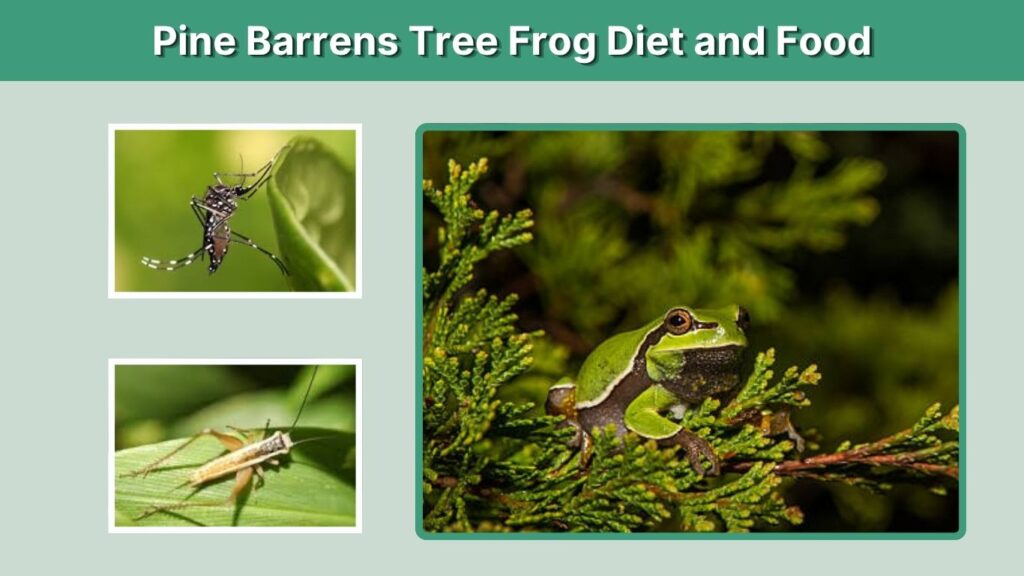
Pine Barrens Tree Frogs are insect-eating amphibians. Adults hunt small moving prey around wetland plants, shrubs, and nearby vegetation. Their diet helps them play a useful role in the ecosystem, while tadpoles feed differently in water before they transform into froglets.
What Do Pine Barrens Tree Frogs Eat?
Adult Pine Barrens Tree Frogs eat small insects and tiny invertebrates. Common food items may include:
- Small flies
- Moths
- Beetles
- Ants
- Mosquitoes
- Small crickets
- Tiny spiders
- Other small arthropods
Tadpole Diet
Pine Barrens Tree Frog tadpoles live in wetland water and feed on small natural food sources. They may eat algae, tiny plant material, and organic particles found in their breeding pools. As they grow, they develop legs, absorb the tail, and eventually leave the water as young froglets.
Reproduction, Eggs, and Life Cycle
The life cycle of the Pine Barrens Tree Frog depends on wetland water and seasonal breeding conditions. Males call to attract females, eggs are laid in water, and tadpoles develop before becoming young frogs. Because breeding sites are limited, wetland health is very important for the species.
Breeding Season
Breeding usually happens during warm, wet months when suitable pools and boggy wetlands hold water. Males call from vegetation near the water to attract females. Rain and humidity can increase breeding activity because they create better conditions for eggs and tadpoles.
Eggs and Tadpoles
Females lay eggs in wetland water, often in places with plants and shallow protected areas. After the eggs hatch, tadpoles live in the water and feed until they are ready to transform. Clean, acidic, fish-free or low-predator wetlands can improve their chances of survival.
Lifespan
The exact lifespan of wild Pine Barrens Tree Frogs can vary. Like many small frogs, they face risks from predators, drought, drying wetlands, disease, and habitat change. Frogs that survive past the tadpole and froglet stages may return to breeding wetlands as adults.
Are Pine Barrens Tree Frogs Poisonous?
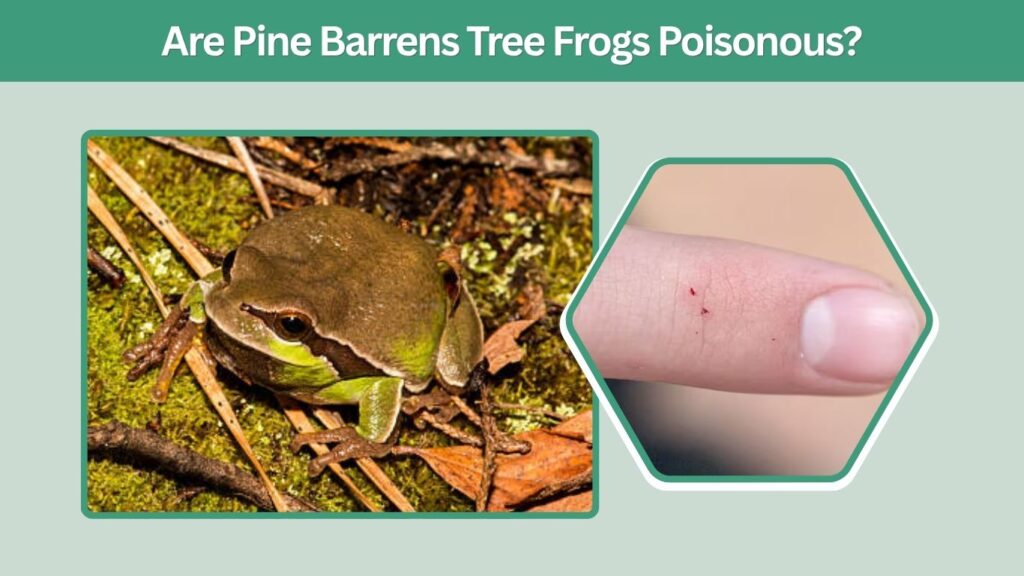
Many people ask this question because brightly colored animals are sometimes poisonous. Pine Barrens Tree Frogs are not considered dangerous to humans, but they should still be treated carefully. Amphibians have sensitive skin, and handling can harm the frog more than the person.
Are They Dangerous to People?
Pine Barrens Tree Frogs are not known as dangerously poisonous frogs. Touching one is unlikely to cause serious harm, but it is still smart to avoid touching your eyes or mouth after contact. Washing your hands after handling any amphibian is always a good habit.
Safe Handling Advice
The best choice is to look without touching. If a frog must be moved from danger, use clean, wet hands and release it close to where it was found. Never handle frogs with dry hands, sunscreen, insect repellent, soap, or chemicals on your skin.
Why Are Pine Barrens Tree Frogs Endangered or Threatened?
The Pine Barrens Tree Frog is a conservation concern in parts of its range because it depends on rare and sensitive habitats. It needs acidic wetlands, nearby pine landscapes, and clean breeding water. When these habitats are drained, polluted, developed, or changed, local frog populations can decline.
Habitat Loss
Development, road building, wetland drainage, and land clearing can destroy or separate breeding sites. Since the frog already has a scattered range, losing even small wetland areas can affect local populations. Habitat fragmentation can also make it harder for frogs to move between suitable areas.
Water Quality Changes
This frog depends on special wetland conditions. Pollution, runoff, ditching, and changes in water chemistry can damage breeding pools. If acidic wetlands become unsuitable, eggs and tadpoles may not survive well. Clean water and natural wetland cycles are essential for healthy populations.
Small and Isolated Populations
Because Pine Barrens Tree Frogs occur in separated populations, they are more vulnerable to local problems. A drought, disease outbreak, or habitat change can harm a small group quickly. Isolated populations may also have fewer chances to recover if nearby habitats are lost.
Pine Barrens Tree Frog and Andy Warhol
The Pine Barrens Tree Frog is also known outside wildlife circles because of Andy Warhol’s endangered species artwork. This section helps answer searches about Warhol, posters, prints, and the frog’s cultural importance. It also shows how a small amphibian became part of a larger conservation message.
Andy Warhol Pine Barrens Tree Frog
Andy Warhol created a Pine Barrens Tree Frog print as part of his famous endangered species art series. The artwork helped bring attention to rare and threatened animals by using bold colors and a pop art style. Many people searching this term may be looking for the print, poster versions, or art history details.
Posters, Statues, and License Plate Searches
Some searches for Pine Barrens Tree Frog are not about the live animal. They may relate to art prints, wildlife posters, garden frog statues, or conservation-themed license plates. These products show that the frog has become a symbol of rare wildlife, pine barrens habitat, and environmental protection.
FAQs
Are Pine Barrens Tree Frogs poisonous?
Pine Barrens Tree Frogs are not considered dangerously poisonous to humans. Like many amphibians, they may have mild skin secretions, so it is best to avoid handling them. If you touch one, wash your hands afterward and avoid touching your eyes or mouth.
What do Pine Barrens Tree Frogs eat?
Pine Barrens Tree Frogs eat small insects and other tiny invertebrates. Their diet may include flies, moths, beetles, ants, mosquitoes, small crickets, tiny spiders, and other small arthropods. Tadpoles feed differently in water, mostly on algae and organic particles.
Where do Pine Barrens Tree Frogs live?
Pine Barrens Tree Frogs live in scattered populations in the eastern United States. They are best known from the New Jersey Pine Barrens, but they also occur in parts of North Carolina, South Carolina, Alabama, and the Florida Panhandle, mostly near acidic wetlands.
Why are Pine Barrens Tree Frogs endangered or threatened?
They are threatened in some areas because they depend on rare wetland habitats. Habitat loss, wetland drainage, pollution, development, fire suppression, and water-quality changes can damage breeding sites. Their scattered populations also make them more vulnerable to local decline.
What does a Pine Barrens Tree Frog sound like?
The Pine Barrens Tree Frog call is often described as a repeated nasal or honking sound. Males call during warm, wet breeding months from shrubs, grasses, or low vegetation near acidic wetlands. Their call is one of the best clues for finding them in the wild.
