
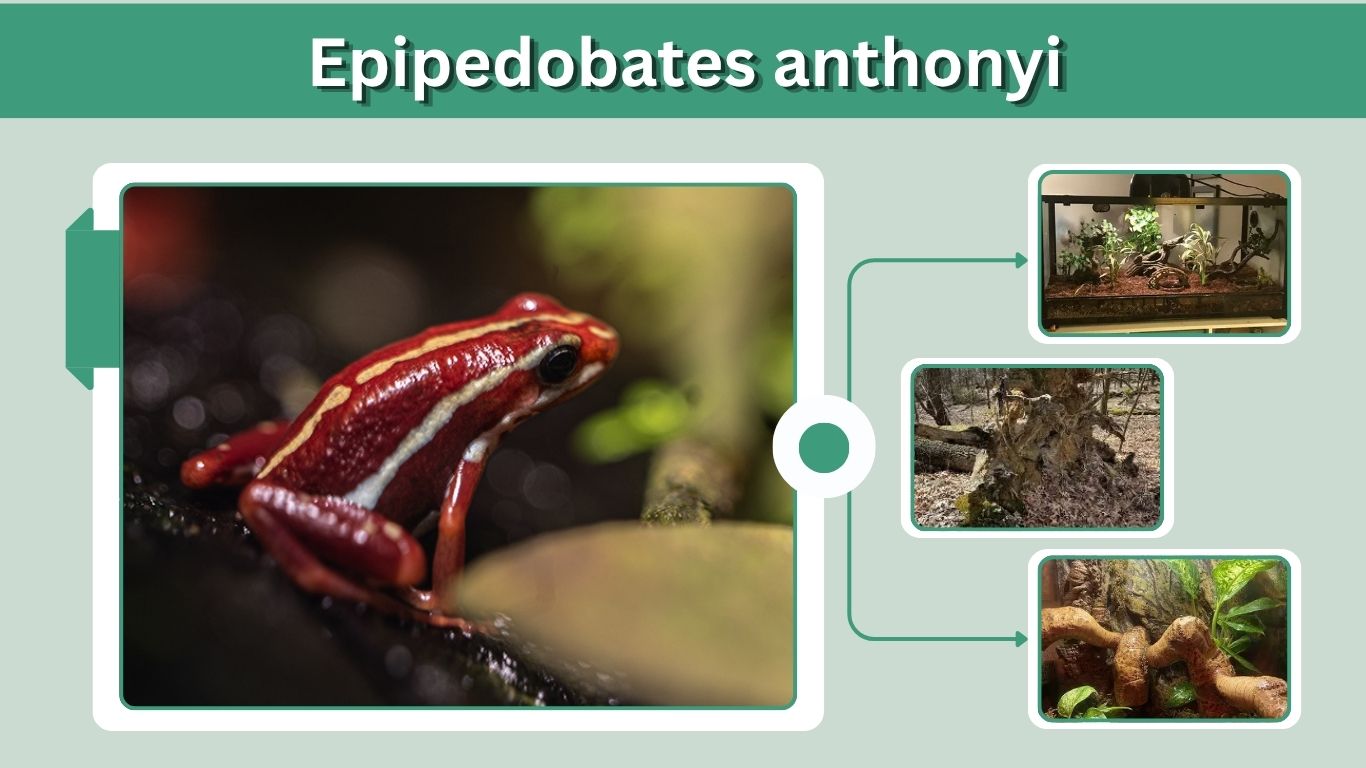
Epipedobates anthonyi is a small, brightly striped poison dart frog native to southwestern Ecuador and northwestern Peru. Commonly called Anthony’s poison-arrow frog or the epibatidine poison frog, it is admired for its red, brown, yellow, cream, or blue-green markings. Captive-bred frogs are active, vocal, and generally easier to maintain than many delicate dart frogs. However, they still require a secure planted terrarium, tiny live foods, consistently warm conditions, high humidity, and careful attention to ventilation.
Epipedobates anthonyi Quick Facts
| Feature | Details |
| Scientific name | Epipedobates anthonyi |
| Family | Dendrobatidae |
| Common names | Anthony’s poison-arrow frog, epibatidine poison frog |
| Adult size | Approximately 19–26 mm |
| Native range | Ecuador and Peru |
| Activity | Diurnal |
| Habitat | Forest floor, stream edges, farms, and disturbed vegetation |
| Captive diet | Fruit flies, springtails, and other tiny invertebrates |
| Call | Loud, repeated chirping or trilling |
| Care level | Beginner to intermediate |
| Conservation status | Near Threatened |
The accepted range extends through southwestern Ecuador and northwestern Peru, west of the Andes. Current records place the species across a broad elevation range, although many populations occupy forests and modified habitats near streams.
Epipedobates anthonyi Appearance and Identification
Epipedobates anthonyi has a compact body, smooth or slightly granular skin, strong hind legs, and small expanded toe pads. Most forms display light stripes running lengthwise over a darker body.
Identification Features
- Dark red, reddish-brown, chocolate, or nearly black base color
- Cream, yellow, turquoise, or pale green longitudinal stripes
- A light stripe extending from the snout along each side of the body
- Additional markings on the legs and lower sides
- Large, dark eyes
- Rounded snout
- Adult body length of roughly one inch
Patterns vary considerably among geographic populations and captive lines. Some frogs are vivid red with yellow-green stripes, while others have chocolate-colored bodies crossed by blue or cream markings.
Females and males are similar in length, although mature females generally appear broader and heavier. Calling is the most reliable way to identify an adult male.
Epipedobates anthonyi Natural Habitat and Distribution
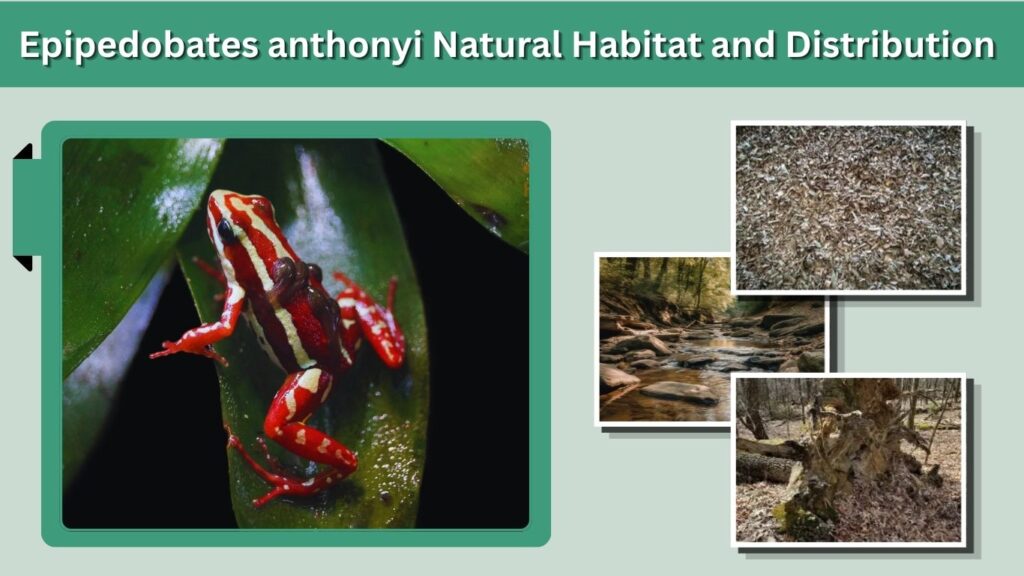
This species occurs in southwestern Ecuador, including Azuay, El Oro, and Loja, and in northwestern Peru. It inhabits the western side of the Andes and has been recorded from low elevations to more than 2,000 metres.
Preferred Habitat
Epipedobates anthonyi is mainly a terrestrial frog that lives among:
- Damp leaf litter
- Fallen branches and logs
- Rocks beside streams
- Forest clearings
- Low-growing plants
- Banana and cacao plantations
- Roadside vegetation
- Other humid, disturbed environments
Its ability to use agricultural and altered habitats makes it more adaptable than some rainforest dart frogs. Nevertheless, water pollution, pesticide exposure, and continued habitat degradation can threaten local populations. The species remains listed as Near Threatened.
Is Epipedobates anthonyi Poisonous?
Wild Epipedobates anthonyi frogs are poisonous rather than venomous. They store defensive alkaloids in their skin instead of injecting venom through a bite.
The species is associated with epibatidine, a powerful alkaloid that acts on nicotinic acetylcholine receptors. The compound was investigated for its pain-relieving potential but is far too toxic for ordinary medical use.
Wild poison frogs obtain many of their defensive compounds from ants, mites, and other small arthropods. Captive-bred frogs fed cultured fruit flies and springtails generally do not develop dangerous skin toxicity. They should still be handled only when necessary because oils, salt, soap, and chemicals on human skin can injure the frog.
Epipedobates anthonyi Care
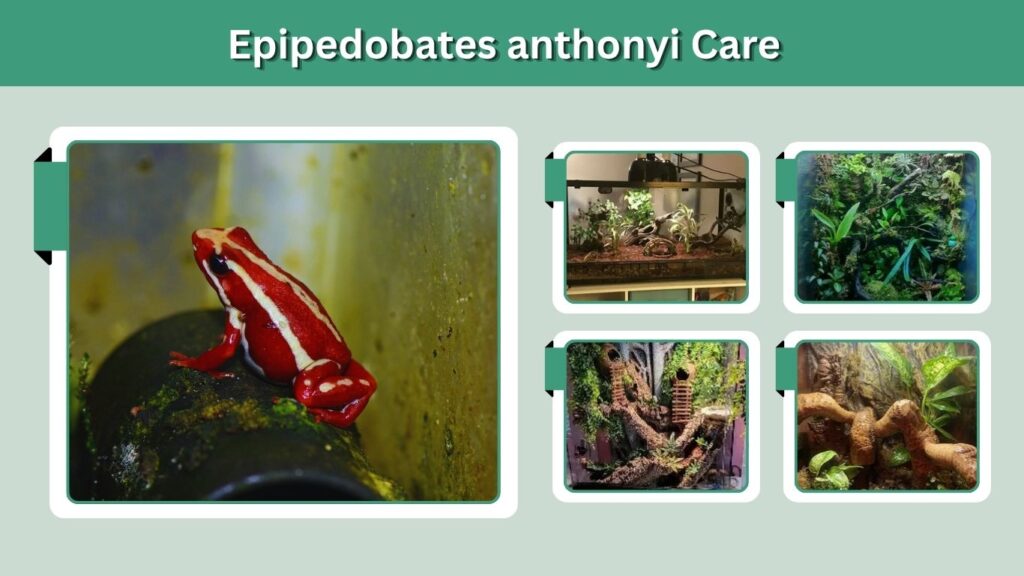
This species is often considered one of the more manageable poison dart frogs. It feeds readily, tolerates small groups, and breeds reliably under suitable conditions. Its strong call and rapid reproduction should still be considered before purchasing it.
Terrarium Setup
A planted enclosure measuring approximately 18 × 18 × 24 inches provides a practical starting size for a pair or small group. Larger enclosures provide more territories, feeding areas, and visual barriers.
The terrarium should include:
- A secure, escape-proof lid
- Good cross-ventilation
- Drainage beneath the substrate
- Tropical plants
- Cork bark and branches
- A thick layer of clean leaf litter
- Several ground-level shelters
- Bromeliads or covered egg-laying locations
- Springtails and small isopods as a cleanup crew
Although the frogs can climb, much of the usable space should be near the ground. Avoid deep open water because dart frogs are not powerful swimmers.
Small groups can live together when sufficient space and cover are provided. Watch for persistent chasing, weight loss, exclusion from food, or injuries.
Temperature and Humidity
Maintain daytime temperatures in the low to mid-70s°F, with a modest nighttime reduction. Temperatures around 65–80°F may be tolerated temporarily, but prolonged heat above approximately 85°F can be dangerous.
Humidity should generally remain high, often around 80–100%, while fluctuating naturally between misting periods. Constantly soaked surfaces and stagnant air can encourage bacterial growth, so high humidity must be paired with effective ventilation.
Diet and Feeding
Captive Epipedobates anthonyi primarily eats small live invertebrates, including:
- Flightless fruit flies
- Springtails
- Pinhead crickets
- Tiny bean beetles
- Small aphids
- Other appropriately sized cultured insects
Dust feeder insects regularly with a quality calcium and vitamin supplement made for amphibians. Maintain several fruit-fly cultures at different stages so that the frogs do not run out of food if one culture fails.
What Does the Call Sound Like?
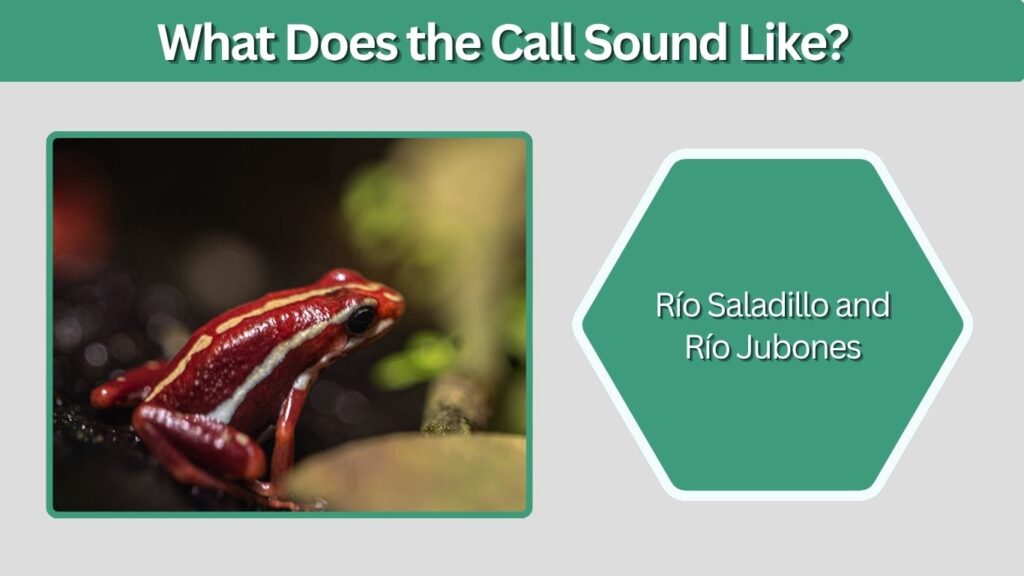
Adult males produce a noticeable series of high-pitched chirps, whistles, or trills. Many keepers compare the call to a cricket, squeaking sound, or electronic beeping.
The call can be surprisingly loud for such a small frog. Males usually call during daylight, especially after misting, during humid weather, or when females are nearby. Calling serves both to attract mates and announce territory.
Different populations can produce measurable variations in their advertisement calls. Recordings have been studied from populations including Río Saladillo and Río Jubones.
Epipedobates anthonyi Breeding and Eggs
Epipedobates anthonyi often breeds readily in a mature, humid vivarium. A calling male leads a receptive female to a protected egg-laying site.
Egg Laying and Parental Care
Eggs may be deposited on:
- Smooth leaves
- Film canisters
- Petri dishes
- Bromeliad leaves
- Damp surfaces beneath bark
- Other enclosed shelters
Captive clutches frequently contain approximately 10–20 eggs, while larger wild clutches have also been reported. The male guards and moistens the developing eggs. After hatching, he carries the tadpoles on his back and deposits them in water.
Tadpoles can be raised separately in small containers to reduce competition. Metamorphosis commonly takes approximately two to three months, depending on temperature, diet, and water quality. Newly emerged froglets need springtails and very small fruit flies.
Localities and Color Forms
Names frequently encountered in the hobby include:
- Santa Isabel
- Ankas
- Río Saladillo
- Zarayunga
- Cielito
- Río Jubones
- Buena Esperanza
These are locality or captive-line labels rather than officially recognized subspecies. They may differ in body color, stripe width, stripe color, boldness, and adult size. Río Saladillo, for example, is a documented population from El Oro, Ecuador, while Ankas and Zarayunga are established names used for distinctive captive forms.
Keep different locality forms separately. Mixing them produces offspring with uncertain ancestry and can permanently erase distinct captive lines.
Epipedobates tricolor vs Anthonyi
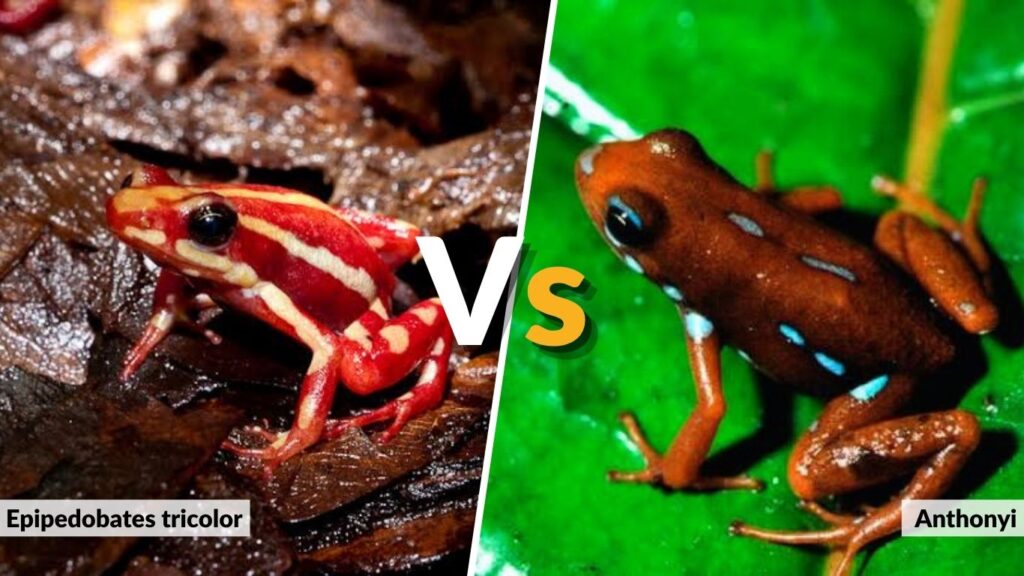
Epipedobates anthonyi and Epipedobates tricolor are separate species, although older publications and pet-trade materials frequently confused their names.
True E. tricolor belongs to populations from central Ecuador, while E. anthonyi occupies southern Ecuador and northwestern Peru. Much of the older information published under E. tricolor was actually based on E. anthonyi.
Finding Epipedobates anthonyi for Sale
Purchase only healthy, legally captive-bred frogs from an established breeder. Ask for the exact locality or captive line, age, feeding history, and information about the parents.
A healthy frog should have clear eyes, a rounded body, smooth movement, straight limbs, and an active feeding response. Avoid animals that appear thin, weak, bloated, uncoordinated, or unable to catch food.
International movement of Epipedobates is regulated under CITES Appendix II, so imported or exported frogs may require permits and proof of legal origin. Local ownership and transport laws should also be checked before purchase.
FAQs
Is Epipedobates anthonyi suitable for beginners?
It is one of the more beginner-friendly dart frogs because captive-bred animals are generally hardy, feed readily, and tolerate group housing. Beginners must still prepare a mature vivarium and reliable fruit-fly cultures before buying frogs.
How large does Epipedobates anthonyi grow?
Adults generally reach approximately 19–26 mm, or close to one inch, from snout to vent. Females are often broader than males but may not be noticeably longer.
Are captive Epipedobates anthonyi frogs poisonous?
Captive-bred frogs generally lack significant toxicity because their cultured feeder insects do not contain the alkaloids found in wild prey. Handling should nevertheless be minimized to protect their sensitive skin.
Can Epipedobates anthonyi live in groups?
Yes. They often tolerate small groups when provided with adequate space, leaf litter, food, hiding places, and visual barriers. Owners should watch for territorial disputes and egg-eating among mature females.
How long does Epipedobates anthonyi live?
With stable temperatures, proper supplementation, good hygiene, and veterinary care when required, captive frogs may live for five to eight years. Some individuals reportedly survive for more than ten years under excellent conditions.
