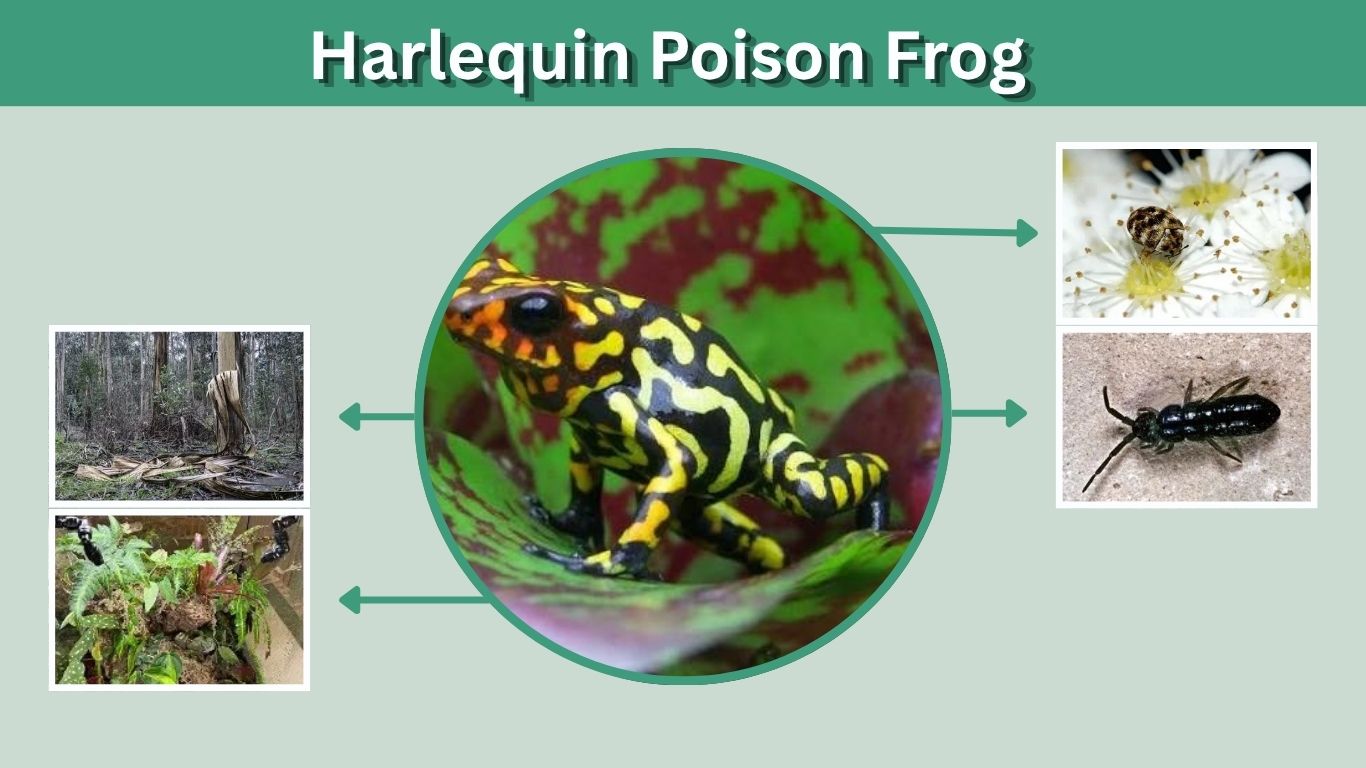
The harlequin poison frog is a small but spectacular amphibian recognized by its glossy skin and contrasting patches of yellow, orange, red, white, or blue over a dark background. Scientifically known as Oophaga histrionica, it inhabits humid tropical forests in western Colombia. Wild individuals carry defensive toxins in their skin, but captive-bred frogs generally lose their toxicity because they do not eat the same alkaloid-containing prey available in nature.
Harlequin Poison Frog Quick Facts
| Feature | Details |
| Scientific name | Oophaga histrionica |
| Family | Dendrobatidae |
| Other name | Harlequin poison-dart frog |
| Size | Approximately 1–1.5 inches |
| Native range | Western Colombia |
| Habitat | Humid tropical rainforest |
| Activity | Diurnal |
| Diet | Ants, termites, mites, beetles, and tiny arthropods |
| Wild toxicity | Toxic skin secretions |
| Captive toxicity | Usually absent or greatly reduced |
| Conservation status | Critically Endangered |
| Reproduction | Tadpoles are fed unfertilized eggs by the mother |
The species is currently recognized within the genus Oophaga and family Dendrobatidae. AmphibiaWeb lists it as Critically Endangered, while the American Museum of Natural History recognizes “harlequin poison frog” as its standard English common name.
What Is a Harlequin Poison Frog?
The harlequin poison frog is a colorful poison-dart frog endemic to Colombia’s Chocó region. It is primarily terrestrial, spending much of its time moving through damp leaf litter, fallen vegetation, exposed roots, and low forest plants.
The name “harlequin” refers to its dramatic patchwork coloration. However, it should not be confused with harlequin frogs in the genus Atelopus. Those are stream-associated frogs from Central and South America and belong to a different amphibian family.
Identification
A harlequin poison frog can be identified by its:
- Small, compact body
- Smooth and glossy skin
- Dark brown or black background color
- Bright yellow, orange, red, white, or bluish markings
- Irregular spots, bands, or net-like patterns
- Rounded snout and large dark eyes
- Slender legs with expanded toe pads
Adults generally measure approximately 1–1.5 inches long. Their pattern can vary dramatically among populations, with some frogs appearing mostly black with colored spots and others showing broad areas of vivid color.
Why Are Harlequin Poison Frogs So Colorful?
Their bright appearance is an example of warning coloration, also called aposematism. The contrasting colors tell potential predators that the frog may be unpleasant or dangerous to eat.
Color does not reliably indicate the exact strength of an individual frog’s toxins. The pattern is primarily a general warning that encourages birds, snakes, and other predators to avoid attacking it.
The species displays substantial geographic variation. Populations from different areas may have predominantly yellow, orange, red, white, or blue markings, sometimes causing them to look like completely different species.
Taxonomy Can Be Confusing
The harlequin poison frog was historically treated as a widely distributed and extremely variable species. A 2018 taxonomic revision separated several populations into other species, including Oophaga anchicayensis, Oophaga andresi, and Oophaga solanensis.
As a result, older books, pet-trade names, photographs, and online range descriptions may classify frogs as Oophaga histrionica that are now assigned to a different species.
Is the Harlequin Frog Poisonous?
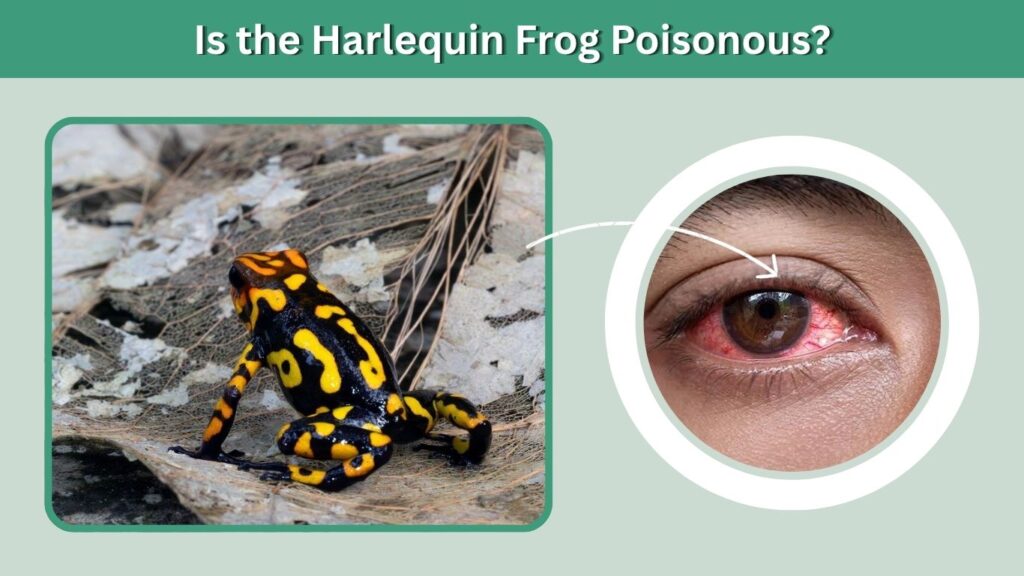
The harlequin poison frog is poisonous, not venomous. Poison is delivered when a toxin is touched, swallowed, or absorbed, while venom must be injected through fangs or a stinger.
Wild harlequin poison frogs store alkaloid toxins in glands throughout their skin. These chemicals are believed to come from tiny arthropods in their natural diet rather than being manufactured entirely by the frog.
Is It Dangerous to Humans?
A wild frog should never be handled unnecessarily. Its secretions could be dangerous if they enter the eyes, mouth, an open cut, or another vulnerable area. The frog does not bite to inject poison, chase people, or release toxins into the air.
Simply being near the frog is not dangerous. The main risk comes from direct contact with the skin secretions, especially when the frog is stressed.
Anyone who accidentally handles a wild poison frog should avoid touching their face and wash their hands thoroughly. The frog is also vulnerable to salts, oils, lotions, and chemicals on human skin, so handling can harm the animal.
Are Captive Harlequin Poison Frogs Toxic?
Captive-bred poison frogs are generally non-toxic or substantially less toxic because they eat cultivated fruit flies, springtails, crickets, and other prey that lack the alkaloids found in their wild diet.
This does not make handling advisable. Amphibians have highly absorbent skin, and frequent contact can stress the frog or expose it to harmful substances from human hands.
Harlequin Poison Frog Habitat
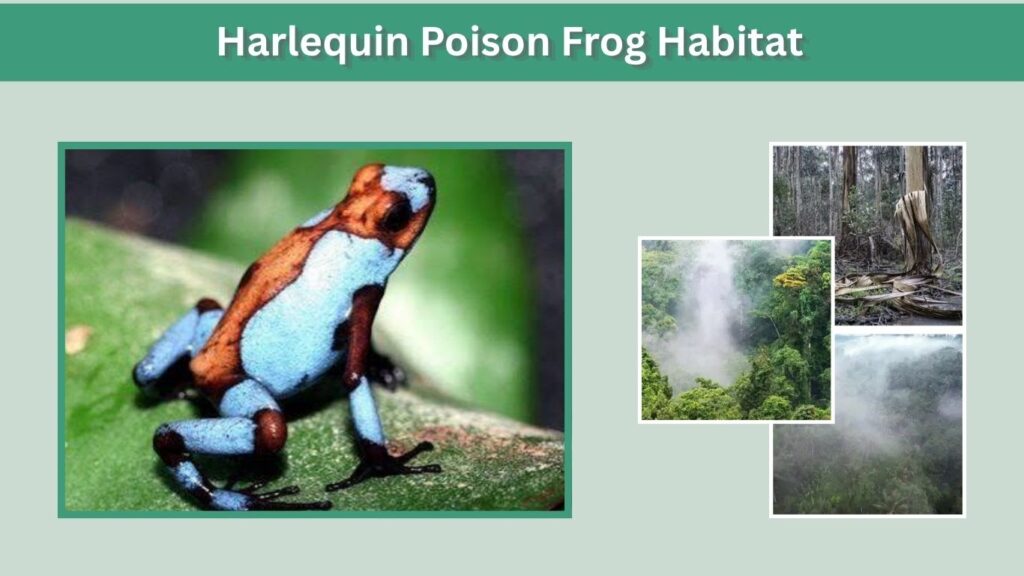
The species inhabits warm, wet tropical forests in western Colombia. It is usually associated with moist conditions on or close to the forest floor.
Preferred Habitat Features
Harlequin poison frogs depend on environments containing:
- Dense rainforest vegetation
- Consistently high humidity
- Thick layers of damp leaf litter
- Fallen branches and forest debris
- Bromeliads and other water-holding plants
- Small arthropods for food
- Shaded areas protected from drying sunlight
Although they are mainly ground-dwelling, they may climb low plants while searching for food, calling, breeding, or transporting tadpoles.
They do not normally live in large ponds. Instead, their reproductive cycle relies on tiny water pockets held by plants, particularly bromeliads.
What Do Harlequin Poison Frogs Eat?
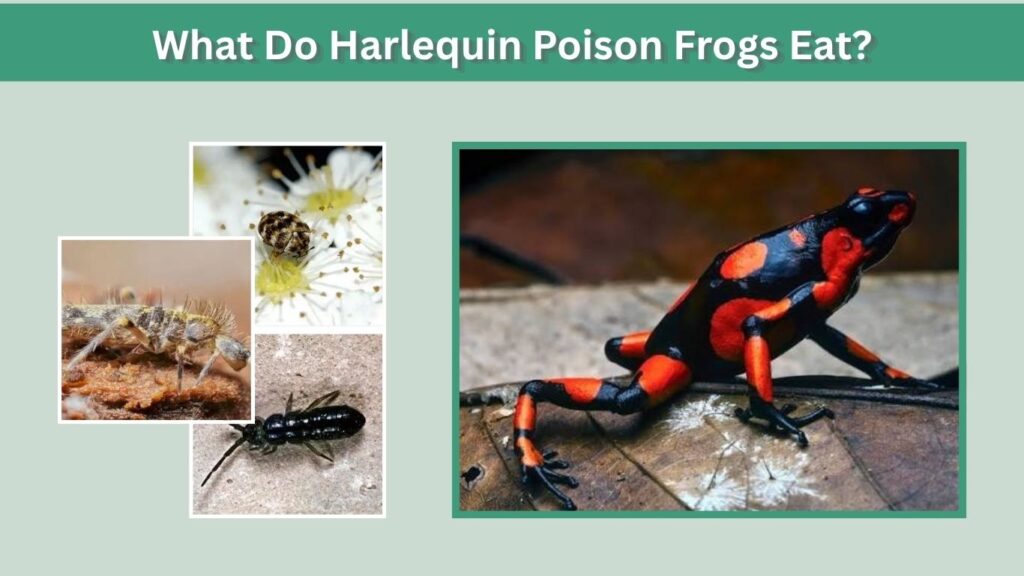
Adult harlequin poison frogs hunt tiny invertebrates during the day. They locate moving prey visually and capture it with a fast, sticky tongue.
Their diet can include:
- Ants
- Termites
- Mites
- Springtails
- Tiny beetles
- Small insect larvae
- Other minute arthropods
The ants and mites eaten in nature are believed to provide many of the chemical compounds that the frogs later store as protective skin toxins. Captive insects usually lack these compounds, explaining why captive-bred frogs are generally harmless.
Behavior and Call
Harlequin poison frogs are diurnal, meaning they forage, communicate, and defend territories during daylight. Their bright warning colors allow them to remain visible without relying entirely on camouflage.
Males use advertisement calls to attract females and communicate with competing males. The call is commonly described as a soft trilling or buzzing sound rather than the deep croak produced by larger frogs.
Calls can vary among populations and color forms. Recent research has examined geographic differences in the calls and calling locations of red, orange, white, and yellow populations in Colombia.
Reproduction and Parental Care
Harlequin poison frogs have one of the most specialized parenting systems among amphibians. Breeding generally becomes more active during rainy conditions.
From Eggs to Froglets
After courtship, the female deposits a small clutch of eggs on a damp leaf or another protected surface. Once they hatch, the tadpoles climb onto the female’s back.
She carries them individually to tiny pools of water, often inside bromeliad leaves. Each tadpole is usually placed in its own water-filled compartment, reducing competition and the risk of cannibalism.
The mother returns repeatedly and lays unfertilized eggs for the tadpole to eat. These nutritional eggs are essential to development, which is why members of the genus are called obligate egg feeders. The name Oophaga roughly refers to egg-eating.
Conservation Status and Threats
The harlequin poison frog is currently classified as Critically Endangered. Its remaining populations are restricted to a relatively small area, making the species vulnerable to environmental changes.
Major threats include:
- Rainforest clearing
- Mining and related pollution
- Agricultural expansion
- Habitat fragmentation
- Illegal collection for the pet trade
- Small and isolated populations
- Potential amphibian diseases
The species is listed under CITES Appendix II, meaning its international trade is regulated. This does not completely prohibit trade, but legal international movement requires appropriate documentation and controls.
Can You Keep a Harlequin Poison Frog as a Pet?
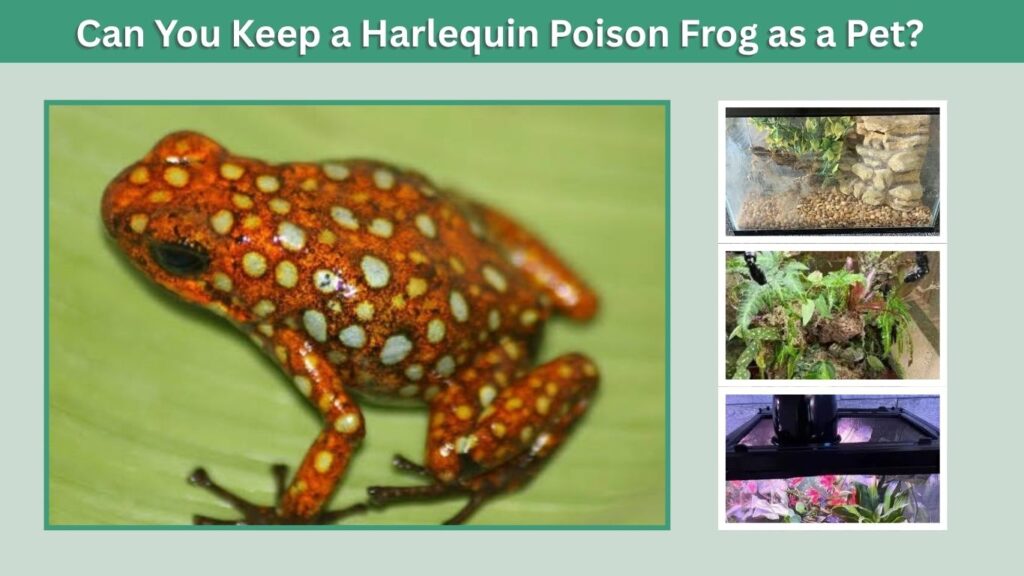
Captive-bred harlequin poison frogs are occasionally available through specialist breeders, but they are not ideal beginner amphibians. Their small prey requirements, sensitive skin, humidity needs, territorial behavior, and specialized reproductive care make them challenging.
Anyone considering one should purchase only a documented, legally captive-bred frog. Wild-caught animals may contribute to population declines, carry parasites, experience severe transport stress, and lack valid trade documentation.
A suitable vivarium requires stable tropical conditions, excellent ventilation, living plants, leaf litter, hiding places, and a reliable supply of properly supplemented micro-insects. Frogs from different localities should not be mixed because this can erase distinct genetic and color lines.
FAQs
Is the harlequin poison frog deadly?
Wild individuals possess defensive skin toxins, but they do not attack people or inject venom. Direct handling should be avoided because secretions could enter the eyes, mouth, or broken skin. Captive-bred frogs normally lack significant toxicity.
Where does the harlequin poison frog live?
It is native to humid tropical forests in western Colombia, particularly within the Chocó region. It spends most of its time around damp leaf litter, fallen vegetation, low plants, and water-holding bromeliads.
What does a harlequin poison frog eat?
Adults eat ants, termites, mites, springtails, small beetles, and other tiny arthropods. Tadpoles have a highly specialized diet and depend on unfertilized eggs regularly deposited by their mother.
What sound does a harlequin poison frog make?
Males produce a relatively soft trilling or buzzing advertisement call. They use it to attract females and communicate territorial ownership to nearby males.
Why are captive harlequin poison frogs not poisonous?
Their toxins come largely from alkaloid-containing prey eaten in the wild. Captive frogs receive fruit flies and other cultured insects that lack those compounds, so they gradually lose or never develop strong skin toxicity.
