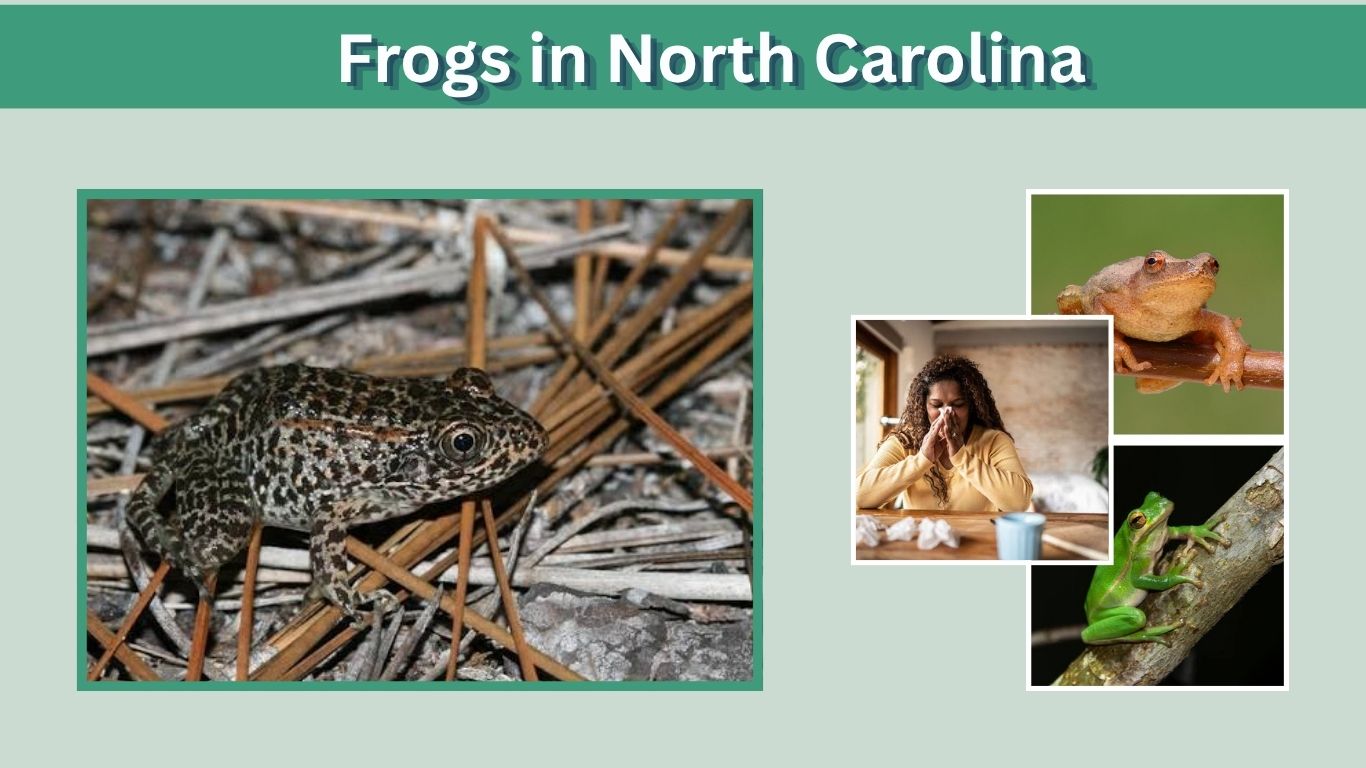
North Carolina’s mountains, Piedmont forests, coastal wetlands, ponds, and temporary rain pools support an impressive variety of frogs and toads. Some species are bright green and live high in vegetation, while others remain near streams, woodland floors, or permanent ponds. Identification depends on body shape, skin texture, markings, habitat, geographic range, and call—not color alone.
Common Frogs in North Carolina
North Carolina supports more than 90 amphibian species, including frogs, toads, salamanders, and newts. Most depend on moist habitats or water for at least part of their life cycle. Adult frogs are generally carnivorous and may eat insects, worms, snails, crayfish, smaller frogs, or other available prey.
| Species | Main identification features | Common region |
| Green treefrog | Smooth green body with pale side stripe | Coastal Plain and lower Piedmont |
| Cope’s gray treefrog | Rough skin and orange inner thighs | Most of the state |
| Barking treefrog | Large, spotted, granular body | Coastal Plain and eastern Piedmont |
| Squirrel treefrog | Small, smooth, highly variable color | Mainly Coastal Plain |
| Pine woods treefrog | Dark eye stripe and hidden thigh spots | Coastal Plain |
| Pine Barrens treefrog | Green with lavender side stripe | South-central sandhills |
| Spring peeper | Small body with an X-shaped back marking | Most of the state |
| Green frog | Large aquatic frog with back ridges | Mountains, Piedmont and Coastal Plain |
| Pickerel frog | Two rows of rectangular dark spots | Most of the state |
| American bullfrog | Very large aquatic frog | Ponds, lakes and wetlands |
Tree Frogs in North Carolina
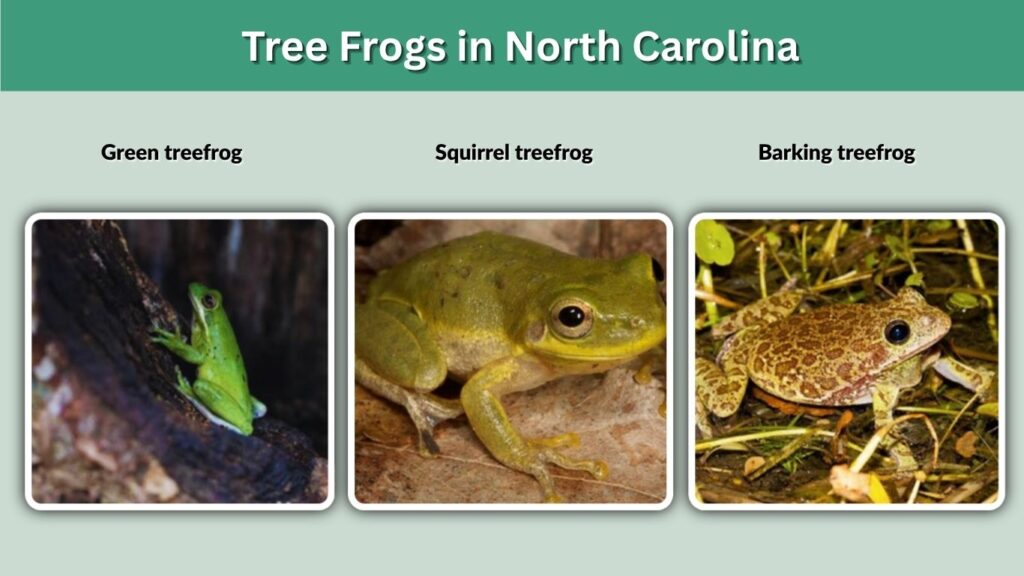
Tree frogs are recognized by their enlarged toe pads, which allow them to grip bark, leaves, walls, and windows. North Carolina’s tree frogs include green, gray, barking, squirrel, pine woods, and Pine Barrens treefrogs. Spring peepers and chorus frogs are also members of the treefrog family, although they usually remain closer to the ground.
Green Treefrog
The American green treefrog is a slender frog with smooth skin, rounded toe pads, and a white or cream stripe extending from the upper lip along the side. Its color may range from bright lime green to olive or brownish green.
In North Carolina, it is found primarily in the Coastal Plain, although populations also occur in parts of the lower Piedmont. Green treefrogs inhabit marshes, ponds, swamps, ditches, lake margins, and vegetation around temporary pools.
Males produce a loud nasal call that sounds like “queenk, queenk.” A large breeding chorus may resemble distant cowbells.
Cope’s Gray Treefrog
Cope’s gray treefrog occurs throughout most of North Carolina. Despite its name, it can appear gray, brown, greenish, or nearly white. It has rough skin, large toe pads, a pale patch beneath each eye, and bright orange or yellow coloring hidden inside the hind legs.
The closely related northern gray treefrog looks nearly identical but has been documented in only a small part of the state. The two are most reliably separated by their calls: Cope’s gray treefrog produces a faster, harsher trill.
Barking Treefrog
The barking treefrog is North Carolina’s largest native treefrog. It has granular skin, large toe pads, and a broad body that may be green, gray, or brown. Reddish-brown or purple spots are often visible across its back.
This species primarily occurs in the Coastal Plain and eastern Piedmont, particularly in pine forests and dry flatwoods. Its breeding call is a deep “toonk.” From a distance, a group can sound like barking dogs.
Squirrel Treefrog
Squirrel treefrogs are small, smooth-skinned frogs found mainly in the Coastal Plain. Their coloration is extremely variable and may be green, gray, brown, or tan. Some have spots or a pale stripe along the side, making them easy to confuse with young green treefrogs.
Their breeding call is a repeated nasal “waaaak,” while their rain call sounds like the rasping chatter of a squirrel.
Pine Barrens Treefrog
The Pine Barrens treefrog is one of North Carolina’s most striking frogs and the state’s official frog. It has a green body, a white-bordered lavender stripe along each side, and brilliant orange coloring beneath the legs.
It occurs in a limited area of the south-central sandhills, where it inhabits shrub bogs, Carolina bays, spring-fed pools, and wetlands near pine forests. Habitat loss and degradation threaten its restricted populations.
Green Frogs in North Carolina
Not every green frog is a tree frog. Several North Carolina species can appear green but differ significantly in body shape and habitat.
Green Treefrog vs. Green Frog
The green treefrog is small, slender, and equipped with adhesive toe pads. It commonly rests on leaves, windows, or vegetation above the ground.
The green frog is larger and more aquatic. It usually has prominent ridges running along the back and spends much of its time beside ponds, streams, and lake edges. North Carolina has both the northern green frog and the closely related bronze frog form, distributed across different parts of the state.
Other Green Species
Barking, squirrel, gray, and Pine Barrens treefrogs can all appear green. Southern leopard frogs may also display bright green coloring with dark spots.
Because frogs can change shades according to temperature, moisture, surroundings, and activity, markings and skin texture are more dependable than color alone.
Are There Poisonous Frogs in North Carolina?
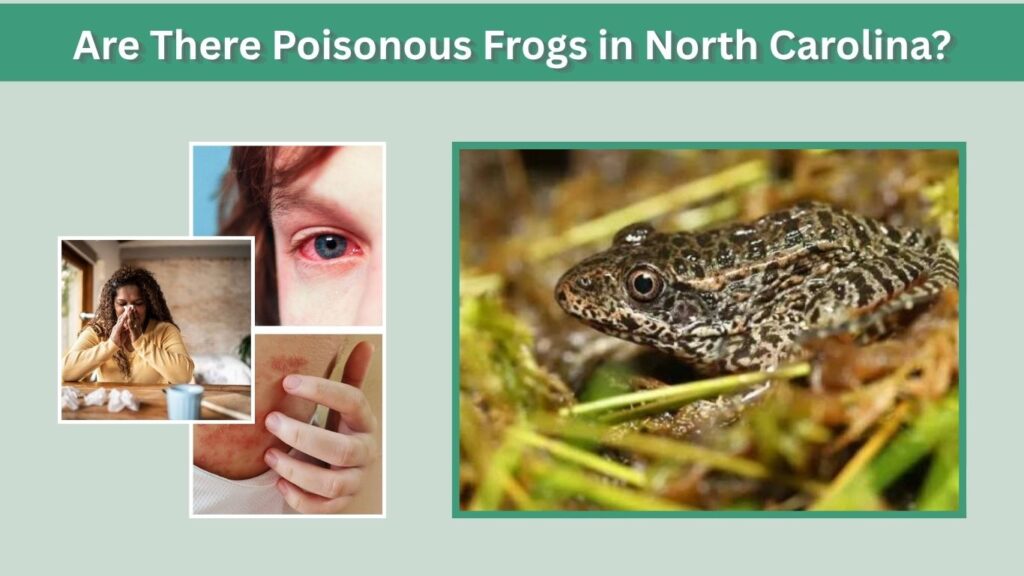
North Carolina does not have native poison dart frogs. However, several native frogs and toads produce defensive skin secretions.
The pickerel frog releases secretions toxic to many predators. A stressed pickerel frog can even harm other amphibians placed in the same container. It is identifiable by two rows of squarish dark spots and yellow or orange coloring inside the hind legs.
Fowler’s and other true toads produce secretions that are toxic or unpleasant to predators. Eastern narrowmouth toad secretions can irritate human eyes and mucous membranes, while eastern spadefoot secretions have reportedly caused strong allergic reactions in some people.
These species are not dangerous when observed without handling. Avoid touching your eyes or mouth after contact, wash your hands thoroughly, and prevent pets from biting or swallowing frogs and toads.
North Carolina Frog Calls
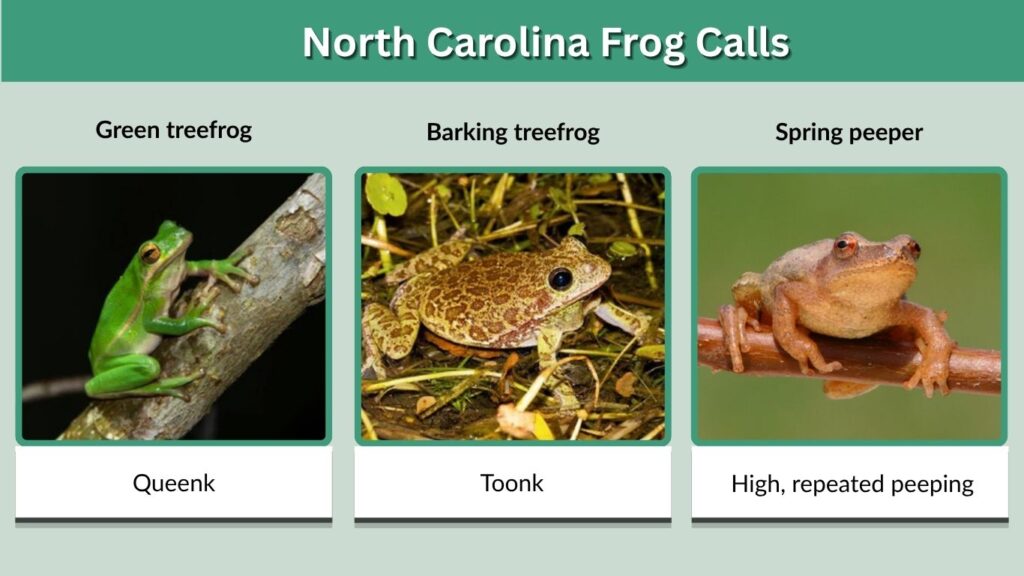
Calls are among the best ways to identify frogs because each species has a recognizable sound.
- Green treefrog: Repeated nasal “queenk”
- Cope’s gray treefrog: Fast, harsh trill
- Barking treefrog: Deep “toonk”
- Squirrel treefrog: Nasal quacks or squirrel-like rasp
- Pickerel frog: Low, snore-like call
- Upland chorus frog: Sound resembling fingers dragged across a comb
- Spring peeper: High, repeated peeping
Most calling occurs during breeding periods around wetlands. Weather and season affect activity, with many species becoming particularly vocal during warm rain.
What to Do When You Find a Frog
A wild frog found outside usually requires no assistance. Leave it where it is unless it faces immediate danger from traffic, pets, machinery, or chemicals.
Avoid taking native frogs home as pets or moving them long distances. Frogs may carry diseases between wetlands, and some North Carolina species have protected conservation status.
Homeowners can support frogs by reducing pesticide use, preserving leaf litter and vegetation, providing shaded cover, and maintaining small fish-free pools. Fish frequently eat amphibian eggs, tadpoles, and sometimes adults, so fishless water features generally provide better breeding habitat.
FAQs
What is the most common tree frog in North Carolina?
Cope’s gray treefrog is widespread through most of North Carolina. Green treefrogs are especially common in the Coastal Plain, while squirrel and pine woods treefrogs are also frequently encountered in eastern parts of the state.
Are green tree frogs in North Carolina poisonous?
Green treefrogs are not considered dangerously poisonous to people. However, all frogs should be handled minimally because their skin may produce protective mucus and can absorb chemicals from human hands. Wash thoroughly after accidental contact.
What North Carolina tree frog has a white stripe?
The American green treefrog normally has a white or cream stripe extending from its jaw along each side. The Pine Barrens treefrog has a more distinctive lavender side stripe bordered with white.
Why do North Carolina tree frogs appear on houses?
Tree frogs climb walls and windows to hunt moths, flies, and other insects attracted to outdoor lighting. Buildings also offer shaded cracks and protected resting areas during hot or dry daytime conditions.
What is the poisonous-looking spotted frog in North Carolina?
A tan frog with two rows of rectangular brown spots may be a pickerel frog. It produces defensive secretions toxic to many predators. Avoid unnecessary handling and do not place it in a container with other amphibians.
